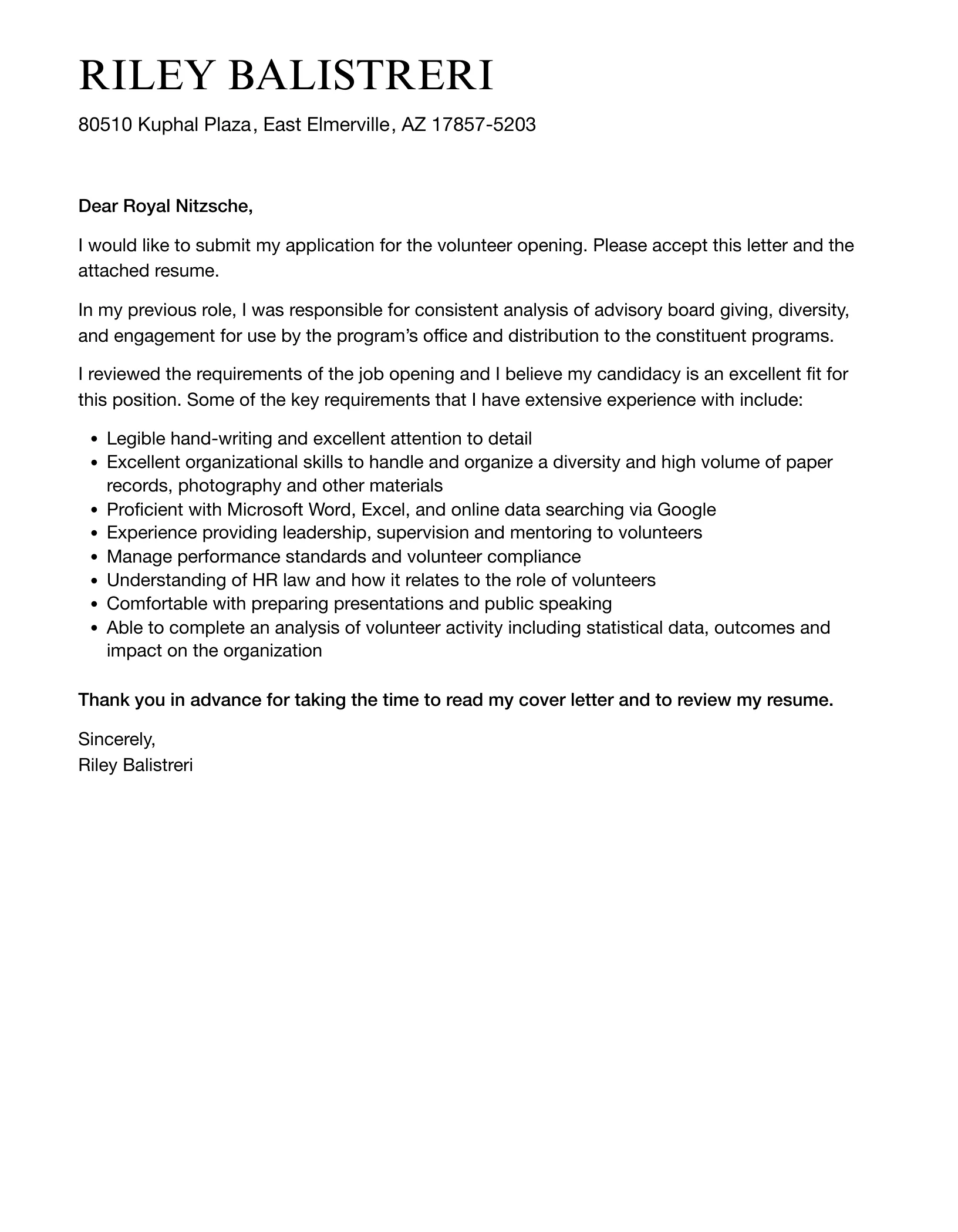
Understanding the Volunteer Cover Letter
A volunteer cover letter is a crucial document accompanying your volunteer application. It serves as your initial introduction to an organization, allowing you to showcase your personality, express your interest, and highlight your qualifications. Unlike a resume, a cover letter provides an opportunity to tell your story and demonstrate why you’re the ideal candidate, even if you lack extensive paid experience. A well-crafted letter can significantly increase your chances of securing a volunteer position, setting you apart from other applicants and making a memorable impression.
Purpose and Importance
The primary purpose of a volunteer cover letter is to articulate your motivation for volunteering and to explain how your skills and experience align with the organization’s needs. It’s an opportunity to go beyond the facts presented in your resume and demonstrate your genuine interest in the cause or mission. The importance of a cover letter lies in its ability to create a personal connection with the reader. A strong letter conveys enthusiasm, highlights your relevant qualifications, and leaves a lasting positive impression, increasing the likelihood of you being selected for the volunteer role. A thoughtful cover letter shows respect for the organization and indicates that you have invested time in preparing your application.
Key Elements to Include

A compelling volunteer cover letter should include several essential components to effectively communicate your qualifications and enthusiasm. These key elements, when crafted thoughtfully, can significantly improve your chances of success. It’s essential to customize each letter to the specific organization and role to demonstrate genuine interest and suitability.
Your Contact Information
Start with your full name, address, phone number, and email address at the top of the letter. This ensures the recipient can easily contact you. Make sure your contact details are accurate and professional. Consider using a professional-sounding email address, if possible.
Date and Recipient Information
Include the date and the recipient’s name, title, and organization address. If you know the hiring manager’s name, address the letter to them specifically. This personalization demonstrates that you have taken the time to research the organization and the volunteer opportunity.
The Greeting

Use a professional greeting, such as “Dear Mr./Ms./Mx. [Last Name],” if you know the hiring manager’s name. If not, use a general greeting like “Dear Hiring Manager” or “Dear Volunteer Coordinator.” Avoid overly casual greetings.
Body Paragraph 1 Why You’re Interested
In your first body paragraph, clearly state the position you are applying for and how you learned about the opportunity. Express your interest in the organization and the specific volunteer role. Explain what motivates you to volunteer, such as a personal connection to the cause, a desire to give back to the community, or a passion for the organization’s mission. Show genuine enthusiasm.
Express Your Passion
Share your enthusiasm for the cause or the organization’s mission. Use words that convey excitement and dedication, and show that you are genuinely committed to making a difference. Passion is contagious and can make a strong impact on the reader.
Connect with the Organization’s Mission

Demonstrate that you understand and support the organization’s mission. Explain how your values align with the organization’s goals. Mention specific programs or initiatives that resonate with you, and explain why you are drawn to them. Research the organization beforehand to show you’ve taken the time to understand their work and purpose.
Body Paragraph 2 Your Relevant Skills and Experience
In this paragraph, highlight the skills and experiences that make you a good fit for the volunteer role. Focus on the most relevant qualifications, even if they come from unrelated experiences. Connect your skills with the specific requirements of the volunteer position, and explain how you can contribute to the organization’s success. Show that you understand what the role requires.
Highlight Relevant Experience
Focus on experiences that align with the volunteer role, such as previous volunteer work, academic projects, or professional skills. Emphasize transferable skills, like communication, teamwork, and problem-solving. Even if your experience isn’t directly related, highlight how your skills can be applied to the role. Tailor your examples to the specific requirements of the volunteer position.
Quantify Your Achievements

Whenever possible, quantify your achievements with numbers or specific examples. For instance, instead of saying “I helped organize events,” say “I organized 10 community events that served over 500 attendees.” This adds credibility and demonstrates the impact of your contributions. Use metrics to illustrate your skills and the value you can bring to the organization.
Body Paragraph 3 Why You’re a Great Fit
Use your third body paragraph to explain why you are a great fit for the organization. Reinforce your enthusiasm, address any specific needs the organization has, and reiterate your commitment. This is your chance to summarize your key qualifications and reiterate your desire to volunteer.
Demonstrate Enthusiasm
Reiterate your excitement about the opportunity. Emphasize your willingness to learn and grow within the organization. Show that you are eager to contribute to their mission and work alongside other volunteers. Your enthusiasm should shine through to the reader.
Address Specific Needs

If you know of any specific needs the organization has, or if the volunteer role requires certain skills, address them in this paragraph. Explain how your skills or experiences can meet those needs. This demonstrates that you have researched the organization and are prepared to contribute effectively.
The Closing
Your closing paragraph should be concise and professional. Express your gratitude for their time and consideration, and include a call to action to make it easy for them to contact you.
Express Gratitude
Thank the reader for their time and consideration. Express your appreciation for the opportunity to apply and reiterate your interest in the role. A simple and sincere expression of gratitude leaves a positive impression.
Call to Action

Include a clear call to action, such as “I look forward to hearing from you soon” or “Thank you for your time I am available for an interview at your earliest convenience.” Provide your contact information again if needed. Making it easy for the reader to take the next step increases your chances of being selected.
Formatting and Presentation
The formatting and presentation of your cover letter are just as important as the content. A well-formatted letter demonstrates professionalism and attention to detail. Ensure your letter is neat, easy to read, and visually appealing. Remember that the presentation reflects your attitude and commitment.
Choosing the Right Tone
Maintain a professional and enthusiastic tone throughout your cover letter. Avoid slang or overly casual language. Show your personality and genuine interest, but keep the tone formal and respectful. Your tone should align with the organization’s culture.
Proofreading and Editing

Proofread your cover letter meticulously. Check for any grammatical errors, spelling mistakes, and punctuation errors. Have someone else review your letter as a fresh pair of eyes can often catch mistakes you might miss. A polished letter indicates that you care about the details.
Examples of Effective Volunteer Cover Letters
Reviewing sample cover letters can help you understand how to structure and write your own. Adapt the examples to fit your unique skills and experiences. Pay attention to the language used and how different elements are presented.
Example 1 Addressing Skills and Experience
This example focuses on highlighting relevant skills and experience. It emphasizes how the applicant’s past experiences align with the volunteer role’s requirements. This example also shows how the candidate quantifies their achievements by giving numerical data or specific examples. The goal is to demonstrate competency and explain how the candidate’s skills match what the volunteer position requires. The applicant focuses on the practical skills required and demonstrates that they are capable of performing the required duties.
Example 2 Highlighting Passion and Mission Alignment
This example emphasizes the applicant’s passion for the cause and their alignment with the organization’s mission. It demonstrates a strong personal connection to the work. The applicant can describe experiences that highlight the reason they want to contribute. By focusing on the emotional connection to the organization, the applicant makes the application more personal and shows the motivation to contribute. This helps the reader to see the applicant’s dedication and interest.
Example 3 Addressing Specific Needs of the Organization
This example demonstrates how an applicant addresses the specific needs of the organization. This shows that the applicant has done their research and understands the challenges the organization faces. By highlighting how they can help, the applicant stands out. This example can show that the applicant understands the role and can adapt to the organization’s needs, which shows a commitment to helping solve problems. This way, the applicant shows that they will bring value to the organization.