Highlighting Your Veterinary Technician Skills
A well-crafted cover letter is your first opportunity to impress a potential employer and secure an interview for a veterinary technician position. This document should go beyond simply restating your resume; it should highlight your key skills, experiences, and enthusiasm for the role and the veterinary field. A successful cover letter is a targeted marketing tool, tailored specifically to the job you are applying for and the clinic or hospital’s needs. It needs to be persuasive, showcasing your unique abilities and demonstrating why you are the best candidate. Remember, a compelling cover letter increases your chances of standing out from the competition and landing your dream job as a veterinary technician. By thoughtfully crafting each section, you can transform your cover letter from a generic formality into a powerful advocacy for your candidacy.
Technical Skills to Showcase
Technical skills are the backbone of a veterinary technician’s daily responsibilities. These skills demonstrate your ability to perform critical tasks necessary for animal care and clinical operations. When describing these, be specific and provide examples. If you are proficient in administering medications, mention the types of medications and the various routes of administration you are familiar with. Similarly, if you are skilled in laboratory procedures, elaborate on the specific tests you can perform, such as blood draws, fecal exams, or urinalysis. Detailing your experience with specialized equipment, such as X-ray machines, dental tools, or anesthesia monitoring devices, can also significantly bolster your application. By showcasing these skills, you emphasize your hands-on abilities and highlight your readiness to contribute to the clinic’s success from day one. Remember to tailor the technical skills section to match the requirements outlined in the job description for maximum impact.
Animal Handling Proficiency

Animal handling is a fundamental skill for any veterinary technician. It encompasses the ability to safely and effectively restrain and handle animals of various species and temperaments. Your cover letter should clearly illustrate your proficiency in this area. Highlight your experience with different animal handling techniques, mentioning specific methods you are comfortable with, like scruffing a cat or safely restraining a dog for a blood draw. Describe any certifications or training you have received in animal handling, such as Fear Free or Low Stress Handling certifications. If you have experience working with specific animal behaviors or handling animals with unique needs, such as senior pets or those with disabilities, be sure to include this information. Demonstrating your ability to handle animals with confidence and compassion is essential and shows you can keep both the animals and yourself safe while providing the best possible care.
Medical Procedures Experience
Your cover letter should also emphasize your experience with various medical procedures, which demonstrate your practical skills in patient care and diagnostic support. Be specific about the procedures you have performed, such as assisting in surgeries, monitoring anesthesia, or performing dental cleanings. For example, if you have experience with surgical assisting, mention the types of surgeries you’ve assisted with and your specific responsibilities during the procedures, like preparing surgical instruments or monitoring vital signs. Detail your experience with various diagnostic tools, such as taking radiographs (X-rays), performing ultrasounds, or collecting samples for laboratory analysis. Quantifying your experience whenever possible is an excellent strategy. For example, you might state that you have assisted in “over 50 surgical procedures” or performed “daily dental cleanings for an average of 10 patients per week.” By highlighting your experience with a range of medical procedures, you demonstrate that you are a well-rounded and capable veterinary technician.
Communication and Interpersonal Abilities
Besides technical skills, a successful veterinary technician needs strong communication and interpersonal abilities. These skills are crucial for effectively interacting with clients, other staff members, and, of course, the animals. In your cover letter, make sure to emphasize your ability to communicate clearly and empathetically with both pet owners and colleagues. Providing examples of how you’ve handled difficult situations, such as calming anxious clients or explaining complex medical information in an accessible manner, can be very impactful. Highlight your active listening skills and your ability to build rapport with clients and patients. Describing your experience in working collaboratively within a team is also valuable, as veterinary practices rely on cohesive teamwork to provide excellent care. By illustrating these soft skills, you paint a picture of yourself as a well-rounded professional who can contribute to a positive and efficient work environment.
Client Communication

Client communication is a cornerstone of a veterinary technician’s responsibilities, and your cover letter must highlight your skills in this area. Focus on your ability to communicate complex medical information in an understandable and empathetic way. Describe your experience with educating clients about their pets’ conditions, treatment plans, and preventative care. Share examples of how you’ve addressed client concerns, answered their questions, and provided reassurance during stressful situations. If you are fluent in multiple languages, or have experience communicating with clients from diverse backgrounds, this can be a significant advantage and should be highlighted. Demonstrate your ability to explain medical terms clearly and your commitment to creating a positive and supportive environment for pet owners.
Teamwork and Collaboration
Teamwork is an essential aspect of veterinary practice, and highlighting your collaborative skills can significantly boost your cover letter. Describe your experience working within a team environment, and give specific examples of how you’ve collaborated with veterinarians, other technicians, and support staff to ensure the best possible care for animals. Showcase your ability to communicate effectively with colleagues, share information, and contribute to a positive and efficient work environment. If you have experience with delegation, conflict resolution, or team leadership, be sure to include it, as these skills demonstrate your ability to contribute to a cohesive and productive team. Emphasizing your teamwork skills illustrates that you are not only competent in your technical abilities, but also a valuable asset to the clinic’s overall operations.
Formatting and Structure of Your Cover Letter
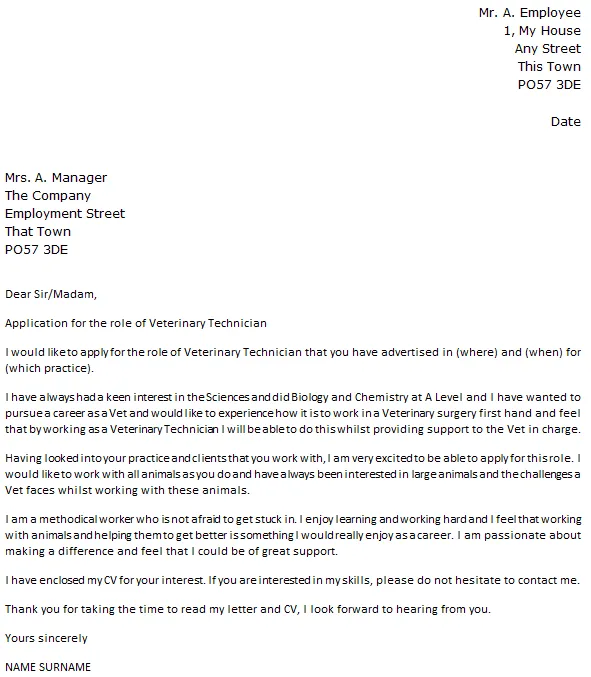
A well-structured and formatted cover letter can be just as important as the content it contains. The clarity and professionalism of your cover letter’s format significantly affect how the reader perceives your skills and abilities. Following the standard structure of a cover letter ensures that your message is easy to read and understand. Using a professional font, such as Times New Roman or Arial, with a font size between 10 and 12 points, enhances readability. Make sure there is consistent spacing and alignment throughout the document. Proper formatting shows attention to detail and reflects your commitment to professionalism. Before sending your cover letter, always proofread it carefully to ensure it is free of any errors in grammar, spelling, or punctuation. A well-formatted cover letter makes a positive first impression and ensures that your key skills and experiences are easily accessible to the reader.
Contact Information & Date

At the top of your cover letter, clearly include your contact information, such as your full name, address, phone number, and email address. This information should be easily accessible to the hiring manager so they can contact you for an interview. Right below your contact information, put the date. The date should reflect the day you are submitting the cover letter. This provides a reference point for when the application was submitted and helps in tracking. Ensure that your contact information is accurate and up-to-date. Consider using a professional-sounding email address and double-checking your phone number for accuracy. A clear and accurate presentation of this information makes it easier for the hiring manager to reach you and signals your attention to detail.
Recipient Information
Next, you will need to include the recipient’s information, which typically includes the name of the hiring manager or the person to whom you are addressing the letter, their title, the name of the veterinary clinic or hospital, and the clinic’s address. If possible, research the hiring manager’s name and use it to personalize your cover letter. This shows that you have taken the time to learn about the practice and are genuinely interested in the position. If you are unsure of the hiring manager’s name, you can use a general salutation, such as “Dear Hiring Manager.” However, always try to find a specific name. Personalizing the recipient information makes a positive impression and demonstrates your commitment to the application process.
Professional Salutation
Begin your cover letter with a professional salutation. The most common salutation is “Dear [Hiring Manager’s Name],” if you know the hiring manager’s name. If you don’t know the hiring manager’s name, a suitable alternative would be “Dear Hiring Manager,” or “Dear [Veterinary Clinic Name] Hiring Team.” Avoid using overly casual salutations, such as “Hi” or “Hello.” A professional salutation sets the right tone from the beginning of your letter, conveying respect and professionalism. Ensure your salutation is consistent with the rest of your cover letter’s tone and formatting. Always double-check the spelling of the recipient’s name to avoid making a negative first impression.
Body Paragraphs

The body paragraphs are the core of your cover letter, where you will provide detailed information about your skills, experience, and qualifications. Use the body paragraphs to highlight your most relevant qualifications and tailor them to match the job description. Clearly outline why you are a good fit for the position and why the employer should consider you. Keep each paragraph focused and concise, using strong action verbs and specific examples to demonstrate your achievements and abilities. Organizing your body paragraphs logically makes your cover letter easy to read and increases the impact of your message. Each paragraph should address a specific point or aspect of your qualifications, making sure to connect your skills and experiences directly to the needs of the clinic or hospital.
Opening Paragraph
The opening paragraph serves as your introduction, so make it compelling and attention-grabbing. State the position you are applying for and where you found the job listing. Briefly explain why you are interested in the position and what specifically attracted you to the clinic or hospital. Consider including a strong opening statement that summarizes your key qualifications or highlights your passion for veterinary medicine. Keep the opening concise, focusing on making a positive first impression and setting the stage for the rest of your cover letter. The opening paragraph should immediately engage the reader, enticing them to continue reading and learn more about your qualifications. By making a strong initial impression, you significantly increase your chances of capturing the employer’s attention.
Highlighting Relevant Experience
In the body paragraphs, you will elaborate on your professional experience and the ways that it makes you the ideal candidate. Focus on the experience that is most relevant to the job requirements. Describe your previous roles as a veterinary technician or similar positions, highlighting your specific responsibilities, accomplishments, and any specialized skills you have developed. Provide concrete examples of how you have successfully applied your skills in previous roles. Quantify your achievements whenever possible, such as stating the number of animals you cared for daily or the types of medical procedures you have experience with. Show the employer how your experience will translate to success in the position. Use action verbs to describe your duties and accomplishments, and always tailor the information to align with the requirements listed in the job description to make your application as relevant as possible.
Quantifying Achievements

Quantifying your achievements is a great way to make your cover letter more impactful. Instead of simply stating that you are experienced, provide specific numbers and metrics to demonstrate the scope and impact of your work. Whenever possible, use data to show the results you have achieved in previous roles. For example, state that you “assisted in over 100 surgical procedures,” “reduced patient wait times by 15%,” or “trained and mentored a team of five veterinary assistants.” Using quantifiable achievements helps the employer understand your contributions and the value you can bring to their clinic or hospital. By using numbers and data, you can make your cover letter more persuasive and demonstrate your ability to achieve results.
Closing Paragraph
The closing paragraph should be concise and leave a lasting positive impression. Restate your interest in the position and thank the employer for considering your application. Express your enthusiasm for the opportunity and reiterate your key qualifications. End with a call to action, such as requesting an interview or expressing your eagerness to discuss your qualifications further. Keep the tone professional and enthusiastic, and avoid sounding overly formal or generic. The closing paragraph should be a strong finish that reinforces your suitability for the role and encourages the employer to take the next step.
Expressing Enthusiasm
Expressing genuine enthusiasm is an effective way to make your cover letter more engaging. Show your excitement for the veterinary technician position, and explain what specifically interests you about the role and the veterinary practice. Highlight what appeals to you about the clinic’s mission, values, or reputation, if possible. Emphasize your passion for animals and veterinary medicine. Demonstrate your commitment to providing excellent animal care and contributing to the practice’s success. Be authentic in expressing your enthusiasm. Showing that you are genuinely excited about the opportunity can create a positive impression and make you stand out from other applicants.
Call to Action

Include a clear call to action in your closing paragraph. This is where you tell the employer what you want them to do next. The most common call to action is to request an interview to discuss your qualifications further. You might also state that you are available for an interview at their earliest convenience or mention your willingness to provide additional information or references. Make sure your call to action is direct, clear, and professional. By including a call to action, you guide the employer on the next steps and show your proactive approach. A strong call to action increases the likelihood of receiving an interview.
Proofreading and Editing
Proofreading and editing are critical steps in the cover letter writing process. Thoroughly proofread your cover letter for any errors in grammar, spelling, punctuation, and formatting before sending it. These errors can undermine your credibility and make a negative impression on the employer. Read your cover letter multiple times and consider having a friend, colleague, or career counselor review it as well. A fresh pair of eyes can often catch mistakes that you might have missed. Pay close attention to detail, and use spell-check and grammar-check tools, but don’t rely on them completely. Review the content, flow, and clarity of your writing. Make sure your cover letter flows logically and that your message is easy to understand. A polished and error-free cover letter demonstrates professionalism and attention to detail, enhancing your chances of success.
Common Mistakes to Avoid
Avoiding common mistakes can significantly increase the effectiveness of your cover letter. Identifying and correcting these errors can help you present a professional and compelling application. Be mindful of common pitfalls, such as typos, generic phrasing, and failing to tailor your letter to the specific job and clinic. Regularly review and revise your cover letter to ensure it’s free of these errors and that it best reflects your qualifications and enthusiasm. The goal is to make sure your cover letter stands out for the right reasons and leaves a lasting positive impression on potential employers.
Typos and Grammatical Errors
Typos and grammatical errors are some of the most common mistakes that can damage your cover letter. They can create a negative impression, making you look unprofessional or careless. Always proofread your cover letter multiple times to catch any spelling, grammar, or punctuation errors. Use spell-check and grammar-check tools, but do not rely on them completely. Read your cover letter aloud or ask a friend to review it to catch errors you might have missed. Ensure that all your words are correctly spelled, and that you have proper punctuation and correct grammar. A well-proofread cover letter demonstrates attention to detail and commitment to quality.
Generic Cover Letters
Avoid using a generic cover letter. A generic cover letter is one that isn’t tailored to a specific job or employer and can come across as insincere or uninterested. Generic letters often use vague language and do not address the specific requirements of the position or the needs of the clinic. To avoid this, always customize your cover letter for each job application. Research the veterinary clinic or hospital, and tailor your cover letter to match the specific skills and qualifications required for the position. Customize your opening paragraph to reflect your genuine interest in the practice. Personalize your cover letter to show the employer that you have put in the effort and are serious about the role. Generic cover letters lack the impact needed to make a positive impression and significantly reduce your chances of getting an interview.
Ignoring the Job Description
A significant mistake is ignoring the job description when writing your cover letter. The job description provides essential information about the required skills, experience, and qualifications needed for the position. Always read the job description carefully and identify the key requirements. Use your cover letter to highlight the skills and experiences that match those requirements. Incorporate keywords and phrases from the job description into your cover letter to demonstrate your understanding of the role. Provide specific examples of how your skills align with the job requirements. Tailoring your cover letter to the job description ensures that the employer knows you are a good fit for the position. Failure to address the job description’s requirements can result in your application being overlooked.
Tailoring Your Cover Letter
Tailoring your cover letter is one of the most crucial steps in the application process. Tailoring ensures that your cover letter speaks directly to the requirements of the specific veterinary technician position and the needs of the clinic or hospital. Customizing your cover letter to each application demonstrates your genuine interest in the role and your attention to detail. By personalizing your cover letter, you can increase your chances of making a positive impression and securing an interview. Tailoring your cover letter requires thorough research, analysis of the job description, and strategic presentation of your skills and experience.
Researching the Clinic
Before you begin writing your cover letter, research the veterinary clinic or hospital you are applying to. Visit their website to learn about their mission, values, and services. If the clinic has a social media presence, browse their profiles to gain insights into their culture and any recent activities. Learn about the clinic’s specializations, the types of animals they treat, and the types of services they offer. If possible, find out the name of the hiring manager and use their name to personalize your cover letter. Researching the clinic allows you to demonstrate that you are genuinely interested in the practice. It also allows you to tailor your cover letter to address their specific needs. By doing so, you showcase your initiative and attention to detail, both of which are highly valued by employers.
Matching Skills to Requirements
Carefully compare your skills and experience to the requirements listed in the job description. Identify the key skills and qualifications the employer is seeking and make sure you highlight those in your cover letter. Provide specific examples of how your skills align with the job requirements. If the job description mentions specific tasks or procedures, describe your experience with those tasks. If the job description emphasizes certain qualities, such as communication skills or teamwork, be sure to address these qualities in your cover letter. Demonstrate how you possess the skills and experiences the employer is looking for. Make sure to use relevant keywords and phrases from the job description. Matching your skills to the requirements in the job description proves to the employer that you can perform the duties of the position and that you are a great fit for the clinic.
Keywords and Action Verbs
Use relevant keywords and action verbs throughout your cover letter to make it more impactful and search-engine friendly. Review the job description, and identify the key skills and requirements. Incorporate keywords related to these skills into your cover letter to show the employer that you possess the necessary qualifications. Use strong action verbs to describe your accomplishments and responsibilities. For example, instead of saying that you “were responsible for” something, use action verbs such as “managed,” “coordinated,” “implemented,” or “trained.” These action verbs will help you to demonstrate your impact and highlight your accomplishments. Using keywords and action verbs can make your cover letter more engaging and help it stand out to the employer.