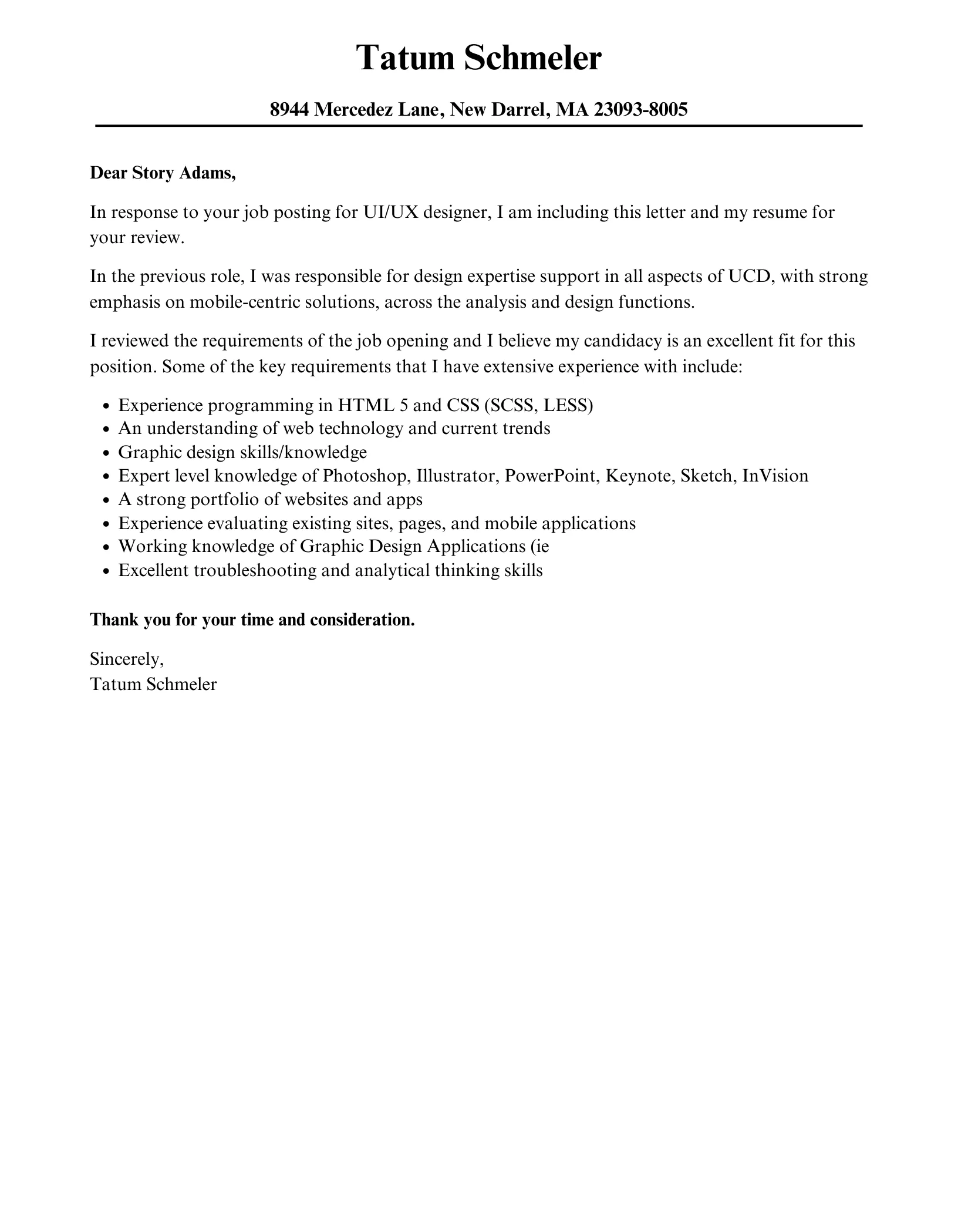
Why a UX Designer Cover Letter Matters
In the competitive world of UX design, your portfolio often takes center stage. However, a well-crafted cover letter is your secret weapon, offering a crucial opportunity to make a strong first impression and set yourself apart. Think of it as your chance to go beyond the resume and portfolio, providing context to your experience and demonstrating your personality, passion, and problem-solving abilities. A cover letter allows you to tell a story, to connect your skills to the specific requirements of the role and the company. It’s where you can highlight your enthusiasm and explain why you’re the perfect fit for this particular opportunity, not just any UX design position. By investing time in a compelling cover letter, you significantly increase your chances of landing an interview and ultimately securing your dream job.
Key Components of a Winning UX Cover Letter
A winning UX designer cover letter is much more than a simple reiteration of your resume. It’s a carefully constructed document that showcases your unique value proposition. Start with a strong opening that grabs the reader’s attention – show your excitement for the specific role and the company. Follow this with a concise and impactful summary of your key accomplishments and skills. Then, delve into the body of the letter, using specific examples to illustrate your experience and the value you bring. Avoid generic statements and instead focus on the specific requirements outlined in the job description, demonstrating how your skills align. The closing should reiterate your interest, express your eagerness for an interview, and include a clear call to action, such as mentioning your portfolio URL or website.
Highlighting Your UX Skills and Experience

When showcasing your skills and experience, remember that the cover letter is your chance to elaborate on the key points from your resume. Don’t just list your skills; provide context. Instead of simply stating that you are proficient in user research, describe a specific project where you successfully conducted user interviews, analyzed data, and delivered actionable insights that improved the user experience. Quantify your achievements whenever possible. For example, instead of saying you improved usability, mention that you increased user task completion rates by a certain percentage. Highlight your experience with design thinking methodologies, prototyping tools, and user testing techniques. Tailor your examples to match the specific requirements of the job description, demonstrating how your skills and experiences directly address the company’s needs.
Showcasing Your Design Portfolio
Your portfolio is your most powerful asset as a UX designer, and your cover letter is the perfect place to subtly guide the reader towards your best work. Don’t just mention your portfolio; highlight specific projects that align with the job’s requirements. Briefly describe the problem you were solving, the process you followed, and the results you achieved. Use the cover letter to pique the reader’s interest and encourage them to explore your portfolio in more detail. Include a direct link to your portfolio website, making it easy for the hiring manager to access your work. Consider mentioning specific case studies within your portfolio that are particularly relevant to the role. Showcasing a well-curated portfolio within your cover letter will provide a comprehensive view of your design capabilities.
Tailoring Your Cover Letter to the Job
Generic cover letters are easily spotted and often tossed aside. The key to a winning cover letter is to tailor it to each specific job you apply for. Thoroughly read the job description and identify the key requirements and responsibilities. Then, customize your cover letter to address those specific needs. Highlight the skills and experiences that are most relevant to the role, using the same keywords and phrases that are used in the job description. Research the company and demonstrate that you understand their mission, values, and products. Show that you’ve taken the time to learn about them. Mention specific projects or initiatives that align with the company’s work, and explain why you are excited to contribute. This level of personalization will demonstrate your genuine interest in the opportunity and significantly increase your chances of getting noticed.
Use the Right UX Design Keywords

In today’s job market, many companies use Applicant Tracking Systems (ATS) to scan cover letters and resumes for specific keywords. To ensure your cover letter doesn’t get filtered out, strategically incorporate relevant UX design keywords. Review the job description and identify the terms that the hiring manager is likely looking for, such as user research, information architecture, usability testing, wireframing, prototyping, interaction design, and visual design. Use these keywords naturally throughout your cover letter. Do not stuff your cover letter with keywords, as this will make it seem forced and inauthentic. Instead, integrate the keywords organically into your descriptions of your skills, experiences, and projects. This will help your cover letter pass through the ATS and reach the hiring manager’s desk.
Formatting Your Cover Letter
The formatting of your cover letter is as important as its content. Your letter should be easy to read and visually appealing. Use a professional and clean font, such as Arial, Helvetica, or Times New Roman, with a font size between 10 and 12 points. Maintain consistent margins and spacing. Break up large blocks of text with short paragraphs and bullet points to improve readability. Ensure there are clear headings and subheadings to organize your content. Avoid using excessive colors or complex formatting. Keep it simple and professional. Use a standard business letter format, including your contact information, the date, the hiring manager’s name and title (if known), and a formal closing, such as “Sincerely” or “Best regards.” A well-formatted cover letter demonstrates attention to detail and professionalism.
Proofreading and Editing Your Cover Letter
Before submitting your cover letter, meticulously proofread and edit it. Errors in grammar, spelling, and punctuation can create a negative impression and undermine your credibility. Read your cover letter aloud to catch any awkward phrasing or inconsistencies. Use a grammar and spell checker, but don’t rely on it entirely. Have a friend, colleague, or mentor review your cover letter for any errors or areas for improvement. Pay close attention to the tone of your cover letter. Ensure it is professional, enthusiastic, and reflects your personality. Make sure the language is clear, concise, and easy to understand. Eliminate any jargon or technical terms that the hiring manager may not understand. A polished and error-free cover letter demonstrates your attention to detail and commitment to quality.
Closing Your Cover Letter

The closing of your cover letter is a critical part of your pitch. Restate your enthusiasm for the position and the company. Briefly summarize your key qualifications and reiterate why you are the best fit for the role. Avoid using generic closing statements. Instead, express your genuine interest in the opportunity. Include a clear call to action. Tell the hiring manager that you are eager to learn more and look forward to the possibility of an interview. Provide your contact information, including your phone number and email address, to make it easy for the hiring manager to reach you. A strong closing leaves a lasting impression and encourages the hiring manager to take the next step in the hiring process.
Call to Action and Follow-Up
Your cover letter should end with a clear call to action. This could be a direct request for an interview or a statement expressing your availability for a call to discuss your qualifications further. After submitting your cover letter and resume, follow up with the hiring manager or the company’s human resources department. Send a brief email within a week to reiterate your interest in the position and inquire about the status of your application. Express your appreciation for their time and consideration. If you don’t hear back after a reasonable period, consider sending a second follow-up email. Persistence and proactive communication demonstrate your genuine interest and can help you stand out from other applicants. A strategic follow-up can significantly increase your chances of securing an interview and landing your desired UX design role.