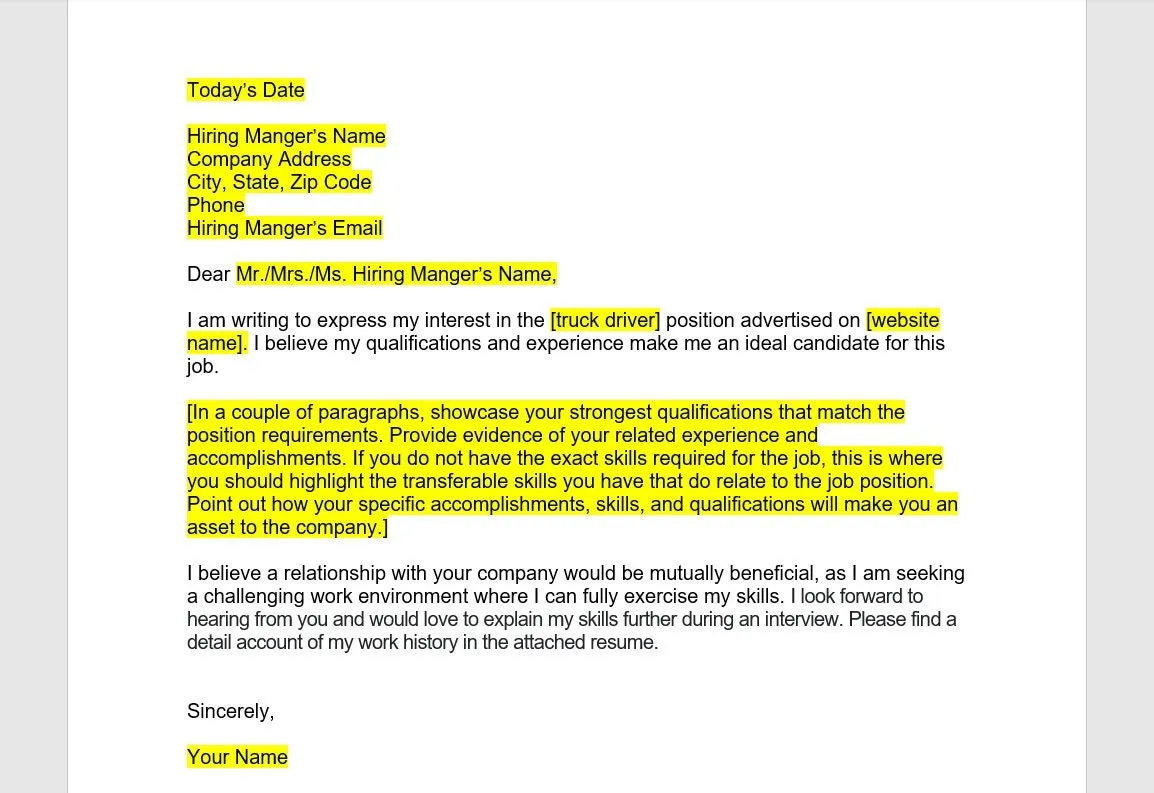
Crafting the Perfect Truck Driving Cover Letter
A well-crafted truck driving cover letter is your first impression on a potential employer. It’s more than just a formality; it’s your opportunity to showcase your skills, experience, and personality. This guide reveals the secrets to writing a cover letter that grabs attention and sets you apart from other applicants. Learn how to highlight your qualifications and increase your chances of landing your dream trucking job. Proper cover letter can significantly improve your odds of getting hired, making the effort well worth it.
Understanding the Importance of a Cover Letter
Why a Cover Letter Matters

In the competitive world of truck driving, a cover letter provides context to your resume. It allows you to tell your story, explaining why you’re the ideal candidate for the job. It also demonstrates your communication skills and attention to detail, essential qualities for a truck driver. Furthermore, a cover letter is your chance to personalize your application, showing that you’ve taken the time to understand the company and the specific requirements of the role. Not using a cover letter might result in your application being dismissed before it even reaches the hiring manager’s desk.
How a Cover Letter Enhances Your Application
A cover letter enhances your application by expanding on your resume. While your resume lists your qualifications, your cover letter explains how those qualifications align with the employer’s needs. It gives you the opportunity to elaborate on specific experiences, skills, and accomplishments. This allows you to paint a more complete picture of yourself, making it easier for the hiring manager to see your potential. It also provides an opportunity to address any potential concerns or gaps in your resume. A strong cover letter can be the deciding factor in whether you get an interview.
Key Components to Include in Your Cover Letter
Your Contact Information and Date

Start your cover letter with your full name, address, phone number, and email address. Include the date you are writing the letter. This section ensures the hiring manager knows how to contact you and adds a professional touch to your document. Ensure that your contact information is accurate and up-to-date. Incorrect details can lead to missed opportunities, so always double-check this information before submitting your application. Make sure the date corresponds with the day you are sending the cover letter.
The Hiring Manager’s Information
If possible, address your cover letter to a specific person, such as the hiring manager or the recruiter. This demonstrates that you’ve taken the time to research the company and are genuinely interested in the position. If you can’t find a specific name, use a professional salutation like ‘Dear Hiring Manager.’ This personal touch can make your application stand out. If the name is unavailable, then search in the company website, LinkedIn or call the company directly to ask who is in charge of hiring in the area. This small effort shows that you’re proactive.
A Strong Opening
Your opening paragraph should immediately grab the reader’s attention. State the position you’re applying for and where you saw the job posting. Briefly mention why you’re interested in the company and the role. Use a strong opening that highlights your key qualifications and enthusiasm. Avoid generic phrases; instead, try to convey your excitement for the opportunity. The first few sentences are critical; they will determine whether the hiring manager continues to read the rest of your cover letter. If you can, mention a specific aspect of the job that interests you.
Highlighting Your Relevant Experience

This is where you showcase your experience as a truck driver. Focus on your most relevant experience, highlighting the skills and accomplishments that match the job requirements. Mention the type of vehicles you’ve driven, the routes you’ve covered, and the types of cargo you’ve handled. Use specific examples to demonstrate your abilities. For instance, mention your experience with long-haul routes, or your proficiency in handling hazardous materials. Quantify your accomplishments whenever possible; for example, mention how you’ve consistently maintained a perfect safety record or exceeded delivery targets.
Skills and Qualifications
List your key skills, such as experience with specific truck models, knowledge of safety regulations, and proficiency in using GPS and other navigation tools. Also, mention any other relevant skills like load securement, pre-trip inspections, and customer service. Make sure to tailor your skills to the specific job requirements. Review the job description carefully and highlight the skills the employer is seeking. Don’t just list skills; provide brief examples of how you’ve used them effectively in past roles. For instance, illustrate your skill in problem-solving by describing a situation where you efficiently resolved an issue on the road.
Certifications and Licenses
Include all relevant certifications and licenses, such as a Commercial Driver’s License (CDL) with necessary endorsements (e.g., tanker, hazmat). List any additional certifications, such as defensive driving courses or specialized training. Always ensure that your licenses and certifications are current and valid. Provide the specific details of your endorsements and the issuing state. Make sure to include your CDL class and any additional qualifications that are relevant to the job. Include images of your certifications for additional impact and for easy reference.
Safety Record and Compliance

Emphasize your commitment to safety. Mention your clean driving record, including any accolades or recognition you’ve received. Include details about any safety training programs you’ve completed. Safety is paramount in the trucking industry. Highlighting your safety record will assure potential employers of your dedication to following regulations and avoiding accidents. Mention any specific safety programs or certifications that are related to the requirements of the job. Always be honest about your safety record; it’s better to address any issues directly than to have them surface later.
Company-Specific Information
Show that you’ve researched the company by mentioning specific aspects of their business that appeal to you. Explain why you want to work for that particular company and how your values align with theirs. Mentioning the company’s mission statement or any specific projects or initiatives you admire demonstrates your genuine interest. Tailor your cover letter to reflect the company’s culture and values. Highlight what makes you a good fit for their specific needs. Researching the company shows that you’re serious about the job. This will also assist you in showing what you can bring to the table.
Expressing Your Enthusiasm and Interest
Convey your enthusiasm for the position and the company. Show your genuine interest in the opportunity. Avoid generic phrases and instead share why you’re particularly excited about the role. Highlight what attracts you to the specific job requirements. This helps to demonstrate your passion for truck driving and increases the likelihood of your application being noticed. Be specific about what excites you. A strong interest can make a lasting impression on the hiring manager. This also shows your commitment to go above and beyond.
Call to Action and Closing

End your cover letter with a call to action. State your availability for an interview and thank the hiring manager for their time and consideration. Provide your contact information again. Keep your closing concise and professional. Ensure that your contact information is easy to find and accurate. Use a professional closing such as “Sincerely” or “Respectfully.” A polite ending can leave a positive, lasting impression. By adding this, you ensure that the hiring manager knows how to contact you for further discussion.
Formatting and Presentation Tips
Choosing the Right Font and Size
Choose a clear and professional font, such as Times New Roman, Arial, or Calibri. Use a font size between 10 and 12 points for readability. Ensure consistency in font style and size throughout the document. Avoid using overly stylized fonts. The goal is to make your cover letter easy to read. The formatting must also follow general rules: use standard font sizes, such as 11 or 12 points for the body text, and use a font size that is suitable for the overall document. A clear and neat presentation is crucial for making a good first impression.
Keeping Your Letter Concise and Focused

Keep your cover letter to one page. Be concise and focus on the most relevant information. Avoid unnecessary details or repetition. Get to the point quickly and effectively. Focus on your key qualifications and how they match the job requirements. Ensure every sentence serves a purpose. Use strong action verbs to describe your accomplishments and skills. By maintaining focus, you can capture the hiring manager’s attention and increase your chances of getting an interview. Remember that brevity is key and you should never exceed one page.
Proofreading and Editing
Proofread your cover letter carefully for any errors in grammar, spelling, and punctuation. Mistakes can undermine your professionalism. It’s also recommended to have a friend or family member review your letter. Errors can make it appear that you lack attention to detail. Always double-check your contact information to ensure accuracy. Check for incorrect information and make sure your letter is consistent. A polished cover letter is a reflection of your professionalism and commitment. This simple step greatly improves your chances of getting hired.
Common Mistakes to Avoid
Generic Cover Letters

Avoid using generic cover letters that are not tailored to the specific job or company. Generic letters show a lack of interest and preparation. Always personalize your cover letter to match the job requirements and the company’s values. Generic letters can come across as impersonal and will not make you stand out. Customize your cover letter for each job application. This demonstrates that you understand the company’s needs and are genuinely interested in the role. Make it relevant for each application.
Typos and Grammatical Errors
Typos and grammatical errors can damage your credibility. Always proofread your cover letter carefully. Use spell-check and grammar-check tools. Ask someone else to review your letter. Errors can make it seem that you lack attention to detail. It is crucial to demonstrate professionalism. Check for common errors, such as subject-verb agreement, tense consistency, and punctuation. A polished cover letter reflects your professionalism. It’s important to maintain clear communication.
Exaggerating or Misrepresenting Information
Never exaggerate or misrepresent your experience, skills, or qualifications. Dishonesty can lead to your application being rejected and your career being damaged. Be honest and accurate in your representation. Stick to the facts and focus on your real achievements. If any issues arise, address them directly in your cover letter. Exaggerated claims can lead to termination. Honesty and integrity are very important in the trucking industry. Always show you’re committed to the highest standards.
Tailoring Your Cover Letter
Researching the Company
Before writing your cover letter, research the company thoroughly. Understand their mission, values, and recent news. Visit their website and social media pages. Understanding the company helps you tailor your letter. This demonstrates that you’re truly interested in the position. Knowing the company’s culture and needs allows you to highlight your qualifications. Knowing the business is a good starting point. Also, it will help to tailor your application to the needs of the company.
Customizing Your Letter to Each Application
Customize your cover letter for each job application. Don’t use the same letter for every job. Tailor it to the specific requirements of the position. Highlight the skills and experience that are most relevant to the role. Show how your qualifications match the company’s needs. Customizing shows you care about the role. Always mention the job title and any specific requirements mentioned in the job description. Always address the requirements of the company. This will increase your chances of being contacted.
Highlighting Specific Requirements
Carefully review the job description and highlight the specific requirements. Use keywords and phrases from the job posting. Focus on the skills and experience that the employer is seeking. Customize your cover letter to match the job description. Highlighting these shows you are a good fit. By highlighting, you demonstrate that you are qualified. Also, include your knowledge of the company’s values. Take the time to carefully match your skills with the requirements.
Finalizing and Submitting Your Cover Letter
Saving Your Letter in the Correct Format
Save your cover letter in the correct format. Usually, PDF is the preferred format to preserve the formatting. Double-check the job application instructions for preferred formats. Using the correct format ensures your cover letter is readable. This protects your formatting from being changed. It is also a sign of professionalism. Save your letter as a PDF to maintain the formatting.
Submitting Your Letter with Your Resume
Always submit your cover letter with your resume unless instructed otherwise. Follow the application instructions carefully. Make sure both documents are well-organized. Both documents work in conjunction. This shows you’re detail-oriented. Ensure that your cover letter complements your resume. Check the application instructions for any other required documents. Following the instructions increases your chances of getting hired.
Following Up After Submitting
Follow up with the hiring manager or recruiter after submitting your application. A week after submitting your application, send a polite email or call. Inquire about the status of your application. Express your continued interest in the position. This shows your enthusiasm and initiative. It demonstrates your commitment to the job. Following up can keep your application top-of-mind. This will also keep you at the forefront of the hiring manager’s mind. When you follow up, you show them you are serious about the job.
Writing a compelling truck driving cover letter requires attention to detail, tailoring to each job application, and highlighting your relevant skills and experience. By following these secrets, you can significantly increase your chances of securing an interview and landing your dream job. Your cover letter is your first chance to impress, so make it count. Remember to be professional, honest, and enthusiastic. Good luck on your job search.