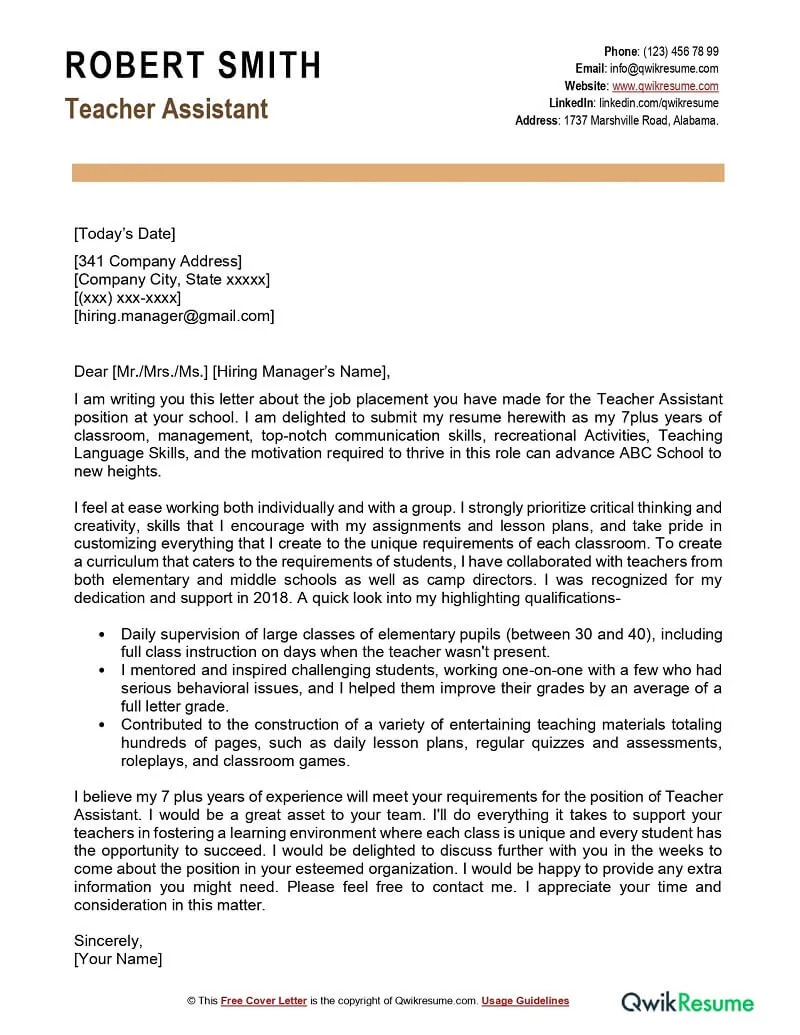
The Importance of a Teaching Cover Letter
A compelling teaching job application cover letter is your first opportunity to make a positive impression on a potential employer. It serves as a crucial introduction, allowing you to highlight your skills, experience, and passion for teaching in a way that a resume alone cannot. In a competitive job market, a well-crafted cover letter can significantly increase your chances of securing an interview and ultimately landing your dream teaching position. Remember, a strong cover letter is not just a formality; it’s a powerful tool to set you apart from other applicants and demonstrate your suitability for the role. Think of it as your personal sales pitch, designed to persuade the hiring committee that you are the ideal candidate. It allows you to express your teaching philosophy, explain any gaps in your resume, and demonstrate why you are the best fit for the school’s culture.
Why a Cover Letter Matters for Teaching Positions
A cover letter for a teaching position offers a platform to showcase your personality and teaching style, something a resume, with its bullet points and concise summaries, can’t fully achieve. It gives you the space to share your teaching philosophy, explain your approach to classroom management, and articulate your passion for education. A cover letter acts as a narrative, allowing you to connect your skills and experiences to the specific requirements of the job and the values of the school. It’s a chance to demonstrate your understanding of the school’s mission, goals, and student population, signaling to the hiring committee that you’ve done your homework and are genuinely interested in the position.
Showcasing Your Unique Value Proposition
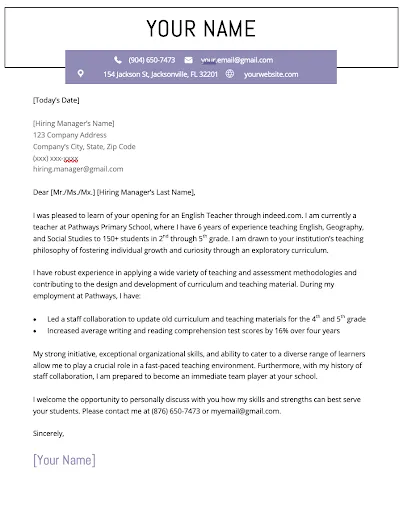
Your unique value proposition is what sets you apart from other candidates. This is where you explain what makes you the best candidate for this particular role. This involves highlighting your strengths, whether it’s a specific teaching method, a particular subject expertise, or experience working with diverse student populations. This could be your ability to foster a positive and inclusive classroom environment, your skills in differentiated instruction, or your experience in integrating technology into the classroom. To showcase your unique value proposition, make sure you understand the needs of the school, and explain how your unique skills meet those needs. Always emphasize how you can contribute to the school’s community and its mission.
Teaching Cover Letter Secret 1 Highlight Your Passion
Your passion for teaching should be the cornerstone of your cover letter. This isn’t just about stating that you love teaching; it’s about demonstrating your genuine enthusiasm for education and student success. Use vivid language to express your excitement for the subject matter and your commitment to creating a positive learning environment. Share specific examples of how your passion has translated into effective teaching practices. For instance, you might describe how you’ve inspired students to engage with challenging material or how you’ve gone the extra mile to support students’ learning and well-being. Passion is infectious, and your cover letter should convey that enthusiasm to the hiring committee, making them want to learn more about you.
Demonstrating Enthusiasm for Teaching
Enthusiasm goes beyond just stating you enjoy teaching. It means showing a genuine excitement for education and a strong belief in the potential of every student. In your cover letter, you can demonstrate enthusiasm by sharing personal anecdotes about your favorite teaching moments, describing innovative lesson plans, or expressing your excitement for the specific school’s programs and values. For example, if you are applying to a school with a focus on arts integration, express your excitement about incorporating art into your curriculum. If the school values community involvement, highlight your experience with parent-teacher organizations or volunteer work. This level of detail not only shows your enthusiasm but also highlights your alignment with the school’s mission.
Sharing Personal Teaching Philosophy

Your teaching philosophy is a core component of your cover letter. It should articulate your beliefs about education, your approach to student learning, and your classroom management strategies. It’s about showing the hiring committee what makes you tick as a teacher. Begin by describing your fundamental beliefs about education, such as your commitment to creating an inclusive and supportive learning environment. Then, discuss your preferred teaching methods, such as differentiated instruction, project-based learning, or incorporating technology into the classroom. Explain how you assess student learning and provide feedback. Illustrate your commitment to fostering critical thinking, creativity, and collaboration, and how you create a classroom environment that supports these skills. By sharing your teaching philosophy, you give the hiring committee insight into your values and approach to education, allowing them to see how you align with their school’s culture and mission.
Teaching Cover Letter Secret 2 Tailor to the School
One of the most effective secrets to writing a winning cover letter is tailoring it to each specific school and position. A generic cover letter is unlikely to impress a hiring committee. Instead, demonstrate that you’ve done your research and understand the school’s unique values, mission, and needs. This shows a genuine interest and demonstrates that you are serious about joining their community. This shows you’re not just sending out a mass application, but are genuinely interested in the specific opportunity. Take the time to understand the school’s specific needs, whether it’s a focus on STEM education, a commitment to social-emotional learning, or a diverse student population. Tailoring your cover letter demonstrates your commitment to the school’s mission and makes you stand out from generic applicants.
Researching the School’s Mission and Values
Thorough research is crucial. Visit the school’s website and read the mission statement carefully. Pay attention to the school’s values, any special programs they offer, and their approach to education. Look for information about the school’s culture, such as their commitment to diversity, community involvement, or use of technology. Explore the school’s social media presence to get a sense of their community. If possible, speak with current teachers, parents, or students to gain further insights. This research will provide valuable insights to make your cover letter more personalized and demonstrate your genuine interest in joining their community. The goal is to show you’re not just applying for a job, but seeking a place where you truly see yourself contributing.
Customizing Your Letter for Each Application

Customizing your cover letter involves more than just changing the school’s name. It means incorporating specific details from your research to demonstrate your understanding of their needs. Mention any specific programs that resonate with your teaching style, or reference the school’s values in your description of your teaching philosophy. Highlight experiences or skills that directly align with the school’s priorities. For example, if the school emphasizes project-based learning, share examples of how you’ve implemented this method in your previous teaching roles. If the school values community involvement, share your experience with parent-teacher organizations or volunteer work. By customizing your cover letter, you show that you’re not just a teacher but someone who understands and aligns with their vision.
Teaching Cover Letter Secret 3 Highlight Key Skills
Your cover letter should act as a showcase of your key skills and how they align with the requirements of the teaching position. Identify the key skills the school is looking for in the job description and make sure to highlight those. The goal is to show that you possess the skills and experience necessary to be successful in the role. Highlight your experience in differentiated instruction, classroom management, curriculum development, and any special areas of expertise. Emphasize how these skills will benefit the school and contribute to the success of their students. Think about how to showcase the skills you’ve developed to meet the school’s needs.
Demonstrating Classroom Management Skills
Classroom management is critical for any teaching position. In your cover letter, describe your strategies for creating a positive and productive learning environment. Share specific examples of how you manage student behavior, create classroom routines, and foster a respectful atmosphere. For instance, you might describe your use of positive reinforcement, restorative justice practices, or clear communication protocols. Share how you promote student engagement and create a classroom culture where every student feels valued and respected. Illustrate how your approach contributes to a safe and supportive environment that supports learning and student well-being.
Showcasing Curriculum Development Experience

If you have experience in curriculum development, make sure to highlight it. Share how you’ve developed or adapted curricula to meet the needs of diverse learners and aligned them with educational standards. If you have experience creating lesson plans, designing assessments, or incorporating technology into your curriculum, mention them. Describe your ability to create engaging and effective learning experiences, and explain how your curriculum development experience will benefit the school. Make sure your skills align with the school’s specific needs and curriculum requirements, and present them in a way that resonates with the hiring committee.
Teaching Cover Letter Secret 4 Quantify Your Achievements
Numbers and data can make your accomplishments more convincing and impactful. Rather than simply stating you’re a successful teacher, use data to prove it. Wherever possible, quantify your achievements with specific numbers and statistics. This provides tangible evidence of your effectiveness and demonstrates the impact you’ve made in previous roles. This could include the percentage increase in student test scores, the number of students who achieved specific learning goals, or the positive feedback you received from parents and colleagues. Quantifiable achievements provide concrete proof of your skills, so the hiring committee understands the value you bring to the table. They also show your ability to measure your success as a teacher.
Using Data to Show Impact on Student Learning
Use data to demonstrate your impact on student learning. This could involve sharing test score improvements, the percentage of students who met or exceeded learning objectives, or the results of student assessments. Show how your teaching methods have helped students improve their academic performance. You might also share data related to student engagement, such as the increase in participation in class discussions, the decrease in disciplinary issues, or the positive feedback received from students. Show a correlation between your teaching methods and positive outcomes, and this helps the hiring committee to see the value you add to the school.
Providing Specific Examples of Success

Provide concrete examples that demonstrate your success. Share specific instances where your teaching methods have led to positive outcomes. Describe a situation where you used a particular strategy to help struggling students, or where you designed an innovative lesson plan that significantly improved student engagement. Provide examples of your ability to solve problems, adapt to challenges, and create a positive learning environment. Your goal is to paint a picture of your skills in action, showing how you’ve made a difference in the lives of students and in your previous teaching roles.
Teaching Cover Letter Secret 5 Proofread and Perfect
Before submitting your cover letter, proofread it meticulously. Errors in grammar, spelling, and punctuation can undermine your credibility and professionalism. Take the time to review every word carefully and check for any mistakes. If possible, have a friend, colleague, or family member proofread your cover letter for you. A fresh pair of eyes can catch errors that you might have missed. Ensuring your cover letter is free of errors shows attention to detail, professionalism, and respect for the hiring committee.
Checking for Grammar and Spelling Errors
Grammar and spelling errors can make your cover letter appear unprofessional and may reflect poorly on your attention to detail. Carefully review your cover letter for errors in grammar, punctuation, and spelling. Use a grammar checker and spelling checker, but also manually proofread the document to make sure it reads well. Make sure all your sentences are clear, concise, and easy to understand. Pay close attention to sentence structure and word choice, ensuring the letter conveys your message accurately and professionally.
Ensuring a Professional Tone and Format

Your cover letter should maintain a professional tone and format throughout. Use a clear, readable font and appropriate spacing. Ensure your letter is well-organized and easy to read. Address the letter to the hiring manager or the appropriate person if you know their name. Make sure your letter is well-organized with a clear introduction, body paragraphs, and conclusion. Keep your tone professional and enthusiastic, and avoid using overly casual or informal language. Maintain a positive and respectful tone throughout the letter, highlighting your achievements and showcasing your qualifications in a way that aligns with the school’s values.
Conclusion
Writing a compelling teaching job application cover letter is essential for showcasing your skills, experience, and passion for teaching. By following these 5 secrets – highlighting your passion, tailoring your letter to the school, showcasing key skills, quantifying your achievements, and proofreading your work – you can significantly improve your chances of landing an interview and securing your dream teaching position. Remember that your cover letter is your opportunity to make a strong first impression and demonstrate that you are the ideal candidate for the role. Take the time to craft a letter that is both informative and engaging, and you will be well on your way to a successful teaching career.