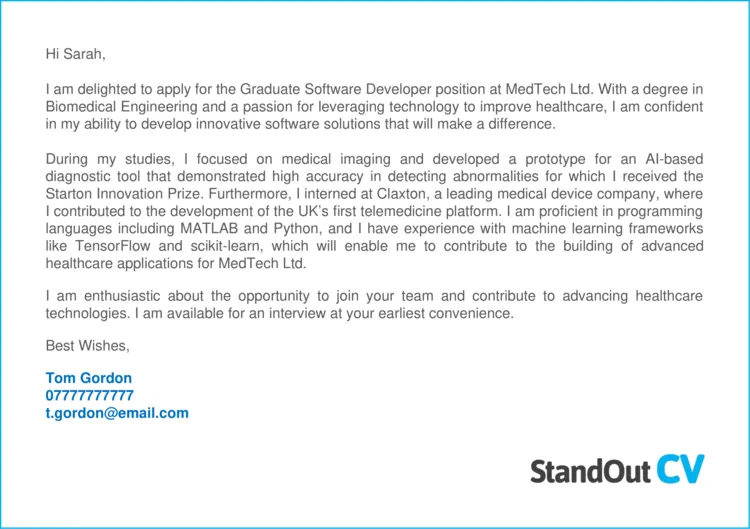
Crafting a Winning Software Developer Cover Letter
In the competitive world of software development, a well-crafted cover letter can be your secret weapon. It’s your first opportunity to make a lasting impression on potential employers and showcase why you’re the ideal candidate. This guide will walk you through the essential elements of a compelling software developer cover letter, providing examples and tips to help you stand out from the crowd. By following these guidelines, you can significantly increase your chances of landing an interview and ultimately securing your dream job. Remember, your cover letter is not just a formality; it’s a crucial marketing tool that highlights your unique skills, experience, and enthusiasm for the role.
Understanding the Purpose of a Cover Letter
Why a Cover Letter Matters

A cover letter serves as a personalized introduction, giving you the chance to elaborate on your resume and demonstrate your genuine interest in the specific position and company. It’s an opportunity to connect with the hiring manager on a more personal level, showcasing your personality, communication skills, and passion for software development. A strong cover letter highlights your relevant skills, experience, and achievements, while also addressing any potential gaps or concerns that might arise from your resume. Furthermore, it demonstrates your attention to detail and your ability to follow instructions, qualities highly valued in the tech industry. In essence, a cover letter is your chance to make a compelling case for why you’re the perfect fit for the role, going beyond the basic information presented in your resume.
Key Components of a Software Developer Cover Letter
Contact Information and Salutation
Formatting your Contact Information

Begin your cover letter with your contact information, neatly aligned at the top. Include your full name, phone number, email address, and LinkedIn profile URL (if applicable). Ensure your contact information is accurate and up-to-date. The formatting should be clean and professional, making it easy for the hiring manager to reach you. Using a clear and readable font, like Arial or Times New Roman, is recommended. Consider adding the date and the recipient’s information (name, title, company, and address) below your contact details. This attention to detail demonstrates professionalism and respect for the hiring process.
Choosing the Right Salutation
Your salutation sets the tone for the entire letter. Whenever possible, address the hiring manager by name (e.g., “Dear Mr. Smith”). Researching the hiring manager’s name can be done via the company website or LinkedIn. If you are unable to find a specific name, opt for a professional alternative such as “Dear Hiring Manager” or “Dear [Company Name] Team.” Avoid generic salutations like “To Whom It May Concern.” Always use a formal and respectful tone in your salutation to show professionalism and attention to detail. This initial greeting helps establish a positive connection with the reader and sets the stage for a compelling application.
The Opening Paragraph
Grabbing Attention from the Start

The opening paragraph is your hook – it needs to grab the reader’s attention immediately. State the position you’re applying for and where you found the listing. Then, express your enthusiasm for the opportunity and the company. Avoid generic phrases; instead, personalize your introduction. Mention something specific that caught your eye about the role or the company’s mission. For example, you could reference a recent project they completed, a specific technology they use, or a company value that resonates with you. The goal is to demonstrate your genuine interest and make the hiring manager want to read more.
Highlighting Your Value Proposition
In your opening, briefly highlight your key skills and experience, emphasizing how they align with the job requirements. What makes you the ideal candidate? Mention one or two of your most relevant achievements or skills that directly address the needs of the role. This could be your expertise in a specific programming language, your experience with a particular framework, or your success in delivering a complex project. This helps the hiring manager quickly understand the value you bring. Ensure your opening statement is concise, compelling, and tailored to the specific job description.
Showcasing Your Skills and Experience
Technical Skills Section

This section is where you showcase your technical prowess. List your programming languages, frameworks, tools, and technologies, making sure they align with the job description. Be specific and provide details. For instance, instead of just saying “Java,” specify your experience with Java, including any relevant libraries or frameworks (e.g., Spring, Hibernate). Quantify your experience where possible (e.g., “5+ years of experience with Python”). This demonstrates your proficiency and provides the hiring manager with a clear understanding of your technical capabilities.
Programming Languages
List the programming languages you are proficient in, such as Java, Python, C++, JavaScript, etc. Indicate your level of expertise (e.g., experienced, proficient, intermediate). Also, mention any certifications or specializations related to these languages. If you have experience with more niche languages, be sure to include those as well. Tailor this list to the specific requirements of the job you are applying for, emphasizing the languages most relevant to the role. Providing this information helps the employer quickly assess your fit for the role based on technical expertise.
Frameworks and Technologies
Detail your experience with relevant frameworks and technologies, like React, Angular, Node.js, .NET, AWS, Azure, etc. Mention the specific versions and your level of expertise. Include experience with databases, version control systems (like Git), and any other tools the job description requires. Quantify your experience where possible. For instance, “Developed and deployed applications using React for 3+ years.” This provides a clear picture of your technical capabilities and demonstrates your ability to work with industry-standard tools and technologies. The more specific you are, the better the hiring manager can understand your skill level.
Experience Section

In this section, highlight your professional experience. For each relevant role, briefly describe your responsibilities and accomplishments. Focus on your achievements rather than just listing your duties. Use the STAR method (Situation, Task, Action, Result) to structure your descriptions and provide concrete examples of your contributions. Show how your skills and experience have led to positive outcomes, such as increased efficiency, reduced costs, or improved performance. This section should not just reiterate your resume but provide additional detail and context.
Quantifying Achievements with Numbers
Whenever possible, quantify your achievements with numbers. For example, instead of saying “Improved website performance,” say “Improved website performance by 20% by optimizing database queries.” Use metrics and data to demonstrate the impact of your work. Did you reduce bugs by a certain percentage? Did you increase user engagement? Did you contribute to cost savings? Numbers make your achievements more concrete and compelling, providing tangible evidence of your value to the organization. This approach allows the hiring manager to quickly understand the value you brought in previous roles.
Using Action Verbs to Describe Accomplishments
Start each bullet point or description with strong action verbs. For example, use words like “developed,” “implemented,” “designed,” “managed,” “led,” “optimized,” “resolved,” or “achieved.” Action verbs bring your experiences to life and create a sense of dynamism. They show what you did, how you did it, and the results you achieved. Avoid passive language. Instead, use verbs that highlight your skills and contributions. For instance, use “Developed a new feature” instead of “Was responsible for developing a new feature.” Action verbs create a more compelling and engaging narrative, illustrating your accomplishments.
Tailoring the Letter to the Job Description

Your cover letter should be tailored to each specific job you apply for. This means carefully reviewing the job description and identifying the key skills, experience, and qualifications the employer is seeking. Then, align your cover letter to match these requirements. Highlight the relevant skills and experiences and use keywords from the job description. Show the employer that you have what they are looking for and that you understand the requirements of the role. A customized cover letter demonstrates your genuine interest in the specific position and the company.
Researching the Company
Before writing your cover letter, research the company. Understand their mission, values, culture, and recent projects. This information will help you tailor your letter and demonstrate your genuine interest. Show that you understand their business and how your skills and experience align with their goals. You can find information on the company’s website, LinkedIn page, and other online resources. Mentioning specific projects or initiatives the company is involved in will show your attention to detail and sincere interest. This level of personalization will increase your chances of success.
Matching Skills to Requirements
Carefully review the job description and identify the required skills and qualifications. Then, explicitly state how your skills and experiences match these requirements. Provide specific examples of how you have used these skills in the past. Use keywords from the job description in your cover letter, but don’t just list them; integrate them naturally into your sentences. This demonstrates to the hiring manager that you have the necessary qualifications and that you understand the requirements of the role. Matching your skills to the requirements is key to getting noticed by the employer.
The Closing Paragraph

Expressing Enthusiasm and Interest
In your closing paragraph, reiterate your enthusiasm for the opportunity and the company. Summarize why you are a strong fit for the role and reiterate your key qualifications. Show that you are excited about the prospect of contributing to the company’s success and taking on the role. Express your interest in learning more about the opportunity and the company. Show that you are keen to be a part of their team.
Call to Action
Conclude with a clear call to action. State that you are looking forward to hearing from them and are available for an interview at their earliest convenience. Provide your contact information again, so the hiring manager can easily get in touch with you. Thank the hiring manager for their time and consideration. End with a professional closing, such as “Sincerely” or “Best regards,” followed by your name. A strong call to action encourages the hiring manager to take the next step in the process.
Proofreading and Editing
Before submitting your cover letter, proofread it carefully. Check for any grammatical errors, spelling mistakes, and typos. Ensure that your writing is clear, concise, and error-free. Have a friend or mentor review your cover letter for feedback. A polished cover letter demonstrates attention to detail and professionalism, which are essential qualities for a software developer. Use grammar and spelling checkers but also manually review the content. An error-free cover letter significantly improves your chances of making a good impression.
By following these guidelines, you can create a compelling software developer cover letter that will impress potential employers and help you land your dream job. Remember to tailor each letter to the specific job description and company, highlighting your unique skills and experiences.