Why a Software Developer Cover Letter Matters
In the competitive field of software development, a well-crafted cover letter is often the key to unlocking your dream job. It serves as your first impression, a chance to go beyond your resume and showcase your personality, passion, and the unique value you bring. A cover letter is not just a formality; it’s a crucial marketing tool, providing context and depth to your application, highlighting your motivation, and demonstrating your genuine interest in the specific role and company. It allows you to connect with the hiring manager on a more personal level, setting you apart from other applicants who may have similar qualifications. Furthermore, a strong cover letter shows that you’ve taken the time to carefully consider the position and tailor your application, a quality that employers highly value. It’s an opportunity to tell a story, your story, and how it aligns with the company’s needs and goals, and it is an essential part of any successful job application.
Showcasing Your Skills
Your software developer cover letter is the perfect canvas to showcase your skills, which go beyond the technical jargon often found in a resume. While technical skills are essential, don’t forget to highlight your soft skills, such as problem-solving, communication, and teamwork. Begin by identifying the key skills the employer is seeking, as mentioned in the job description. Then, provide specific examples from your past experiences where you have successfully utilized these skills. For instance, if the job description emphasizes problem-solving, share a specific project where you encountered a complex challenge and how you approached and overcame it. Similarly, when highlighting communication, provide examples of your ability to explain technical concepts to non-technical audiences or collaborate effectively with team members. Always quantify your achievements with data whenever possible; for instance, if you improved the efficiency of a system, mention by what percentage. Your cover letter becomes much more impactful when backed by solid, verifiable data, providing proof of your abilities and making you stand out from the crowd.
Highlighting Relevant Experience

The most impactful software developer cover letters aren’t merely a list of past experiences, but rather a narrative that weaves your professional journey into the requirements of the target role. Start by carefully reviewing the job description and identifying the key requirements and responsibilities. Then, choose experiences from your resume that directly relate to these requirements. For each experience, provide a brief overview of your role and responsibilities, but the emphasis should be on the specific accomplishments and results you achieved. For instance, if the job requires experience with a specific programming language or framework, provide examples of projects where you used that technology, and discuss the outcomes you achieved. Instead of just saying you worked on a project, describe what you contributed, any challenges you faced, and what you learned. Furthermore, make sure to show a progression in your career, demonstrating how you have grown and gained expertise over time. This provides employers with a clear picture of your capabilities and how you’ve consistently developed throughout your career. This tailored approach makes your cover letter more compelling and relevant.
Tailoring Your Cover Letter
Generic cover letters are often discarded, as they lack the personal touch and genuine interest that employers seek. Therefore, tailoring your cover letter to each job application is paramount for success. Start by researching the company and understanding its mission, values, and the specific role you’re applying for. Use this information to customize your letter, mentioning how your skills and experience align with their needs. Address the cover letter to the hiring manager by name whenever possible, as this shows that you’ve invested time in your research and are genuinely interested in the role. Incorporate keywords from the job description throughout your letter, but do so naturally, without sounding forced or repetitive. Explain why you’re interested in the company and what attracts you to the role, and show that you understand the company’s goals and how you can contribute to their success. This level of detail and personalization sets you apart, demonstrating your initiative and commitment to the specific opportunity and increases the likelihood of getting noticed.
Researching the Company
Before you start writing, it’s crucial to know who you are writing to. Researching the company is a vital step in crafting a compelling cover letter. Start by visiting the company’s website and exploring its ‘About Us’ section, blog, and any recent press releases. This information will provide insight into the company’s mission, values, culture, and current projects. Look for any news or announcements related to the role you’re applying for. This demonstrates to the hiring manager that you are informed and genuinely interested in the position. Also, check the company’s social media profiles, such as LinkedIn, Twitter, and Facebook, to see how they present themselves to the public and what type of projects or initiatives they are involved in. This research allows you to use specific language and demonstrate how your skills align with their needs and culture. By understanding the company’s goals and challenges, you can customize your cover letter to highlight how your skills and experiences can contribute to their success, thereby increasing your chances of getting noticed.
Formatting Your Cover Letter

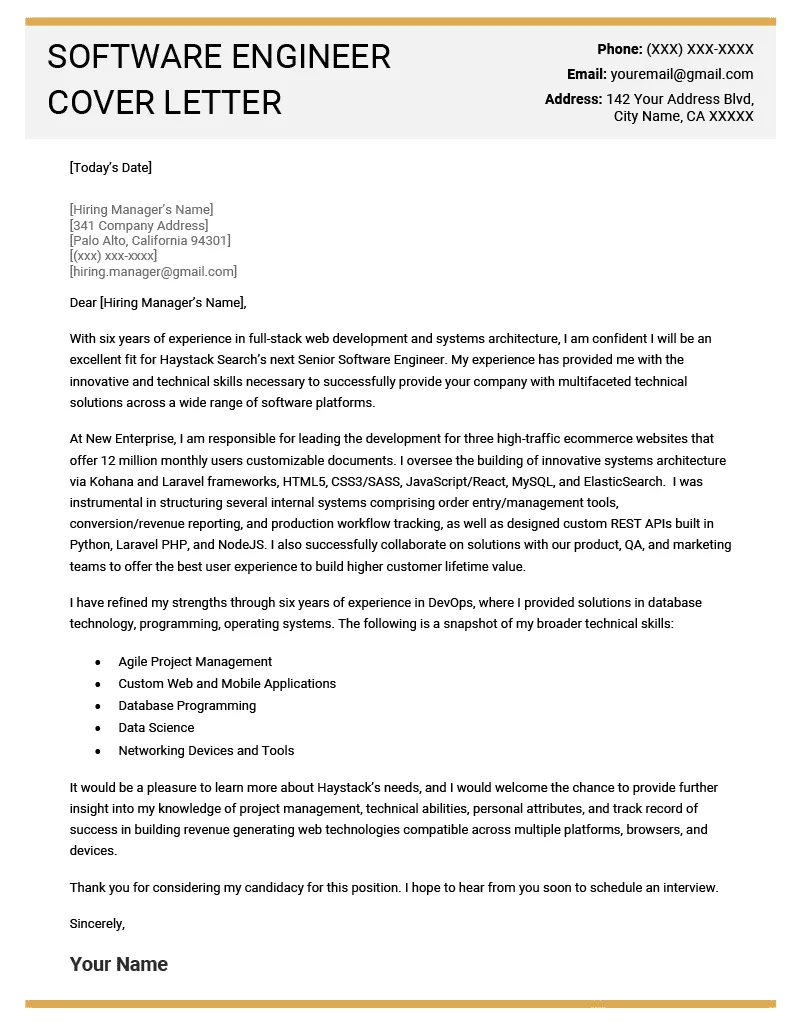
A well-formatted cover letter is visually appealing and easy to read, which demonstrates professionalism and attention to detail. Begin with your contact information at the top, including your name, phone number, email address, and possibly your LinkedIn profile URL. Follow this with the date and the hiring manager’s name and title. Choose a clear and professional font, such as Arial, Calibri, or Times New Roman, and maintain a consistent font size (usually 11 or 12 points) throughout the letter. Use single spacing for the body of your letter, but leave a space between paragraphs to improve readability. Keep your letter concise, ideally one page in length, as hiring managers are often pressed for time. Use clear, concise language and avoid jargon or overly technical terms unless they’re relevant to the specific role. Break up large blocks of text into smaller paragraphs to make your letter easier to scan. Proofread your letter carefully to eliminate any errors in grammar and spelling. A well-formatted cover letter shows that you are organized, detail-oriented, and committed to presenting yourself in the best possible light.
Creating a Compelling Opening
The opening of your software developer cover letter is your opportunity to make a strong first impression and capture the hiring manager’s attention. It should immediately communicate your enthusiasm for the role and the company. Start by stating the position you are applying for and where you saw the job posting. Avoid generic greetings like ‘To Whom It May Concern.’ If possible, address the hiring manager by name, which demonstrates that you have done your research and are genuinely interested. Clearly state the value you can bring to the company and how your skills and experience align with their needs. Mention any specific projects or accomplishments that align with the job requirements. This sets the tone for the rest of your letter and motivates the hiring manager to continue reading. Keep your opening concise and to the point, making sure that it is engaging and shows your personality. A strong opening grabs the reader’s attention and encourages them to learn more about you, making it easier for you to stand out.
Structuring the Body Paragraphs
The body paragraphs of your software developer cover letter are where you elaborate on your skills, experience, and qualifications. Break up your cover letter into several well-structured paragraphs to ensure the information is easy to digest. Each paragraph should focus on a specific aspect of your skills or experience, related to the job requirements. Use the job description as your guide, addressing each requirement in your letter and showing how your experience matches the needs of the role. Focus on quantifying your achievements, using numbers and data to demonstrate your impact in past roles. Provide examples of how you have successfully used specific technologies, solved complex problems, and contributed to team projects. Use action verbs to demonstrate your abilities and responsibilities, and always tailor your language to the specific role and company. Link your past experiences to the current opportunity by showing how your skills and experience align with the requirements of the role. This structured, focused approach not only ensures clarity but also increases the likelihood of your cover letter leaving a positive impression, ultimately moving you closer to an interview.
Quantifying Your Achievements

Numbers speak louder than words, so always quantify your achievements in your software developer cover letter. Instead of simply stating that you improved a system, provide measurable data such as ‘reduced processing time by 30%’. Quantifying your accomplishments makes your claims more credible and gives the hiring manager concrete evidence of your abilities. When describing your previous projects, provide data that shows the impact of your work. Did your code improve efficiency, reduce costs, or increase user engagement? Include those metrics in your letter. Did you lead a team that successfully delivered a project on time and within budget? Highlight these achievements with specific figures. When describing your accomplishments, focus on outcomes rather than just your tasks, and always tailor your use of numbers to the specific role and company. By using data, you provide concrete proof of your skills, making your cover letter much more impactful. This strategy makes it easier for employers to see your value and helps you to stand out from the crowd.
Emphasizing Your Technical Skills
While your resume lists your technical skills, your cover letter offers an opportunity to expand on them and demonstrate your expertise in relevant technologies. Review the job description and identify the technical skills that the employer is seeking. Then, provide specific examples of how you have utilized those skills in past projects. Don’t just list the technologies; explain how you have applied them, what problems you solved, and what results you achieved. For example, if the job requires experience with Python, mention projects where you used Python, what libraries or frameworks you leveraged, and any challenges you overcame. If you have experience with cloud platforms such as AWS, Azure, or Google Cloud, provide details about how you used these platforms to develop and deploy applications. In addition to showcasing your technical skills, it is also important to demonstrate your ability to learn new technologies. Mention any courses or certifications you have taken to enhance your skills. Tailor your skills to the specific role and use keywords from the job description to make your application more relevant.
Demonstrating Soft Skills
Soft skills are increasingly important in the software development field, and your cover letter provides an excellent platform to showcase them. While technical skills are vital, demonstrating your soft skills can significantly enhance your application. Consider the job requirements, and highlight how you possess and use specific soft skills. For instance, mention specific instances where you demonstrated teamwork, emphasizing your ability to collaborate effectively with others, sharing your approach to project management, and contributing to a positive and productive work environment. If the job requires leadership skills, provide an example where you led a team, delegated tasks, and motivated others. Highlight your problem-solving skills by detailing how you tackled complex technical challenges. Show your communication skills, and describe how you explained technical concepts to non-technical audiences. Ensure your examples are specific, quantifiable, and demonstrate your skills in action. By providing concrete examples, you show hiring managers that you possess the soft skills necessary to succeed in the role and within their organization.
Closing Your Cover Letter

Your closing should be concise, professional, and leave a lasting positive impression. Express your enthusiasm for the opportunity and reiterate your interest in the role and company. Reiterate your interest in an interview, and make it easy for the hiring manager to contact you. You can provide your phone number and email address again for convenience. If you have a portfolio or online profile (like a GitHub profile), provide a link. Avoid generic phrases, such as ‘Thank you for your time and consideration’. Instead, express your excitement about the possibility of contributing to the company’s success. Also, be sure to express your appreciation for their time and consideration. End with a professional closing, such as ‘Sincerely’ or ‘Best regards’, followed by your full name. Your closing should be a final touch, summarizing your interest in the role, and making it simple for the hiring manager to take the next step. Always ensure that your closing reinforces your interest in the company, thereby ending your cover letter on a positive note.
Proofreading and Editing
Before submitting your software developer cover letter, proofread it meticulously. Errors in grammar and spelling can undermine your professionalism and potentially disqualify you from consideration. Take a break from writing before you begin proofreading, so you can look at the document with fresh eyes. Read your cover letter slowly, paying attention to every word. Use a spell checker and grammar checker, but don’t rely on them entirely; these tools often miss subtle errors. Read your letter aloud to catch any awkward phrasing or inconsistencies in the text. Have a friend, colleague, or career counselor review your letter for clarity, grammar, and style. They might spot errors that you missed. Ensure that your contact information is correct and that all your links are functioning correctly. If you are applying online, make sure your document is in the correct format, such as PDF, to prevent any formatting issues. Your cover letter is a reflection of your attention to detail. A polished, error-free cover letter will leave a strong, positive impression, increasing the likelihood of your application succeeding and leading to an interview. Taking the time to proofread and edit is an investment that will make you a standout applicant.