Scholarship Cover Letter Basics
Applying for scholarships can be a daunting task, and often, a well-crafted cover letter is the key to unlocking financial aid for your education. A scholarship cover letter serves as your introduction, a chance to showcase your personality, and a compelling argument for why you deserve the scholarship. It is your opportunity to make a positive first impression, demonstrating to the scholarship committee that you’re not just a qualified candidate but also a worthy investment. Writing a cover letter that stands out requires understanding its purpose, key components, and the proper formatting to leave a lasting impact on the reviewers. This guide will provide you with a comprehensive understanding and help you create a compelling cover letter.
Understanding the Purpose of a Cover Letter
The primary purpose of a scholarship cover letter is to provide a personalized introduction that supplements your scholarship application. It’s more than just restating information from your application; it’s an opportunity to connect with the scholarship committee on a personal level. The cover letter helps you highlight your unique qualities, experiences, and aspirations that align with the scholarship’s mission and values. A well-written cover letter can distinguish you from other applicants, helping the committee to understand your story and motivations beyond academic achievements and qualifications. Always show how the scholarship will impact your future and why you need the funds to achieve your goals.
Key Components of a Scholarship Cover Letter

A successful scholarship cover letter typically includes several key components. Start with a strong opening that grabs the reader’s attention and states the scholarship you are applying for. Then, provide a brief overview of your background, including your academic achievements, extracurricular activities, and any relevant work experience. Use the body paragraphs to showcase your personality, highlighting the skills and experiences that make you a unique candidate. Clearly articulate your financial need, explaining how the scholarship will help you achieve your educational goals. Finally, express your gratitude to the scholarship committee, and express your sincere interest in the scholarship.
Formatting Your Scholarship Cover Letter
Formatting your scholarship cover letter correctly is essential for creating a polished and professional document. Proper formatting ensures your letter is easy to read and makes a positive impression on the scholarship committee. Adhering to standard formatting practices is crucial for conveying professionalism and respect for the application process. Pay close attention to the layout, font, and spacing to ensure that your cover letter looks clean, organized, and visually appealing. Incorrect formatting can distract from the content and negatively impact your chances of selection.
Header and Contact Information
Begin your cover letter with a clear and concise header that includes your full name, address, phone number, and email address. This information should be consistently formatted at the top of the page, typically left-aligned or centered. Include the date of the letter, followed by the name of the scholarship committee or the organization offering the scholarship. If you have the name of a specific person to address the letter to, use it to personalize your letter. Make sure all your contact details are current and accessible. Double-check that your email address is professional. Never use an unprofessional email address.
Salutation and Introduction

Start your letter with a formal and appropriate salutation, such as “Dear Scholarship Committee” or “Dear [Name of the person, if known]”. In your introduction, clearly state the scholarship you are applying for and briefly introduce yourself. Mention your major or field of study and the name of the institution you are attending. The introduction should immediately establish the purpose of the letter and provide a brief overview of your qualifications. The introduction should make a strong first impression by setting the tone for the rest of your letter, showing your enthusiasm, and establishing your intent.
Body Paragraphs
The body paragraphs are the core of your cover letter, where you provide detailed information about yourself and your qualifications. Use these paragraphs to showcase your achievements, experiences, and goals. Tailor your content to the specific scholarship requirements. Structure the paragraphs logically, each focusing on a different aspect of your application. Support your claims with specific examples and evidence. Be genuine in your tone. Don’t exaggerate your achievements or try to be someone you’re not. Let your passion and sincerity shine through.
Highlighting Achievements and Goals
Use one paragraph to highlight your academic achievements, such as your GPA, awards, and honors. Provide examples of your extracurricular activities, leadership roles, and community service involvement. Connect your accomplishments to the scholarship’s criteria and the qualities valued by the committee. Then, discuss your future goals and how this scholarship will help you achieve them. Clearly explain how the scholarship aligns with your long-term educational and career aspirations. Briefly mention how the scholarship aligns with the mission of the scholarship, which makes the committee see that you made an effort to understand its values.
Demonstrating Financial Need

If the scholarship considers financial need, then use a paragraph to describe your financial situation. Provide a brief explanation of your family’s financial background and the cost of your education. Explain why you need the scholarship, and how it would help you cover your educational expenses. If applicable, mention any other sources of funding you’re receiving. Be honest and transparent about your financial situation and show the scholarship committee that you have a genuine need for financial assistance. The more specific you are, the better.
Expressing Gratitude and Closing
In your closing paragraph, express your sincere gratitude to the scholarship committee for considering your application. Reiterate your enthusiasm for the scholarship and reiterate your commitment to your education. Make sure the committee knows you are committed to succeeding. End with a professional closing, such as “Sincerely” or “Respectfully,” followed by your typed name. Include your signature above your typed name if submitting a physical copy of the letter.
Proofreading and Editing
Before submitting your cover letter, it’s crucial to proofread and edit it carefully. Look for any grammatical errors, spelling mistakes, or typos. Ensure your sentences flow smoothly and are easy to understand. Ask a friend, family member, or career advisor to review your letter and provide feedback. Make sure your tone is appropriate for the scholarship committee. The finished letter must demonstrate that you have excellent writing skills, which increases your chances of being selected. A polished, error-free cover letter reflects your attention to detail and dedication.
Sample Cover Letter

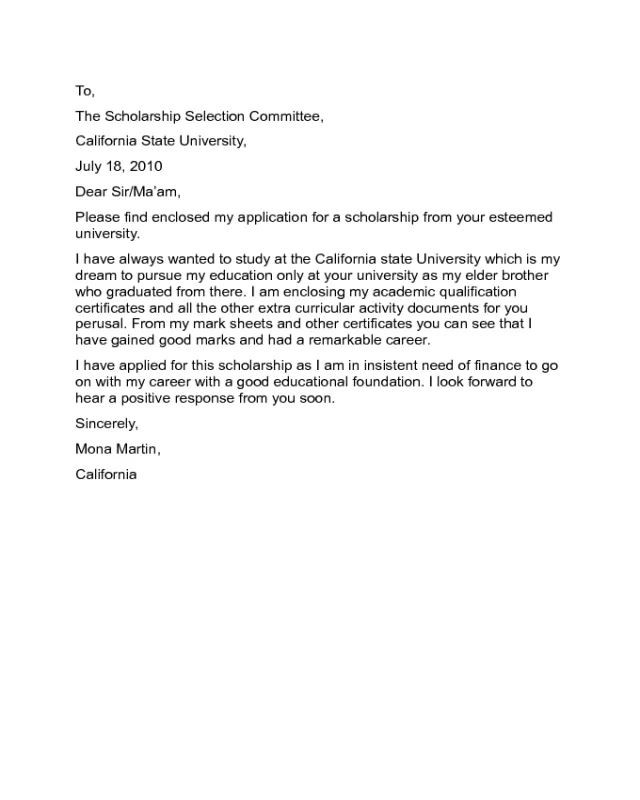
A sample cover letter provides a valuable model for constructing your own. The sample covers are a great starting point to give you an overview of how a scholarship cover letter is put together, from the format to the content of each section. Study the structure, language, and tone used in the sample letters. Then, adapt it to your own unique background, experiences, and goals. Modify the provided information to fit your own profile. Always personalize the sample letter to make it sound authentic and reflect your genuine personality. Use the sample as a guide and not a template, tailoring it to your situation.
Template Cover Letter
A template cover letter offers a pre-designed framework that can streamline the writing process. Templates provide a basic structure for your cover letter, including placeholders for your contact information, salutation, body paragraphs, and closing. Use a template to save time and ensure you include all the necessary components. Fill in the template with your information, tailoring it to reflect your individual qualifications and experiences. Personalize the template by including your own unique experiences, and accomplishments to make it stand out. By using a template, you can avoid the stress of creating a cover letter from scratch.
Where to Find Scholarship Opportunities
There are multiple resources that can help you find scholarship opportunities. Websites, such as Scholarship.com, Fastweb.com, and SallieMae.com, offer extensive databases of scholarships. Search for scholarships that match your academic interests, field of study, and demographic profile. Your high school or college’s guidance counselor can also provide information on scholarships. Check with professional organizations, and companies related to your field of study. Explore local community foundations and organizations that offer scholarships. Be persistent and diligent in your search. The more you apply, the greater your chances of winning scholarships.