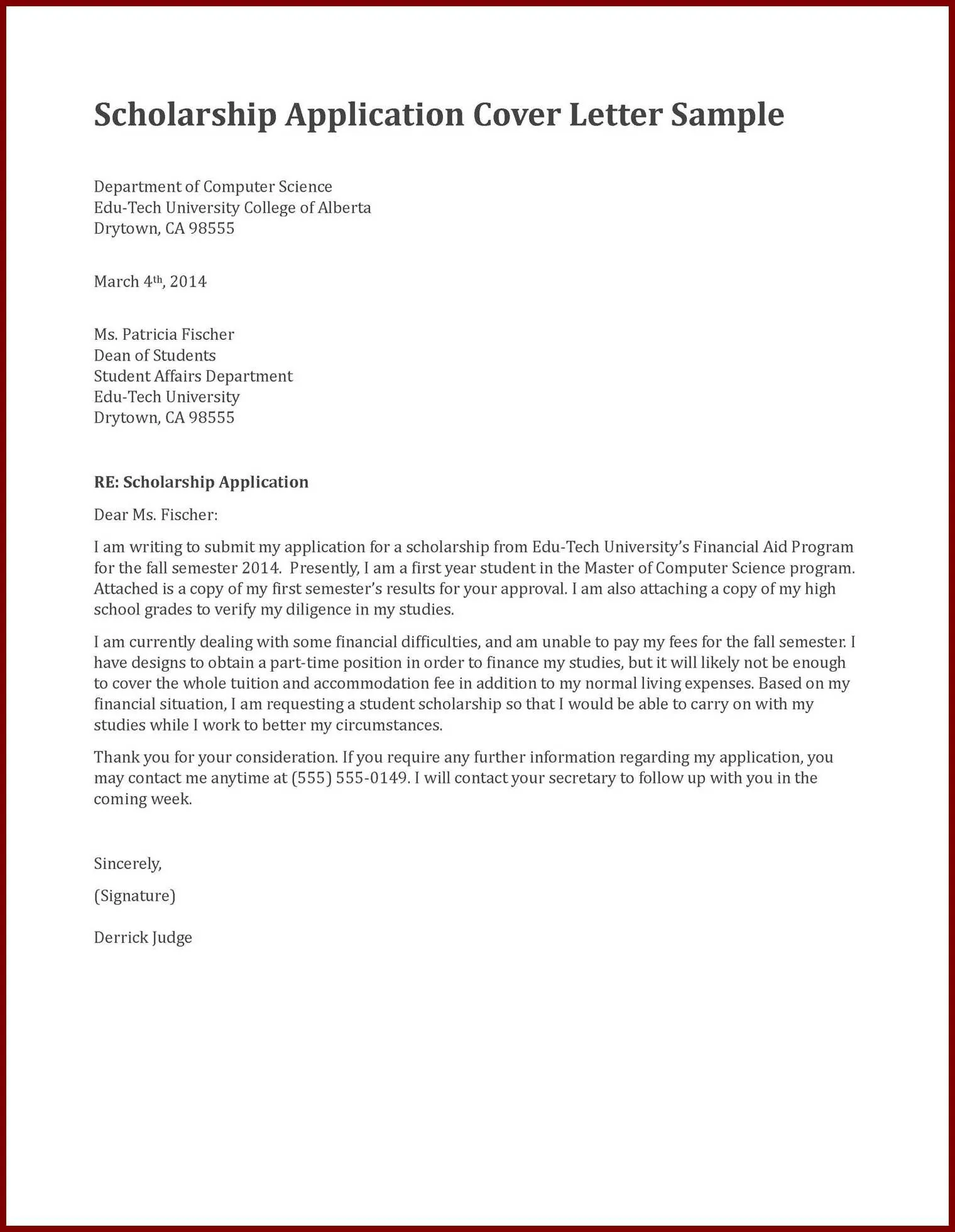
Applying for scholarships can be a game-changer when it comes to funding your education, but a well-crafted cover letter is often the key that unlocks these opportunities. A scholarship cover letter serves as your introduction to the selection committee, providing them with a glimpse into your personality, goals, and the reasons why you deserve the scholarship. In this guide, we’ll explore how to write a compelling scholarship cover letter that increases your chances of success. This guide will equip you with the knowledge and tools necessary to craft a cover letter that stands out.
Why a Scholarship Cover Letter is Important
A scholarship cover letter is more than just a formality; it’s your chance to make a strong first impression. It allows you to go beyond the basic information provided in your application form and truly connect with the scholarship committee. A cover letter allows you to personalize your application and demonstrate a genuine interest in the scholarship. It’s your opportunity to showcase your personality, express your gratitude, and highlight your unique qualifications. This document is not just about summarizing your resume; it’s about telling your story and making the committee understand why they should invest in you.
Understanding the Purpose of a Scholarship Cover Letter
The primary purpose of a scholarship cover letter is to persuade the selection committee that you are a deserving candidate. It’s about demonstrating that you possess the qualities, skills, and values that align with the scholarship’s criteria. It’s your chance to elaborate on your achievements, explain your financial need, and articulate your future aspirations. The cover letter is also meant to showcase your writing abilities, including your ability to communicate effectively, organize your thoughts, and convey your enthusiasm. By carefully crafting your cover letter, you position yourself as a serious applicant who has taken the time to thoughtfully consider the scholarship and its requirements.
Key Components of a Scholarship Cover Letter

A well-structured scholarship cover letter includes several key components that work together to create a compelling narrative. Each part plays a vital role in conveying your qualifications and making a strong case for why you deserve the scholarship. Understanding these elements and how to incorporate them effectively will significantly increase your chances of success. The following sections outline the essential elements that should be included in your cover letter.
Your Contact Information and Date
At the top of your cover letter, include your full name, address, phone number, and email address. This ensures the selection committee can easily contact you. Below your contact information, include the date. Ensure this information is formatted clearly and professionally, making it easy for the reader to identify your details. Accuracy in this section is crucial, as it sets the tone for the rest of your application, demonstrating attention to detail and professionalism.
Recipient’s Information
Directly below the date, address the recipient of the scholarship. If possible, find out the name of the scholarship committee chair or the specific person who will be reviewing your application. If you can’t find a name, use a formal salutation such as ‘Dear Scholarship Committee’. Addressing the letter to a specific person demonstrates that you have done your research and are genuinely interested in the scholarship. This personalization can make your application stand out.
A Compelling Opening

The opening paragraph is your first opportunity to grab the reader’s attention. Start with a strong statement that immediately conveys your interest in the scholarship and your suitability for it. State the specific scholarship you are applying for and briefly mention why it resonates with you. Highlight a key achievement or aspiration that sets you apart and encourages the committee to read on. A memorable opening can make all the difference in capturing the reader’s interest from the outset and making your application memorable.
Showcasing Your Qualifications and Achievements
This is where you elaborate on your qualifications and achievements. Provide specific examples of your academic accomplishments, extracurricular activities, leadership roles, and any other experiences that demonstrate your skills and potential. Quantify your achievements whenever possible (e.g., ‘Increased sales by 20%’). Explain how these experiences have shaped you and prepared you for your future goals. Connect your qualifications to the scholarship’s criteria, showing the committee how your skills and experiences align with their mission and values. Ensure your letter is tailored to the specific scholarship, focusing on the most relevant achievements.
Highlighting Your Financial Need
If the scholarship considers financial need, explain your circumstances honestly and respectfully. Briefly describe your financial situation, any challenges you face, and why this scholarship is crucial for your education. Be sincere and avoid exaggerations. Explain how receiving the scholarship would impact your ability to pursue your educational goals and any plans you have for managing your finances. This section should demonstrate that you understand the importance of financial assistance and how it will help you succeed.
Expressing Gratitude and Closing

In the closing paragraph, express your gratitude for the committee’s time and consideration. Reiterate your interest in the scholarship and your commitment to your future goals. Include a call to action, such as stating that you look forward to hearing from them. Use a professional closing, such as ‘Sincerely’ or ‘Respectfully,’ followed by your typed name. Ensure your contact information is readily available. A strong closing leaves a lasting positive impression and reinforces your enthusiasm for the opportunity.
Writing the Perfect Scholarship Cover Letter Step-by-Step
Crafting the perfect scholarship cover letter involves a systematic approach, from initial research to final proofreading. Following these steps will help you create a compelling letter that highlights your qualifications and increases your chances of success. Proper preparation and attention to detail are essential.
Step 1 Research the Scholarship
Before you start writing, thoroughly research the scholarship. Understand its requirements, eligibility criteria, and the values it promotes. Visit the scholarship website and read all the information provided. Pay attention to the types of students the scholarship typically supports. This research will guide your writing, enabling you to tailor your letter to the specific scholarship’s goals and criteria. Knowing the scholarship’s focus will help you highlight the most relevant aspects of your background and aspirations.
Step 2 Review the Requirements

Carefully review the application instructions and any specific guidelines provided. Many scholarships have specific requirements for the cover letter, such as word limits, formatting preferences, or required content. Ensure your letter adheres to these instructions to avoid immediate disqualification. Note any specific questions or prompts that the scholarship committee wants you to address. Following the guidelines shows that you pay attention to detail and are serious about the opportunity.
Step 3 Draft Your Cover Letter
Begin drafting your cover letter, following the key components outlined above. Start with an outline to organize your thoughts and ensure that you include all necessary information. Focus on showcasing your qualifications and experiences, highlighting your financial need if applicable, and expressing your gratitude. Use clear, concise language and strong action verbs. Ensure the letter is well-organized, with each paragraph serving a specific purpose. Draft the letter, and be prepared to revise and edit multiple times.
Step 4 Proofread and Edit
Proofreading and editing are essential steps to ensure your cover letter is free of errors. Check for grammatical errors, spelling mistakes, and punctuation issues. Read the letter aloud to identify any awkward phrasing or sentences that don’t flow smoothly. Ask a friend, family member, or career counselor to review your letter and provide feedback. Ensure the letter is well-formatted and visually appealing. A polished, error-free cover letter reflects your professionalism and attention to detail.
Common Mistakes to Avoid in Your Cover Letter

Avoid common pitfalls that can weaken your cover letter and reduce your chances of success. Paying attention to these mistakes will help you create a more effective application that aligns with the scholarship’s requirements and the committee’s expectations.
Poor Formatting
Poor formatting can make your letter look unprofessional and difficult to read. Ensure your letter is properly formatted with clear margins, appropriate font size (e.g., 12-point font), and consistent spacing. Avoid long paragraphs and use headings and subheadings to break up the text. Ensure the letter is easy on the eyes. Poor formatting suggests a lack of attention to detail and can reflect poorly on your application.
Generic Language
Using generic language and phrases that could apply to any applicant makes your cover letter less impactful. Tailor your letter to each scholarship, highlighting specific experiences and qualifications that align with the scholarship’s goals. Avoid clichés and generic statements. Make sure the letter is uniquely yours. The selection committee wants to see why you are the best fit. This will make your application stand out.
Ignoring Instructions
Failing to follow the application instructions is a major mistake. Always carefully read and adhere to the scholarship’s guidelines. This includes word limits, formatting requirements, and any specific questions or prompts. Ignoring instructions demonstrates a lack of attention to detail and may lead to immediate disqualification. Following instructions shows that you are serious about the opportunity and prepared to meet the scholarship’s standards.
Tips for a Winning Scholarship Cover Letter
Beyond the basic requirements, certain strategies can help you write a winning scholarship cover letter. Incorporating these tips will enhance your application and make it more compelling, increasing your chances of success.
Tailor Your Letter
Tailor each cover letter to the specific scholarship you are applying for. Highlight the experiences, skills, and achievements that align with the scholarship’s criteria and values. Avoid using a generic cover letter that you send to every scholarship. By demonstrating a genuine understanding of the scholarship’s mission, you make your application more relevant and persuasive. Tailoring showcases your genuine interest in the specific scholarship and increases your chances of success.
Use Strong Action Verbs

Use strong action verbs to describe your accomplishments and experiences. This makes your cover letter more dynamic and engaging. Instead of saying ‘I was responsible for,’ use verbs such as ‘managed,’ ’led,’ ‘achieved,’ or ‘developed.’ Action verbs convey confidence and demonstrate your skills. Using strong verbs creates a sense of accomplishment, helping the selection committee understand your capabilities. Make your language energetic and concise.
Proofread Carefully
Thorough proofreading is essential. Check for grammar, spelling, punctuation, and formatting errors. Read your letter aloud to catch any awkward phrasing or unclear sentences. Ask a friend, family member, or career counselor to review your letter for feedback. A polished, error-free cover letter reflects your attention to detail and professionalism. Errors can undermine your credibility, so taking the time to proofread thoroughly is crucial.
Examples of Effective Scholarship Cover Letters
Reviewing examples of effective scholarship cover letters can provide valuable insights and inspiration. Many online resources offer sample letters tailored to various scholarships and academic fields. Analyze these examples to understand how successful applicants structure their letters, highlight their qualifications, and express their financial needs. Pay attention to the language, tone, and formatting used in these examples. This will help you create a cover letter that is both informative and persuasive.
Writing a compelling scholarship cover letter requires careful planning, thorough research, and attention to detail. By following the guidelines and tips outlined in this guide, you can create a cover letter that showcases your qualifications and significantly increases your chances of securing a scholarship. Remember to tailor your letter to each scholarship, use strong action verbs, and always proofread carefully. With a well-crafted cover letter, you can make a lasting impression and demonstrate why you are a worthy candidate.