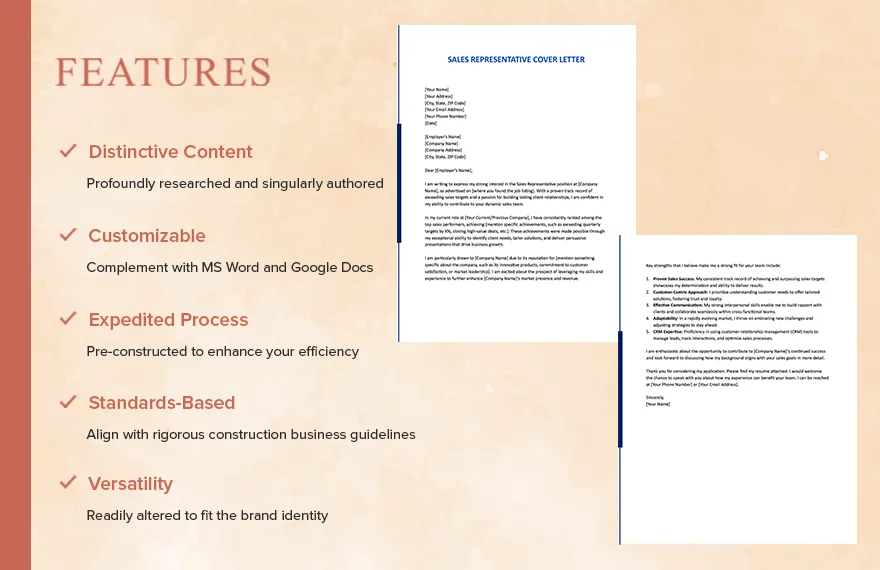
What is a Sales Representative Cover Letter
A sales representative cover letter is a crucial document that accompanies your resume when applying for sales positions. It serves as your first impression, allowing you to introduce yourself to a potential employer, highlight your relevant skills and experience, and express your enthusiasm for the opportunity. Unlike a resume, which provides a chronological overview of your career, a cover letter allows you to tell a story and demonstrate why you are the perfect fit for the specific role and company. It’s your chance to connect with the hiring manager on a more personal level and showcase your personality, communication skills, and understanding of the sales industry.
Why a Cover Letter Matters for Sales Reps
In the competitive world of sales, a cover letter can be the deciding factor in whether your application gets noticed. It provides an opportunity to differentiate yourself from other candidates and demonstrate your understanding of the sales process. A well-crafted cover letter shows that you’ve taken the time to research the company, understand their needs, and tailor your application accordingly. It’s a way to showcase your written communication skills, which are essential for success in sales. Strong communication builds rapport with customers and colleagues alike. Furthermore, a cover letter allows you to address any gaps in your resume or explain career transitions, giving you a chance to provide context and highlight your adaptability.
Highlighting Your Sales Achievements

Sales is a results-driven field, so your cover letter should emphasize your accomplishments and quantify your successes whenever possible. Instead of simply listing your responsibilities, focus on what you’ve achieved. Use specific examples of how you’ve exceeded sales targets, increased revenue, acquired new clients, or improved customer satisfaction. Include numbers, percentages, and specific metrics to demonstrate the impact you’ve made in previous roles. For example, instead of saying “Managed a sales team,” say “Led a team of five sales representatives, resulting in a 20% increase in quarterly sales revenue.” This approach not only grabs the hiring manager’s attention but also provides concrete evidence of your abilities.
Key Elements of a Winning Cover Letter
Your Contact Information
Start your cover letter with your contact information, including your full name, phone number, email address, and LinkedIn profile URL (if you have one). This information should be clearly displayed at the top of the letter so the hiring manager can easily reach you. Make sure your email address is professional and reflects your name, not a generic or outdated username. Double-check all the information for accuracy to avoid any missed opportunities due to incorrect contact details.
The Opening Paragraph

The opening paragraph of your cover letter is crucial for grabbing the reader’s attention. It should be concise, compelling, and immediately convey your interest in the position. Start by stating the specific sales representative role you’re applying for and where you found the job posting. Briefly mention what attracted you to the company and the opportunity, demonstrating that you’ve done your research. You might also include a brief statement of your relevant experience or a key achievement that aligns with the company’s needs. The goal is to pique the hiring manager’s interest and encourage them to read the rest of your letter.
Showcasing Your Skills and Experience
The body of your cover letter should highlight your most relevant skills and experience, aligning them with the requirements of the sales representative position. Review the job description carefully and identify the key skills and qualifications the employer is seeking. Then, provide specific examples from your past experiences that demonstrate those skills. This could include your ability to build and maintain client relationships, negotiate deals, close sales, manage a sales pipeline, or use CRM software. Focus on what makes you a strong candidate and how your expertise aligns with the company’s goals. For example, if the job requires strong communication skills, provide a specific example of how you successfully communicated with a difficult client or presented a complex product effectively.
Quantifiable Results
As mentioned earlier, quantifying your results is vital in sales. Wherever possible, use numbers and data to illustrate your achievements. Instead of saying “Increased sales,” state “Increased sales by 15% in Q4.” Instead of saying “Managed a large client base,” state “Managed a client base of 100+ accounts, generating $1 million in annual revenue.” Quantifying your accomplishments provides concrete evidence of your capabilities and makes your cover letter more persuasive. Remember that prospective employers value numbers, so provide as much data as possible.
Tailoring Your Letter to the Company

A generic cover letter is easily dismissed. Take the time to customize your cover letter for each specific sales representative position you apply for. Research the company’s mission, values, products, and target market. Demonstrate that you understand the company’s needs and how your skills can contribute to their success. Address the hiring manager by name if possible (research their name on LinkedIn or the company website). Mention specific projects, initiatives, or challenges that resonate with the company’s goals. Personalizing your cover letter shows that you are genuinely interested in the opportunity and that you’ve taken the initiative to learn about the organization.
Expressing Enthusiasm and Interest
Let your enthusiasm for the sales representative role and the company shine through in your cover letter. Express your genuine interest in the opportunity and highlight why you’re excited about the prospect of joining their team. You can discuss what aspects of the company or the role appeal to you most. This might include their innovative products, their company culture, their commitment to customer service, or the opportunity to grow your career. Showing your passion for sales and your eagerness to contribute to their success can make a significant impact on the hiring manager. This excitement should be combined with professionalism and a focus on the needs of the business.
Call to Action
End your cover letter with a clear call to action. Express your interest in an interview and reiterate your enthusiasm for the position. Include a statement that encourages the hiring manager to contact you. You can also mention your availability for an interview. Thank the hiring manager for their time and consideration. A strong call to action ensures the reader knows how to proceed and shows your proactive approach. An example: “I am eager to discuss my qualifications further and how I can contribute to [Company Name]’s sales success. Thank you for your time and consideration. I am available for an interview at your earliest convenience.”
Formatting and Presentation Tips

Font and Readability
The formatting of your cover letter is as important as the content. Choose a professional and readable font, such as Arial, Times New Roman, or Calibri, with a font size of 11 or 12 points. Use a clear and concise layout with adequate margins and spacing. Break up large blocks of text with short paragraphs and bullet points to improve readability. This will make your cover letter visually appealing and easier for the hiring manager to scan and absorb the information. Keep your letter to one page, unless specifically requested otherwise. This shows respect for the hiring manager’s time and helps to maintain their focus.
Proofreading and Editing
Proofread your cover letter carefully for any grammatical errors, typos, or spelling mistakes. These errors can undermine your credibility and make you appear unprofessional. Use a spell checker and grammar checker, but also read the letter aloud to catch any mistakes. Ask a friend, family member, or career advisor to review your cover letter for clarity and accuracy. Fresh eyes can often identify errors that you might have missed. A well-proofread and edited cover letter demonstrates your attention to detail, which is a valuable asset in sales.
Common Mistakes to Avoid

Generic Content
Avoid using generic content that could apply to any sales role. Tailor your cover letter to the specific position and company. Instead of using generic phrases like “I am a hard worker” or “I have excellent communication skills,” provide specific examples of your achievements and skills relevant to the job. Generic cover letters demonstrate a lack of research and interest in the specific opportunity, which can lead to your application being overlooked. Customize each cover letter to highlight the skills and experiences that match the job requirements.
Typos and Grammatical Errors
As mentioned earlier, typos and grammatical errors can significantly damage your credibility. Ensure that your cover letter is free of these mistakes by proofreading it carefully and using spell-check and grammar-check tools. Even a minor error can make you appear careless and unprofessional, suggesting that you lack attention to detail. Always take the time to review your cover letter before submitting it to avoid any potential issues.
Failing to Tailor the Letter

Sending a generic cover letter without any customization for the specific job and company is a common mistake. This shows that you’re not truly interested in the role and haven’t taken the time to research the organization. Tailor your cover letter by addressing the hiring manager by name, mentioning specific details about the company and the role, and highlighting the skills and experiences that align with the job requirements. This effort demonstrates that you are genuinely interested in the opportunity and have the ability to match the role expectations.
Cover Letter Examples for Sales Representatives
Example 1 Experienced Sales Professional
This example highlights proven sales achievements and is suitable for seasoned professionals. It will showcase your track record of success, highlighting your experience and ability to consistently exceed targets. The letter will emphasize your experience in lead generation, client relationship management, and closing deals.
Example 2 Entry-Level Sales Representative

This will be beneficial for people looking for entry-level positions with little to no experience. It will demonstrate transferable skills, strong communication, and a willingness to learn. It will stress the ability to learn quickly, work well in a team, and a great attitude for prospecting and nurturing leads. It focuses on soft skills and potential, highlighting your enthusiasm and eagerness to succeed.
Example 3 Sales Representative with Specific Industry Experience
This cover letter is designed for professionals with experience in a particular industry, such as software, healthcare, or finance. It will highlight industry-specific knowledge, relevant contacts, and understanding of industry trends. This type of letter shows you understand the unique challenges and opportunities within the industry, making you a valuable asset.
Final Thoughts and Next Steps
Writing a compelling sales representative cover letter is essential for making a strong first impression and securing an interview. By following these guidelines and tailoring your letter to each opportunity, you can increase your chances of getting hired. Always remember to highlight your achievements, quantify your results, and express your enthusiasm for the role and the company. Take the time to proofread and edit your cover letter carefully. Your cover letter is your opportunity to showcase why you are the ideal candidate, so make it count. Good luck with your job search!