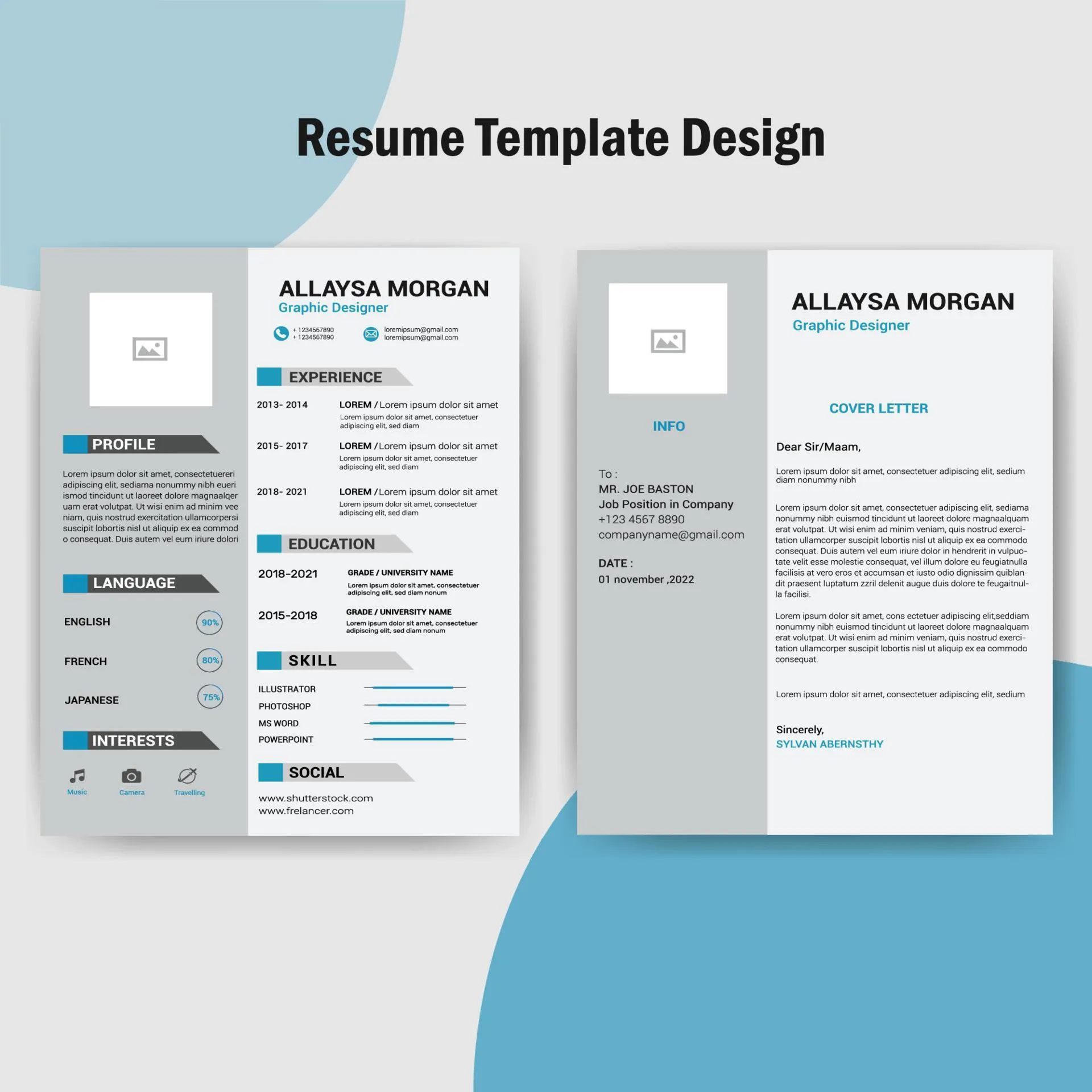
Understanding Resume Format Cover Letters
A resume format cover letter is a crucial document that accompanies your resume when applying for a job. It serves as your introduction to the hiring manager, offering a glimpse into your personality, skills, and experiences. Unlike a resume, which provides a factual overview, a cover letter allows you to elaborate on your qualifications, express your enthusiasm for the position, and demonstrate how your skills align with the specific job requirements. Understanding its purpose is the first step toward crafting an effective cover letter that grabs attention and increases your chances of landing an interview. Many job seekers often overlook the importance of a well-written cover letter, but it can be the deciding factor in whether your application gets noticed.
Importance of a Cover Letter with Resume
The significance of a cover letter in your job application process cannot be overstated. It’s an opportunity to personalize your application and showcase your unique value proposition. A cover letter allows you to connect your skills and experiences to the specific needs of the employer. In a sea of applicants, a compelling cover letter can set you apart, demonstrating your interest and understanding of the role. It shows that you’ve taken the time to research the company and tailor your application accordingly. It provides a space to explain gaps in your employment history, highlight key achievements, and express your personality in a way that your resume alone cannot. Neglecting a cover letter can give the impression that you are not genuinely interested in the position or have not put in the necessary effort to stand out.
Why Use a Resume Format Cover Letter

A resume format cover letter provides a structured way to present your qualifications. By following a standard format, you ensure that your letter is clear, concise, and easy to read. This structure allows you to systematically address key aspects of your candidacy, such as your skills, experiences, and reasons for applying. Using a cover letter template or sample can help you organize your thoughts and ensure that you include all the essential information. This format also demonstrates professionalism and attention to detail, qualities that employers value. A well-formatted cover letter makes a positive first impression, signaling that you are organized and capable of presenting your ideas in a clear and compelling manner. Adhering to a standard format ensures that your cover letter complements your resume effectively.
Top 5 Resume Format Cover Letter Examples
Here are five different types of resume format cover letter examples, each with a different approach to help you tailor your application to different situations. Each type highlights different aspects of your profile, allowing you to choose the one that best suits your needs and the specific job you are applying for. Understanding these different formats gives you flexibility and helps you adapt your application strategy to optimize your chances of success.
Example 1 The Classic Approach
The classic cover letter format is a straightforward and traditional approach that focuses on clarity and professionalism. This format typically includes a formal salutation, a brief introduction stating your interest in the position, a few paragraphs highlighting your relevant skills and experiences, and a closing paragraph expressing your enthusiasm and desire for an interview. It follows a clear, concise structure, making it easy for the hiring manager to quickly understand your qualifications. The classic format is suitable for almost any industry and job application, especially where a professional tone is expected. It’s a safe and reliable option for making a positive first impression.
Key Elements of the Classic Cover Letter

Key elements of the classic cover letter format include a formal salutation (e.g., “Dear Mr./Ms. [Last Name]” or “Dear Hiring Manager”), a clear statement of purpose, and a strong emphasis on your qualifications. Each paragraph should address a specific aspect of your candidacy, such as your key skills, relevant experiences, and accomplishments. Ensure that your language is professional, grammatically correct, and free of jargon. The closing paragraph should reiterate your interest in the position and express your gratitude for their time and consideration. Proofreading is very important before submitting your application, so make sure you carefully review your letter to avoid any errors.
Example 2 The Skills-Focused Cover Letter
The skills-focused cover letter emphasizes your abilities and how they align with the job requirements. This format is particularly effective if you are changing careers, have gaps in your employment history, or want to highlight specific skills. The letter begins by identifying the key skills required for the position and then showcases how your past experiences have equipped you with those skills. This approach allows you to directly address the employer’s needs and demonstrate your capabilities. By prioritizing skills over chronological work history, you can create a compelling case for your candidacy, even if your experience doesn’t perfectly match the job description. This is an effective method for showcasing transferable skills or demonstrating how you have gained certain skills in different roles.
Highlighting Relevant Skills and Achievements
To effectively highlight your skills and achievements, carefully review the job description and identify the key skills and qualifications the employer is seeking. Then, in your cover letter, provide concrete examples of how you have demonstrated those skills in your previous roles. Use the STAR method (Situation, Task, Action, Result) to describe your experiences. This method provides a structured way to articulate your accomplishments and the positive impact you have had. Quantify your achievements whenever possible (e.g., “Increased sales by 15%” or “Managed a team of 10 employees”). Focus on how you have helped previous employers and how you can bring the same results to the new role.
Example 3 The Storytelling Cover Letter

The storytelling cover letter uses narrative to engage the reader and connect your experiences to the job. This approach involves crafting a compelling narrative that showcases your journey, your passion for the field, and your unique qualifications. It uses storytelling to make your application more memorable and helps the hiring manager understand your motivations and career goals. This format is often suitable for creative roles or positions where personality and communication skills are highly valued. It allows you to present your experiences in a more personal and engaging way, making it stand out from the competition. The goal is to create a narrative that captures attention and makes the reader want to learn more about you.
Creating a Narrative to Engage the Reader
To create an engaging narrative, start by identifying your career goals and how they align with the job. Frame your experiences as part of a larger story, highlighting key moments, challenges overcome, and lessons learned. Use vivid language, strong verbs, and descriptive details to bring your experiences to life. Weave your skills and qualifications into the story in a natural and organic way, rather than simply listing them. Make sure your narrative is focused and relevant to the job, demonstrating how your past experiences have prepared you for success in the role. Your tone should be confident and enthusiastic, reflecting your passion for the position and the industry.
Example 4 The Networking Cover Letter
The networking cover letter is used when you have a connection within the company or when you’ve learned about the job through networking. This format leverages your existing connections to gain an advantage and create a more personal introduction. Begin by mentioning the person who referred you or how you learned about the opportunity. Then, briefly explain why you are interested in the position and how your skills and experiences align with the requirements. It adds a layer of credibility and shows that you are proactive in seeking opportunities. This approach works well when you have made a strong impression during networking events or conversations. It can also be used when applying for a job that is not formally advertised but you learned of it through a contact within the organization.
Leveraging Connections for Opportunities

When leveraging connections, it’s important to name the person who referred you in the cover letter. Mention how you know them and, if appropriate, how they spoke highly of the company or the role. Tailor your cover letter to the specific company or position and emphasize your shared interests or values. Be sure to follow up with your contact to thank them for their help and keep them updated on the progress of your application. Networking can open doors to opportunities you might otherwise miss. It can also provide valuable insights into the company culture and the expectations of the role. Be genuine, and show you value the recommendation.
Example 5 The Concise Cover Letter
The concise cover letter is short and to the point, focusing on key information and avoiding unnecessary details. This format is suitable for roles where brevity is valued or when you want to quickly convey your qualifications without overwhelming the reader. It typically contains a brief introduction, a summary of your key skills and experiences, and a closing paragraph expressing your interest and call to action. The focus is on conveying essential information as efficiently as possible. This approach shows respect for the hiring manager’s time, demonstrating that you understand the importance of clear and effective communication. It is particularly effective when the job description is very specific or where the employer emphasizes brevity.
Streamlining Your Message for Impact
To streamline your message, focus on the most relevant skills and experiences, and avoid unnecessary details or lengthy explanations. Use concise language and strong verbs to convey your points effectively. Quantify your achievements whenever possible to make a strong impact (e.g., “Increased sales by 20% in one year”). Proofread your cover letter carefully, and eliminate any redundant words or phrases. Ensure that every sentence serves a purpose and contributes to the overall message. Keep your cover letter to one page, if possible, with a clear and easy-to-read format. This demonstrates professionalism and the ability to communicate effectively.
Tips for Writing a Great Cover Letter

Writing a great cover letter involves more than just filling in the blanks. It requires careful attention to detail, tailoring your letter to each job, and avoiding common mistakes. Here are some essential tips to help you create cover letters that get noticed and increase your chances of success. Effective cover letters are well-written, well-organized, and personalized to each job. They present your qualifications, express your enthusiasm, and show your understanding of the role. This is a crucial step to distinguish you from other applicants and make a positive impact on your potential employer.
Tailoring Your Letter to Each Job
One of the most important tips is to tailor your cover letter to each job application. Avoid using a generic cover letter that is sent to multiple employers. Instead, carefully review the job description and identify the key skills, experiences, and qualifications the employer is seeking. In your cover letter, specifically mention how your skills align with these requirements and provide concrete examples of your accomplishments. Research the company, and demonstrate your knowledge of its mission, values, and culture. This shows that you are genuinely interested in the role and have taken the time to understand the specific needs of the employer. When your cover letter is tailored, it is likely to create a greater impact on the hiring manager.
Proofreading and Editing Your Cover Letter
Proofreading and editing are essential steps in the cover letter writing process. Ensure that your cover letter is free of grammatical errors, typos, and spelling mistakes. These errors can create a negative impression and undermine your credibility. Carefully review your letter for clarity, conciseness, and professionalism. Use a grammar and spell checker, but also read your letter aloud to catch any awkward phrasing or sentence structure. Consider having a friend, family member, or career counselor review your cover letter for feedback. Polishing your cover letter can significantly enhance its impact and increase your chances of getting an interview.
Formatting Your Cover Letter for Readability

Formatting your cover letter for readability is crucial. Use a professional font, such as Times New Roman, Arial, or Calibri, and ensure that the font size is easy to read (typically 11 or 12 points). Use clear and consistent formatting, including proper spacing between paragraphs, headings, and bullet points. Keep your cover letter to one page, if possible, and avoid using excessive text or dense paragraphs. Use bullet points or numbered lists to highlight key information and make your letter easier to scan. Good formatting shows attention to detail and demonstrates respect for the hiring manager’s time. Make sure your cover letter is easy to read and visually appealing, so your message can be readily understood.
Common Mistakes to Avoid in Cover Letters
Several common mistakes can significantly reduce the effectiveness of your cover letter. Avoiding these errors will help you make a stronger impression and increase your chances of getting an interview. Make sure you pay attention to these common pitfalls, and be prepared to make necessary adjustments. Careful editing and proofreading are key to ensuring that you avoid these mistakes.
Overusing Generic Phrases
Avoid using generic phrases and clichés that lack originality and make your cover letter sound impersonal. Phrases like “I am writing to express my interest” or “I am a hard worker” are overused and do not effectively communicate your unique value proposition. Instead, use specific examples and concrete details to highlight your skills, experiences, and accomplishments. Show, don’t tell, by providing evidence of your capabilities and demonstrating how you have delivered results. Generic language fails to capture the reader’s attention and reduces the impact of your cover letter. Use language that is specific to the role and company.
Ignoring the Job Description

One of the most critical mistakes is ignoring the job description. Failing to tailor your cover letter to the specific requirements of the job demonstrates a lack of attention to detail and a lack of interest in the position. Carefully review the job description and identify the key skills and qualifications the employer is seeking. Then, in your cover letter, highlight how your experiences and skills align with these requirements. Provide concrete examples and show how you have demonstrated these skills in the past. Failing to address the specific needs of the employer reduces your chances of standing out and getting an interview. Demonstrating an understanding of the job’s demands shows that you are a good fit for the role.
Not Proofreading
Not proofreading your cover letter is a serious mistake that can undermine your credibility and reduce your chances of getting hired. Errors in grammar, spelling, and punctuation make a negative impression, suggesting a lack of attention to detail and professionalism. Proofread your cover letter carefully, and use a grammar and spell checker to catch any errors. Read your cover letter aloud to catch any awkward phrasing or sentence structure. Consider having a friend, family member, or career counselor review your cover letter for feedback. Proofreading shows that you care about your application. Double-check your application to ensure that it represents you effectively.