Understanding the Research Assistant Cover Letter
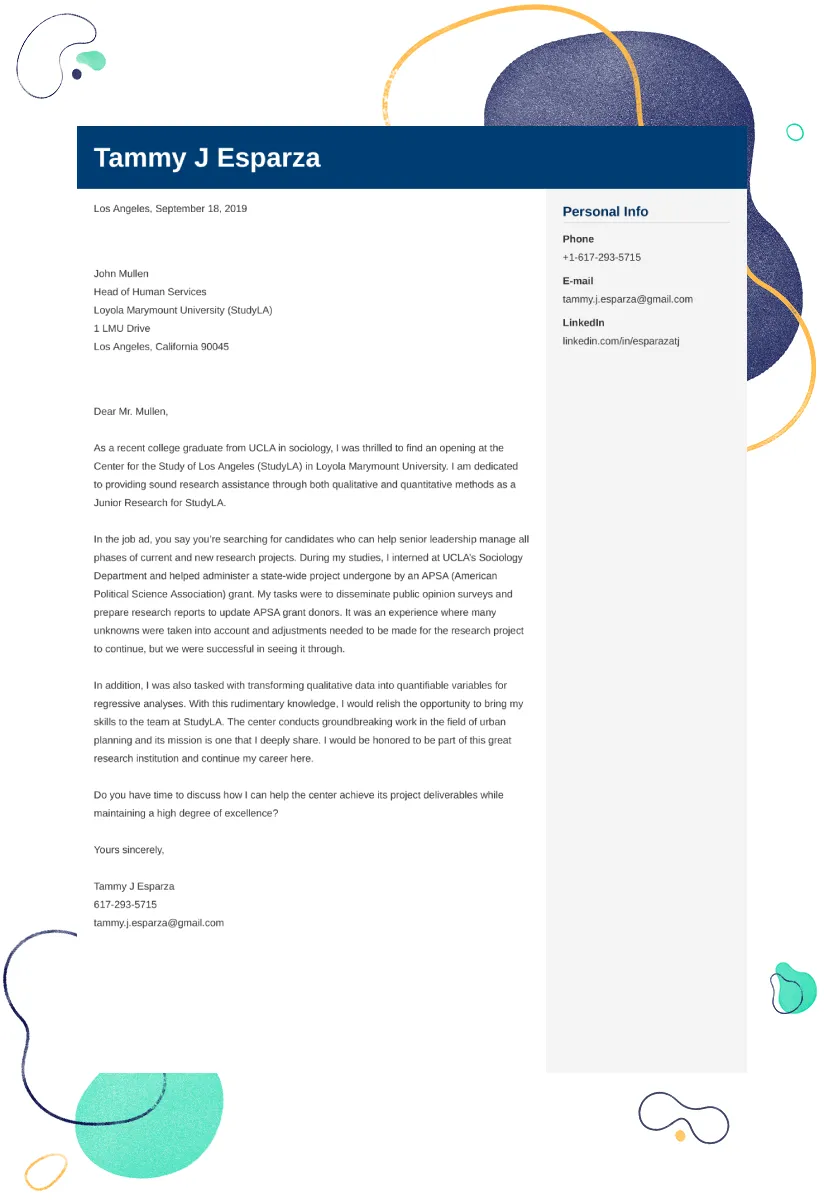
A research assistant cover letter is more than just a formality it’s your first opportunity to make a strong impression and secure an interview. It’s a crucial document that accompanies your resume and application, serving as a personal introduction and a showcase of your qualifications. Unlike a resume, which provides a factual overview of your experience, the cover letter allows you to highlight your personality, express your enthusiasm for the specific role, and explain why you are the perfect fit for the position. A well-crafted cover letter can significantly increase your chances of getting noticed by the hiring committee, making it an indispensable part of your job application strategy. The primary purpose of this letter is to persuade the reader that you possess the necessary skills, experience, and motivation to excel as a research assistant. It should demonstrate your understanding of the research field, the institution’s values, and the specific requirements of the job. A poorly written or generic cover letter can immediately disqualify you, so it’s essential to invest time and effort into creating a compelling and tailored document.
Key Components of a Research Assistant Cover Letter
A successful research assistant cover letter comprises several key components, each serving a specific purpose in conveying your qualifications and interest. Understanding these elements and how to structure them effectively is crucial for creating a compelling document. The format should be professional and easy to read. Clarity and conciseness are paramount; avoid jargon and unnecessary details. The key components include your contact information and the date, the recipient’s information, a professional salutation, a compelling introduction, a section that highlights your relevant skills and experience, a clear expression of your interest in the role and the institution, an enthusiastic closing, and a formal signature. Each of these components contributes to a cohesive and persuasive narrative that showcases your suitability for the research assistant position. Let’s delve into each of these components to help you create a standout cover letter.
Contact Information & Date

Begin your cover letter with your contact information and the date. This section typically appears at the top left of the page. Include your full name, address, phone number, and email address. Ensure that the email address is professional (e.g., firstname.lastname@email.com) and that your voicemail message is professional as well. Following your contact information, include the date on which you are writing the letter. This provides a reference point for the reader and indicates the timeliness of your application. Correct formatting in this initial section demonstrates attention to detail, which is a critical attribute in research. Using a clear and easily readable font, such as Times New Roman or Arial, and ensuring the layout is neat and professional will set a positive tone for the rest of the letter. It is important that your contact information is up-to-date and accurate, as this is how the hiring committee will contact you if they are interested in your application.
Recipient’s Information
Directly below your contact information and the date, include the recipient’s information. This typically includes the name of the hiring manager or the person to whom you are addressing the letter, their title, the department or institution, and the address. If you can, address the cover letter to a specific person, as this shows that you have taken the time to research the role and the hiring process. You can often find this information on the job posting or the institution’s website. If you are unsure of the hiring manager’s name, try to find it by searching the department’s website or contacting the department directly. Addressing the letter to a specific person adds a personal touch and demonstrates your proactive approach. If you are unable to find a specific name, using a general salutation such as ‘Dear Hiring Committee’ is acceptable, but addressing the letter to a specific person is always preferable. Accuracy and attention to detail in this section are vital in demonstrating your professionalism and respect for the recipient.
The Salutation
The salutation is your formal greeting to the recipient of your cover letter. The most common and recommended salutation is ‘Dear Mr./Ms./Dr. [Last Name],’ using the hiring manager’s last name. This is a respectful and professional way to begin the letter. If you are unsure of the person’s gender or preferred title, it’s often safer to use their full name. For example, ‘Dear [First Name Last Name]’ is an acceptable alternative. If you are unable to find the name of a specific person, you can use a general salutation like ‘Dear Hiring Manager’ or ‘Dear Search Committee.’ However, try your best to find a specific name, as this adds a personal touch and demonstrates that you’ve done your research. Avoid informal salutations, such as ‘Hello’ or ‘Hi,’ as these can be perceived as unprofessional in a formal application context. A well-chosen salutation sets the tone for the rest of the letter and shows your respect for the hiring process. Always double-check the spelling of the recipient’s name to avoid any embarrassing mistakes.
Crafting a Compelling Introduction

Your introduction is your first chance to grab the reader’s attention. Start with a strong opening sentence that clearly states your purpose for writing. Immediately mention the specific research assistant position you are applying for and where you found the job posting. Then, provide a brief overview of your relevant skills and experience, highlighting key qualifications that make you a suitable candidate. Aim to create a sense of intrigue that encourages the reader to delve deeper into your letter. In this initial paragraph, it is vital to demonstrate your enthusiasm for the role and the research field. Show that you have a genuine interest in the research being conducted and the institution’s mission. Avoid generic or vague statements. Instead, tailor your introduction to the specific requirements of the job posting and the research project. Focus on what sets you apart from other candidates and why you are uniquely qualified. A compelling introduction will make the reader want to continue reading and learn more about your qualifications. Your introduction needs to be concise, focused, and impactful.
Highlighting Your Relevant Skills and Experience
The body of your cover letter is where you showcase your skills and experience. This section is crucial for demonstrating how you meet the requirements outlined in the job description. Break down this section into distinct paragraphs, each focusing on a specific aspect of your qualifications. Be specific and provide concrete examples to support your claims. Instead of simply listing your skills, explain how you have applied them in previous research projects or academic settings. Quantify your achievements whenever possible. For instance, instead of saying ‘I assisted with data analysis,’ say ‘I analyzed over 100 datasets using SPSS, resulting in a 15% reduction in processing time.’ Tailor this section to align with the job requirements. Review the job description carefully and identify the key skills and experiences that the employer is seeking. Then, structure your paragraphs to highlight these qualifications, ensuring that you provide evidence to support your claims. This demonstrates to the hiring committee that you have a thorough understanding of the position and the ability to fulfill its responsibilities. Be sure to back up the skills by listing examples and showing what you have done and the outcome of your actions.
Research Experience
Detail any previous research experience you have. Include the names of the projects you worked on, your role, and the responsibilities you had. Describe the methodologies you used and the results you achieved. Provide specific examples of your contributions, such as data collection, analysis, report writing, or literature reviews. If you have worked in a lab setting, mention the techniques you are familiar with. Focus on the outcomes of your work, such as publications, presentations, or significant findings. If you have worked on projects that align with the current job’s research focus, highlight those experiences prominently. Quantify your contributions whenever possible by providing metrics that demonstrate the impact of your work. Ensure your descriptions are clear, concise, and easy to understand, avoiding excessive jargon. Show the committee that you can perform tasks successfully and efficiently, and that you have the necessary skills and experience for the required tasks.
Technical Skills

List any technical skills that are relevant to the research assistant position. This could include proficiency in statistical software (e.g., SPSS, R, SAS), programming languages (e.g., Python, MATLAB), data management tools, or laboratory techniques. Be specific about your level of proficiency with each skill. For example, instead of saying ‘I am familiar with SPSS,’ you might say ‘I have three years of experience using SPSS for data analysis and have successfully completed projects involving regression analysis, ANOVA, and t-tests.’ If you have experience with specific equipment or instruments, be sure to mention them. Tailor your technical skills section to match the requirements of the job description. Emphasize the skills that are most relevant to the position. Mention any certifications or training you have received related to these skills. Including this information can strengthen your application. Make sure you include all the skills that the employer is looking for.
Academic Achievements
Highlight your academic achievements that are relevant to the research assistant position. Include your degree(s) earned, your major(s), and any relevant coursework. Mention your GPA if it is competitive. If you have received any academic awards, scholarships, or honors, be sure to list them. If you have published any research papers or presented at conferences, provide details about these accomplishments. Even if your research is not directly related to the role, you can still demonstrate your ability to write and communicate effectively. If your academic achievements are particularly relevant to the specific research project, be sure to highlight those. If you have conducted independent research projects as part of your academic work, explain the scope of these projects and the results you achieved. Showing an employer you have academic experience provides them with a solid foundation for the required skills.
Demonstrating Your Interest in the Role and Institution
It’s not enough to simply list your skills and experience. You must also demonstrate genuine interest in the role and the institution. This is where you can showcase your enthusiasm and explain why you are the perfect fit for the position. Research the institution and the research project to show that you have a clear understanding of the research area. Highlight the aspects of the research that excite you and explain why you are drawn to the project’s goals. If possible, mention specific researchers or faculty members whose work interests you. Explain how your skills and experience align with the research project’s objectives and how you can contribute to its success. Show that you have a long-term interest in research and the field. By doing this, you are proving to the hiring committee that you have an interest in their goals and you may work well within their team.
Expressing Your Enthusiasm and Suitability

Throughout your cover letter, express your enthusiasm for the position and your suitability for the role. Use enthusiastic language to convey your interest in the research, the institution, and the opportunity to contribute. Explain why you are excited about the prospect of working as a research assistant and what you hope to gain from the experience. Tailor your language to the specific requirements of the job description. Address the essential and desired qualifications listed in the job posting and explain how you possess those skills or experiences. Connect your skills and experiences to the research project’s objectives, showing how you can contribute to its success. Show the hiring committee how you are ready to meet and exceed their expectations. You need to convey that you are a highly motivated and capable individual. This enthusiasm should be evident throughout the entire document.
Tailoring Your Cover Letter to the Specific Job
One of the most critical aspects of writing a successful cover letter is tailoring it to the specific job and institution. A generic cover letter that is sent to multiple employers without any modifications is unlikely to impress the hiring committee. Review the job description carefully and identify the key requirements, skills, and experiences that the employer is seeking. Then, tailor your cover letter to address these specific needs. Highlight your relevant qualifications and provide concrete examples of how you have demonstrated those skills in the past. Research the institution’s mission, values, and research projects. Use this information to show that you understand the organization’s goals and that you share their values. If you know the name of the hiring manager, use it to personalize your letter. Mentioning specific details about the research project can also demonstrate that you have taken the time to learn about the role and that you are genuinely interested. Customization is essential for making a positive impact on the hiring committee. Tailoring the letter shows them that you are motivated and that you pay close attention to detail.
Reviewing and Editing Your Cover Letter
Before submitting your cover letter, it is essential to review and edit it carefully. This is an important step in ensuring that your letter is polished, professional, and free of errors. Read through your cover letter multiple times, checking for any grammatical errors, spelling mistakes, or typos. Make sure that your sentences are clear, concise, and easy to understand. Check for any inconsistencies in your formatting or content. Pay close attention to the tone of your letter and make sure it is appropriate for the context. Ask a friend, family member, or career advisor to review your cover letter and provide feedback. Getting a second opinion can help you identify any errors or areas for improvement that you might have missed. Ensure that your cover letter is aligned with your resume. It is crucial to check that you are not making any claims that are not supported by the information in your resume, or vice versa. Taking the time to review and edit your cover letter will help ensure that your application is professional and effective.
Proofreading for Errors

Proofreading is a critical step in the cover letter writing process. This involves carefully reviewing your document to catch any grammatical errors, spelling mistakes, or typos. Errors in a cover letter can reflect poorly on your attention to detail and professionalism. Read your cover letter multiple times, focusing on different aspects each time. For instance, you might read once for grammar, once for spelling, and once for sentence structure. Use a spell-checker and grammar-checker, but do not rely on them entirely. These tools can miss errors or misinterpret context. Read your cover letter aloud to catch any awkward phrasing or sentences that don’t flow well. It is also helpful to have a fresh pair of eyes review your cover letter. Ask a friend, family member, or career advisor to proofread your letter and provide feedback. Proofreading is essential for ensuring that your cover letter is polished and professional. Make sure that all names and job titles are spelled correctly. Thorough proofreading is a sign of respect for the employer and shows your commitment to quality.
Formatting for Readability
Proper formatting is essential for ensuring that your cover letter is easy to read and visually appealing. A well-formatted cover letter is more likely to capture the reader’s attention and make a positive impression. Use a professional and readable font, such as Times New Roman, Arial, or Calibri. The font size should be between 10 and 12 points. Use consistent spacing throughout your letter. Double-space between paragraphs and use single spacing within paragraphs. Use clear headings and subheadings to break up the text and make it easier to scan. Use bullet points or numbered lists to highlight key skills or accomplishments. Keep your margins at 1 inch on all sides of the page. Keep the overall layout clean and uncluttered. Avoid using excessive bolding, underlining, or italics. Format your cover letter to be easy to read, visually appealing, and professional in appearance. Proper formatting demonstrates your attention to detail and respect for the reader’s time. It’s essential to create a positive first impression with the hiring manager.
The Closing
The closing of your cover letter is your final opportunity to leave a lasting impression. It should be concise, professional, and express your gratitude for the reader’s time and consideration. Thank the hiring manager for reviewing your application and express your appreciation for the opportunity. Reiterate your interest in the position and the institution, briefly summarizing your qualifications and why you are a good fit. Include a call to action, such as stating that you look forward to hearing from them soon or that you are available for an interview at their earliest convenience. Keep the closing short and sweet, avoiding unnecessary details or self-promotion. Your closing should be professional and express your appreciation. The closing should leave the reader with a positive impression and convey your enthusiasm for the position.
Formal Closing

Use a formal closing to end your cover letter. Common options include ‘Sincerely,’ ‘Respectfully,’ or ‘Best regards.’ Avoid using informal closings, such as ‘Thanks’ or ‘Cheers,’ as these are not appropriate for a formal application. Choose a closing that aligns with the tone and style of your cover letter. If you have written a formal and professional letter, a formal closing is more suitable. Ensure that your closing is grammatically correct and properly formatted. Following your closing, leave several spaces for your signature (if submitting a hard copy) and then type your full name. This demonstrates professionalism and respect for the hiring process. The formal closing is a sign of professionalism and should be used in all cases, and is appropriate for job applications. Ensure that your closing is consistent with the tone of the letter.
Signature
If you are submitting a hard copy of your cover letter, include your signature above your typed name. Print your cover letter on high-quality paper and sign your name in blue or black ink. If you are submitting an electronic version of your cover letter, you can either type your name or insert an image of your signature. If you choose to insert an image of your signature, make sure that it is clear, professional, and legible. Ensure that your signature is placed above your typed name and is centered on the page. The signature adds a personal touch to your application and demonstrates that you have taken the time to personalize your cover letter. A signature, whether handwritten or digital, is the final touch that completes your cover letter and shows that you have put your effort into the application process.
Next Steps after Submitting Your Cover Letter
After submitting your cover letter and application materials, it’s important to take a few follow-up steps. First, keep track of the jobs you have applied for, including the date you submitted your application and the contact information of the hiring manager. If you haven’t heard back within a reasonable timeframe (typically 2-3 weeks), you can send a polite follow-up email to the hiring manager. In your email, reiterate your interest in the position and briefly mention your qualifications. Thank the hiring manager for their time and consideration. Be patient and professional in your communication. If you are contacted for an interview, prepare thoroughly. Research the institution, the research project, and the interviewers. Practice answering common interview questions and prepare questions to ask the interviewers. Dress professionally and arrive on time. After the interview, send a thank-you note to each person who interviewed you. In your note, reiterate your interest in the position and express your gratitude for the opportunity. By following these steps, you can increase your chances of landing a research assistant position.