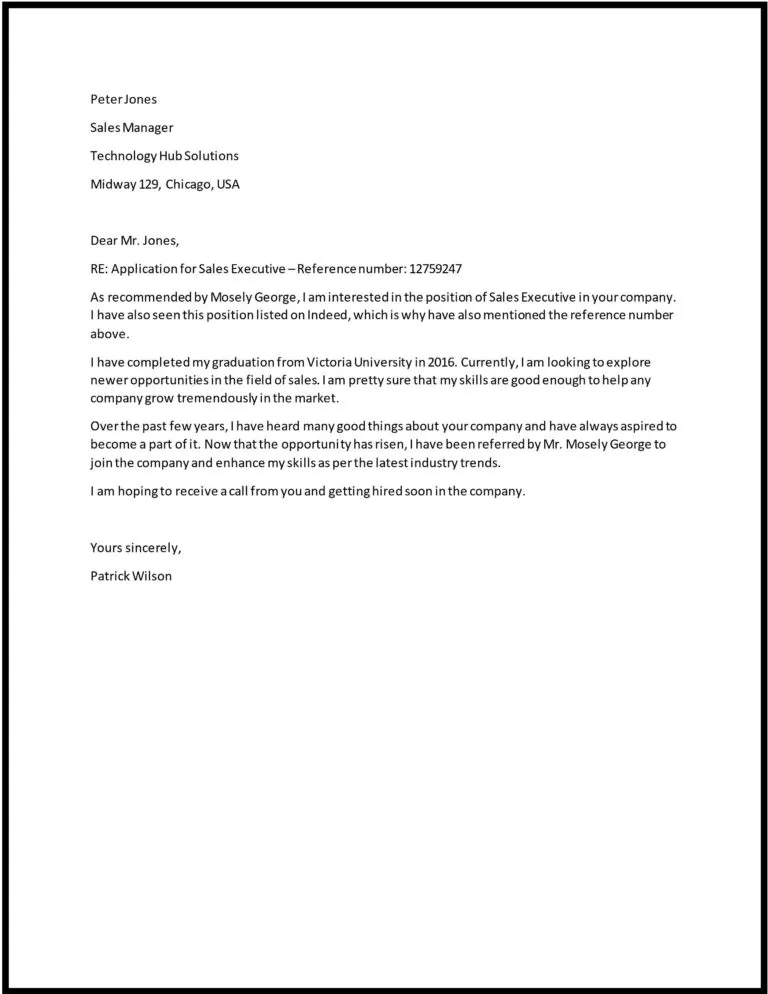
What is a Referral Cover Letter?
A referral cover letter is a specialized job application document that is used when you have been referred for a job opportunity by someone who already works at the company. This letter serves as your introduction and aims to highlight your qualifications while leveraging the credibility and endorsement of the referrer. Unlike a standard cover letter, a referral cover letter explicitly mentions the person who referred you, adds extra weight to your application, and often gets a closer look from the hiring manager. Effectively, it transforms your application from a cold approach to a warm introduction, increasing your chances of getting noticed in a competitive job market. Including a referral can significantly boost your application, especially when the referrer has a good reputation within the company.
Benefits of Using a Referral Cover Letter
The benefits of using a referral cover letter are numerous, primarily centered around increasing your visibility and chances of landing an interview. First and foremost, a referral can significantly increase your chances of getting your resume reviewed. Hiring managers often prioritize referred candidates because they come with an implicit endorsement. Secondly, referrals often bypass the initial screening processes, allowing you to speak directly to your qualifications and how they align with the role. They also help in gaining insights into the company culture and the hiring manager’s expectations. Furthermore, by mentioning the referrer, you demonstrate that you have a connection within the company, showing that you’ve done your research and have a genuine interest in joining the team. Finally, referrals can also lead to a faster hiring process since the hiring manager is more inclined to give referred candidates an interview and make a decision.
Key Components of a Referral Cover Letter

A well-structured referral cover letter consists of several key components that collectively highlight your qualifications and endorsement from the referrer. These parts work together to create a persuasive case for why you are the best fit for the role. The most crucial is, of course, the referral itself. It should come early in the letter, immediately establishing the connection. You also need to clearly state the position you’re applying for, and you should show your enthusiasm for the opportunity. Your letter should include a brief overview of your qualifications, making sure to highlight the most relevant skills and experiences that align with the job description. It should emphasize why you are a great fit, and provide specific examples of achievements that demonstrate your abilities. Make sure the document includes a call to action, encouraging the hiring manager to review your resume and consider you for an interview. Finally, remember to end with a professional sign-off, such as “Sincerely” or “Best regards.”
Contact Information
At the top of your referral cover letter, you should include your contact information. This typically includes your full name, phone number, email address, and optionally, your LinkedIn profile URL. Make sure that your contact details are accurate and professional-looking, making it easy for the hiring manager to reach you. It is best to use a professional email address that includes your name rather than a nickname or unusual address. Ensure your phone number is current and that your voicemail is set up to receive messages. This information is crucial for the hiring manager to contact you promptly if they are interested in moving forward with your application. Keep your contact details clear and easy to find, so they can easily connect with you.
Hiring Manager’s Information
If possible, include the hiring manager’s name and title in your referral cover letter. Addressing the letter to a specific person shows that you have taken the initiative to research and find the correct contact, which can show you’ve put in extra effort. This personalization shows respect for the person and the opportunity. If you cannot find the hiring manager’s name, you can use a general greeting such as “Dear Hiring Manager,” but make an effort to personalize the letter to someone specific if possible. You can often find this information on the company’s website, LinkedIn, or by asking the person who referred you. Addressing the letter to a specific individual is a simple yet effective way to show your interest and attention to detail. It immediately makes your application feel more personal and shows that you are serious about the opportunity.
The Referral’s Introduction

The referral introduction is one of the most critical components of your cover letter, as it is where you mention the person who referred you. Start by clearly stating the name of the person who referred you and their relationship to you, if any. For example, “I am writing to express my interest in the [Job Title] position, as recommended by [Referrer’s Name], [Referrer’s Title] at [Company Name].” The beginning should also include the position you are applying for and the reason you’re interested. This introduction immediately gives your application an advantage. Make sure the name is spelled correctly and that the referrer is okay with you mentioning them. The goal here is to establish credibility and to immediately highlight the connection. This sets the stage for the rest of your letter, so make sure to start strong.
Why You Are a Great Fit
The next section should explain why you are a great fit for the job, focusing on the relevant qualifications. Your cover letter should highlight the skills and experiences that match the job description. Make sure to tailor your letter to the specific requirements mentioned in the job posting, emphasizing your relevant skills and how they align with the job duties. Provide a brief overview of your background, showcasing your educational background, and previous work experience. Explain how your background has prepared you for the position. By connecting your qualifications directly to the role’s requirements, you’ll clearly demonstrate that you possess the skills and experience to excel in the role. This alignment assures the hiring manager that you understand the job and are capable of performing its duties effectively.
Highlight Relevant Skills and Experience
In this section, you will need to delve into your relevant skills and experiences that directly apply to the job. Review the job description carefully, identify the key skills and qualifications, and then highlight those in your cover letter. Use specific examples to illustrate how you have used those skills in previous roles and what results you achieved. For example, if the job requires project management skills, describe a project you successfully managed, the challenges you overcame, and the outcomes. Make sure the experiences you include support your claims and match the employer’s requirements. To make the information easy to read, use bullet points or short paragraphs to break up the text and clearly showcase your skills. This targeted approach ensures that your cover letter effectively highlights your most relevant and appealing attributes to the hiring manager.
Showcase Achievements

When showcasing your achievements, always emphasize quantifiable results. Instead of just saying “Improved customer satisfaction,” state “Increased customer satisfaction by 15% through implementing a new feedback system.” Quantifiable achievements demonstrate your impact on past employers. Use the STAR method (Situation, Task, Action, Result) to structure your achievements. Describe the situation you faced, the task you were assigned, the actions you took, and the positive results you achieved. This method allows you to tell a compelling story that is both descriptive and insightful. By providing concrete examples of your past successes, you give the hiring manager a clear idea of the value you can bring to their company. This gives the hiring manager a clear understanding of what you can do for them.
Express Enthusiasm
Show genuine enthusiasm for the opportunity and the company. Your cover letter should convey your excitement about the role and why you want to work there. Research the company and express your interest in their mission, values, or recent projects. Mention what attracts you to the company and the position. You could also include the positive things you have heard from your referrer about the company culture. Demonstrating a strong interest shows that you are more than just another applicant; you are genuinely interested in being part of the team. Your excitement is contagious, and the hiring manager will more likely be interested in you as a result. This excitement makes you seem more than just someone looking for a job. You are a motivated individual who is eager to contribute to the company’s success.
Call to Action
Conclude your letter with a clear call to action. Clearly state that you are eager to discuss your qualifications in more detail and invite the hiring manager to review your resume. Thank the hiring manager for their time and consideration. Make it easy for them to take the next step. Also, make sure to provide your contact information in your closing to make it simple for the hiring manager to reach out. By including a clear and concise call to action, you guide the hiring manager on what you want them to do next. This encourages them to contact you and move forward with the hiring process. This approach is especially important since you are aiming to make a great impression.
Formatting and Design Tips

Formatting and design can significantly affect the readability and professionalism of your referral cover letter. Always choose a clean and professional font, such as Arial, Times New Roman, or Calibri. The font size should be between 10 and 12 points. Use appropriate spacing and margins to ensure the text is easy to read. Use headings and subheadings to organize your content. Keep the letter concise, ideally no more than one page. Proofread your cover letter carefully. Use a professional-looking template to format your cover letter, or design your own. Ensure the layout is clean and consistent. Professional formatting increases the chances of a favorable impression. Ensure your cover letter is easy to read and visually appealing, and that it reflects well on your attention to detail and your commitment to professionalism.
Proofreading and Editing
Proofreading and editing are extremely important to ensure your referral cover letter is error-free. Review your cover letter for any grammatical errors, spelling mistakes, and punctuation issues. Consider having a friend or colleague proofread your letter, as they may catch errors that you missed. A cover letter filled with errors can create a negative impression and undermine your credibility. Make sure that your letter is concise and well-written, with clear and straightforward language. Use a grammar checker and spell checker. Avoid using jargon or overly complex language. Proofreading and editing show your attention to detail and your commitment to presenting yourself in the best possible light. These details can be the difference between a call for an interview and rejection. It is very important to get it right.
Common Mistakes to Avoid
Several common mistakes can undermine your referral cover letter and diminish your chances of success. Avoid generic cover letters; customize each letter to the specific job and company. Do not misspell the hiring manager’s name or the name of the company. Ensure all details are accurate. Do not overuse jargon or overly complex language. Maintain a professional tone throughout the letter. Avoid including irrelevant information or going into excessive detail about your previous roles. Make sure your cover letter is not too long. Do not simply repeat your resume; instead, provide more context and expand on your skills and experiences. By avoiding these common mistakes, you will increase the effectiveness of your referral cover letter and enhance your prospects of getting an interview.
Example of a Referral Cover Letter

Here’s an example of a referral cover letter. [Your Name] [Your Address] [Your Phone Number] [Your Email Address] [Date] [Hiring Manager Name] [Hiring Manager Title] [Company Name] [Company Address] Dear [Hiring Manager Name], I am writing to express my strong interest in the [Job Title] position at [Company Name], as recommended by [Referrer’s Name], [Referrer’s Title]. [Referrer’s Name] shared that [Company Name] is looking for [briefly describe job requirements]. As a [Your Current/Most Recent Title] with [Number] years of experience, I am confident that my skills and experience make me a perfect fit. In my previous role at [Previous Company Name], I was responsible for [list relevant responsibilities]. In this position I [mention specific achievements]. My key strengths include [list 2-3 relevant skills]. Thank you for your time and consideration. I look forward to discussing my qualifications in more detail. Sincerely, [Your Signature] [Your Typed Name]