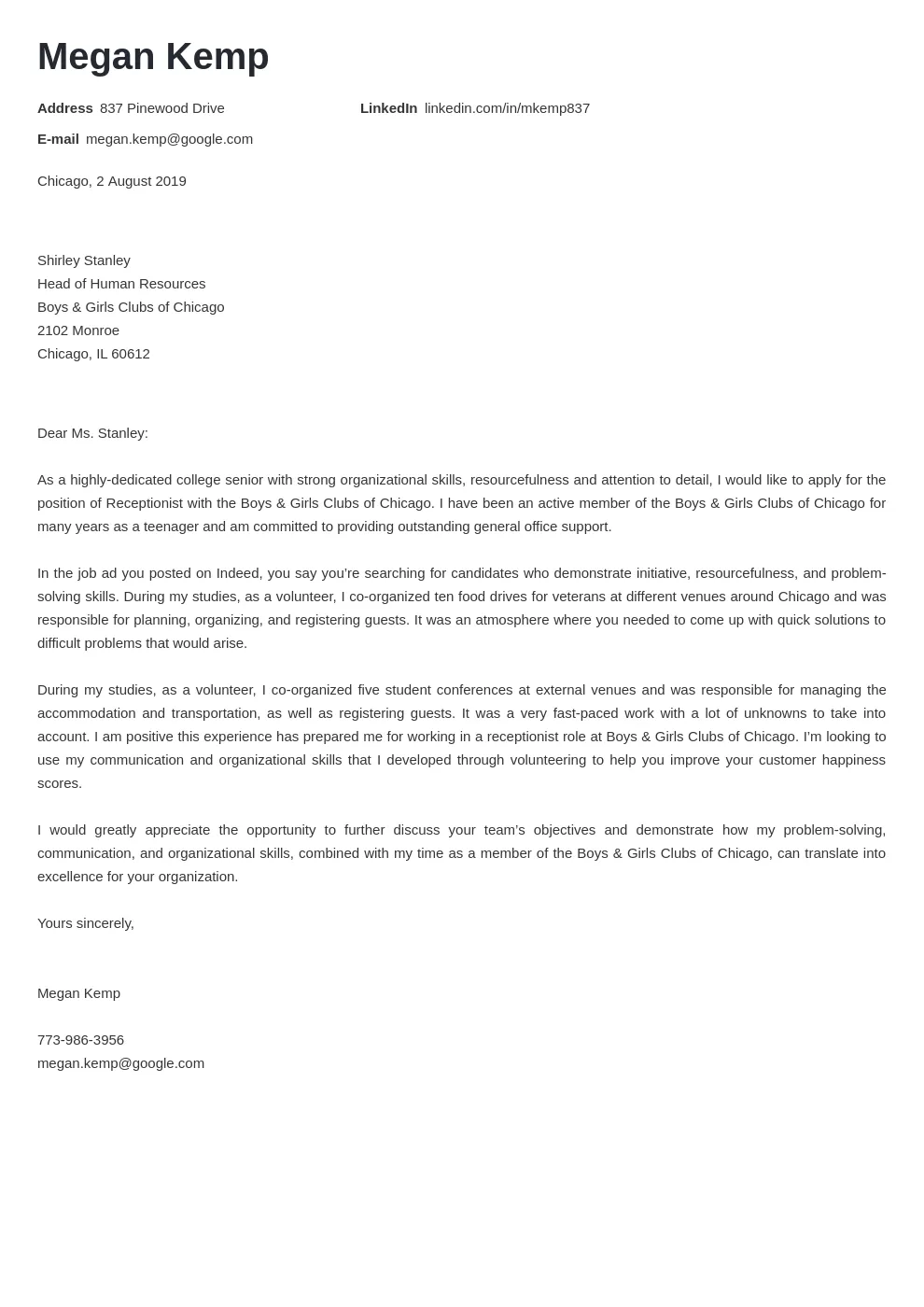
Why a Strong Receptionist Cover Letter Matters
In the competitive job market, a well-crafted receptionist cover letter can be your golden ticket to an interview. It’s your first chance to make a positive impression and showcase why you’re the perfect fit for the role. A strong cover letter goes beyond simply listing your skills; it tells a story, highlighting your enthusiasm and demonstrating your understanding of the company’s needs. It’s an opportunity to personalize your application, setting you apart from other candidates and signaling your genuine interest in the position. Think of it as your personal introduction, a way to connect with the hiring manager and make them eager to learn more about you. A lackluster letter, on the other hand, can easily lead to your application being overlooked, so invest the time to make yours shine. This guide will walk you through how to write a simple cover letter, making sure your application will stand out.
Key Elements to Include in Your Cover Letter
A compelling receptionist cover letter needs to include several key elements to grab the reader’s attention and make your case effectively. First and foremost, you need clear and concise contact information, as well as a professional salutation. Next, you must highlight your skills and experience, showcasing how they align with the specific job requirements. Demonstrating your enthusiasm and personality is crucial, as it shows you’re not just qualified but also a good fit for the company culture. Finally, remember to tailor your letter to each job, researching the company and using keywords from the job description to show your understanding of their needs. This will demonstrate to the employer that you can do the job.
Contact Information and Salutation

Your cover letter should start with your contact information, including your name, phone number, email address, and optionally your LinkedIn profile URL. This ensures the hiring manager can easily reach you. Following your contact information, use a professional salutation. Start with ‘Dear’ and follow with the hiring manager’s name, if known (e.g., ‘Dear Ms. Smith’). If you don’t know the name, use a generic greeting like ‘Dear Hiring Manager’ or ‘Dear [Company Name] Team’. Avoid casual greetings as it’s important to demonstrate your professional approach in the cover letter.
Highlighting Your Skills and Experience
The body of your cover letter is where you sell yourself. Start by showcasing the skills that make you a great receptionist. Include your experience, emphasizing how you have demonstrated these skills in previous roles. Use specific examples to illustrate your abilities, such as managing phone systems, greeting visitors, or handling administrative tasks. It is not enough to simply say you are skilled; provide concrete examples. Show, don’t just tell, how you’ve successfully handled various situations and contributed to a positive work environment. This section must showcase your experience as it reflects the requirements of the company.
Showcasing Relevant Skills
Receptionist roles demand a diverse skillset. Highlight skills that are specifically relevant to the job description. Common essential skills include excellent communication (both written and verbal), organizational abilities, proficiency in relevant software (Microsoft Office, CRM systems, etc.), customer service skills, and the ability to multitask. Also demonstrate your abilities to handle stressful situations with composure, maintain confidentiality, and pay attention to detail. Provide examples of how you’ve utilized these skills in past roles and the positive outcomes you achieved. This section should also include how the skills can be transferred to the new workplace.
Emphasizing Experience

Detail your experience in previous receptionist or related roles. Briefly describe your responsibilities and accomplishments in each position. Quantify your achievements whenever possible. For example, instead of saying ‘Managed phone calls,’ say ‘Managed 50+ phone calls daily, ensuring accurate message delivery.’ Focus on results and the value you brought to your previous employers. This will help you to connect your previous experience to the current requirements. The relevant experience will ensure you stand out from the competition and show you can take on the responsibilities.
Demonstrating Enthusiasm and Personality
Let your enthusiasm for the role and the company shine through. Express genuine interest in the position and explain why you’re excited about the opportunity. Mention anything that resonates with you about the company’s mission, values, or culture. This shows you’ve done your homework and are genuinely interested in joining their team. Inject a little personality, but remain professional. Let your passion for providing excellent customer service and creating a welcoming environment come through in your writing. Highlight how your personality aligns with the company’s values, adding a personal touch to your application.
Tailoring Your Letter to the Job
One-size-fits-all cover letters rarely impress. Tailor your letter to each specific job you apply for. Review the job description carefully and identify the key skills and qualifications the employer is seeking. Then, customize your letter to highlight your relevant experience and skills, demonstrating how you meet those requirements. This shows the hiring manager that you understand their needs and are genuinely interested in the position. Make it clear that you’ve taken the time to understand the specific requirements of the role and company, making your application more compelling.
Researching the Company

Before you start writing, research the company. Visit their website, read their ‘About Us’ section, and explore their social media presence. Understand their mission, values, and culture. This knowledge will help you tailor your cover letter to resonate with the company and demonstrate your genuine interest. Identify any recent company news or achievements you can mention to show you’re informed and engaged. Showing that you’ve invested the time to understand the company’s background is a great way to connect with the hiring manager.
Using Keywords from the Job Description
Use keywords from the job description to make your cover letter more effective. Carefully review the job posting and identify the key skills and qualifications the employer is looking for. Incorporate these keywords naturally throughout your cover letter. This helps ensure your application gets noticed by applicant tracking systems (ATS) and demonstrates that you possess the required skills and experience. Don’t overdo it; the goal is to integrate the keywords organically, maintaining a natural flow of the writing. This will allow you to be on the employer’s radar when reviewing applications.
Formatting and Proofreading
The appearance of your cover letter matters. Use a professional font like Times New Roman, Arial, or Calibri, with a font size between 10 and 12 points. Use clear and concise language, and avoid jargon or overly complex sentences. Keep your paragraphs short and easy to read. Ensure your letter is well-formatted, with appropriate spacing and margins. A clean and professional appearance reflects your attention to detail and professionalism. A well-formatted cover letter makes a positive first impression and is easier for the hiring manager to read.
Ensuring a Professional Appearance

Your cover letter is a reflection of your professionalism. Maintain a clean and professional appearance throughout. Use a standard business letter format, with your contact information at the top, followed by the date and the hiring manager’s contact information (if known). Use a professional font, consistent formatting, and appropriate margins. Avoid excessive use of bolding, italics, or underlining. Your goal is to present a polished and professional image that will inspire confidence in the hiring manager. This attention to detail helps you to stand out amongst all the candidates.
Proofreading for Errors
Proofreading is critical. Errors in grammar, spelling, and punctuation can undermine your credibility. Carefully review your cover letter for any mistakes before submitting it. Read it aloud to catch awkward phrasing or typos. Consider having a friend or family member proofread it as well. A polished, error-free cover letter demonstrates your attention to detail and professionalism, which are essential qualities for a receptionist. Always ensure your work is ready for public consumption; it will leave a great impression on the hiring manager.
Closing Your Cover Letter
Your closing should be professional and express gratitude. Start by thanking the hiring manager for their time and consideration. Reiterate your interest in the position and your enthusiasm for the opportunity. Include a call to action, such as ‘I look forward to the opportunity to discuss my qualifications further in an interview.’ Close with a professional sign-off like ‘Sincerely’ or ‘Best regards,’ followed by your typed name. A strong closing leaves a lasting positive impression and encourages the hiring manager to contact you.
Expressing Gratitude

Expressing gratitude is a simple yet powerful way to end your cover letter. Thank the hiring manager for taking the time to read your application and consider your qualifications. This demonstrates your respect for their time and your appreciation for the opportunity. It also leaves a positive impression and shows you are courteous and professional. A brief expression of gratitude can make a big difference in the eyes of the hiring manager.
Providing Contact Information
Ensure your contact information is readily available. Include your phone number and email address, so the hiring manager can easily reach you. Make sure your voicemail is set up and your email inbox is active. Consider providing your LinkedIn profile URL if you have one. This allows the hiring manager to learn more about you and contact you if necessary. Ensuring your contact information is easily accessible can streamline the hiring process and increase your chances of landing an interview.
Follow-up Steps After Submitting
After submitting your cover letter and resume, take appropriate follow-up steps. Send a thank-you email to the hiring manager within 24 hours of your interview. If you haven’t heard back within the timeframe specified in the job posting, consider sending a polite follow-up email. This demonstrates your continued interest and initiative. Be patient, but proactive. Following up appropriately keeps you top-of-mind and shows your dedication to the job. This shows the hiring manager that you care about the position and are ready to start working.