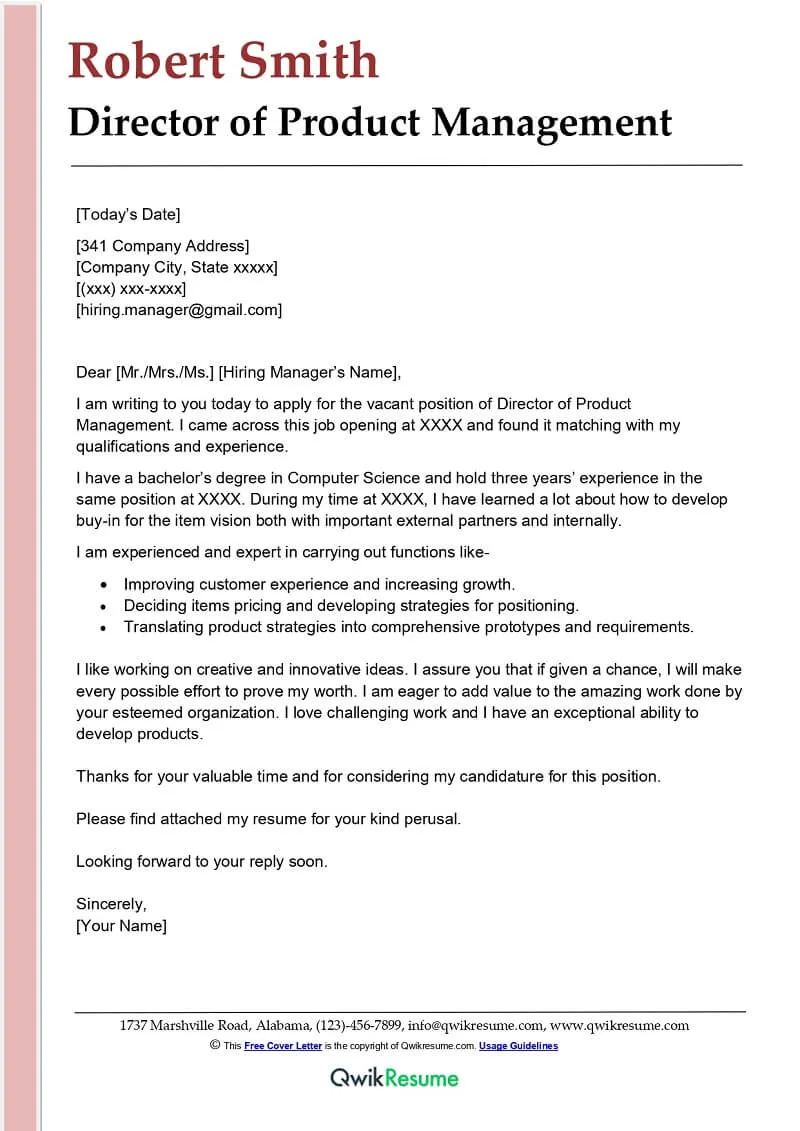
Product Management Cover Letter How-To Guide
A product management cover letter is your first opportunity to make a strong impression on a hiring manager. It’s more than just a formality; it’s your chance to demonstrate that you understand the role, the company, and the specific requirements of the job. A well-crafted cover letter can significantly increase your chances of landing an interview, while a poorly written one can quickly lead to your application being overlooked. This guide provides a comprehensive walkthrough on how to write a product management cover letter that stands out and gets you noticed.
Understanding the Purpose of a Product Management Cover Letter
The primary purpose of a product management cover letter is to introduce yourself to the hiring manager and provide context for your resume. It’s a concise and focused document that highlights your relevant skills, experience, and accomplishments, demonstrating why you are a good fit for the position. It showcases your passion for product management and your understanding of the company’s mission and values. The cover letter goes beyond a simple listing of your qualifications; it tells a story about your career journey and what you can bring to the role.
Why a Cover Letter Matters for Product Managers

In the competitive field of product management, a cover letter gives you a unique edge. It allows you to personalize your application and demonstrate your communication skills, an essential quality for product managers. This is your opportunity to connect with the hiring manager on a personal level, expressing your enthusiasm for the role and company. Moreover, a cover letter shows that you’ve taken the time to understand the specific job requirements and tailor your application accordingly, indicating your attention to detail and commitment.
Key Components of a Product Management Cover Letter
Contact Information and Date
Start your cover letter with your contact information (name, phone number, email, and LinkedIn profile URL) and the date. Make sure the contact information is current and professional. The date should reflect the day you are submitting your application. This section ensures the hiring manager can easily reach you.
The Introduction

In the introduction, state the position you’re applying for and how you learned about the opportunity. Show your excitement and interest in the role and the company. Briefly mention a key skill or achievement that immediately grabs the reader’s attention. This opening paragraph sets the tone for the entire letter and entices the hiring manager to read further. Make sure the introduction is concise, engaging, and reflects your understanding of the company’s needs.
Highlighting Relevant Skills and Experience
This is the core of your cover letter. Highlight the skills and experiences that align with the job description. Focus on the most relevant qualifications, such as strategic thinking, market analysis, user research, product roadmapping, and agile methodologies. Use action verbs to describe your accomplishments, and quantify your achievements whenever possible. Tailor this section to the specific requirements of the job, emphasizing the skills and experiences that the employer is looking for.
Quantifying Achievements
Whenever possible, quantify your achievements to demonstrate your impact. Instead of saying “Increased user engagement,” say “Increased user engagement by 30% within six months.” Use numbers and metrics to showcase the results of your work. This helps the hiring manager understand the value you bring to the table and makes your accomplishments more impactful and memorable. Consider providing specific examples of how you’ve solved problems, improved processes, or driven product success in previous roles. This could be a chart or graph as well.
Tailoring Your Letter to the Job Description

Customize your cover letter for each job application. Carefully review the job description and identify the key requirements and desired skills. Highlight the experiences and skills that directly address these requirements. Demonstrate that you understand the company’s products, target market, and challenges. Research the company and mention specific projects or initiatives that resonate with you. This shows that you are genuinely interested in the role and have taken the time to understand their needs.
Showcasing Product Management Skills
Focus on the core skills of product management, such as market analysis, user research, product strategy, roadmap planning, and execution. Highlight your ability to define product vision, create product roadmaps, prioritize features, and collaborate with cross-functional teams. Provide examples of how you’ve used these skills to drive product success. Mention any specific methodologies you have experience with, such as Agile, Scrum, or Lean. Use action verbs to describe your contributions and the results you achieved.
Emphasizing Leadership and Collaboration
Product managers often lead cross-functional teams, so showcase your leadership and collaboration skills. Highlight your experience managing teams, facilitating meetings, and communicating effectively with stakeholders. Describe how you’ve fostered a collaborative environment and built consensus. Mention instances where you’ve influenced and motivated teams to achieve common goals. Provide examples of successful product launches or improvements that resulted from your collaborative efforts.
The Closing and Call to Action

In the closing paragraph, reiterate your interest in the position and thank the hiring manager for their time and consideration. Include a call to action, such as “I look forward to hearing from you soon” or “I am eager to discuss my qualifications further in an interview.” Make sure your closing is professional and expresses your enthusiasm for the opportunity. End with a formal closing, such as “Sincerely” or “Best regards,” followed by your name.
Proofreading and Formatting
Before submitting your cover letter, carefully proofread it for any grammatical errors, typos, or inconsistencies. Ensure the formatting is clean and easy to read. Use a professional font and avoid excessive use of bolding, underlining, or italics. Pay attention to the layout, ensuring there is adequate spacing between paragraphs and sections. A polished and well-formatted cover letter reflects your attention to detail and professionalism, leaving a positive impression on the hiring manager. Consider having a friend or mentor review your letter as well.
Common Mistakes to Avoid in a Product Management Cover Letter
Overly Generic Letters

Avoid using a generic cover letter that could be sent to any company or for any role. Hiring managers can easily spot generic letters, which demonstrate a lack of interest in the specific role. Tailor your cover letter to each job application, highlighting the skills and experiences that are relevant to the specific job requirements. Generic letters often fail to resonate with the hiring manager, reducing your chances of getting an interview. Make sure to research the company and customize your letter accordingly.
Focusing Solely on Responsibilities
Don’t just list your responsibilities. Instead, focus on your accomplishments and the results you achieved in previous roles. Highlight the impact you made on product development, user satisfaction, and business goals. Quantify your achievements whenever possible. Providing specific examples of your successes makes your application more impactful and demonstrates the value you can bring to the role. It’s more important to demonstrate your impact than simply listing what you did.
Grammatical Errors and Typos
Carelessly written cover letters are a major turn-off for hiring managers. Proofread your letter multiple times to catch any errors in grammar, spelling, or punctuation. Errors can make you appear unprofessional and indicate a lack of attention to detail. Always use a spell checker, but also read through the letter carefully. Having a friend or career counselor review your cover letter can help catch any errors you might have missed.
Examples of Strong Product Management Cover Letter Phrases

To make your cover letter stand out, consider using strong action verbs and specific phrases that highlight your skills and accomplishments. For instance, “led a cross-functional team,” “increased user engagement by X%,” or “developed and launched a successful product.” You could also use phrases such as “I am passionate about product-led growth” or “My experience aligns perfectly with the needs of this role.” Use these phrases strategically throughout your cover letter to demonstrate your expertise and create a lasting impression. Remember to tailor your phrases to the specific job requirements and your own experiences to make your letter as effective as possible.