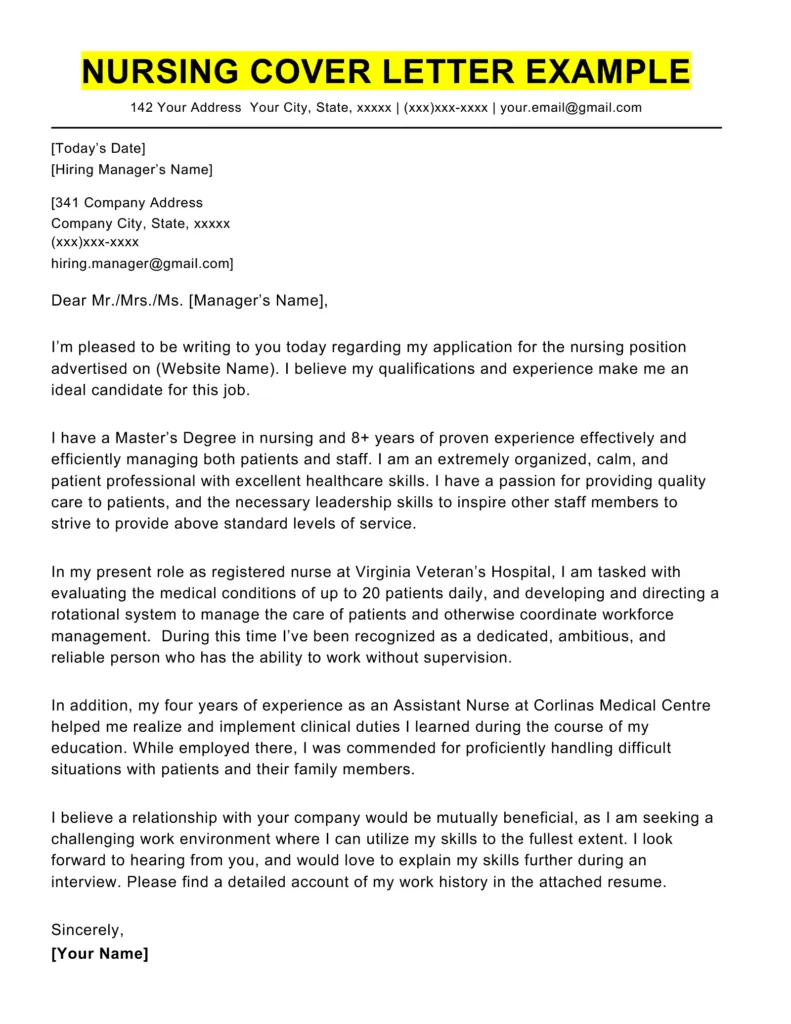
5 Tips for Nursing Student Cover Letters
Crafting a compelling cover letter is a crucial step in landing your dream nursing role. As a nursing student, your cover letter is your chance to showcase your potential, highlight your skills, and demonstrate your passion for the profession. Unlike seasoned nurses who can lean on years of experience, you must effectively communicate your enthusiasm, educational background, and any relevant experiences like clinical rotations and volunteer work. A well-written cover letter can set you apart from other applicants and make a positive impression on potential employers. It’s an opportunity to tell your story, explain why you’re the right fit, and express your career goals. Mastering the art of cover letter writing is a vital skill for any aspiring nurse. This guide provides five essential tips to help you create a standout cover letter that captures the attention of hiring managers.
Highlight Your Skills and Experiences
Your cover letter should serve as a concise introduction to your skills and experiences, even if you’re just starting your nursing career. Even without extensive professional experience, you’ve likely gained valuable skills through your nursing education, clinical rotations, and any volunteer work. Identify the key skills the employer is looking for and then match those with your abilities. Include skills like patient care, communication, critical thinking, and teamwork. For each skill, provide specific examples from your clinical rotations or volunteer experiences to demonstrate how you’ve applied them. For example, if you possess strong communication skills, describe a situation where you effectively communicated with a patient or their family. If you have experience with electronic health records (EHR) or specific medical equipment, make sure to mention it. This targeted approach shows the employer that you have the skills necessary for the role and that you are prepared for the practical aspects of nursing.
Quantify Your Achievements

Whenever possible, quantify your achievements and experiences to demonstrate your impact. Instead of simply stating that you provided patient care, specify the number of patients you cared for or the types of procedures you assisted with. For example, you could mention that you assisted with the care of 20+ patients during your clinical rotation in the ICU. If you received any awards, recognition, or positive feedback, be sure to include them. Use numbers, percentages, and specific details to make your accomplishments more compelling and memorable. For instance, if you improved patient satisfaction scores in a clinical setting, state the percentage increase. Quantifiable achievements provide concrete evidence of your abilities and make your cover letter more persuasive. By providing measurable results, you demonstrate your capability and show employers the value you can bring to their team. Ensure your achievements align with the requirements of the job posting, helping you to highlight your relevant competencies.
Showcase Your Passion for Nursing
Your cover letter is a perfect place to demonstrate your enthusiasm for nursing. Explain what motivates you to pursue a career in this demanding but rewarding field. Share your personal experiences or insights that have shaped your passion for nursing. Whether it’s a specific moment during a clinical rotation or a personal connection to healthcare, use your cover letter to convey your genuine interest in caring for patients. Talk about why you chose nursing, what aspects of nursing you find most appealing, and the kind of impact you hope to make on patients’ lives. Avoid generic statements and instead, provide specific examples that illustrate your commitment to patient care and your desire to contribute to a positive healthcare environment. Let your passion shine through to connect with the hiring manager on an emotional level and make a memorable impression. Authenticity and genuine interest will help you stand out from the crowd, emphasizing your dedication to the nursing profession.
Tailor Your Letter to the Role
Generic cover letters rarely make a strong impact. Customize each cover letter you write to the specific job and organization you are applying to. Start by carefully reviewing the job description and identifying the key requirements, skills, and values that the employer is seeking. Then, tailor your cover letter to address these specific elements. Highlight the experiences and skills that align with the job requirements, and use the same keywords and phrases as the job posting. Research the organization to understand its mission, values, and culture. Show that you have taken the time to learn about the organization, and explain why you are particularly interested in working there. Customize the language and tone of your letter to match the organization’s style. This level of personalization shows your genuine interest in the position and demonstrates that you have carefully considered your fit with the role and the organization. Tailoring your letter increases your chances of making a positive impression and getting an interview.
Proofread and Edit Carefully

A cover letter riddled with errors can immediately disqualify you from consideration. Proofread your cover letter carefully for any grammatical errors, typos, and inconsistencies. Ensure that your letter is clear, concise, and easy to read. Read your cover letter aloud to catch any awkward phrasing or sentence structures. Consider asking a friend, professor, or career counselor to review your letter for feedback. They may catch errors that you missed and provide valuable suggestions for improvement. A well-written, error-free cover letter demonstrates your attention to detail, professionalism, and commitment to excellence. Use a spell checker and grammar checker, but don’t rely on them entirely. Manual proofreading is essential to catch errors that automated tools may miss. Take the time to revise and refine your cover letter until you are confident that it accurately represents you and showcases your qualifications. A polished cover letter is the final step in making a positive impression.
Emphasize Your Education and Certifications
As a nursing student, your education and any certifications you’ve earned are vital assets. Clearly state your degree, the name of your nursing program, and your expected graduation date. If you have any specializations or areas of focus within your nursing program, be sure to highlight them. Include any relevant certifications, such as Basic Life Support (BLS), Advanced Cardiac Life Support (ACLS), or any other certifications required or preferred by the employer. If you have received any academic honors or scholarships, include them as well. These demonstrate your dedication to excellence and your achievements. Use your cover letter to give a brief overview of your clinical experiences, including where you completed your rotations and the patient populations you worked with. This will provide a snapshot of your practical experience and help the employer assess your suitability for the role. Make sure that you present this information in a way that is easy to understand, making your qualifications clear and concise. Showcasing your educational background and certifications provides employers with confidence in your abilities.
In conclusion, writing a strong cover letter is a critical step for nursing students seeking employment. By following these five key tips, you can create a compelling cover letter that highlights your skills, passion, and qualifications. Remember to tailor your letter to each specific job, proofread carefully, and emphasize your education and certifications. Good luck with your job applications!