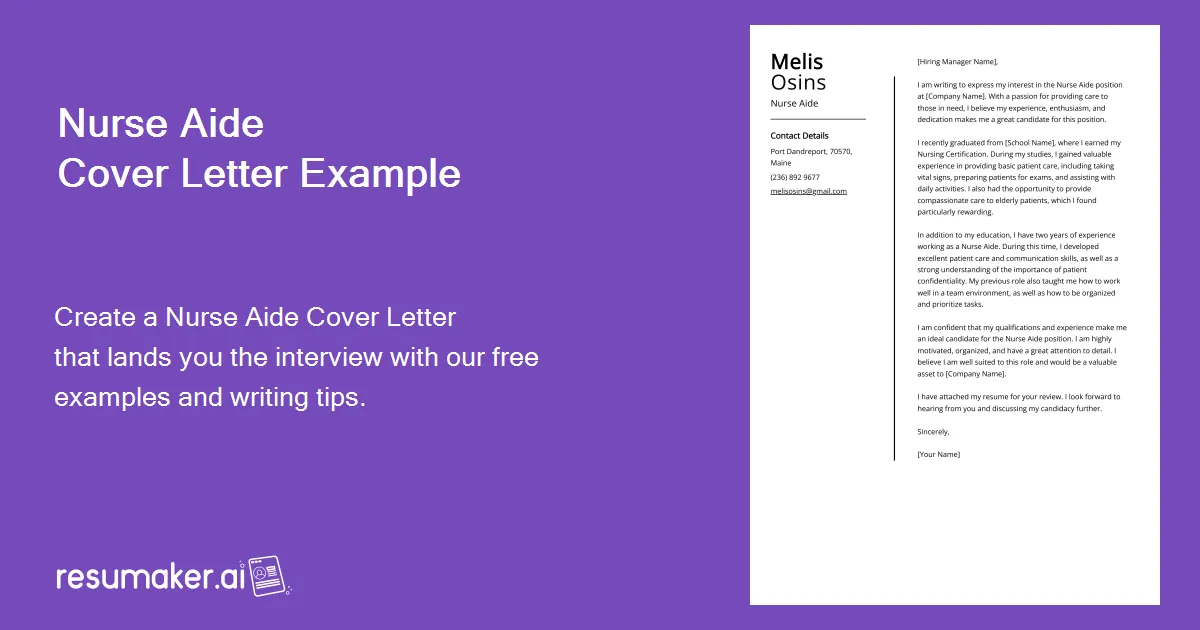
Understanding the Nurse Aide Cover Letter
A well-crafted cover letter is a critical tool for any aspiring Nurse Aide. It serves as your first introduction to a potential employer, providing an opportunity to showcase your skills, experience, and passion for patient care. This guide will walk you through the essential components of a compelling Nurse Aide cover letter, helping you to create a document that grabs attention and secures you an interview. Understanding the purpose and structure of a cover letter is the first step in making a strong impression.
Purpose of a Nurse Aide Cover Letter
The primary purpose of a Nurse Aide cover letter is to personalize your job application and highlight your suitability for the role. It provides a platform to elaborate on your qualifications, demonstrate your understanding of the healthcare environment, and express your genuine interest in the position and the facility. A cover letter allows you to go beyond the information presented in your resume and give employers a better sense of your personality, work ethic, and commitment to providing excellent patient care. It’s your chance to tell a story about who you are and why you would be a great nurse aide.
Key Components of a Nurse Aide Cover Letter

A strong Nurse Aide cover letter comprises several key components, each contributing to its overall effectiveness. These elements work together to create a cohesive narrative that showcases your qualifications and enthusiasm for the role. Attention to detail in each section is crucial for making a positive first impression.
Header Section
Applicant Information
Begin with your contact information: your full name, address, phone number, and professional email address. Ensure your email address sounds professional. It’s the first piece of information the employer will see, so it should be clear and easy to read. This information allows the employer to easily contact you for an interview.
Date

Include the current date, usually formatted at the top of the letter. This indicates when the letter was written and helps with organization.
Employer Information
Address the letter to the hiring manager if possible. Research their name and title. If a specific name isn’t available, use a formal greeting like “Dear Hiring Manager”. Include the employer’s name, the facility name, and the address. This personal touch demonstrates your interest and attention to detail. (Image: nurse-aide-cover-letter-header.webp)
Salutation
Start with a professional greeting such as “Dear Mr./Ms. [Last Name]” or “Dear Hiring Manager.” Using the correct name is crucial; it shows that you have taken the time to personalize your application. Avoid generic greetings if possible.
Body Paragraph 1: Introduction

Express Your Interest
Clearly state your interest in the Nurse Aide position. Mention how you learned about the opening (e.g., job board, referral). Demonstrate your enthusiasm from the outset.
Mention the Specific Position
Specify the exact role you are applying for. Refer to the job title as listed in the job posting to ensure you are addressing the correct opportunity. This shows that you have carefully read the job description and are tailoring your letter accordingly.
Body Paragraph 2: Highlighting Skills and Experience

This is where you showcase your qualifications. Tailor this section to the job requirements, emphasizing the skills and experiences that align with the position. Provide concise examples and quantifiable achievements whenever possible.
Relevant Certifications
List your Nurse Aide certification and any other relevant credentials, such as CPR or First Aid certification. Include the issuing organization and the dates of certification. This immediately establishes your professional qualifications.
Patient Care Experience
Describe your previous experiences in patient care, highlighting your responsibilities and accomplishments. Give specific examples of how you provided care, assisted patients with daily living activities, and contributed to a positive environment. Mention any specialized skills or experience, like working with specific patient populations (e.g., elderly, disabled). Use action verbs to demonstrate your capabilities. (Image: nurse-aide-patient-care.webp)
Soft Skills and Attributes

Highlight soft skills such as compassion, empathy, communication, teamwork, and problem-solving. Provide examples of how you have demonstrated these skills in past roles. This could include the ability to communicate with patients and families effectively, the ability to work collaboratively with a healthcare team, and the ability to remain calm in stressful situations. (Image: nurse-aide-skills.webp)
Body Paragraph 3: Demonstrating Passion and Fit
In this paragraph, showcase why you are interested in the specific facility and what you can bring to their team. This helps you stand out by showing that you have researched the facility and understand its mission and values.
Why You Chose This Facility
Explain why you are drawn to this particular facility. Mention any specific programs, services, or values that resonate with you. This shows that you have researched the facility and are genuinely interested in working there. This also demonstrates your interest and attention to detail. (Image: nurse-aide-facility-choice.webp)
Your Care Philosophy

Briefly explain your approach to patient care and the values that guide your work. This could include a focus on patient dignity, comfort, or a collaborative approach to care. This helps the employer understand your approach and commitment to patient well-being. (Image: nurse-aide-care-philosophy.webp)
Concluding the Cover Letter
The conclusion provides a final opportunity to reiterate your interest, thank the employer, and encourage them to contact you. Ensure the conclusion is concise, professional, and leaves a positive impression.
Call to Action
Express your enthusiasm for an interview and make it easy for the employer to contact you. Include your phone number and email address again. State that you are available for an interview at their earliest convenience. (Image: nurse-aide-closing.webp)
Closing and Signature

Use a professional closing, such as “Sincerely” or “Respectfully.” Leave space for your handwritten signature above your typed name. This adds a personal touch and indicates you have reviewed the document.
Formatting and Design Best Practices
The formatting and design of your cover letter are just as important as the content. A well-formatted letter is easy to read and conveys professionalism. Pay attention to fonts, spacing, and overall layout to create a polished document.
Font and Style
Use a clear and readable font, such as Times New Roman, Arial, or Calibri, in a 10-12 point size. Maintain a consistent font throughout the letter. Use appropriate spacing and margins (1-inch margins are standard). Avoid excessive use of bolding, italics, or underlining. (Image: nurse-aide-font-style.webp)
Length of the Cover Letter
Keep your cover letter concise, ideally no longer than one page. Focus on the most relevant information and avoid unnecessary details. Respect the hiring manager’s time by presenting your qualifications efficiently.
Proofreading and Editing
Proofread your cover letter meticulously for any grammatical errors, spelling mistakes, and typos. Ask a friend or family member to review your letter as well. Errors can damage your credibility. Ensure your language is clear, professional, and free of jargon. (Image: nurse-aide-proofreading.webp)