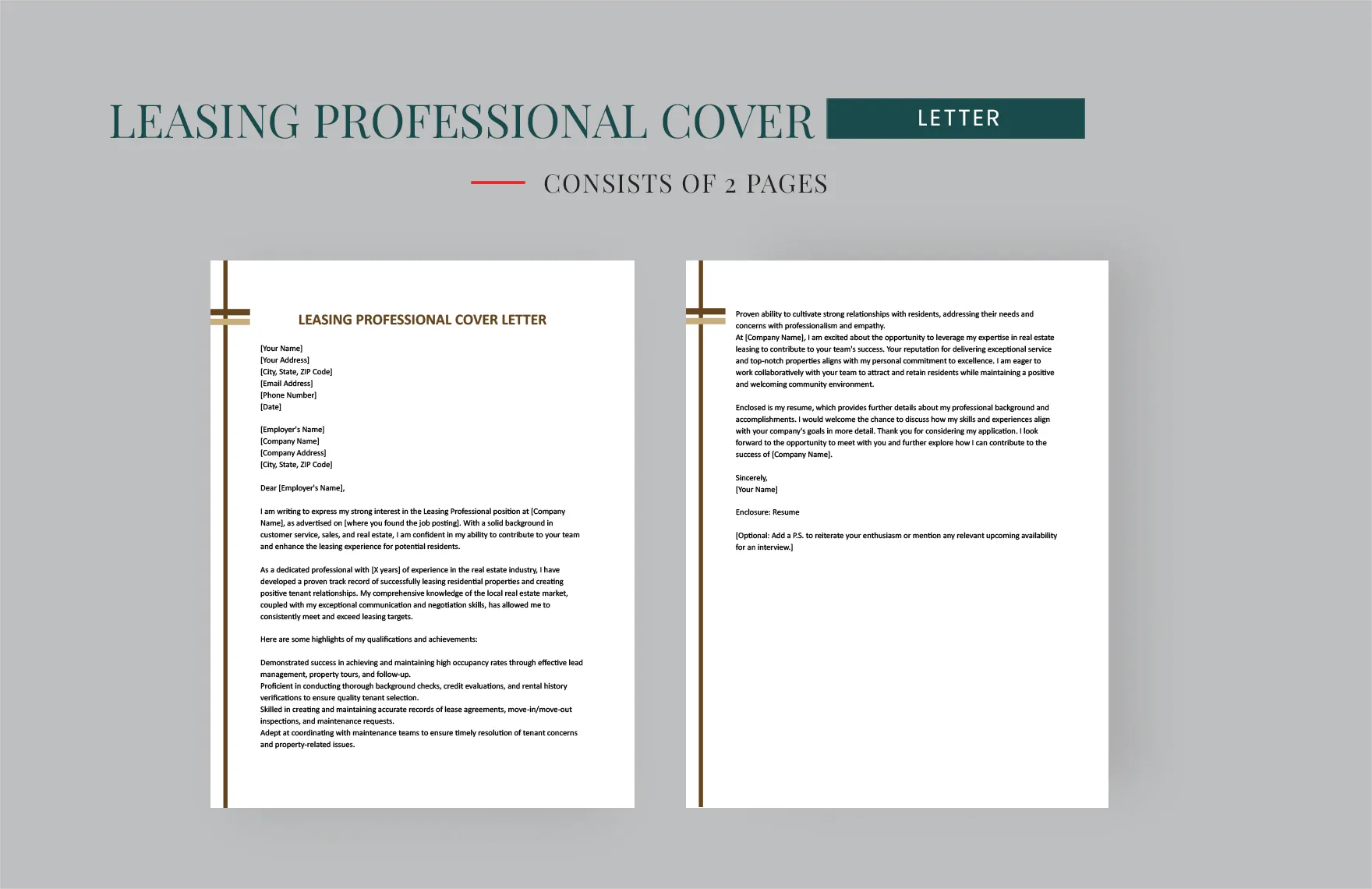
Crafting Your Leasing Agent Cover Letter
A well-crafted cover letter is your first opportunity to make a positive impression on a potential employer. For aspiring leasing agents, a compelling cover letter can be the key to unlocking the door to a successful career in property management. It’s more than just a formality; it’s a crucial tool for showcasing your skills, enthusiasm, and suitability for the role. This guide will walk you through the essential steps to create a standout cover letter that grabs the attention of hiring managers and sets you apart from the competition. We will cover everything from understanding the purpose of a cover letter to formatting and submitting your application effectively. A strong cover letter demonstrates your professionalism, attention to detail, and your genuine interest in the position, significantly increasing your chances of landing an interview. Let’s dive in and create a cover letter that truly represents you.
Understanding the Purpose of a Cover Letter
Before you start writing, it’s vital to understand what a cover letter is designed to achieve. The primary purpose of a cover letter is to introduce yourself to the hiring manager and explain why you are the ideal candidate for the leasing agent position. It provides an opportunity to go beyond the information presented in your resume, allowing you to elaborate on your qualifications, highlight relevant experiences, and express your genuine interest in the role and the company. A cover letter is also a chance to demonstrate your communication skills and writing ability, essential qualities for a leasing agent. Moreover, it allows you to address any specific requirements or preferences mentioned in the job description, showing that you’ve taken the time to understand the role and tailor your application accordingly. A well-written cover letter should entice the reader to want to learn more about you, leading to the all-important interview stage. This demonstrates initiative and a proactive approach to the job search process.
Highlighting Your Skills and Qualifications

Your cover letter is the perfect platform to spotlight your skills and qualifications that align with the leasing agent role. Focus on the key attributes that make a successful leasing agent, such as strong communication and interpersonal skills, sales ability, and organizational prowess. It’s important to connect your skills directly to the job requirements. Review the job description carefully to identify the specific skills and experiences the employer is seeking. Then, use your cover letter to show how you possess these qualifications. Use specific examples from your past experiences to illustrate these skills. For instance, if the job description emphasizes customer service, provide an example of a time you went above and beyond to assist a customer. Highlighting these skills not only shows you can perform the job, but also demonstrates your potential to contribute to the company’s success.
Reviewing the Leasing Agent Job Description
Thoroughly reviewing the job description is a fundamental step in tailoring your cover letter effectively. The job description provides critical insight into the employer’s needs and expectations. Pay close attention to the specific skills, experiences, and qualifications the company is looking for in a leasing agent. Identify the keywords and phrases used in the description, as these often indicate the key competencies the employer values most. Tailoring your cover letter to match these requirements demonstrates that you’ve taken the time to understand the role and that you’re a good fit for the company’s culture. Customize your cover letter to address the specific requirements outlined in the job description, showcasing how your skills and experiences align with their needs. This personalized approach significantly increases your chances of getting noticed by the hiring manager. For instance, if the job description mentions proficiency in a specific software or experience in a certain type of property management, be sure to highlight your relevant experience and skills in these areas.
Key Components of a Leasing Agent Cover Letter
Structuring your cover letter correctly is crucial for making a strong impression. A well-organized cover letter typically includes several key components that work together to present you in the best possible light. Each section serves a distinct purpose, ensuring that your application is clear, concise, and compelling. From the essential contact information at the top to the closing statement that reiterates your interest, each element contributes to the overall effectiveness of your letter. Understanding these components and how to incorporate them effectively will help you create a cover letter that captures the attention of hiring managers. Let’s break down the essential elements needed to build a cover letter that gets you noticed.
Contact Information

At the top of your cover letter, provide your contact information. Include your full name, address, phone number, and professional email address. Make sure your email address is professional and easy to read. This ensures that the hiring manager can easily reach you if they decide to move forward with your application. Double-check all the details for accuracy to avoid any errors. This is the first piece of information the hiring manager will see, so it’s important to make a good impression from the outset. Presenting accurate and up-to-date contact information shows attention to detail and professionalism, which are essential qualities for a leasing agent.
Date
Following your contact information, include the date the cover letter is written. This helps the employer keep track of when the application was submitted. Always ensure the date is current, reflecting the day you’re sending your application. The date ensures the application is up to date and valid. It’s a simple yet essential element that adds to the professional presentation of your cover letter, demonstrating that you’re organized and attentive to detail. Including the date is a standard practice and shows that you’re following professional conventions.
Hiring Manager’s Name and Title
Address your cover letter to the hiring manager by name. If possible, research the name of the person responsible for hiring for the leasing agent position. Addressing the letter to a specific person shows that you’ve taken the time to learn about the company and that you’re serious about the job. Use the hiring manager’s title and formal name (e.g., Mr., Ms., or Dr.) to show respect. If you cannot find a specific name, you can use a general greeting, such as “Dear Hiring Manager.” Tailoring your greeting to the specific person or role adds a personal touch and can make your cover letter more impactful. This shows you’re not just sending out a generic letter but that you’re genuinely interested in the position.
The Opening Paragraph

The opening paragraph is your first chance to grab the hiring manager’s attention. Start by stating the position you are applying for and how you learned about the opportunity. Clearly express your enthusiasm for the role and the company. You might mention something that caught your attention in the job description or show your excitement about the prospect of joining the team. Keep it concise and focused, setting the tone for the rest of the letter. This paragraph should immediately grab the reader’s attention, so make it engaging. State your objective and express your eagerness to contribute to the company’s success. Begin with a strong opening statement that makes the reader want to know more. This initial impression is critical, as it determines whether the hiring manager continues reading your cover letter or moves on.
Expressing Your Interest and Enthusiasm
Throughout your cover letter, show genuine interest and enthusiasm for the leasing agent position. This excitement should be evident in your tone and language. Share your passion for the real estate industry, property management, or customer service. Explain why this particular role and company appeal to you, and emphasize what excites you most about the opportunity. Demonstrate your eagerness to learn more and contribute to the team’s goals. Your enthusiasm can set you apart from other candidates. When expressing your interest, connect it back to the company’s values or mission if possible. This can show that you’ve done your research and are aligned with their culture. Make sure your interest is authentic and reflects your real feelings about the job. This can include what aspects of the role particularly excite you or what you hope to achieve in the position. Showing that you care can make a big difference.
Highlighting Relevant Experience
Focus on your experience that is most relevant to the leasing agent role. If you have previous experience in sales, customer service, or property management, highlight those roles. Even if your experience is not directly related to leasing, identify transferable skills, such as communication, negotiation, or organizational abilities. Provide specific examples of your accomplishments. Whenever possible, quantify your achievements with data. This demonstrates the value you can bring to the company. Explain how your previous experiences have prepared you for the responsibilities of a leasing agent. Be sure to explain your duties and responsibilities, focusing on how they align with the job description. Tailor your highlights to the specific requirements mentioned in the job posting. This makes it easy for the hiring manager to see your skills and experience in relation to their needs.
Showcasing Key Skills for Leasing

Identify and showcase the key skills essential for a leasing agent. This is a critical part of your cover letter. These skills often include sales and negotiation, customer service, and strong organizational and time management abilities. Use specific examples to demonstrate how you have successfully utilized these skills in the past. Align your skills with the job requirements and the needs of the company. Explain how these skills will enable you to excel in the role. The more examples and proof you can provide, the more impactful your cover letter will be. Mentioning these skills shows the hiring manager you are a well-rounded candidate. Showcasing key skills helps you make a strong case for why you’re the right person for the job.
Sales and Negotiation Skills
Emphasize your sales and negotiation skills in your cover letter, as these are critical for a leasing agent’s success. Explain your experience in generating leads, closing deals, and meeting or exceeding sales targets. Provide specific examples of successful sales outcomes and strategies you’ve employed. Highlight your ability to persuade potential tenants and negotiate lease terms. Demonstrate your understanding of sales techniques and customer relationship management. Mention your ability to understand client needs and successfully close deals. These skills directly impact your performance and revenue.
Customer Service and Communication Skills
Highlight your customer service and communication skills. A leasing agent must communicate effectively with potential and current tenants. Describe your ability to build rapport, address concerns, and provide excellent customer service. Mention specific examples of how you have resolved tenant issues and improved customer satisfaction. Include your strong listening skills, and ability to clearly explain complex information. Demonstrate your ability to communicate professionally, both verbally and in writing. Show that you understand the importance of creating positive tenant relationships. Your communication skills are essential for tenant retention and overall property management success.
Organization and Time Management

Emphasize your organizational and time management skills. A leasing agent manages multiple tasks. Detail your abilities to manage your time effectively, prioritize tasks, and meet deadlines. Mention any organizational systems or tools you’ve used to stay on track. Give examples of your ability to handle multiple responsibilities simultaneously. Show your capability to manage a high volume of inquiries and tasks. These skills are essential for handling lease applications, scheduling showings, and other property management duties. Providing specifics will illustrate your abilities. Your efficiency ensures smooth operations and tenant satisfaction.
Quantifying Achievements with Data
Whenever possible, support your claims with data to quantify your achievements. Using numbers, percentages, and specific metrics makes your accomplishments more impactful and provides concrete evidence of your skills. For example, instead of saying “Increased sales,” say “Increased sales by 15% in six months.” Similarly, instead of saying “Improved customer satisfaction,” you could say “Improved customer satisfaction scores by 20% through enhanced communication strategies.” Providing specific, quantifiable results shows the hiring manager the value you can bring to their company. This will provide a clear picture of your past achievements and demonstrate your capacity to achieve similar results in the new role.
Using Action Verbs to Describe Accomplishments
Use strong action verbs to describe your accomplishments and responsibilities. Action verbs bring your experiences to life. Start sentences with verbs that showcase your proactive approach and achievements. Examples of effective action verbs include managed, achieved, increased, reduced, implemented, and developed. These words instantly demonstrate your competence and show what you’ve accomplished. Using action verbs shows that you are results-oriented and detail-oriented, which are important qualities for a leasing agent. Always use action verbs to make your statements about your skills clear and impactful. The actions you’ve taken and the results you’ve achieved will be more memorable.
The Body Paragraphs

The body paragraphs are the core of your cover letter, where you provide detailed information about your qualifications, experience, and how they align with the job requirements. Structure these paragraphs to highlight your skills and accomplishments, using specific examples to support your claims. Each paragraph should address a specific aspect of your experience or skills, making sure the information is relevant to the leasing agent position. Aim for a clear and concise writing style. By structuring your body paragraphs effectively, you can create a compelling narrative that persuades the hiring manager. Use these paragraphs to showcase your value and make a strong case for why you are the best candidate.
Connecting Your Skills to the Job Requirements
Clearly connect your skills and experiences to the specific requirements of the job. Review the job description carefully and identify the key skills and qualifications the employer is seeking. Then, in your body paragraphs, explain how your skills and experiences match these requirements. Provide examples to demonstrate how you have successfully used these skills in the past. This alignment shows the hiring manager that you understand the needs of the role. Always tailor your application for each job. Tailoring your skills to the job description helps the hiring manager see you as the perfect fit for the position. Make it easy for the hiring manager to see that you have the skills and experiences they’re seeking.
Providing Specific Examples
Provide specific examples to support your claims and showcase your skills. Instead of making broad statements, provide concrete examples of your achievements and how you have applied your skills in past experiences. When describing your accomplishments, use the STAR method – Situation, Task, Action, Result – to provide a clear and concise overview. This helps the hiring manager understand the context, your role, and the outcome of your actions. The use of specific examples demonstrates the value you can bring to the role. These examples not only validate your skills but also provide a clear picture of your capabilities.
Demonstrating Your Knowledge of the Industry
Demonstrate your knowledge of the real estate or property management industry. If you’re familiar with industry trends, regulations, or specific property management software, mention them. Show that you are updated on the current market and leasing practices. Demonstrate your commitment to professionalism and your familiarity with the industry. Mention any industry-related certifications or training programs you’ve completed. Providing this information demonstrates your commitment to the profession and your dedication to staying informed. Highlighting your industry knowledge shows the hiring manager that you are informed and capable, and that you understand the requirements of the role.
The Closing Paragraph
The closing paragraph is your final opportunity to leave a lasting impression. In this section, reiterate your interest in the position and the company. Express your enthusiasm for the opportunity and summarize why you’re the best candidate. End with a call to action, requesting an interview and thanking the hiring manager for their time and consideration. This ensures you’re ready for the next step. The closing paragraph demonstrates that you’re proactive and eager to move forward. It’s a great way to make sure the hiring manager remembers you and is encouraged to contact you.
Reiterating Your Interest
In your closing paragraph, reiterate your interest in the leasing agent position and the company. Briefly summarize why you are the best fit for the role, and express your eagerness to contribute to the company’s success. Restating your interest reinforces your enthusiasm and demonstrates your commitment to the opportunity. Reminding the hiring manager of your qualifications in the closing paragraph keeps you top of mind. This emphasizes your genuine interest in the opportunity. This will leave a final positive impression.
Call to Action
Include a clear call to action. This is a direct request for the hiring manager to take the next step in the hiring process. State your availability for an interview and provide your contact information. Thank the hiring manager for their time and consideration. This encourages the hiring manager to take action. It also shows your professionalism and initiative. Your call to action is designed to move the application process forward.
Proofreading and Editing
Before submitting your cover letter, carefully proofread and edit it to ensure it is free of errors. Errors in grammar, spelling, or punctuation can undermine your credibility. Check for any typos, grammatical mistakes, or formatting inconsistencies. Ensure that the tone and language are professional. Also, it is very important to make sure that it is easy to read. Consider having a friend, family member, or career advisor review your cover letter to provide a fresh perspective. This can help you catch mistakes. A well-proofread cover letter shows attention to detail and professionalism. Taking the time to proofread and edit is crucial for presenting yourself in a positive light. This also demonstrates that you have excellent attention to detail.
Ensuring Accuracy and Professionalism
Always ensure your cover letter is accurate and professional. Double-check all details. Use a professional font and layout. Maintain a formal and polite tone throughout the letter. Address the hiring manager correctly, and tailor your letter to match the requirements of the job. Make sure the information presented in your cover letter is honest and accurate. Verifying all details ensures that your application presents you in a positive and reliable manner. Highlighting accuracy and professionalism in your application will definitely set you apart from other candidates. Your diligence is your best chance to be offered the opportunity.
Formatting Your Cover Letter
Proper formatting is essential for making your cover letter easy to read and visually appealing. Your cover letter should look professional and be easy to read. Choose a clear and legible font, use appropriate spacing, and ensure consistent formatting throughout the document. Formatting is important to ensure that your cover letter makes a good first impression and shows that you pay attention to detail. Poor formatting can distract the reader and diminish the overall effectiveness of your letter. Correct formatting will make your cover letter look its best and makes it easy for the hiring manager to find the important points quickly.
Choosing the Right Font and Layout
Choose a professional font and layout. Use fonts like Times New Roman, Arial, or Calibri. Keep the font size between 10 and 12 points for readability. Use a standard layout with clear margins and spacing. Ensure your layout is consistent throughout the letter. Your font choice can affect how the hiring manager perceives your application. Use the correct formatting for a professional appearance. The correct font and layout will make your cover letter visually appealing, making it easy for the hiring manager to read. Make sure the layout is balanced and clear. This is an important factor for ensuring that your cover letter is easy to read and looks professional. Proper formatting shows that you’ve taken the time to present yourself in the best possible light.
Tailoring Your Cover Letter
Tailoring your cover letter is vital for demonstrating your genuine interest in the role and the company. Generic cover letters often fail to capture the hiring manager’s attention. Instead, take the time to customize each cover letter to match the specific requirements of the job and the values of the company. Demonstrating that you’ve taken the time to research the company can help you stand out from other candidates. This helps your cover letter read as if it was crafted for that job and that company alone. Take the time to show your interest in the role and company. Tailoring your cover letter will make it more impactful and will help you land an interview.
Customizing for Each Application
Customize your cover letter for each job application. Avoid sending a generic cover letter to multiple companies. Instead, tailor your letter to each job you apply for. Customize your cover letter by referencing the job description and company details. Research the company and mention specific things you like about their mission or culture. Highlighting specific skills or experiences helps you show that you are the right fit. Including these details can really improve your application. Showing the time you’ve taken to learn about the role and the company will definitely make you stand out. Your customized cover letter makes a more compelling case for your qualifications.
Submitting Your Cover Letter
Proper submission of your cover letter and resume is crucial for making a positive impression. Follow all application instructions carefully. Make sure your application is submitted in the required format. Ensure that all your attachments are clearly labeled and organized. This includes your cover letter and resume. Double-check all attachments before submitting to avoid any errors. A well-submitted application demonstrates professionalism and attention to detail. This is essential for showing the hiring manager that you meet all the application requirements and that you’re a reliable and organized candidate. This ensures that your application reaches the right people and in the right format.
Best Practices for Sending Your Application
Follow best practices for submitting your application. Carefully review the application instructions and adhere to them precisely. If the instructions specify a particular file format, make sure you use it. Ensure your attachments are clearly labeled with your name and the job title. Before submitting, proofread your application to check for any errors. If you’re submitting your application via email, use a professional subject line. Once you’ve submitted your application, consider sending a follow-up email to confirm receipt. Following best practices shows your attention to detail and professional approach. These steps show that you’re a serious and professional candidate. Using these practices significantly increases your chances of making a good impression.