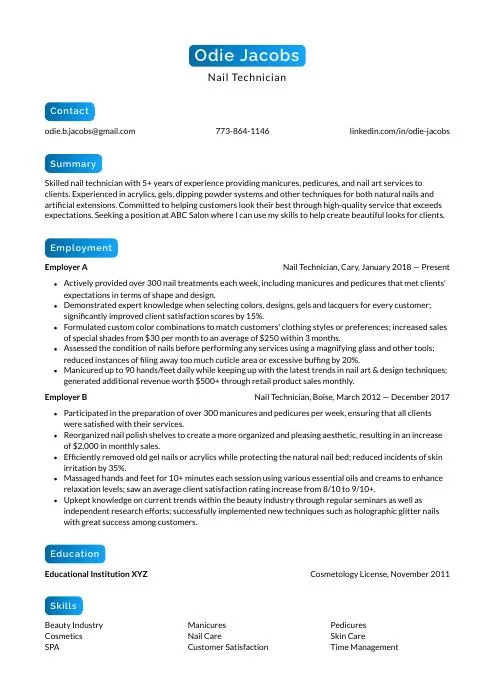
Why You Need a Nail Technician Cover Letter
In the competitive world of nail technology, a well-crafted cover letter can be your secret weapon. While your resume provides a snapshot of your skills and experience, a cover letter allows you to showcase your personality, passion, and unique qualifications. It’s your opportunity to make a strong first impression and persuade potential employers why you’re the perfect fit for their salon or spa. Think of it as your chance to go beyond the bullet points and connect with the hiring manager on a personal level. A compelling cover letter demonstrates your genuine interest in the position and highlights what makes you stand out from other applicants. Without a cover letter, you risk blending in with the crowd, missing out on the chance to articulate your value and increase your chances of landing an interview.
Highlighting Your Skills and Experience
Your cover letter should be a showcase of your abilities, aligning them directly with the job requirements. This involves a detailed exploration of your skills, experience, and any achievements that exemplify your abilities. This part is crucial because it informs the hiring manager about what you bring to the table. Make sure to mention specific techniques you excel in, your experience with different nail products, and your ability to create various nail art designs. Providing concrete examples of how you’ve used these skills to satisfy clients, handle difficult situations, or improve business performance can be highly effective.
Your Nail Technician Skills

List your technical skills. This includes manicures, pedicures, acrylics, gels, nail art, and any specialized techniques you possess. Tailor this section to match the specific job description; if they emphasize gel manicures, highlight your proficiency in that area. Always quantify your skills with numbers if you can. For instance, you can say, ‘Performed an average of 15 gel manicures per week, consistently receiving positive feedback on the quality and longevity of the service.’
Nail Art Proficiency
If you have a knack for nail art, this is the perfect place to show it. Describe your skills with different art techniques, such as freehand designs, 3D nail art, and intricate patterns. If you have experience with specific art styles, mention them. Provide any awards or recognition you’ve received for your art or your speed, accuracy or artistry in doing it. If the job description mentions a particular style, make sure to highlight your related experience and expertise.
Client Communication and Customer Service
Client interaction is essential for a nail technician. Highlight your customer service skills and your ability to build rapport. If you’ve received any awards for your client service or good reviews, include them. Explain your communication style, emphasizing that you listen well and can understand clients’ needs. Highlight your experience in handling different client personalities, managing complaints, and resolving issues. Mention how you go above and beyond to create a comfortable, enjoyable experience for your clients, which will impress potential employers.
Showcasing Your Professional Experience

Your cover letter’s impact will depend on how well you present your professional experiences. Focus on the relevant work you’ve performed in the past. Begin with your most recent experiences, and succinctly describe your role and responsibilities in each position. Provide some details about the salons or spas where you worked. Mention the size, location, and any specific focus of the business. This context helps the hiring manager understand the environment where you gained your experience and how it aligns with the current job opportunity. Be sure to include quantifiable results or accomplishments where possible, like how many clients you served per day, or the number of repeat clients you gained.
Tailoring Your Cover Letter to the Job
A generic cover letter is unlikely to make a strong impression. Customize each letter to match the specific job description. Review the description carefully and highlight the skills and experiences the employer seeks. This will demonstrate your serious interest. You should avoid using the same cover letter for every application; instead, take the time to adapt it to each position, highlighting the skills, experiences, and qualifications that the employer specifically seeks. This attention to detail significantly increases your chances of being considered.
Researching the Salon or Spa
Before you start writing, research the salon or spa. Visit their website, social media pages, and read online reviews. Understanding the business’s values, services, and clientele can help you tailor your letter. Show the hiring manager that you understand their business model and can contribute to their success. Mentioning this understanding will make your cover letter more personal and focused. By doing your research, you can tailor your letter to show how your skills and experience align with the salon’s brand and values.
Matching Skills to Job Requirements

Carefully compare your skills and experience with the job’s requirements. Identify keywords and phrases in the job description and incorporate them naturally into your cover letter. This helps the employer see how well you fit the role. If the job emphasizes a specific technique or service, make sure to highlight your experience and proficiency in that area. By carefully aligning your skills with the job requirements, you make it clear that you are a strong candidate who has the specific expertise needed for the position.
Crafting a Compelling Opening
The first paragraph is essential. It’s your chance to grab the reader’s attention. It should be concise, enthusiastic, and focused on the specific job. You can start with a brief summary of why you’re interested in the position or the salon, mentioning where you saw the job posting, and highlighting a key skill or achievement. This sets the tone and encourages the reader to continue reading.
Grabbing the Reader’s Attention
Instead of a generic greeting, try starting with a strong opening statement. You can mention a specific aspect of the salon that interests you, such as its reputation or its unique services. You might also open with a quick summary of your key qualifications, highlighting your skills and accomplishments that align with the job’s requirements. Always show your enthusiasm for the role; this can be done by expressing excitement about the salon’s brand or services. This approach immediately shows the hiring manager that you have a genuine interest in the role and have taken the time to research the company.
Expressing Your Passion for Nail Tech

Show your passion for nail technology. Mention what you enjoy about the profession. Perhaps you love the creativity of nail art, the satisfaction of transforming clients’ nails, or the joy of building relationships with customers. Share a brief anecdote about why you are passionate about your work, such as a time you went above and beyond to meet a client’s need, or the positive impact you make on your clients’ lives. The purpose of this is to demonstrate your genuine passion for the profession.
Structuring the Body of Your Cover Letter
The body of your cover letter is the area where you provide the details of your skills, experience, and achievements. Organize this section logically. Use clear paragraphs, each focusing on a specific skill or aspect of your experience. Structure your body paragraphs to follow the STAR method (Situation, Task, Action, Result). This approach helps you effectively present your accomplishments. Each paragraph should be easy to read, with clear examples of how you’ve used your skills.
Emphasizing Relevant Achievements
Focus on achievements, not just job duties. Instead of saying ‘Performed manicures,’ you should say ‘Increased client satisfaction by 20% through personalized manicure services.’ Quantifiable results are very compelling to an employer, as they directly demonstrate your impact. Mention any awards, recognition, or positive feedback you’ve received. Include specific details that showcase your talents and impact, such as how you improved a salon’s efficiency or revenue.
Quantifying Your Accomplishments

Quantify your achievements whenever possible. Use numbers and data to illustrate your impact. For example, ‘Increased client retention by 15% through personalized service and attention to detail,’ or ‘Performed an average of 25 manicures per week, maintaining a 98% client satisfaction rating.’ Providing measurable results shows employers that you deliver results. This also makes it easier for the hiring manager to evaluate your performance and understand the value you bring to the role.
Using Action Verbs
Begin each sentence in the body of your cover letter with strong action verbs. This helps to create a dynamic and engaging tone. Words like ‘managed,’ ‘created,’ ‘developed,’ ‘implemented,’ ‘achieved,’ and ’exceeded’ draw the reader’s attention. Avoid passive language. Active verbs make your achievements and skills more impactful. By using action verbs, you can make your cover letter more dynamic and highlight your accomplishments.
Closing Your Cover Letter Effectively
Your closing is a final opportunity to reinforce your interest and make a strong impression. This is your chance to leave a lasting impression. Keep it concise, expressing gratitude, reiterating your interest, and including a clear call to action. By using a professional closing, you signal to the employer that you are serious about the opportunity and ready to move forward in the hiring process. It’s important to make it easy for the hiring manager to contact you.
Expressing Enthusiasm and Availability
Reiterate your enthusiasm for the position and the salon. State your interest in an interview and mention your availability. Make sure the tone remains professional and enthusiastic. Thank the hiring manager for their time and consideration. Providing your contact information is essential. Be sure to provide a professional email address and phone number. Confirming your availability shows the hiring manager that you are eager to move to the next step and are prepared to take the necessary steps.
Proofreading and Editing Your Cover Letter
Before submitting, thoroughly proofread and edit your cover letter. Errors can undermine your credibility and make it less likely you’ll be considered. Ask a friend or family member to review your cover letter. Ensure your language is clear and professional. Also, ensure that the formatting is consistent and easy to read. The process of proofreading is an important step; it demonstrates attention to detail and professionalism. It can be the difference between getting hired or not.
Common Mistakes to Avoid
Be aware of common pitfalls that can hurt your application. Some mistakes are easily avoided, such as typos. These mistakes can impact your chances. Understanding and avoiding these common mistakes can significantly increase your chances of success. These errors are often easy to correct with a little care and attention. By being careful, you can present yourself as a polished and professional candidate.
Typos and Grammatical Errors
Typos and grammatical errors can make you look unprofessional and inattentive. Always proofread carefully. Use spell-check and grammar-check tools, but do not rely on them completely. Read the cover letter aloud to check for awkward phrasing and ensure the language flows smoothly. Consider using a grammar checker. These tools can help identify any errors you may have missed.
Generic Cover Letters
Avoid using a generic cover letter. Hiring managers can easily spot a template. They want to see that you’ve taken the time to research the company and tailor your letter to the specific job. Customization demonstrates your interest and attention to detail. Generic letters suggest that you’re not particularly interested in the specific role and will decrease your chances. Take the time to tailor each cover letter.
Providing Examples of Nail Technician Cover Letters
Here are examples of different nail technician cover letters that you can use as a guide. These should demonstrate different styles to follow. They vary according to the job requirements, the level of experience of the applicant, and also the way the applicant wants to present themselves. Use them as inspiration to craft your own. Review the examples and adapt them to your personal profile. Be sure to personalize the examples to match your particular background and skills. Tailoring these examples will help your cover letter stand out.