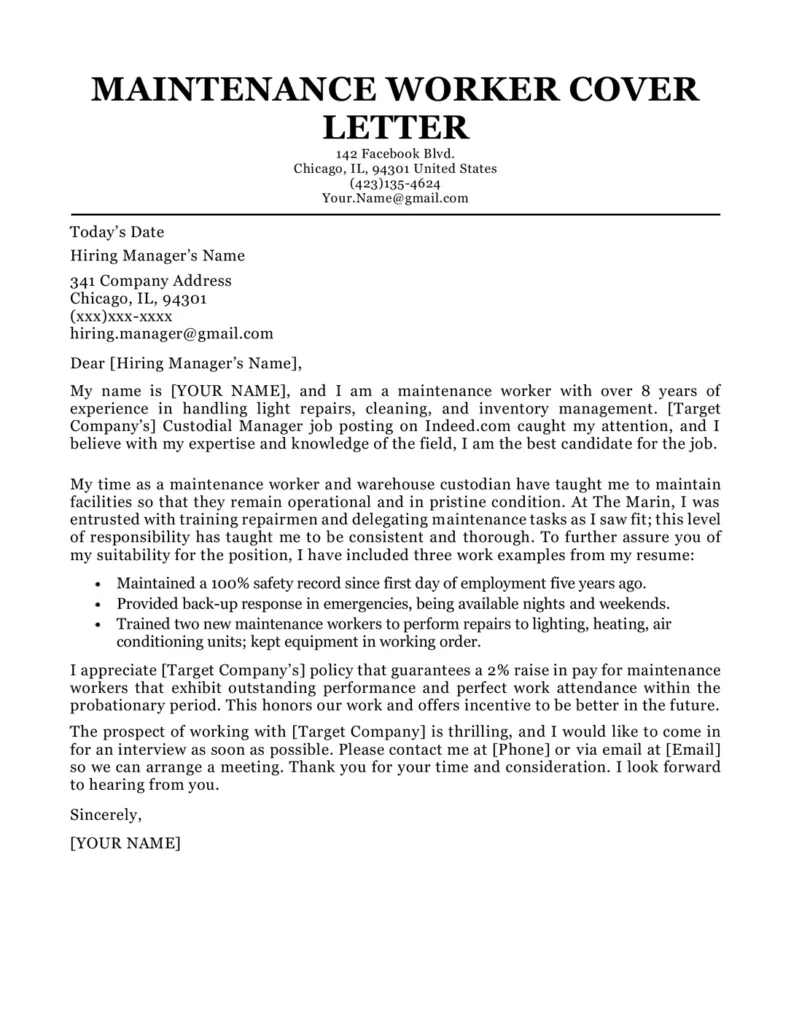
Understanding the Importance of a Maintenance Cover Letter
A well-crafted maintenance cover letter is your first opportunity to make a strong impression on potential employers. It’s your chance to showcase your skills, experience, and enthusiasm for the role, going beyond what’s listed in your resume. In the competitive field of maintenance, where attention to detail and problem-solving abilities are critical, a compelling cover letter can be the deciding factor in securing an interview. This document provides context to your application, highlighting how your qualifications align with the specific needs of the employer and the open position. A good maintenance cover letter demonstrates your understanding of the job’s requirements and your commitment to excellence, making you stand out from other applicants.
Key Elements of a Successful Maintenance Cover Letter
Several key elements are essential for a successful maintenance cover letter. These elements help you clearly and effectively present your qualifications, skills, and experience. By including these components, you can create a cover letter that effectively grabs the reader’s attention and highlights your suitability for the role.
Highlighting Relevant Skills and Experience

Your cover letter should prominently feature your relevant skills and experience. Start by identifying the key skills mentioned in the job description, such as electrical, plumbing, carpentry, or HVAC knowledge. Then, provide specific examples of how you’ve used these skills in previous roles. Quantify your achievements whenever possible, detailing the specific projects you’ve worked on, the problems you’ve solved, and the results you’ve achieved. For instance, mention how you successfully repaired a complex system or how you improved efficiency in a maintenance process. Use action verbs to describe your responsibilities and accomplishments and demonstrate your practical experience. This will give the reader a clear understanding of your capabilities.
Quantifying Accomplishments and Achievements
Whenever possible, quantify your accomplishments. Instead of simply stating you ‘reduced downtime’, specify by how much. For example, ‘reduced equipment downtime by 15% through proactive maintenance strategies.’ Using numbers and metrics to illustrate your achievements makes your cover letter more impactful and shows your ability to deliver results. For instance, you might state, ‘Managed a team of five technicians, maintaining over 200 pieces of equipment and ensuring 99% operational readiness.’ Providing hard data gives employers concrete evidence of your abilities and helps them understand the value you bring to the role.
Showcasing Knowledge of Maintenance Procedures
Demonstrate your knowledge of maintenance procedures and best practices. Discuss your familiarity with preventive maintenance schedules, safety protocols, and troubleshooting techniques. Mention any certifications or training you’ve received, such as those related to OSHA, EPA, or specific equipment. Also, describe your experience with maintenance management software, such as CMMS systems, if applicable. Showcasing your understanding of industry standards and your commitment to safety and efficiency will make you a highly attractive candidate. This detailed and relevant information establishes your credibility and readiness to perform the job effectively.
Tailoring Your Cover Letter to the Job Description

Customize your cover letter for each job application. Generic cover letters often fail to impress because they don’t demonstrate that you’ve carefully considered the specific needs of the employer. Review the job description carefully to understand the required skills, experience, and responsibilities. Then, tailor your cover letter to highlight your qualifications that align with these requirements. This shows the hiring manager that you understand what the role entails and that you are a good fit for their team. Specific examples of how your skills match the job requirements will greatly increase your chances of getting an interview.
Analyzing the Job Requirements
Carefully analyze the job description. Note the specific skills, experience, and qualifications the employer is seeking. Identify the keywords and phrases used to describe the desired candidate. Understanding the job requirements is the first step to tailoring your cover letter effectively. Make a list of the essential and preferred qualifications mentioned in the job description. This list will serve as a guide when you write your letter, ensuring you address the employer’s needs and expectations.
Matching Skills and Experience to Requirements
In your cover letter, directly address the requirements listed in the job description. Explain how your skills, experience, and accomplishments align with each requirement. Provide concrete examples that illustrate your abilities. For example, if the job requires experience with electrical systems, describe your experience working with electrical panels, troubleshooting wiring issues, and performing necessary repairs. Use specific examples to demonstrate how you have met the employer’s needs in previous roles. This direct approach makes it easier for the hiring manager to see how you fit the role and can contribute to their team.
Using Keywords from the Job Description

Incorporate keywords and phrases from the job description into your cover letter. This helps the hiring manager quickly identify that you have the qualifications they are seeking. Keywords can include specific skills, technical knowledge, or software experience. While it is important to include relevant keywords, avoid simply listing them. Integrate these keywords naturally into your sentences to describe your skills, experience, and achievements. This shows the reader that you understand the job requirements and gives your cover letter a professional and relevant tone, increasing your chances of moving forward in the application process.
Formatting and Style for Impact
The format and style of your cover letter are just as important as its content. A well-formatted and professionally written cover letter demonstrates attention to detail and professionalism. Proper formatting makes the letter easy to read and visually appealing, leaving a positive impression on the reader. A clear and concise writing style ensures your message is delivered effectively.
Choosing the Right Format
Use a standard business letter format. Include your contact information, the date, and the employer’s contact information at the top of the letter. Use a clear, readable font such as Arial or Times New Roman, and use 1-inch margins. Keep the letter concise, ideally no more than one page. Ensure there is enough white space between paragraphs to make it easy to read. This formatting makes your letter appear professional and easy to scan, increasing the likelihood that the hiring manager will read the entire document.
Using a Professional Tone

Maintain a professional and respectful tone throughout your cover letter. Avoid using slang, jargon, or overly casual language. Use a formal salutation, such as ‘Dear Mr./Ms. [Last Name],’ and a professional closing, such as ‘Sincerely’ or ‘Respectfully.’ Your tone should reflect your respect for the employer and the position you are applying for. Be polite, courteous, and enthusiastic. This professionalism will leave a positive impression and show your understanding of workplace etiquette.
Proofreading and Editing for Errors
Always proofread and edit your cover letter carefully before submitting it. Errors in grammar, spelling, and punctuation can damage your credibility and make you look unprofessional. Use spell-check and grammar-check tools, but also read the letter aloud to catch any errors that the tools may miss. Have someone else review your cover letter as a second set of eyes can catch mistakes you might not see. A polished and error-free cover letter demonstrates your attention to detail and commitment to quality, which are crucial in maintenance roles.
Examples of Effective Maintenance Cover Letters
Reviewing examples of effective maintenance cover letters can help you create your own. These examples provide a framework for how to structure your letter and what kind of information to include. Consider various scenarios, such as applying for an entry-level position or a management role, to tailor your cover letter effectively. Here are a few examples to get you started:
Example 1 Entry-Level Maintenance Technician

This example focuses on showcasing basic skills and enthusiasm for the field. Highlight any relevant coursework, volunteer experience, or any part-time work that involved maintenance tasks. Show your eagerness to learn and your willingness to take on new challenges. Mention any safety training or basic certifications you possess. This will demonstrate that you are ready to work and have a foundation of the core skills for a maintenance role. Provide a clear objective and express your desire to contribute to the team.
Example 2 Experienced Maintenance Supervisor
Focus on your leadership skills, experience in managing teams, and your ability to handle complex maintenance issues. Mention any projects you’ve led, any improvements you’ve implemented, and any reduction in downtime or costs you’ve achieved. Quantify your results using numbers and metrics to demonstrate your value. Highlight any experience with CMMS software, budget management, and vendor relations. Show your ability to manage a maintenance team effectively and efficiently and your skills to contribute to the overall operational success.
Example 3 Maintenance Manager
Emphasize your strategic planning, budgeting, and team leadership skills. Describe your experience in developing and implementing maintenance programs, managing budgets, and ensuring regulatory compliance. Highlight your ability to improve efficiency, reduce costs, and maintain a safe working environment. Showcase your ability to oversee a team of maintenance professionals, solve complex problems, and ensure the smooth operation of facilities. Focus on your ability to contribute to the organization’s overall success.
Common Mistakes to Avoid in Your Cover Letter

Avoiding common mistakes in your cover letter is crucial for making a positive impression. Some errors can immediately disqualify your application, so careful attention to detail is essential. Here are some mistakes to avoid:
Generic Cover Letters
Using a generic cover letter that is not tailored to the specific job or company. Generic cover letters show a lack of interest and make it appear you’re sending the same application to many employers. Always personalize your cover letter to the specific role and the organization you are applying to. Research the company, understand its needs, and show how your skills align with its goals. Demonstrating your genuine interest significantly increases your chances of being considered for the role.
Focusing on the Wrong Skills
Focusing on skills that are not relevant to the job. Ensure that your cover letter emphasizes the skills and experience that are most important for the specific role. Avoid listing unrelated skills or experience that do not add value to your application. This helps the hiring manager quickly identify your strengths and ensures your application aligns with their needs and expectations.
Failing to Proofread and Edit
Failing to proofread your cover letter can lead to errors in grammar, spelling, and punctuation. These errors can make you look unprofessional and damage your credibility. Always carefully proofread your letter and have a second person review it. Proofreading helps to eliminate embarrassing mistakes and highlights your attention to detail, making a positive impression on the hiring manager.
Tips for a Standout Cover Letter
To make your cover letter stand out, consider incorporating specific strategies to capture the hiring manager’s attention. These strategies can help you show your personality and enthusiasm for the role and encourage further action. These tips can help you significantly improve your chances of securing an interview.
Showcasing Your Personality and Enthusiasm
Let your personality shine through while maintaining a professional tone. Share your enthusiasm for the maintenance field and your excitement about the opportunity. Use an engaging writing style that highlights your passion for the job. This can make your application more memorable. You may mention why you are interested in the company or what specific aspects of the role excite you the most. This adds a human element to your application and shows the hiring manager that you’re enthusiastic about the position.
Including a Strong Call to Action
Conclude your cover letter with a strong call to action. This encourages the hiring manager to take the next step. Express your interest in an interview and thank them for their time and consideration. Offer to provide any additional information or references they may need. A strong call to action shows your proactive approach and encourages the hiring manager to engage with your application more actively. This helps you move forward in the hiring process and potentially secure an interview.
Following Up After Submitting Your Application
Consider following up on your application. Send a polite email or make a phone call a week or two after submitting your cover letter and resume. Express your continued interest in the position and reiterate your qualifications. This shows your initiative and your genuine desire to be considered for the role. Ensure that you are polite and respectful when following up. This can increase your visibility and helps you stand out in the application process.
In conclusion, writing a successful maintenance cover letter requires careful attention to detail, strategic planning, and a strong understanding of the job requirements. By following the tips and examples provided, you can create a compelling cover letter that showcases your skills, experience, and enthusiasm, significantly increasing your chances of landing your dream job. Tailoring your letter to each specific role, highlighting relevant accomplishments, and presenting yourself professionally will position you as a strong candidate. A well-written cover letter is a powerful tool that can help you stand out from the competition and make a lasting impression on hiring managers.