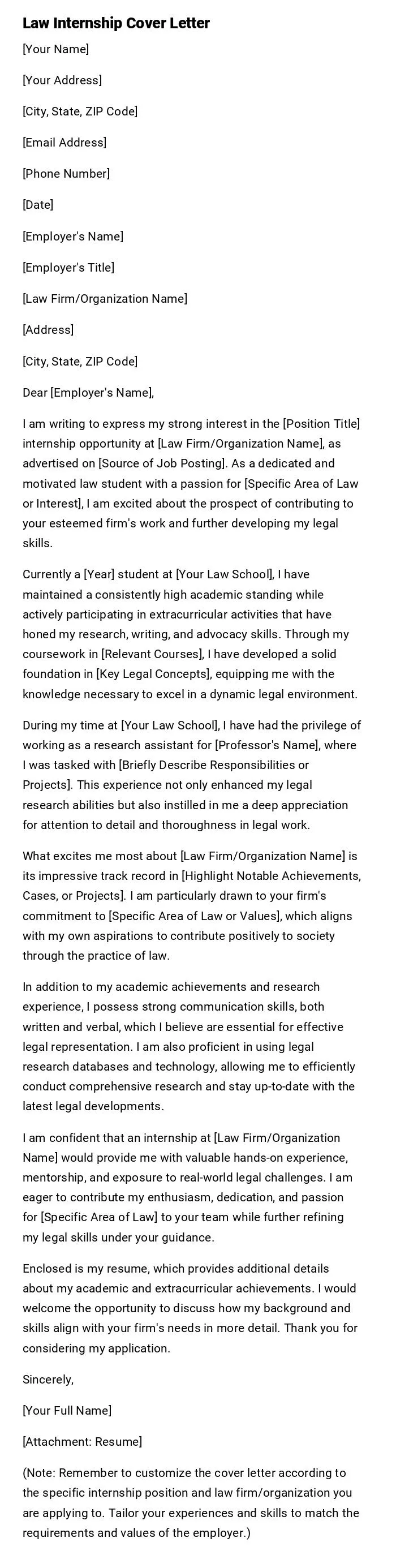
Why a Perfect Legal Internship Cover Letter Matters
Your legal internship cover letter is more than just a formality; it’s your first impression and a crucial opportunity to showcase your suitability for the role. In a competitive field like law, a well-crafted cover letter can be the deciding factor in whether you get an interview. It allows you to highlight your skills, experiences, and passion for the law, setting you apart from other applicants. A strong cover letter demonstrates professionalism, attention to detail, and a clear understanding of the internship’s requirements. It is your chance to tell a story about why you’re the perfect fit and what you can bring to the table, beyond what’s listed on your resume. A well-written cover letter significantly increases your chances of securing a valuable legal internship.
Highlighting Your Legal Skills
Your cover letter should be a showcase of your relevant legal skills. While your resume lists these skills, your cover letter provides the space to elaborate on them, offering context and illustrating how you’ve applied them in past experiences. Focus on the skills that directly align with the internship’s requirements. This shows that you’ve taken the time to understand the position and are not just sending a generic application. Provide specific examples to support your claims. Instead of just saying you have strong research skills, describe a project where you successfully researched and analyzed complex legal issues. Show, don’t just tell, and emphasize how your skills can benefit the organization you’re applying to.
Legal Research Abilities

Legal research is fundamental to any legal internship. Highlight your experience with legal databases like Westlaw, LexisNexis, or other research tools. Mention any specific research projects you’ve undertaken, such as finding relevant case law, statutes, or articles. If you have experience with cite-checking or legal writing, be sure to include that as well. Emphasize your ability to synthesize information, analyze legal issues, and present your findings clearly and concisely. The ability to conduct thorough and efficient legal research is highly valued in legal internships, so make sure to present this skill prominently.
Drafting Legal Documents
Interns often assist with drafting legal documents. If you have experience drafting legal memos, briefs, contracts, or other legal documents, this is a significant advantage. Describe any specific documents you’ve drafted, the purpose of the documents, and the outcome. Even if your experience is limited, you can still highlight your ability to follow instructions, pay attention to detail, and use proper legal formatting. Mention any courses you’ve taken that focused on legal writing or drafting. Show your understanding of legal terminology and your ability to express legal concepts clearly and persuasively. Even if you haven’t drafted a full legal brief, mention tasks such as summarizing case facts or other document drafting tasks.
Communication Skills for Law
Strong communication skills are essential for legal internships. Highlight your ability to communicate effectively in both written and verbal forms. If you’ve given presentations, participated in moot court, or engaged in client interviews, be sure to mention it. Emphasize your ability to listen actively, understand complex information, and convey it in a clear, concise manner. Demonstrate your ability to adapt your communication style to different audiences, whether it’s writing to a judge or explaining legal concepts to a client. The ability to communicate effectively is a key component of legal work, and showcasing this skill in your cover letter will make you a strong candidate.
Structuring Your Legal Internship Cover Letter

The structure of your cover letter can significantly impact its effectiveness. A well-organized letter is easy to read and allows you to effectively communicate your qualifications. Start with a strong opening that grabs the reader’s attention. Structure your letter with clear paragraphs, each addressing a specific point, such as your interest in the position, your relevant experiences, and your skills. Use concise language and avoid jargon. Aim for a letter that is no more than one page long, ensuring that it remains focused and engaging. Proofread meticulously to eliminate any grammatical errors or typos. Make sure your cover letter is tailored to the specific internship and the employer.
Contact Information and Date
Start your cover letter with your contact information, including your name, address, phone number, and email address. Include the date below your contact information. Ensure that your email address is professional and that your phone number is up-to-date. This section is crucial for allowing the employer to easily contact you if they wish to move forward with your application. Formatting matters; ensure that the contact information is clean and easy to read.
The Opening Paragraph (The Hook)
The opening paragraph is your first chance to make an impression. It should immediately grab the reader’s attention and convey your enthusiasm for the internship. Mention the specific position you are applying for and where you found the posting. Briefly state your interest in the internship and why you are a good fit. Avoid generic openings; instead, tailor your introduction to reflect the specific requirements and mission of the organization. A compelling opening sets the tone for your entire cover letter and makes the reader want to learn more about you.
Expressing Your Interest

Clearly express your interest in the legal internship and the organization. Explain why you are drawn to this particular opportunity, and what aspects of the position or the firm excite you. Show that you have researched the organization and understand its mission and values. Mention how your goals align with the internship’s objectives. This conveys genuine interest and demonstrates that you are applying to the right place. Be specific and avoid generic statements that could apply to any internship or firm. Personalize your interest by relating your goals and aspirations to the company.
Showcasing Relevant Experiences
This is the heart of your cover letter. Use this section to highlight experiences that are relevant to the internship. Focus on experiences that demonstrate your legal skills, such as legal research, writing, and analysis. Provide specific examples of your accomplishments and how you contributed to those experiences. Quantify your achievements whenever possible. For example, instead of saying you assisted with research, say you completed research on X topic, resulting in Y finding. Tailor this section to the requirements of the internship posting. Show how your prior experiences have prepared you to succeed in this role.
Academic Achievements
If you have outstanding academic achievements, include them in your cover letter. Mention your GPA if it’s strong, or highlight relevant coursework. Include any honors, awards, or scholarships that demonstrate your academic excellence. This can be particularly important if you lack extensive work experience. Showing a strong academic record provides evidence of your intelligence, work ethic, and ability to succeed in a rigorous academic setting. Be selective, and only include achievements that align with the goals of the internship.
Legal Coursework

Highlight any legal coursework that is relevant to the internship. Mention courses you have taken that directly align with the practice areas of the firm or the responsibilities of the internship. If the internship involves a specific area of law, such as contracts or intellectual property, emphasize any relevant courses you’ve taken. Briefly describe the skills or knowledge you gained from these courses, and explain how they prepared you for the internship. This information can help the employer quickly understand your familiarity with specific legal areas.
Highlighting Your Soft Skills
Soft skills are the personal attributes that enable you to interact effectively and harmoniously with other people. Legal internships require a range of soft skills, which are often as important as technical skills. Your cover letter should highlight these skills. Showcase your ability to work well with others, manage your time effectively, and demonstrate a strong work ethic. Provide examples to support your claims, such as participation in group projects, leadership roles, and any work experience that demonstrates your soft skills.
Attention to Detail
Attention to detail is critical in the legal field. Demonstrate your ability to pay close attention to detail by proofreading your cover letter meticulously. In your letter, you can explicitly mention your ability to catch errors and ensure accuracy. Provide an example of a time when your attention to detail helped avoid a mistake or solve a problem. Showing a commitment to accuracy and precision is an important skill.
Teamwork and Collaboration

Legal work often involves collaboration. If you have experience working in teams, whether in academic projects or previous jobs, be sure to include it. Provide examples of how you contributed to a team effort. Highlight your ability to communicate effectively, listen to different perspectives, and work toward a common goal. Emphasize your adaptability and ability to work harmoniously with others.
Time Management and Organization
Time management and organizational skills are essential for succeeding in a legal internship. Mention your ability to manage multiple tasks, meet deadlines, and stay organized. Describe any systems you use for managing your time. If you have experience balancing multiple projects, mention it. Being organized and managing time effectively demonstrates your ability to handle the workload and meet the demands of a legal internship.
The Closing Paragraph
Your closing paragraph should summarize your interest and reiterate your enthusiasm for the internship. It should be concise and leave a positive final impression. Review the key skills and experiences you’ve presented and tie them back to the internship requirements. End on a strong note, demonstrating your commitment to the position and expressing your eagerness to learn and contribute.
Expressing Gratitude

Thank the reader for their time and consideration. A simple thank you demonstrates your appreciation for the opportunity. Customize this expression of gratitude to match the tone of the letter. You can also express appreciation for their consideration of your application. A sincere thank you leaves a professional and positive impression.
Call to Action
Conclude with a clear call to action. State your availability for an interview and provide your contact information. Express your enthusiasm for the opportunity and your eagerness to discuss your qualifications further. Make it easy for the employer to contact you by including your phone number and email address in your closing. A strong call to action encourages them to take the next step, showing you are eager to move forward in the application process.