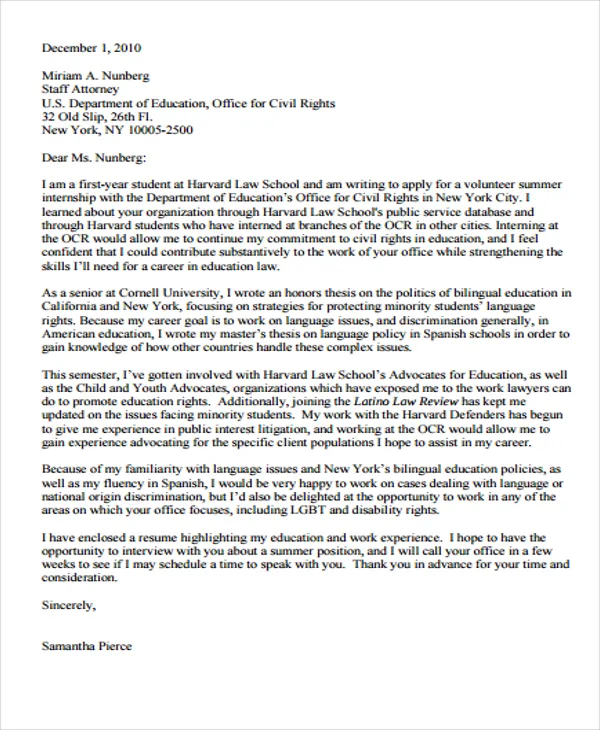
What is a Law Student Internship Cover Letter
A law student internship cover letter is a crucial document accompanying your resume when applying for internships. It serves as your introduction to potential employers, providing context to your application and highlighting why you are a suitable candidate. Unlike a resume, which lists your qualifications, the cover letter allows you to articulate your interest, skills, and experiences in a narrative format. It’s your chance to showcase your personality, writing skills, and genuine enthusiasm for the internship opportunity.
Why is a Cover Letter Important for Law Student Internships
Cover letters are essential because they offer a personalized view of your candidacy that a resume alone cannot convey. They provide an opportunity to elaborate on your skills, experiences, and motivations in a way that directly addresses the requirements and culture of the specific internship. A well-crafted cover letter can differentiate you from other applicants, demonstrating your genuine interest and your ability to communicate effectively—a critical skill in the legal field. It allows you to showcase your legal writing skills and tailor your application to the specific requirements of the role.
Key Elements of a Law Student Internship Cover Letter

A compelling law student internship cover letter comprises several key elements. Each section must be carefully constructed to create a positive impression and effectively convey your qualifications. The components discussed below build a cohesive narrative, highlighting your strengths and demonstrating your genuine interest in the opportunity. This structured approach ensures that your application is polished, professional, and persuasive, increasing your chances of securing an interview.
Contact Information
At the top of your cover letter, include your contact information, such as your name, address, phone number, and email address. Ensure your email address is professional. This allows the recipient to easily contact you.
Your Header
Start with a professional header that includes your name, address, phone number, and email. Consider using a slightly different font from the body of the letter, and ensure the header complements the overall design without being distracting. The goal is to provide essential contact details in a clear and visually appealing manner. Use a professional and easy-to-read font for your header.
The Recipient’s Information

Below your contact information, include the recipient’s details: their name, title, the firm’s name, and address. Research who will be reading your application, and address the letter to a specific person whenever possible. Addressing the letter directly shows you’ve taken the initiative to research the firm and the opportunity, which demonstrates your genuine interest. This attention to detail highlights your professionalism and commitment.
Greeting
Use a formal greeting, such as “Dear Mr./Ms./Mx. [Last Name],” or “Dear [Hiring Manager Name],” if you know it. Avoid generic greetings like “To Whom It May Concern.” A personalized greeting sets a professional tone and immediately engages the reader. This simple gesture shows that you have taken the time to personalize your application, and that you are dedicated to this specific opportunity.
Body Paragraph 1: Introduction and Purpose
In the opening paragraph, state the position you are applying for and how you found the internship opportunity. Briefly mention why you are interested in this specific internship and the firm. Make your introduction concise, yet compelling, to capture the reader’s attention immediately. This paragraph should create a positive first impression, setting the stage for the rest of your letter. State your strong interest and your understanding of the firm’s work.
Body Paragraph 2: Highlight Relevant Skills and Experience

This paragraph is the core of your cover letter. Highlight your relevant skills and experiences. Use specific examples from your coursework, previous internships, or other relevant experiences to demonstrate your abilities. Match your skills and experiences to the requirements listed in the job description. Quantify your achievements whenever possible. Show how your skills align with the internship’s needs, and use concrete examples to prove your capabilities. Focus on how your past experiences make you a strong candidate for this specific internship.
Body Paragraph 3: Showcase Your Enthusiasm and Fit
In this paragraph, articulate your enthusiasm for the internship and the firm. Explain what attracts you to their work and why you believe you are a good fit. Show that you’ve researched the firm and understand its values and mission. Mention any specific projects or aspects of the firm’s practice that interest you. This paragraph must highlight how your goals align with the firm’s culture and the internship’s objectives. Express your specific interests related to the firm’s practice areas.
Body Paragraph 4: Closing and Call to Action
Conclude by summarizing your interest and reiterating your qualifications. Clearly state your availability for an interview and thank the reader for their time and consideration. Be proactive; let them know you are looking forward to the opportunity to discuss your application further. Provide your contact details once more, just in case they are needed. A strong call to action ensures the reader knows what to do next.
Complimentary Close

End with a professional closing such as “Sincerely,” or “Best regards.” Sign your name (typed or handwritten if printing) after the closing. A proper closing reinforces your professionalism and respect for the reader. Ensure the closing matches the tone of the rest of your letter and maintains a formal and respectful demeanor. Keep the closing concise and professional, and avoid overly casual phrases.
How to Tailor Your Cover Letter for Each Internship
Customize each cover letter to align with the specific internship. Demonstrate your genuine interest in the firm and the opportunity. This level of detail is critical, as it highlights your dedication and attention to detail. Tailoring your letter shows that you are serious about the internship and have invested the time to understand the firm’s needs. Generic cover letters often fail because they do not show the applicant’s specific motivations or understanding of the role. Take the time to research the firm, and understand its practice areas.
Researching the Employer
Thoroughly research the employer, including the firm’s mission, values, recent cases, and any specific details about the internship. Visit their website, read recent news articles, and look at their social media profiles. This research will help you tailor your letter and express a genuine interest in their work. Understanding their work shows you’ve done your homework and can demonstrate your interest in the firm. It also allows you to speak knowledgeably during the interview process. Tailor your resume to match what the employer is seeking.
Matching Skills to the Job Description

Carefully review the job description and identify the skills and experiences the employer is seeking. Align your experiences with the listed requirements. Use keywords from the job description in your cover letter to demonstrate that you possess the necessary qualifications. The keywords will help your application pass through applicant tracking systems (ATS). Make sure the keywords are integrated into your narrative naturally. Demonstrate how your skills and experiences meet the requirements of the role.
Proofreading and Editing
Always proofread your cover letter for any grammatical errors, typos, or inconsistencies. Ask a friend, professor, or career counselor to review it as well. A polished cover letter reflects your attention to detail and professionalism. Proofreading is critical, because errors can create negative impressions. A well-edited letter demonstrates your commitment to excellence. Make sure your document flows well, and the formatting is perfect. Proper proofreading can be the deciding factor.
Common Mistakes to Avoid
Avoid common mistakes that can undermine your application. These errors can detract from your qualifications and negatively impact your chances of getting an interview. Knowing these pitfalls will allow you to write a cover letter that successfully showcases your strengths. Addressing these issues ensures your application makes a positive impression and stands out to potential employers. Avoid these common errors to create a strong application.
Using Generic Language

Avoid using generic phrases that lack substance and show little about your specific interest in the firm or position. Customize your letter by using specific examples and demonstrating how your skills align with the job description. Specificity is crucial; avoid phrases that could apply to any job or firm. Your letter should reflect your genuine interest and detailed knowledge of the firm.
Focusing Too Much on Yourself
While highlighting your skills and experiences is important, avoid making the cover letter solely about yourself. Focus on how your skills and experiences can benefit the employer. Frame your accomplishments in terms of how they align with the firm’s needs and goals. Show how you can contribute to the team’s success. Demonstrate a focus on what you can bring to the table, and how you can contribute to the firm’s goals.
Neglecting Proofreading
Failing to proofread your cover letter is a significant mistake. Typos, grammatical errors, and inconsistencies can undermine your credibility and make you appear unprofessional. Always proofread your letter carefully, and ask someone else to review it as well. Errors can make your cover letter appear sloppy and signal a lack of attention to detail. Proofreading ensures your message is clear and professional. Always take this step seriously and make sure to find and remove any errors.
Formatting Tips for a Professional Cover Letter
Proper formatting is essential for creating a professional cover letter. Clean formatting will make your letter easy to read and visually appealing. Well-formatted letters are more likely to make a positive impression. Pay attention to formatting details to ensure your cover letter looks professional. These tips contribute to an effective and professional presentation.
Font and Size
Use a professional and easily readable font, such as Times New Roman, Arial, or Calibri, with a font size between 11 and 12 points. Avoid using overly stylized fonts that can be distracting. Maintain consistency throughout the document. A professional font indicates your attention to detail and respect for the reader’s time. Choose a font and size that enhance readability.
Margins and Spacing
Set 1-inch margins on all sides and use single or 1.15 line spacing. This spacing gives your letter a clean and uncluttered appearance. Proper margins and spacing ensure your letter is easy on the eyes and allows the reader to focus on your content. Properly formatted margins enhance the overall visual appeal of your letter.
File Format
Save your cover letter as a PDF file to ensure that the formatting remains consistent across different devices and operating systems. A PDF file maintains the integrity of your document and prevents formatting issues. When submitting your cover letter electronically, a PDF file is the most reliable format. The PDF format makes sure your cover letter is displayed correctly on any device.
Examples of Strong Cover Letter Phrases
Use strong, action-oriented verbs and phrases to describe your skills and experiences. These phrases make your cover letter more dynamic and compelling. Action verbs showcase your abilities and create a strong impression. Including powerful phrases enhances your application’s impact. Enhance your writing by using strong, persuasive phrases.
Highlighting Relevant Coursework
Emphasize coursework directly related to the internship, such as legal research, writing, or specific practice areas. Mention any projects or assignments that align with the internship’s requirements. Connecting your coursework with the internship requirements demonstrates your knowledge and preparedness. Showcase your legal knowledge and indicate your willingness to excel in the internship.
Demonstrating Legal Writing Skills
Showcase your legal writing skills by using clear, concise, and persuasive language. Provide examples of your writing abilities, such as drafting legal briefs or memos. Good writing is critical in the legal field; demonstrating this skill is key. Use precise language and construct your sentences clearly. Demonstrate your ability to communicate effectively in writing.
Expressing Your Interest in the Firm’s Work
Clearly articulate your interest in the firm’s specific areas of practice. Mention any cases or projects that have caught your attention and explain why you are interested in them. This level of detail shows you’ve done your research and are truly motivated. Demonstrate your commitment to the firm and the internship. Express your specific interests and provide concrete reasons why you are interested in the firm’s work.
Additional Tips for Success
Consider these extra tips to improve your application. They will give you an edge and increase your chances of success. Taking these steps will improve your overall application. By taking these extra steps, you can maximize your chance of landing an interview and getting the internship. Extra effort will help you stand out.
Networking and Informational Interviews
Network with lawyers and legal professionals to learn more about their experiences and the firm. Consider doing informational interviews to gain insights into the internship and the firm’s culture. This networking demonstrates your initiative and dedication. Networking can provide valuable insights into the firm. Informational interviews can provide helpful insights and help you make a positive impression.
Following Up After Submission
If you haven’t heard back within a reasonable timeframe, follow up with the hiring manager or recruiter. A brief, polite follow-up email demonstrates your continued interest. This is an effective way to show your enthusiasm and commitment. Following up demonstrates that you are serious about the internship. It will also show you are committed to landing the opportunity.