What is a Human Resources Cover Letter?
A Human Resources (HR) cover letter is a crucial document accompanying your resume when applying for HR positions. It serves as your introduction to a potential employer, providing an opportunity to showcase your qualifications, skills, and enthusiasm for the role. Unlike a resume, which lists your experience and skills, a cover letter allows you to elaborate on your suitability for the specific job, demonstrating how your background aligns with the company’s needs and values. It provides a chance to highlight your achievements, express your personality, and make a strong first impression. Crafting a compelling HR cover letter can significantly increase your chances of getting an interview and ultimately landing your dream job in the field.
Why You Need a Great HR Cover Letter
A well-written HR cover letter is more than just a formality; it’s a strategic tool in your job search. It’s your opportunity to go beyond the bullet points of your resume and connect with the hiring manager on a personal level. It demonstrates your communication skills, which are essential in HR. A great cover letter can differentiate you from other applicants, especially when competing for highly sought-after positions. By tailoring your letter to each specific job and company, you demonstrate genuine interest and attention to detail, qualities highly valued in HR professionals. Furthermore, it allows you to address any potential gaps in your resume, such as career changes or periods of unemployment, providing context and assuring the hiring manager of your continued suitability. A strong cover letter can elevate your application and make you a top contender.
Key Components of an HR Cover Letter

A successful HR cover letter template comprises several essential components, each playing a critical role in effectively communicating your qualifications and interest. Understanding these elements and how to incorporate them thoughtfully is key to creating a compelling document that captures the attention of hiring managers. From the opening salutation to the closing statement, each part of your cover letter should be carefully crafted to present you in the best possible light and maximize your chances of securing an interview. Proper structuring also helps ensure your letter is easy to read and understand, enabling the reader to quickly grasp your key strengths and suitability for the role.
Contact Information
Begin your cover letter by including your contact information at the top. This should include your full name, phone number, email address, and optionally, your LinkedIn profile URL. Make sure this information is up-to-date and professional. This ensures that the hiring manager can easily reach you if they want to schedule an interview. It’s also a sign of preparedness and attention to detail, both of which are essential traits for HR professionals. Presenting this information clearly and concisely sets a professional tone from the outset.
Applicant’s Name and Contact Details
At the top of your cover letter, clearly state your full name and contact information, including your phone number and professional email address. This is crucial for the hiring manager to easily reach you. Ensure that your email address is professional (e.g., firstname.lastname@email.com) and that your phone number is current. Double-check for accuracy to avoid any missed opportunities. This section establishes who you are and how you can be contacted, essential elements for a successful job application. Providing a direct way to contact demonstrates your commitment and availability for any follow-up communication.
Date of the Letter

Include the date you are writing the letter. This is typically placed just below your contact information and helps the recipient understand when the letter was created. It’s a simple detail, but it adds a layer of formality and organization to your document. The date gives context to your application and can be useful for tracking when it was submitted. Correctly formatting the date (month, day, year) is also important for a professional appearance.
Recipient’s Information
Below the date, include the recipient’s information. This includes the hiring manager’s name (if you know it), their title, the company’s name, and the company’s address. If you are unsure of the hiring manager’s name, research the company website or LinkedIn to find the correct contact person. Addressing the letter to a specific individual personalizes your application and demonstrates that you’ve done your research. It shows initiative and a genuine interest in the company. Addressing your letter to ‘Dear Hiring Manager’ is acceptable, but using the name of the specific person always makes a better impression.
Salutation
Start your cover letter with a professional salutation. Use ‘Dear Mr./Ms./Mx. [Last Name]’ if you know the hiring manager’s name. If you don’t know the name, use ‘Dear Hiring Manager’ or ‘Dear [Department Name] Team’. Avoid informal greetings such as ‘Hello’ or ‘Hi’. A proper salutation sets the right tone and demonstrates respect and professionalism from the outset. It’s a small detail that can make a significant difference in how your application is perceived. Ensuring your salutation aligns with professional standards reflects your attention to detail.
Opening Paragraph Create a Strong First Impression

The opening paragraph is your chance to grab the reader’s attention. State the position you are applying for and where you saw the job posting. Briefly mention why you are interested in the role and the company. Highlight one or two key skills or experiences that make you a strong candidate. The opening paragraph should be concise, compelling, and designed to make the hiring manager want to read more. This initial impression sets the stage for the rest of your letter and influences the reader’s perception of you. A well-crafted opening paragraph immediately showcases your enthusiasm and qualifications, encouraging the reader to continue.
Highlighting Relevant Skills and Experience
In the body of your cover letter, highlight the skills and experiences most relevant to the job description. Provide specific examples of how you have used these skills in previous roles and the results you achieved. Quantify your achievements whenever possible using numbers and data to demonstrate your impact. Focus on the key requirements of the job and tailor your examples to match the employer’s needs. This section should showcase your abilities and show how your expertise aligns with the requirements of the role. Use action verbs to describe your accomplishments and skills in a way that is clear and compelling.
Tailoring Your Skills to the Job Description
Carefully review the job description and tailor your cover letter to match the specific requirements and keywords. Use the same language and terminology as the job posting to demonstrate that you understand the role and the company’s needs. Identify the key skills, qualifications, and experiences the employer is seeking and make sure to highlight those in your letter. Customize your cover letter for each job application to showcase how you are a perfect fit. This personalized approach shows that you have taken the time to understand the role and are genuinely interested in the opportunity.
Showcasing Achievements and Quantifiable Results

When describing your accomplishments, focus on quantifiable results. Use numbers, percentages, and data to demonstrate the impact of your work. For example, instead of saying ‘Improved employee satisfaction,’ state ‘Increased employee satisfaction scores by 15% through the implementation of new training programs.’ Providing concrete evidence of your achievements helps the hiring manager to understand your value and contributions. Quantifiable results showcase your abilities and make a stronger impression than vague statements. This is a key aspect of an effective cover letter, proving your capabilities with concrete examples.
Expressing Enthusiasm and Interest
Express your genuine enthusiasm for the position and the company. Explain why you are interested in the specific role and what excites you about the opportunity. Show that you have researched the company and understand its mission, values, and culture. Demonstrating your passion and alignment with the company will make a positive impression on the hiring manager. Convey your enthusiasm by expressing your excitement for the challenges and opportunities that the role presents. This helps to make you more memorable and demonstrates your desire to be a part of the company.
Call to Action and Closing
Conclude your cover letter with a call to action. State your availability for an interview and express your eagerness to discuss your qualifications further. Reiterate your interest in the position and thank the hiring manager for their time and consideration. A clear call to action encourages the hiring manager to take the next step, increasing your chances of getting an interview. End the letter with a professional closing such as ‘Sincerely’ or ‘Best regards,’ followed by your full name.
Expressing Gratitude and Offering Follow-up
In your closing, express your gratitude to the hiring manager for considering your application. Thank them for their time and attention. Offer to follow up, but do so in a professional and non-intrusive manner. You might say, ‘I look forward to hearing from you and would welcome the opportunity to discuss my qualifications in an interview.’ Providing a polite expression of thanks and willingness to follow up ensures you leave a positive impression and remain top of mind. This courteous approach demonstrates respect and professionalism, qualities highly valued in HR.
Formatting and Design
The format and design of your HR cover letter are just as important as the content. A well-formatted letter is easy to read and visually appealing, making a positive impression on the hiring manager. Ensure your cover letter is neat, organized, and free of distracting elements. Proper formatting reflects your attention to detail and professionalism, key qualities for any HR professional. The overall presentation should reflect your professionalism and competence, helping you to stand out.
Font and Font Size
Choose a professional and readable font such as Times New Roman, Arial, or Calibri. Keep the font size between 10 and 12 points for optimal readability. Avoid using overly stylized or decorative fonts that can be distracting. A clear and easily readable font and size ensure that your cover letter is accessible and easy on the eyes. The goal is to create a professional and visually appealing document that is easy for the hiring manager to read and digest. Consistency in font style is vital.
Margins and Spacing

Use standard margins (1 inch on all sides) and single-spaced lines within paragraphs. Use double-spacing between paragraphs to improve readability. Proper spacing and margins create a clean and organized layout, making your cover letter visually appealing. This makes the text easier for the hiring manager to read. A well-formatted letter reflects your attention to detail and demonstrates a commitment to professionalism. Avoid cramming text; ensure ample white space to avoid overwhelming the reader.
Proofreading and Editing
Before submitting your cover letter, carefully proofread and edit it for any grammatical errors, spelling mistakes, and typos. Have someone else review your letter to catch any errors you might have missed. Errors can undermine your credibility and make a negative impression. Thorough proofreading is essential to ensure that your cover letter is polished and professional. Pay close attention to sentence structure, punctuation, and word choice. Correct any mistakes to present a professional image.
Common Mistakes to Avoid
Several common mistakes can significantly diminish the effectiveness of your HR cover letter. By understanding and avoiding these pitfalls, you can ensure your cover letter effectively highlights your strengths and increases your chances of getting hired. From grammatical errors to generic content, each mistake can negatively impact the perception of your application. Pay careful attention to these areas to make your cover letter stand out for the right reasons.
Grammar and Spelling Errors
Grammatical errors and spelling mistakes can make your cover letter appear unprofessional and careless. Proofread your letter carefully, and use grammar and spell-checking tools to catch any errors. Ensure that your writing is clear, concise, and error-free. Correct grammar and spelling are critical to demonstrating your attention to detail and professionalism. These errors can be a major turn-off for hiring managers and can damage your credibility as a candidate. Review your letter multiple times to catch and correct all mistakes.
Generic and Uninspired Content
Avoid using generic or uninspired language. Your cover letter should be tailored to the specific job and company. Avoid using phrases that could apply to any job. Instead, use specific examples, mention how your skills align with the job requirements, and demonstrate your knowledge of the company. Generic content suggests that you haven’t taken the time to personalize your application, which may suggest a lack of genuine interest. Ensure that your cover letter stands out by personalizing it. This shows that you have done your research and are enthusiastic about the specific opportunity.
Tone and Professionalism
Maintain a professional tone throughout your cover letter. Avoid using slang, jargon, or overly casual language. Your cover letter should reflect your professional demeanor and demonstrate your ability to communicate effectively in a workplace setting. The tone should be respectful and enthusiastic, demonstrating that you’re taking the application process seriously. Ensure that your language is clear, concise, and conveys your qualifications in a positive light. A professional tone will reflect positively on you and ensure that your letter makes a strong impression.
Different Types of HR Cover Letter Templates
Depending on your experience level and the type of HR role you are targeting, there are different cover letter templates that are more effective. Tailoring your template to your experience level will highlight your qualifications and address any specific requirements of the job. Understanding the different templates and selecting the one best suited to your situation is crucial to getting the most out of your application. Several general types cater to different career stages and specific job levels.
Entry-Level HR Cover Letter Template
An entry-level HR cover letter template should focus on highlighting relevant coursework, internships, volunteer experience, and transferable skills. Emphasize your enthusiasm for HR and your willingness to learn. If you lack extensive experience, focus on your education and any extracurricular activities that demonstrate your skills. Highlight any projects or assignments that demonstrate your understanding of HR principles. Tailor the content to demonstrate your foundational knowledge and your strong work ethic. Show your eagerness to contribute and grow within the organization. Using the right template is key to conveying your potential.
Experienced HR Professional Cover Letter Template
An experienced HR professional cover letter should showcase your accomplishments, skills, and relevant experience. Focus on quantifiable results and highlight how you have contributed to previous employers’ success. Provide specific examples of your achievements and how you have improved HR processes. Use the STAR method (Situation, Task, Action, Result) to detail your accomplishments. Demonstrate leadership skills, strategic thinking, and your ability to drive HR initiatives. Showcase your experience with specific HR systems, programs, and legal and compliance requirements. Tailor the content to highlight your ability to handle complex HR challenges.
HR Manager Cover Letter Template
An HR Manager cover letter template should demonstrate your leadership skills, strategic thinking, and management abilities. Highlight your experience in leading HR teams, developing HR strategies, and managing budgets. Provide specific examples of your accomplishments in improving HR processes, reducing costs, or increasing employee engagement. Focus on your ability to drive organizational change, manage complex projects, and make strategic decisions. Demonstrate your experience in areas such as talent management, performance management, and employee relations. Showcase your ability to communicate effectively with senior management and key stakeholders. Provide clear evidence of your ability to contribute to the overall success of the organization.
Tips for Customizing Your HR Cover Letter
Customizing your HR cover letter is essential to make a strong impression on the hiring manager. A generic cover letter will likely be overlooked, while a tailored one shows your genuine interest and attention to detail. Taking the time to customize your letter to the specific job and company will significantly increase your chances of getting an interview. Consider the different areas where you can tailor your letter to make it more effective and relevant to the opportunity.
Researching the Company
Before writing your cover letter, research the company’s mission, values, culture, and recent news. Visit the company website and social media profiles to gain insights into their operations and what they value. Understanding the company’s objectives and culture allows you to tailor your letter to match their needs and demonstrate your interest. Mentioning specific company initiatives or values in your letter demonstrates that you have taken the time to research the organization and are genuinely interested in joining the team. Doing your research also allows you to align your skills and experience with the company’s specific requirements.
Using Keywords from the Job Description
Carefully review the job description and identify the keywords and phrases used to describe the required skills, experience, and qualifications. Incorporate these keywords into your cover letter naturally. This helps your application pass through applicant tracking systems (ATS) and ensures that your letter aligns with the employer’s requirements. Highlighting the keywords can help you demonstrate how your skills and experience meet the employer’s needs. However, avoid keyword stuffing; ensure that the language flows naturally and reflects your genuine qualifications.
Showcasing Your Personality
While maintaining a professional tone, let your personality shine through. Use your cover letter to demonstrate your enthusiasm, passion, and unique qualities. Share what motivates you to work in HR and why you are excited about the opportunity. This can include a brief anecdote or a personal connection to the company or industry. Demonstrating your personality makes your cover letter more memorable and allows the hiring manager to get a sense of who you are as a person. Make sure that your personality complements your professional skills and experience. This makes you stand out from the other candidates, especially in the competitive HR field.
Examples of Effective HR Cover Letters
Reviewing examples of effective HR cover letters can provide valuable insights and guidance as you create your own. Studying well-written examples can help you understand how to structure your letter, highlight your skills, and effectively showcase your qualifications. By analyzing these examples, you can learn what works and what to avoid. Seeing the different styles and approaches can give you a clearer idea of how to write your own HR cover letter, tailoring your content to make it outstanding. Many templates are available, but a good example is essential to understand the approach and content.
Example 1
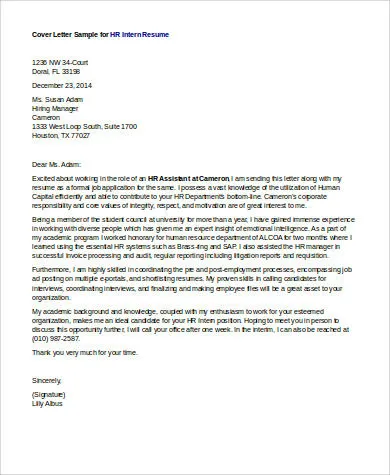
This example shows a cover letter for an entry-level HR position. The applicant highlights their coursework, internship experience, and transferable skills. The tone is enthusiastic, and the letter emphasizes their eagerness to learn and contribute to the team. Key elements include a strong opening statement, specific examples, and a clear call to action. The applicant states the position they are applying for and where they saw the job posting. They then highlight a skill that aligns with the job description. For instance, using the phrase ‘as demonstrated by my involvement in…’ provides direct results from their actions. This example is designed to show eagerness to learn and contribute.
Example 2
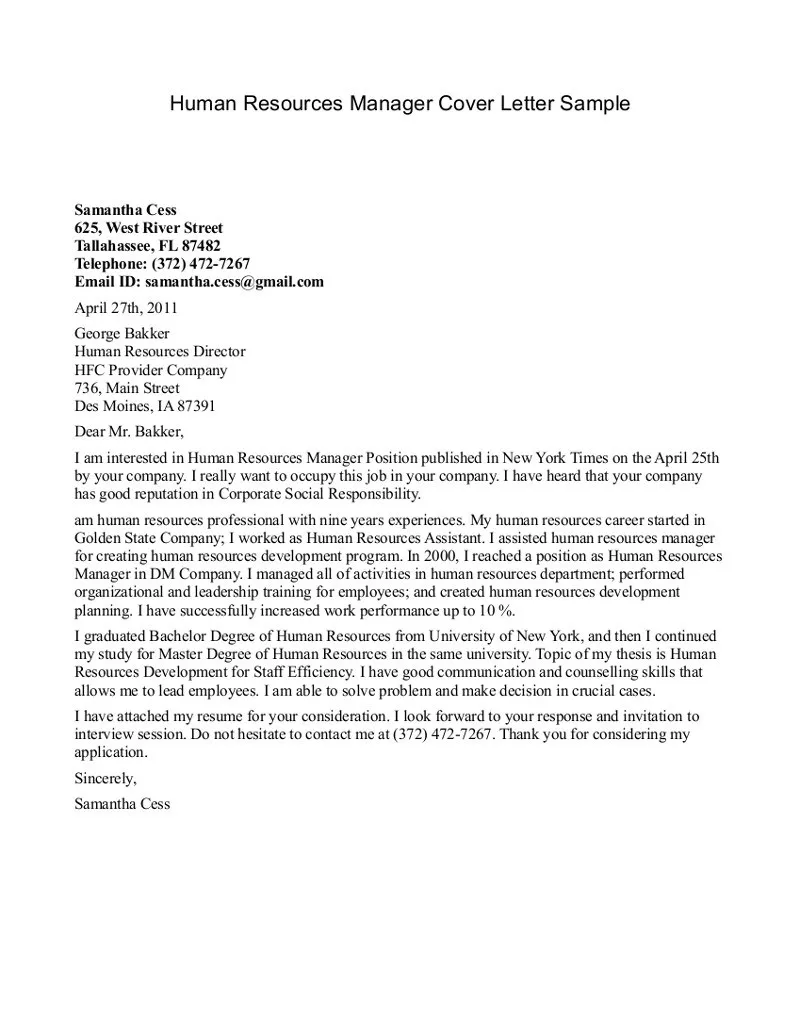
This example provides a cover letter for an experienced HR professional. It showcases the applicant’s accomplishments, skills, and results. The letter uses the STAR method (Situation, Task, Action, Result) to describe specific examples and quantify achievements. Key sections include the summary of experience and detailed accomplishments that align with the job description. The applicant uses the STAR method to outline their responsibilities, the actions they took, and the positive results. The body provides an overview, highlighting achievements and skills that match the job description’s needs. This shows their management and problem-solving abilities, as well as their understanding of the HR field.
Example 3
This example illustrates a cover letter for an HR manager position. The applicant highlights their leadership skills, strategic thinking, and experience in leading HR teams. The letter emphasizes their ability to develop and implement HR strategies and manage budgets. Key elements include a strong opening and closing and highlights experience and skills. Specific accomplishments and data, such as budget management, performance improvements, or employee engagement are detailed to provide results. This provides experience and demonstrates their qualifications and shows the ability to drive organizational success. The letter highlights the candidate’s specific accomplishments and results, creating an excellent impression.