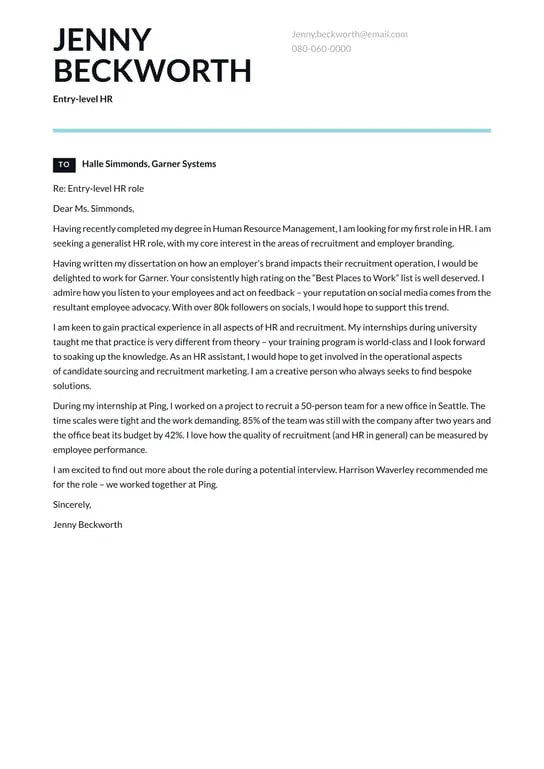
Why a Strong HR Cover Letter Matters
In the competitive field of Human Resources, a well-crafted cover letter is your first impression. It is more than just a formality, it’s an opportunity to demonstrate your understanding of the HR landscape and showcase your relevant skills. A strong cover letter complements your resume, providing context and depth to your qualifications. It allows you to highlight specific achievements, explain career transitions, and express your enthusiasm for the role and the company. By investing time in a compelling cover letter, you significantly increase your chances of getting noticed by hiring managers and securing an interview. Remember that a generic cover letter will likely end up in the rejection pile. Your goal is to stand out, showing that you are a good fit for the company.
Highlighting Key HR Skills
Human Resources professionals require a diverse set of skills, and your cover letter is the perfect place to spotlight them. Focus on skills directly relevant to the job description. These may include communication, both written and verbal, crucial for interacting with employees and management. Highlight your interpersonal skills, which are essential for building relationships, resolving conflicts, and fostering a positive work environment. If the job involves recruitment, emphasize your experience in sourcing, interviewing, and onboarding candidates. If the position involves HR administration, point out your skills in managing employee data, benefits, and payroll. If the job emphasizes strategic alignment, then it’s essential to demonstrate that you can align HR activities with the goals of the company.
Emphasizing Relevant Experience

Your cover letter is your chance to bring your resume to life by detailing specific experiences. Instead of simply listing your previous roles, provide context. Describe your responsibilities in each role, emphasizing those that align with the job you are applying for. Give examples of how you have successfully managed HR functions, such as employee relations, training and development, or performance management. For each experience you describe, briefly explain what you did, what strategies you used, and the positive outcomes that resulted. Always make sure that your past experience is highly relevant to the job you are applying for. This shows you are able to transfer your knowledge, skills, and abilities to the new role. By showing you have a proven track record of success, you will persuade the hiring manager to bring you in for an interview.
Tailoring Your Cover Letter for the Role
One of the most important secrets to a great HR cover letter is customization. Avoid using a generic template. Instead, carefully review the job description and tailor your cover letter to match the specific requirements and expectations. Research the company and demonstrate your understanding of their mission, values, and culture. Highlight how your skills and experience align with their needs. This shows that you are genuinely interested in the position and have taken the time to understand what the company is looking for. Use keywords from the job description naturally within your cover letter. This helps the hiring manager quickly see that you meet their requirements. Take the time to learn about the company; show that you understand their business, and explain how you would be of value to them.
Formatting and Structure for HR Cover Letters
The formatting and structure of your HR cover letter is very important for making a positive first impression. Use a professional font, such as Times New Roman, Arial, or Calibri, in a readable size, typically 11 or 12 points. Keep your letter concise and easy to read, ideally no longer than one page. Start with a clear heading that includes your contact information and the date. Address the letter to the hiring manager, if possible, otherwise use a professional salutation. Use a clear and logical structure, with a brief introduction, a few body paragraphs highlighting your skills and experience, and a strong conclusion. Ensure there is enough white space between paragraphs for better readability. Proofread your cover letter carefully to eliminate any grammatical errors or typos. Poorly formatted letters with errors will be an immediate sign of unprofessionalism.
Common Mistakes to Avoid in HR Cover Letters

Even the most qualified HR professionals can make common mistakes that undermine their cover letters. One of the most critical is using a generic cover letter. Do not use a generic letter; tailor it to the specific role and company. Another mistake is not addressing the letter to a specific person, which is often a sign of lacking interest. Grammatical errors and typos are a major turnoff for hiring managers, as they reflect poor attention to detail. Make sure to proofread your work and have someone else review it. Including irrelevant information or rambling on about unrelated experiences can distract from your core qualifications. Overselling your skills or exaggerating your achievements may also appear unprofessional. Focus on providing evidence of what you can do and letting the hiring manager form an opinion. Finally, forgetting a call to action or providing unclear contact information can leave recruiters without a clear understanding of how to contact you.
Focus on Achievements and Results
A great cover letter showcases your achievements rather than simply listing job duties. Instead of just stating what you did in past roles, explain the results you achieved. Did you improve employee retention rates? Did you implement a successful training program? Did you reduce recruitment costs? Quantify your achievements whenever possible. For example, instead of saying you ‘managed employee relations,’ you might say you ‘resolved employee grievances, resulting in a 15% reduction in conflict-related incidents.’ Describe the challenges you faced, the actions you took, and the positive outcomes you delivered. Focus on results that are relevant to the job you are applying for. Demonstrate your value by highlighting how your contributions have improved previous company performance. Emphasizing results shows your value and helps the hiring manager picture you as a potential success.
Quantify Your Accomplishments
Whenever possible, quantify your accomplishments to make them more impactful. Numbers give your achievements weight and show the tangible value you brought to your previous employers. Instead of saying you ‘improved employee satisfaction,’ state that you ‘increased employee satisfaction scores by 20% through the implementation of a new wellness program.’ If you streamlined a process, explain how much time or money you saved. For instance, you could say you ‘reduced the time-to-hire by 10% by optimizing the recruitment process.’ Use metrics such as percentages, dollar amounts, or specific timeframes to show the direct impact of your actions. When you quantify your accomplishments, it’s easy to understand the value of your contributions and compare your performance to other candidates. Numbers make a clear, concrete point, so don’t be afraid to use them to make a point.
Call to Action and Closing Your Cover Letter

Your cover letter should conclude with a clear call to action. Tell the hiring manager that you are eager to learn more about the position and that you look forward to the opportunity to discuss your qualifications in an interview. Reiterate your enthusiasm for the role and the company. Express your gratitude for their time and consideration. Include a professional closing, such as ‘Sincerely’ or ‘Best regards,’ followed by your full name. Ensure your contact information is easily accessible. Double-check your email address and phone number. Make sure you have followed up your cover letter with the company after a week, which shows that you are interested in the role. This gives the recruiter a chance to remember you. By carefully crafting your closing, you leave a positive final impression, increasing your chances of moving forward in the hiring process.