Understanding the Importance of a Hospitality Cover Letter
In the competitive world of hospitality, a well-crafted cover letter is your golden ticket to landing your dream job. It’s often the first impression you make on a potential employer, and it can significantly influence their decision to invite you for an interview. Unlike a resume, which provides a factual overview of your experience, a cover letter gives you the opportunity to showcase your personality, enthusiasm, and genuine interest in the specific role and the company. A strong cover letter demonstrates your communication skills, attention to detail, and ability to articulate why you are the perfect fit for the position, qualities that are highly valued in the hospitality industry. This document allows you to go beyond the bullet points and provide a narrative that resonates with the hiring manager, setting you apart from other applicants and increasing your chances of success.
Why a Cover Letter Matters in Hospitality
A cover letter is crucial in hospitality because it allows you to personalize your application and show genuine interest. Hospitality is a people-oriented industry, and employers look for candidates who can communicate effectively and demonstrate a passion for providing excellent service. The cover letter serves as a platform to highlight your soft skills such as communication, teamwork, and problem-solving abilities. These skills are essential for success in roles that involve interacting with guests and colleagues. It also provides a chance to address any gaps in your resume, explain career changes, or discuss how your skills and experience align with the specific requirements of the job, demonstrating your understanding of the role and your commitment to the company’s values and objectives. A cover letter is your chance to build a connection with the hiring manager, demonstrating why you are the best person for the job.
Key Elements of a Successful Cover Letter

A successful hospitality cover letter should be tailored to the specific job and the company. Begin by researching the company and the role to understand the requirements and expectations. The key elements include a clear and concise introduction that grabs the reader’s attention, a body that highlights your relevant skills and experiences, and a strong closing that expresses your enthusiasm and interest. Your cover letter should demonstrate your understanding of the hospitality industry, your commitment to customer service, and your ability to contribute to the company’s success. Highlighting specific achievements and quantifying your accomplishments whenever possible will make your cover letter more impactful. For example, if you increased customer satisfaction in a previous role, be sure to mention by what percentage. Finally, a well-written cover letter should be free of grammatical errors and typos, demonstrating your professionalism and attention to detail, which are crucial in the hospitality field.
Formatting Your Hospitality Cover Letter
Proper formatting is critical for making your cover letter easy to read and visually appealing. A well-formatted cover letter demonstrates professionalism and attention to detail, reflecting positively on your application. Choose a simple and clean font, such as Times New Roman, Arial, or Calibri, and use a font size between 10 and 12 points. This ensures readability and makes the letter accessible to the hiring manager. Proper margins (typically 1 inch on all sides) and spacing (single or 1.15) create a balanced look and prevent the letter from appearing cluttered. Ensure consistent spacing throughout the document, including between paragraphs, headings, and bullet points. Use a professional letterhead or include your contact information at the top of the page. The goal is to make your cover letter easy to read and visually appealing, creating a positive first impression.
Choosing the Right Font and Font Size
Selecting the right font and font size is a subtle yet crucial aspect of cover letter formatting. The font you choose should be easy to read and professional. Stick to classic fonts like Times New Roman, Arial, Calibri, or Helvetica. These fonts are widely recognized and considered standard for professional documents. Avoid using decorative or overly stylized fonts, as they can distract from the content and make your letter appear less credible. The font size should be between 10 and 12 points to ensure readability. A font size that is too small can be difficult to read, while one that is too large can make your letter look unprofessional. Stick to these guidelines to make sure your cover letter is both accessible and visually pleasing.
Proper Margins and Spacing

Margins and spacing contribute significantly to the overall presentation of your cover letter. Use standard 1-inch margins on all sides of your document. This creates a balanced look and provides ample white space, making the text less overwhelming to read. Consistent spacing is also important. Use single or 1.15-line spacing for the body of your letter. Double-space between paragraphs to separate ideas and improve readability. Ensure there’s enough space between the header, greeting, body, and closing. Well-formatted margins and spacing enhance the visual appeal of your cover letter, making it easier for the hiring manager to scan the content and absorb your key qualifications and experiences quickly. These seemingly minor details can make a big difference in how your application is received.
Cover Letter Structure Guide
A well-structured cover letter follows a logical flow that guides the reader through your qualifications and interests. The structure typically includes a header with your contact information, a greeting, an introduction, the body paragraphs highlighting your skills and experience, and a closing statement. Each section serves a specific purpose in conveying your message effectively. This organized structure not only makes your cover letter easy to read but also ensures that you cover all the essential information that the hiring manager needs to know. The goal is to present your qualifications in a clear, concise, and compelling manner, ultimately increasing your chances of getting an interview.
Header Information and Contact Details
The header of your cover letter should include your full name, address, phone number, and professional email address. This information is essential for the hiring manager to contact you if they are interested in your application. Ensure that your email address is professional; avoid using nicknames or informal language. You can include your LinkedIn profile URL if you have one, as it allows the hiring manager to learn more about your professional background. The header should be neatly formatted and aligned, typically at the top left or right corner of the document. Make sure all contact information is up-to-date and accurate, as any errors could lead to missed opportunities. This section provides essential information for easy communication, which shows that you are prepared and detail-oriented.
Greeting the Hiring Manager

The greeting sets the tone for your cover letter and should be professional and respectful. Whenever possible, address the hiring manager by name. Research the company and the job posting to find the name of the person who will be reviewing your application. Use a formal greeting such as “Dear Mr./Ms./Mx. [Last Name]”. If you are unable to find a specific name, it is acceptable to use a general greeting such as “Dear Hiring Manager” or “Dear [Company Name] Recruitment Team”. Avoid informal greetings like “Hello” or “Hi”. A personalized greeting shows that you have taken the time to research the company and demonstrates your attention to detail and your interest in the specific role. This small touch can make a big difference in making a positive first impression.
Crafting a Compelling Opening Paragraph
The opening paragraph of your cover letter should immediately grab the reader’s attention. Start by stating the position you are applying for and where you saw the job posting. Then, briefly express your enthusiasm for the role and the company. The opening paragraph should highlight your key qualifications or experiences that make you a strong candidate. Focus on what makes you stand out and what you can offer the company. Keep it concise and to the point, aiming to pique the hiring manager’s interest and encourage them to read the rest of your letter. Avoid generic opening statements; tailor your introduction to the specific job and demonstrate your understanding of the company’s needs. Make your introduction compelling to ensure the hiring manager continues reading.
Highlighting Your Skills and Experience
The body of your cover letter is where you showcase your skills and experience. Review the job description carefully and identify the key requirements. Then, provide specific examples from your past experiences that demonstrate how you have met those requirements. Use action verbs to describe your responsibilities and accomplishments. Focus on quantifiable results whenever possible. For example, instead of saying “Managed customer complaints”, you could write “Resolved an average of 20 customer complaints per day, resulting in a 95% customer satisfaction rate”. Tailor your skills and experience to the specific needs of the role. By clearly highlighting your relevant skills and providing concrete examples, you convince the hiring manager that you have the qualifications to excel in the position.
Quantifying Your Achievements
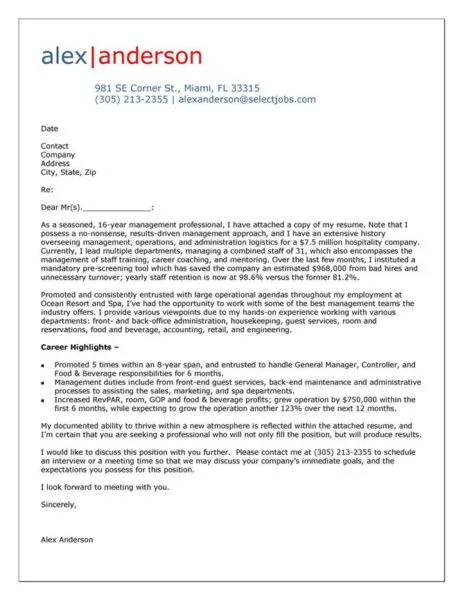
Quantifying your achievements is a powerful way to demonstrate the impact of your work and provide concrete evidence of your skills. Whenever possible, use numbers, percentages, and data to showcase your accomplishments. For example, instead of saying “Improved customer service”, you could write “Increased customer satisfaction scores by 15% within six months”. This allows the hiring manager to easily see the value you brought to previous roles. Quantifiable achievements show that you understand the importance of results. Think about how you can measure your accomplishments and use these metrics to strengthen your cover letter. Adding numbers to your cover letter gives credibility to your claims and makes your application much more persuasive.
Tailoring Your Cover Letter to the Job
Tailoring your cover letter to each job application is crucial for demonstrating your genuine interest and suitability for the role. Start by carefully reviewing the job description and identifying the key skills and experiences that the employer is seeking. Then, customize your cover letter to highlight the relevant skills and experiences that match these requirements. Use keywords from the job description throughout your letter. Demonstrate how your skills and experiences align with the specific needs of the position and how you can contribute to the company’s goals. Avoid using a generic cover letter template; instead, personalize each letter to reflect the specific opportunity and the company’s values. Taking the time to tailor your cover letter will make your application stand out and increase your chances of getting an interview.
Expressing Your Enthusiasm and Interest
Expressing your enthusiasm and genuine interest is an essential part of a compelling cover letter. Use your cover letter to articulate why you are excited about the opportunity and why you are drawn to the company. Mention specific aspects of the role, the company culture, or the organization’s mission that resonate with you. Show that you have researched the company and understand its values and goals. Avoid generic statements like “I am interested in this position”. Instead, be specific and explain why you are a good fit for both the job and the company. Your enthusiasm will not only make your cover letter more engaging but will also highlight your passion for hospitality and your commitment to providing excellent service.
Closing Your Cover Letter

The closing of your cover letter should reiterate your interest in the position and encourage the hiring manager to contact you. Thank the hiring manager for their time and consideration. Reiterate your enthusiasm for the opportunity and briefly mention that you are eager to discuss your qualifications further. Provide a call to action, such as stating that you look forward to hearing from them soon. Include your contact information again. Close with a professional salutation like “Sincerely” or “Best regards,” followed by your full name. The closing is your final opportunity to make a positive impression, so make sure it’s concise, professional, and demonstrates your eagerness to take the next step in the hiring process.
Proofreading and Editing Your Cover Letter
Proofreading and editing are critical steps in the cover letter writing process, ensuring that your letter is polished and professional. Carefully check for grammatical errors, typos, and spelling mistakes. Read your cover letter aloud to catch any awkward phrasing or sentence structure issues. Use spell check and grammar check tools, but don’t rely on them entirely; these tools may not catch all errors. It is also good practice to have a fresh pair of eyes review your cover letter. Ask a friend, family member, or career counselor to proofread your letter and provide feedback. Pay close attention to the formatting, making sure that it is consistent throughout the document. A well-proofread and edited cover letter demonstrates your attention to detail and your commitment to presenting yourself in the best possible light.
Common Mistakes to Avoid
Several common mistakes can undermine your cover letter and hurt your chances of getting hired. Avoid generic cover letters that are not tailored to the specific job and company. Generic letters show a lack of genuine interest. Do not include information that is not relevant to the job. Keep your cover letter concise and to the point, and avoid including too much unnecessary detail. Another common mistake is neglecting to proofread your cover letter, which can lead to embarrassing errors and create a negative impression. Avoid using overly casual language or slang. Do not focus solely on what you want from the job; instead, emphasize what you can bring to the company. Finally, always remember to tailor your cover letter for each application; the hiring manager will immediately notice if your cover letter looks generic and isn’t targeted to their role.
Seeking Feedback from Others

Seeking feedback from others is a valuable step in refining your cover letter. Ask trusted friends, family members, mentors, or career counselors to review your cover letter. They can provide fresh perspectives and identify areas for improvement that you may have overlooked. Ask them to check for clarity, grammar, spelling, and overall effectiveness. Ask them to assess whether your cover letter is compelling and accurately reflects your skills and experiences. Be open to their suggestions and willing to make revisions based on their feedback. The insights of others can help you improve your cover letter and increase your chances of making a positive impression on hiring managers. This process can help you refine your application and highlight your strengths more effectively.
Hospitality Cover Letter Samples for Inspiration
Reviewing hospitality cover letter samples can provide valuable inspiration and guidance as you write your own. These samples offer insight into how to structure your letter, highlight your skills and experience, and express your enthusiasm for the role. As you review the samples, pay attention to the language used, the formatting, and the overall tone. See how the writers tailor their letters to specific job descriptions and company cultures. Use these samples as a starting point and adapt them to fit your own qualifications and the requirements of the job you are applying for. Be sure to customize your cover letter, making it unique to you and the specific position. These samples serve as a source of motivation, so you can create an effective cover letter that increases your chances of success.
Hotel Cover Letter Example
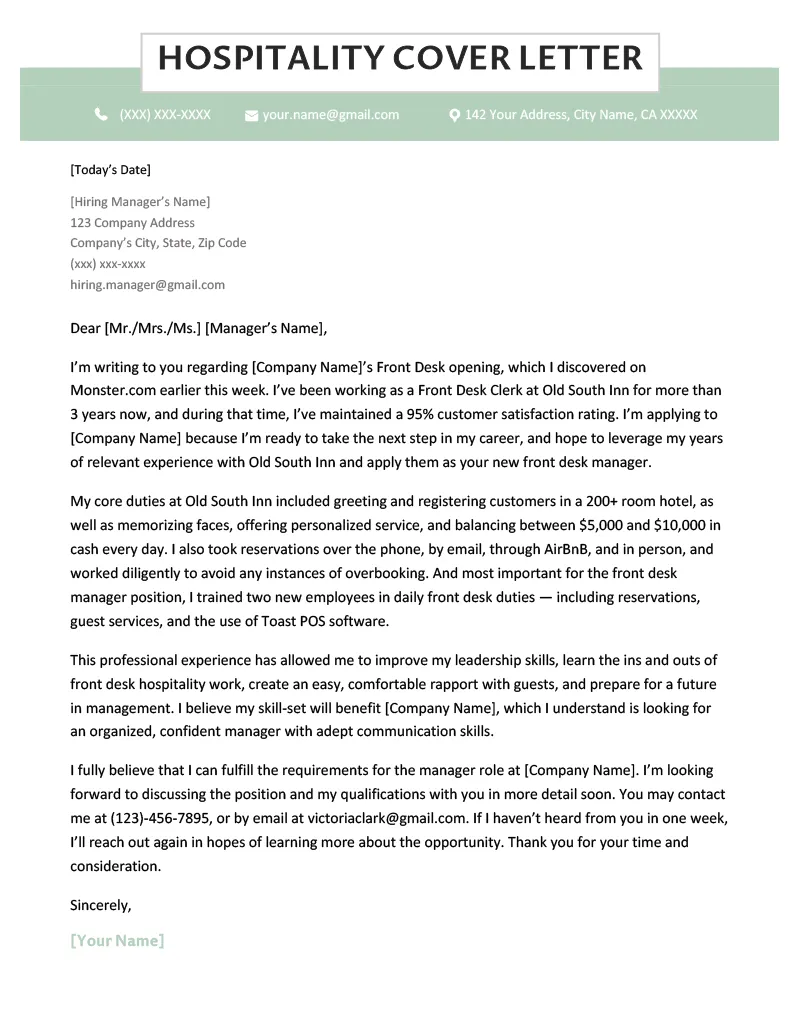
Here is an example of a cover letter for a hotel position. This example highlights a candidate’s experience and expresses enthusiasm for the role. The cover letter starts with a strong opening, emphasizing the candidate’s passion for hospitality. The body provides specific examples of the candidate’s skills, such as guest service, problem-solving, and teamwork, using action verbs and quantifiable achievements whenever possible. The closing paragraph expresses a strong desire to join the hotel team and thanks the hiring manager for their consideration. You can use this sample to model your own cover letter. Tailor it to the specific requirements of the job description and make it unique to showcase your qualifications and skills.
Restaurant Cover Letter Example
Below is a cover letter sample tailored to a restaurant position. The cover letter should be customized to reflect your specific skills and experiences. For instance, if you have experience in a particular role or with a certain type of cuisine, you can highlight those experiences in the letter. Focus on demonstrating your knowledge of the restaurant industry and your commitment to providing excellent customer service. Mention any relevant training or certifications. A cover letter that is well-written and personalized can significantly boost your application. Using the restaurant cover letter sample as a template, make sure you can personalize it to reflect your strengths and abilities. This ensures that your letter stands out and makes a strong impression on the hiring manager.
Cover Letter for a Hospitality Manager
A cover letter for a hospitality manager should highlight leadership skills, experience in staff management, and a proven ability to improve operational efficiency. When writing this letter, you must express your experience in all areas of operations to demonstrate your ability to thrive. The letter should emphasize your ability to motivate teams, solve problems, and exceed guest expectations. Quantify your accomplishments with data, such as guest satisfaction scores or revenue growth. Explain your understanding of hospitality management principles and your commitment to providing exceptional service. Tailor the letter to match the specific job description. A well-crafted cover letter increases your chances of landing the interview and landing the job. You will be able to stand out from the rest and show your strong abilities as a hospitality leader.