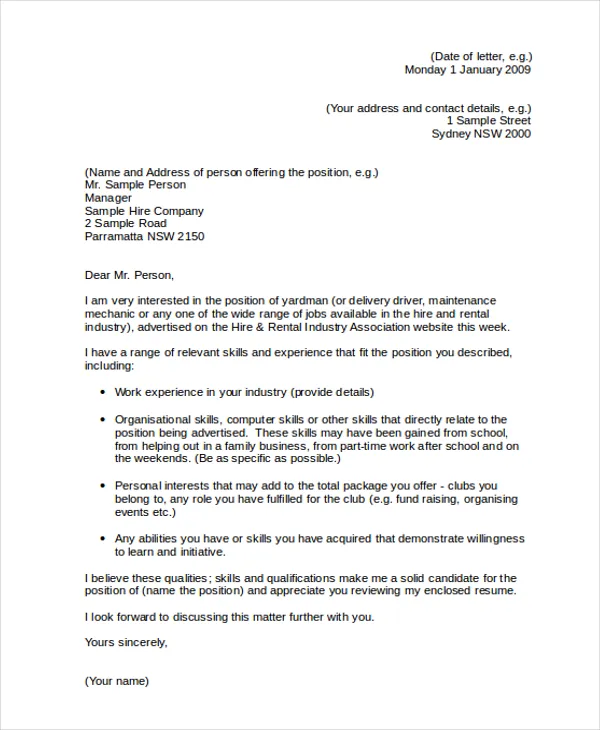
Understanding the Purpose of a Cover Letter
A cover letter serves as your introduction to a potential employer, offering a concise overview of your qualifications, skills, and enthusiasm for a specific job. Its primary goal is to persuade the hiring manager to read your resume and ultimately, invite you for an interview. Unlike your resume, which provides a factual record of your experience, a cover letter allows you to showcase your personality, explain your motivations, and highlight how your skills align with the company’s needs and the specific job requirements. A well-crafted cover letter can significantly increase your chances of landing an interview by demonstrating your genuine interest and making a compelling case for why you are the best candidate.
Why Cover Letters Are Still Crucial
In an era dominated by online applications and automated screening systems, many job seekers question the relevance of cover letters. However, cover letters remain a crucial part of the job application process, particularly for roles that require a high degree of communication and interpersonal skills. They provide a platform to personalize your application, demonstrate your writing abilities, and explain any gaps or unique circumstances in your resume. In competitive job markets, a well-written cover letter can differentiate you from other applicants by showcasing your passion for the role and your understanding of the company’s values and goals. It is an opportunity to highlight the value you bring to the table and leave a memorable impression on the hiring manager.
When Cover Letters Are Optional or Not Needed

While often recommended, there are instances where a cover letter might be optional or even unnecessary. Some companies, especially for certain entry-level or technical positions, might not explicitly require a cover letter. In such cases, carefully review the job posting to determine if a cover letter is requested. Additionally, for internal applications within the same company, a cover letter may be less critical, but it is still recommended to show your initiative. However, it’s always better to err on the side of caution and submit a tailored cover letter unless the job posting explicitly states that it’s not required. Skipping the cover letter when one is expected can signal a lack of attention to detail and could harm your chances.
Key Components of a Winning Cover Letter
A winning cover letter comprises several key components, each playing a vital role in conveying your qualifications and making a positive impression. These elements include a clear and professional header, a compelling opening paragraph, detailed information on your skills and experience, an enthusiastic tone, and a strong call to action. By carefully crafting each section, you can create a cover letter that captures the hiring manager’s attention and persuades them to consider your application seriously. Attention to detail and a personalized approach will make your letter stand out. The more work you put into it, the more value the hiring manager will see.
Header and Contact Information
Begin your cover letter with a professional header that includes your full name, contact information (phone number and email address), and the date. You can also include a link to your LinkedIn profile or online portfolio if you have one. Ensure that your contact information is up-to-date and easy to read. It is important to use a professional email address; avoid using informal or unprofessional email addresses. Always address the hiring manager or the specific contact person mentioned in the job posting; if a name isn’t available, research it or use a general greeting, such as “Dear Hiring Manager.” Keeping the header clean and properly formatted makes a good first impression.
Addressing the Hiring Manager

Personalizing your cover letter by addressing the hiring manager directly is essential. If the job posting provides a name, use it. Research the hiring manager’s name on LinkedIn or the company website. Addressing the letter to a specific person demonstrates your attention to detail and your genuine interest in the role. Avoid generic greetings like “To Whom It May Concern.” Instead, use “Dear Mr./Ms./Mx. [Last Name].” If you can’t find a specific name, it’s acceptable to use “Dear Hiring Manager” or “Dear [Company Name] Hiring Team.” Take the time to personalize the greeting; it shows initiative and respect.
Opening Paragraph that Grabs Attention
The opening paragraph is your chance to immediately capture the hiring manager’s interest. Start with a strong statement that grabs their attention and clearly states the position you’re applying for and where you found the listing. Express your enthusiasm for the opportunity and briefly highlight what makes you a compelling candidate. Avoid generic openings like “I am writing to express my interest…” Instead, try a more impactful approach by mentioning a key skill or achievement that aligns with the job requirements. Consider using a hook, such as a specific company project or something that made you want to work there. Make sure your introduction is concise, engaging, and immediately establishes why you’re the right fit.
Highlighting Your Skills and Experience
The body of your cover letter is where you demonstrate how your skills and experience align with the job requirements. Instead of simply restating your resume, use this section to provide context, elaborate on your accomplishments, and explain why you are a good fit for the role. Use specific examples to illustrate your abilities, quantifying your achievements whenever possible. Focus on the skills and experiences that are most relevant to the job description, using keywords and phrases from the posting. Structure your paragraphs logically, using clear and concise language to showcase your strengths. This is your chance to make a strong argument.
Tailoring to the Job Description

Carefully review the job description and identify the key skills, qualifications, and responsibilities. Tailor your cover letter by highlighting the specific skills and experiences that align with these requirements. Use the same keywords and phrases from the job description where appropriate, demonstrating that you understand the role and are a good match for the company’s needs. Provide concrete examples to show how you have demonstrated these skills in previous roles. The goal is to make it easy for the hiring manager to see that you possess the necessary qualifications and are well-suited to the position.
Quantifying Achievements
Whenever possible, quantify your achievements to demonstrate your impact. Instead of saying “improved customer satisfaction,” state “increased customer satisfaction scores by 15% through implementing a new feedback system.” Using numbers and data provides concrete evidence of your accomplishments and makes your claims more credible. Quantifying your achievements showcases your ability to produce measurable results and adds weight to your application. Use numbers to show your successes, and provide evidence to support your claims.
Expressing Enthusiasm and Fit
Throughout your cover letter, express your enthusiasm for the position and the company. Demonstrate that you have researched the company and understand its mission, values, and culture. Explain why you are excited about the opportunity and how you believe you can contribute to the team’s success. Show your genuine interest by mentioning specific projects, initiatives, or aspects of the company that resonate with you. Making sure your cover letter comes from a place of excitement will leave the hiring manager with a strong feeling about you.
Call to Action and Closing

Conclude your cover letter with a strong call to action. Reiterate your interest in the position and express your desire for an interview. Thank the hiring manager for their time and consideration. Provide your contact information again to make it easy for them to reach you. Use a professional closing, such as “Sincerely,” “Best regards,” or “Respectfully.” Ensure your tone is polite, confident, and leaves a lasting positive impression. Ending on a high note increases the chance of being hired.
Formatting and Design for Impact
The formatting and design of your cover letter contribute significantly to its readability and overall impact. A well-formatted cover letter is easy to read and conveys professionalism. Choosing appropriate fonts, using proper spacing, and following a logical structure will make your cover letter stand out. A neat and well-organized cover letter shows your attention to detail and respect for the reader’s time.
Font Choices and Readability
Choose a professional and easy-to-read font for your cover letter, such as Times New Roman, Arial, Calibri, or Helvetica. Use a font size between 10 and 12 points to ensure readability. Avoid using overly decorative or unusual fonts. Maintain consistent formatting throughout your cover letter to ensure a clean and professional appearance. Use bolding, italics, or underlining sparingly to highlight key information. Make sure your formatting choices enhance readability rather than distracting from your content.
Length and Structure Guidelines

Keep your cover letter concise and focused, aiming for one page in length. Use clear and concise language, avoiding long paragraphs or dense blocks of text. Use headings and subheadings to break up the text and improve readability. Structure your cover letter with a logical flow, including an opening paragraph, body paragraphs highlighting your skills and experience, and a closing paragraph with a call to action. Ensure proper spacing between paragraphs and sections to create a clean and uncluttered layout. Be sure to follow all instructions provided by the hiring manager to avoid any issues.
Proofreading and Editing Your Cover Letter
Proofreading and editing are crucial steps in the cover letter writing process. Carefully review your cover letter for any grammatical errors, spelling mistakes, and typos. Pay close attention to sentence structure, punctuation, and clarity. Read your cover letter aloud to identify any awkward phrasing or sentences that could be improved. It is also helpful to ask a friend, family member, or career counselor to review your cover letter and provide feedback.
Common Mistakes to Avoid
Avoid common mistakes such as using generic cover letters, making typos, including irrelevant information, and using jargon. Always tailor your cover letter to each job application and customize it to match the specific requirements. Ensure your cover letter is free of errors and well-written. Proofread carefully before submitting your application. Keep the letter concise, focused, and relevant to the job. A good cover letter should highlight you as a perfect candidate.
Tools and Resources for Cover Letter Creation

Several tools and resources can help you create a winning cover letter. Use cover letter templates as a starting point, customizing them to fit your needs. Explore online resources such as career websites, resume writing services, and cover letter examples. Consider seeking feedback from a career counselor or a trusted professional. By utilizing these resources, you can significantly improve your cover letter and increase your chances of securing an interview. Use the tools to help you write the best possible cover letter for a job.