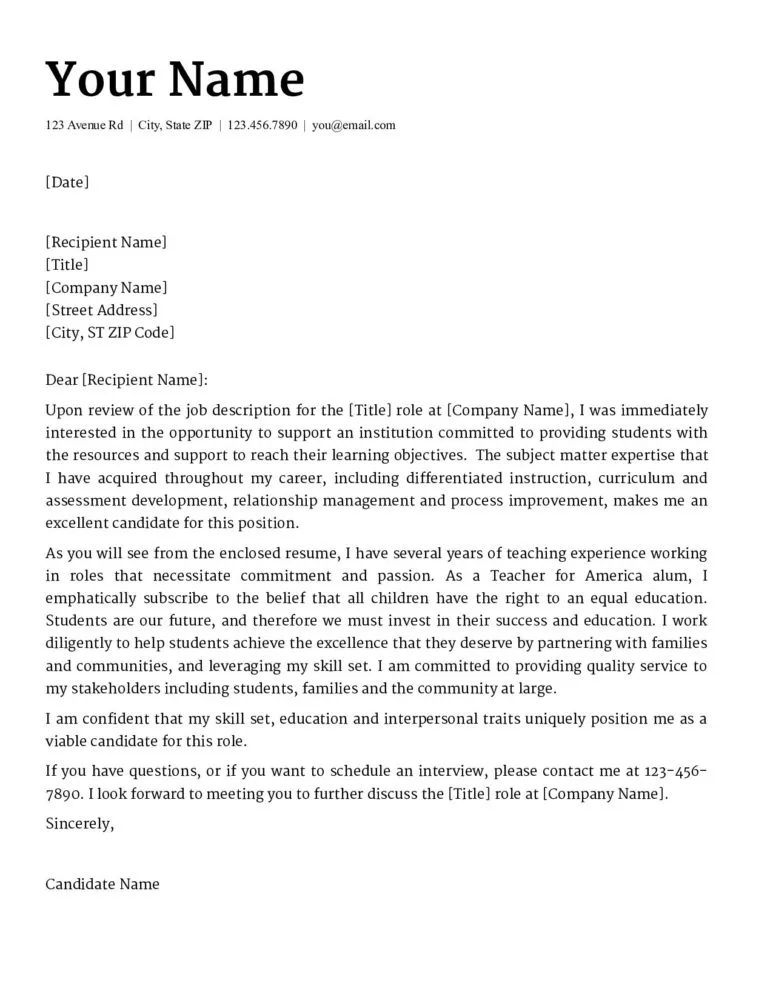
Understanding the Teaching Cover Letter
A teaching cover letter is a crucial document that accompanies your resume when applying for a teaching position. It serves as your introduction to the hiring committee, providing an opportunity to showcase your personality, teaching philosophy, and how your skills align with the specific requirements of the role and the school’s values. Unlike a resume, which provides a summary of your experience, a cover letter allows you to elaborate on specific experiences, explain your motivations, and demonstrate your enthusiasm for the opportunity. It’s a chance to make a strong first impression and differentiate yourself from other applicants. A well-crafted cover letter can significantly increase your chances of getting an interview.
Why a Strong Cover Letter Matters
In a competitive job market, a strong teaching cover letter is essential. It provides a personalized introduction that goes beyond the facts presented in your resume. The cover letter demonstrates your communication skills, writing ability, and attention to detail, all of which are critical qualities for a teacher. It allows you to explain any gaps in your employment history, highlight career transitions, and emphasize your unique strengths and experiences that make you an ideal candidate. Furthermore, a well-written cover letter shows that you’ve taken the time to research the school and understand its needs, which can make a significant impact on the hiring manager.
Key Components of a Teaching Cover Letter

A strong teaching cover letter comprises several key sections. Each section plays a crucial role in conveying your qualifications and enthusiasm. The layout is usually divided in several sections that are described below. Structuring your letter thoughtfully makes it easier for the hiring manager to read and understand your qualifications.
Header Section (Contact Information)
The header of your cover letter should include your contact information, making it easy for the hiring manager to reach you. This section ensures that they can quickly find your details if they are interested in moving forward with your application. Accuracy is critical to avoid any delays in communication. Always double-check your contact details before submitting your application.
How to Format Your Header
Format your header neatly and professionally. Include your full name, address, phone number, and email address. If you have a professional online presence, such as a LinkedIn profile, you can also include a link. Make sure your email address sounds professional. Here is a sample of how to format your header.
[Your Full Name] [Your Address] [Your Phone Number] [Your Email Address] [LinkedIn Profile URL (Optional)]
Salutation & Addressing the Hiring Manager

Always address the hiring manager by name if possible. Research the school’s website or use LinkedIn to find out who is responsible for hiring. A personalized salutation shows that you have taken the time to learn about the school and the hiring process, and that you care. If you cannot find the hiring manager’s name, use a general salutation like “Dear Hiring Committee” or “Dear [Department Name] Hiring Team.”
Crafting a Compelling Opening Paragraph
The opening paragraph is your first chance to grab the hiring manager’s attention. State the position you’re applying for and where you found the job posting. Briefly mention your most relevant qualifications or a key accomplishment that aligns with the school’s needs. Show your enthusiasm for the school or the position. Keep it concise and focused on creating interest, showing that you know the school. Make a strong opening statement.
Highlighting Your Passion for Teaching
Demonstrate your passion for teaching throughout your cover letter. Explain why you are drawn to education and what motivates you to work with students. Share specific examples of how you’ve fostered a positive learning environment, encouraged student engagement, or supported student success. Show your genuine commitment to helping students learn and grow. Reflect on your teaching philosophy, and what are the reasons why you think that you are a good fit for the position.
Showcasing Your Qualifications & Skills

In the main body of your cover letter, provide concrete examples of your skills and qualifications. Instead of just listing skills, describe how you have used them in a classroom setting and the results you achieved. The goal is to show, not just tell, the hiring manager about your capabilities. Make sure that your cover letter matches the skills listed in the job description. Tailor your letter to align with the specific requirements of the position.
Education & Certifications
Mention your educational background, including your degrees, majors, and any relevant coursework. Highlight any certifications, licenses, or endorsements you possess. Include the name of the institution, degree earned, and the date of graduation. Ensure that your certifications align with the requirements of the teaching position you are applying for. Mention if you have any other certifications, for instance, in CPR or first aid.
Classroom Experience
Describe your classroom experience, including the grade levels and subjects you have taught. Detail any innovative teaching strategies or curriculum development projects you have undertaken. Provide specifics about your teaching methods, such as your use of technology or your ability to differentiate instruction. Mention any experience with classroom management and student discipline. Use examples to show how you have created a positive and productive learning environment.
Other Relevant Skills

Highlight any other skills that are relevant to the teaching position. This could include experience with special education, technology integration, or curriculum development. Describe your ability to work collaboratively with colleagues, parents, and the community. Mention any extracurricular activities you have been involved in, such as coaching, clubs, or mentoring programs. Tailor your selection of skills to the specific job posting and what the school is looking for.
Body Paragraphs & Making Your Case
Use the body paragraphs to elaborate on your experiences and skills. Connect your qualifications to the specific needs of the school or district. Demonstrate how you have successfully implemented teaching strategies, managed classrooms, and supported student success. Include specific examples and quantifiable results whenever possible. Explain your teaching philosophy and how it aligns with the school’s values.
Connecting Your Skills to the School’s Needs
Research the school and understand its mission, values, and goals. In your cover letter, highlight how your skills and experiences align with these needs. Mention any specific programs or initiatives that you are interested in or have experience with. Show how you can contribute to the school’s success. Tailor your letter to the specific school you are applying to, showing that you are a good fit for their culture.
Quantifying Your Accomplishments

Whenever possible, quantify your accomplishments using numbers and data. For example, instead of saying “Improved student test scores,” say “Increased student test scores by 15% through the implementation of a new reading program.” Quantifiable results make your accomplishments more concrete and demonstrate your impact. Use data to demonstrate the value you can bring to the school. Show that you know how to measure your success.
Using Action Verbs
Use strong action verbs to describe your accomplishments and responsibilities. Action verbs make your writing more dynamic and engaging. Examples of effective action verbs include: developed, implemented, led, managed, created, assessed, evaluated, and mentored. Action verbs can give more value and relevance to the experience you’ve gained. Use active language throughout your letter.
Closing Your Letter
The closing of your cover letter should be professional and leave a positive impression. Summarize your key qualifications and reiterate your interest in the position. Express your gratitude for the opportunity to apply and mention any next steps you expect, such as an interview. A strong closing can lead the hiring manager to contact you.
Expressing Gratitude

Express your gratitude for the hiring manager’s time and consideration. Thank them for reviewing your application and for the opportunity to apply for the position. A simple expression of gratitude can leave a positive impression and show respect for the hiring process.
Call to Action – Requesting an Interview
End your cover letter with a clear call to action. State your availability for an interview and express your eagerness to discuss your qualifications further. This shows your enthusiasm and allows the hiring manager to know what you want them to do next. Example: “I am available for an interview at your earliest convenience and I would welcome the opportunity to discuss my qualifications in more detail.”
Formatting & Proofreading Your Letter
Proper formatting and proofreading are essential for creating a professional cover letter. A well-formatted letter is easy to read and free of errors. This demonstrates your attention to detail and professionalism. Poor formatting or errors can create a negative impression and undermine your qualifications.
Font Choice & Readability

Choose a professional and readable font, such as Times New Roman, Arial, or Calibri. Use a font size between 10 and 12 points. Use clear and concise language, and avoid jargon or overly complex sentence structures. Ensure your cover letter is easy to read and navigate. Use white space effectively to separate sections and make the text more appealing.
Proofreading for Errors
Proofread your cover letter carefully for any grammatical errors, spelling mistakes, or typos. Use a spell checker, but also read the letter aloud to catch any errors that the spell checker might miss. Have a friend or family member review your cover letter. Ensure that your cover letter is perfect before submitting it. Errors can reflect a lack of attention to detail.
Teaching Cover Letter Examples (Templates)
Reviewing examples and templates can help you create an effective cover letter. Search online for teaching cover letter templates and examples. Use these templates as a guide, but always customize them to match your own qualifications and the specific requirements of the job. Adapting templates can help you to showcase your unique skills and experiences.
Elementary Teacher Cover Letter
When writing a cover letter for an elementary teaching position, focus on your ability to create a nurturing and engaging learning environment for young children. Highlight your experience with early childhood education, curriculum development, and classroom management. Show enthusiasm for working with young children and fostering their growth and development. Use a tone that shows your patience and care.
High School Teacher Cover Letter
For a high school teaching position, emphasize your subject matter expertise, your experience in teaching older students, and your ability to create a challenging and engaging learning environment. Discuss your experience with curriculum development, assessment, and classroom management. Highlight your skills in motivating students and preparing them for college or careers. Show that you know how to help students in high school prepare to succeed.
Special Education Teacher Cover Letter
If you are applying for a special education teaching position, highlight your experience working with students with diverse learning needs. Emphasize your knowledge of special education laws and regulations, your ability to develop individualized education programs (IEPs), and your experience with differentiated instruction. Show your commitment to providing a supportive and inclusive learning environment for all students. Mention any additional training or certifications.