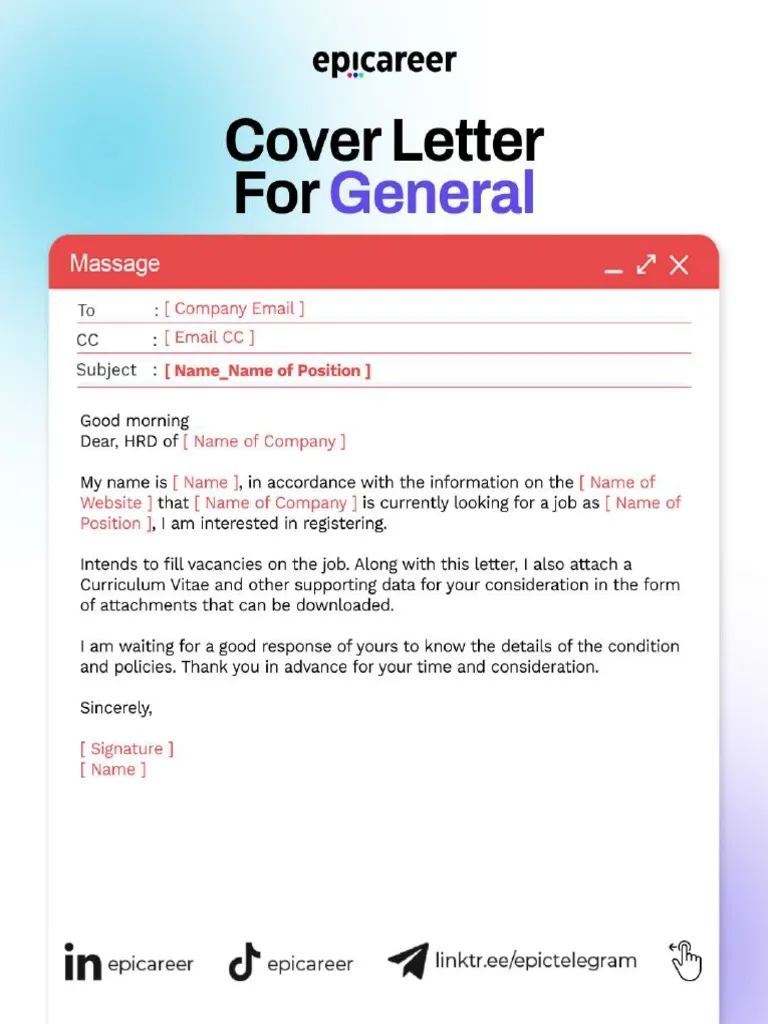
Understanding the Purpose of a Cover Letter
A cover letter is your first opportunity to make a strong impression on a potential employer. Unlike a resume, which provides a factual overview of your skills and experience, a cover letter allows you to showcase your personality, express your enthusiasm for the role, and connect your qualifications to the specific requirements of the job. It serves as a personalized introduction, demonstrating your communication skills and providing context to your resume. A well-crafted cover letter significantly increases your chances of getting your resume read and securing an interview. It is an essential tool in today’s competitive job market, helping you stand out from the crowd and highlight why you are the perfect fit for the position. Your cover letter isn’t just about repeating your resume; it’s about telling a compelling story.
Key Components of a Powerful Cover Letter
A powerful cover letter is structured in a way that immediately grabs the reader’s attention. This includes a clear and professional format, concise language, and a focus on the employer’s needs. It typically includes the following elements: contact information, a compelling opening paragraph, a discussion of your relevant skills and experience, a demonstration of your value to the employer, a closing paragraph with a call to action, and a formal closing. Each section plays a vital role in conveying your qualifications and enthusiasm. It is a way of showing how your skills align with the company’s needs. By understanding the structure and content, you can tailor each letter to the specific job and company, thereby maximizing your chances of a positive response. Remember, personalization is key; generic letters are easily discarded.
Contact Information and Salutation

Start with your contact information: your name, address, phone number, and email address. It’s important to make it easy for the employer to reach you. Following this, include the date and the employer’s contact information (name, title, company, and address), if available. When you know the hiring manager’s name, use it in the salutation (e.g., “Dear Mr. Smith”). If you don’t know the name, use a professional greeting like “Dear Hiring Manager” or “Dear [Department Name] Team.” Avoid generic salutations that feel impersonal. Proper formatting and attention to detail in this section set the tone for the rest of the letter, displaying professionalism and respect.
Opening Paragraph Grabbing Attention
The opening paragraph is critical; it’s your hook. It should immediately capture the reader’s interest and state the position you are applying for. Briefly mention where you found the job posting. Then, succinctly express your enthusiasm for the role and the company. Consider starting with a strong statement about your passion, a brief mention of a relevant achievement, or a direct statement about why you are the ideal candidate. Avoid generic openings. The goal is to create an immediate positive impression and motivate the reader to continue reading. The opening should set the tone and demonstrate your understanding of the job requirements and the company’s values.
Highlighting Your Relevant Skills and Experience
This section is where you connect your skills and experience to the job requirements. Review the job description carefully and identify the key skills and qualifications the employer is seeking. Provide specific examples of how you’ve used these skills in previous roles. Use action verbs to describe your accomplishments and quantify your achievements whenever possible. Explain how your experience aligns with the company’s needs and what value you can bring to the role. Focus on the skills and experiences that are most relevant to the position, rather than listing everything from your resume. Tailor this section to match the job, showcasing your understanding of the company’s needs.
Demonstrating Your Value to the Employer

Go beyond simply listing your skills; show the employer what you can do for them. Explain how your skills and experience will benefit the company. This involves demonstrating an understanding of the company’s goals and values. Share specific examples of how you have solved problems, improved processes, or contributed to success in previous roles. Quantify your achievements to provide tangible evidence of your impact. This section allows you to express why you are the perfect fit for the company, not just the job. Tailor your examples to reflect the specific needs of the employer and show how you can contribute to their success. This demonstrates that you are not just qualified, but also a valuable asset.
Showcasing Your Achievements and Accomplishments
Use this section to provide compelling evidence of your capabilities by highlighting specific achievements. Describe situations where you have exceeded expectations, solved problems, or made significant contributions. Use the STAR method (Situation, Task, Action, Result) to structure your examples: describe the situation, explain your task, detail the actions you took, and quantify the results. This method allows you to present your accomplishments in a clear and impactful way. For example, if you improved sales in a previous role, detail the percentage increase, the strategies you implemented, and the impact on the company’s revenue. These tangible achievements show the value you can bring to the new role. These real-world examples make your application more persuasive.
Addressing the Specific Job Requirements
Carefully review the job description and address each key requirement in your cover letter. Directly connect your skills, experience, and accomplishments to the qualifications listed. If the job description asks for specific skills or software knowledge, mention your proficiency and provide examples of how you have used them. Show the hiring manager that you have read the job description and understand what the company is looking for. This personalized approach shows that you have invested time in your application and are a good fit for the role. Clearly demonstrate how your experience aligns with the employer’s needs, making it easy for them to see why you are a strong candidate.
Closing the Cover Letter and Call to Action

Your closing paragraph should summarize your interest in the position and reiterate your enthusiasm for the company. Express your confidence in your ability to contribute to their success. Include a clear call to action, such as requesting an interview. Make it easy for the employer to take the next step by providing your contact information again, if necessary. End on a positive note, thanking the reader for their time and consideration. This helps to reinforce the positive impression you’ve made throughout the letter and prompts them to respond. The goal is to leave a lasting impression and encourage them to contact you for an interview.
Formal Closing and Contact Information
Use a professional closing, such as “Sincerely”, “Best regards”, or “Respectfully”. Avoid informal closings. After the closing, include your full name and contact information. Ensure all your contact details are correct and up-to-date. While the main contact information is at the beginning, repeating it here reinforces the professional nature of your application. Always proofread your cover letter one last time to make sure everything is perfect before submitting. It is also a good idea to save your cover letter as a PDF file to ensure that the formatting remains consistent across different devices and operating systems.
Formatting and Design for Professionalism
The formatting and design of your cover letter are just as important as the content. A well-formatted cover letter shows professionalism and attention to detail. Use a standard, easy-to-read font like Arial, Calibri, or Times New Roman in a size between 10 and 12 points. Keep the letter concise, aiming for one page, and use clear, concise language. Use headings and subheadings to break up large blocks of text and make it easier for the reader to scan the document. Use bullet points to highlight your accomplishments or skills. Maintain consistent spacing and margins. Ensure your letter is clean and uncluttered, making it pleasant to read. Consistency in formatting shows professionalism and consideration for the reader.
Font and Readability Considerations

Choosing the right font is critical for readability. Select a font that is easy on the eyes and professional-looking. Avoid overly stylized or decorative fonts, as they can be difficult to read and detract from your message. Arial, Calibri, and Times New Roman are safe and reliable choices. Ensure the font size is appropriate (10-12 points) to prevent the text from appearing too small or too large. Use bolding and italics sparingly to highlight key information, such as job titles or important skills. Maintain a consistent style throughout the letter. A readable font makes your cover letter accessible and helps ensure that the reader focuses on your qualifications and experience, rather than struggling to read your words.
Proofreading and Editing for Perfection
Proofreading and editing are crucial steps. Check for any grammatical errors, typos, or spelling mistakes. These errors can undermine your credibility and make a negative impression on the employer. Use spell-check and grammar-check tools, but don’t rely on them entirely; always review your letter manually. Read your cover letter aloud to identify awkward phrasing or sentences that don’t flow well. Ask a friend or family member to review your letter for a fresh perspective. Ensure that the tone is appropriate for the job and company and that all the information is accurate. Perfecting your cover letter shows your commitment to detail and professionalism, significantly boosting your chances of getting an interview.
Cover Letter Examples and Templates
Using cover letter examples and templates can be an excellent starting point. However, remember to personalize them to fit your specific situation and the job requirements. Many online resources offer free cover letter templates for various industries and job types. Review these examples to gain insight into formatting, language, and content. Tailor the template to match your experience, skills, and the specific job description. Replace generic phrases with your own accomplishments and experiences. Customize the examples to demonstrate your value to the employer and to show you’ve researched the company and the role. The goal is to create a customized cover letter that showcases your unique qualifications and personality.
Adapting Your Cover Letter for Different Jobs

Your cover letter should be tailored to each job application. Never use a generic cover letter for multiple positions. Start by carefully reviewing the job description and identifying the key requirements. Customize your cover letter to highlight the skills, experience, and accomplishments most relevant to the specific role. Use the same keywords and phrases found in the job description to show the employer that you are a good fit. Demonstrate your understanding of the company and its needs. Adapt your examples to the specific industry and role. Tailoring your cover letter to each job shows that you are genuinely interested in the position and have taken the time to understand the requirements, significantly increasing your chances of securing an interview.
Tailoring Your Cover Letter for Different Industries
Different industries have unique expectations for cover letters. Research the industry standards for formatting, tone, and content. For example, a cover letter for a creative role might be more informal and allow for showcasing your personality, while a letter for a corporate position might require a more formal and structured approach. Use industry-specific language and terminology. Highlight the skills and experiences most valued in the industry. Tailor your examples to reflect your accomplishments and show your expertise in that industry. Understand what the employer expects and adapt your cover letter to meet those expectations. Consider researching other professionals and reviewing successful cover letter examples from the industry to gain inspiration.
Common Cover Letter Mistakes to Avoid
Avoid these common mistakes to make your cover letter effective: generic cover letters (always personalize), grammatical errors and typos (proofread carefully), focusing on what you want instead of what you can offer the company, not researching the company, using overly formal or informal language, being too long (aim for one page), not using a call to action, and including irrelevant information. Also, don’t repeat your resume word-for-word; use your cover letter to provide context and show your personality and enthusiasm. By avoiding these common pitfalls, you can ensure that your cover letter makes a positive impression and helps you secure an interview.