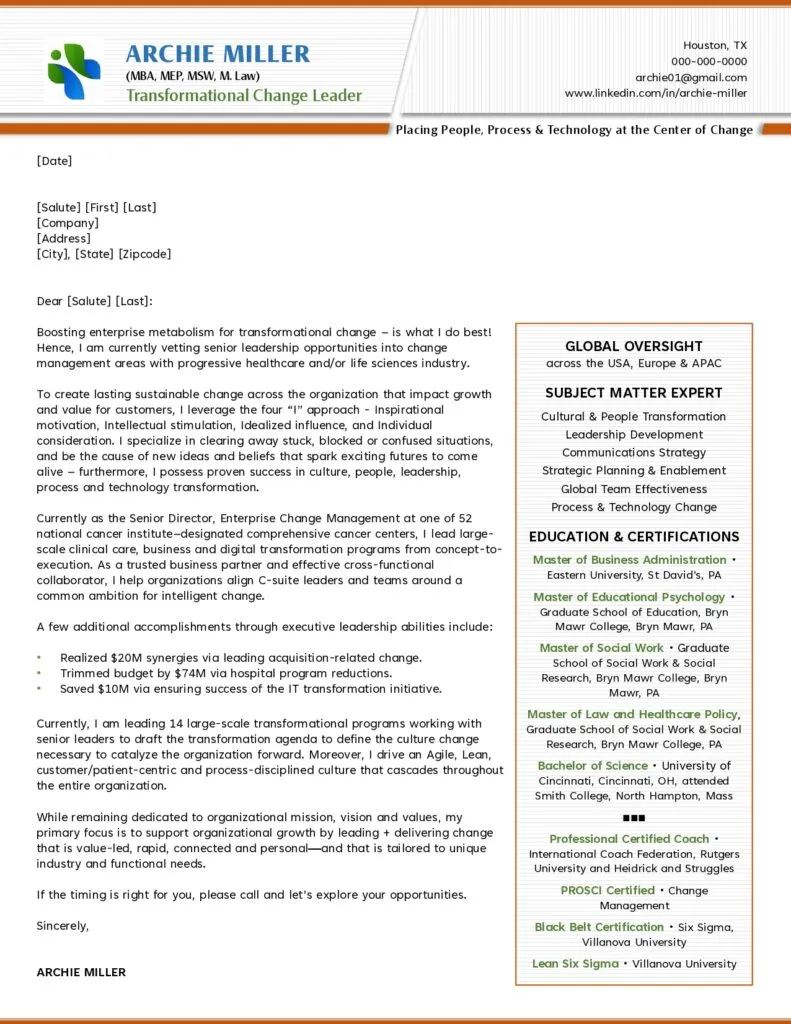
What is a Cover Letter
A cover letter is a one-page document you submit with your resume when applying for a job. It serves as a formal introduction, allowing you to expand on your resume and demonstrate your suitability for the position. Think of it as your first opportunity to make a strong impression on a potential employer. It’s your chance to showcase your personality, enthusiasm, and your understanding of the company and the specific role. A well-crafted cover letter can significantly increase your chances of getting an interview, while a poorly written one can lead to your application being overlooked. Therefore, crafting a compelling cover letter is a crucial step in any job application process. It’s your chance to shine and demonstrate why you’re the perfect fit for the job. A cover letter needs to be written specifically for each job you apply for because it needs to highlight how your unique experiences and skills meet the needs of the potential employer. It’s not just a rehash of your resume; it’s a chance to tell your story and make a lasting impression.
Why is a Cover Letter Important
While a resume provides a factual overview of your qualifications, a cover letter allows you to connect with the hiring manager on a more personal level. It helps you explain why you are interested in the specific role and the company. It allows you to highlight relevant experiences, skills, and achievements that directly align with the job requirements. It also allows you to demonstrate your communication skills, writing style, and attention to detail. By tailoring your letter to the specific job and company, you can show that you have done your research and are genuinely interested in the opportunity. In today’s competitive job market, a well-written cover letter can set you apart from other candidates, giving you a significant advantage in the application process. It’s your chance to make a compelling case for why you deserve an interview.
Key Components of a Cover Letter

A strong cover letter typically includes several key components, each playing a vital role in making a positive impression. These components work together to create a cohesive and compelling narrative that showcases your qualifications and enthusiasm. A well-structured cover letter is easier to read and more effective in conveying your message. By following these essential elements, you can create a cover letter that grabs attention and significantly boosts your chances of landing an interview. Ensuring all of these elements work in concert with one another will drastically improve the strength of your application.
Header and Contact Information
Begin your cover letter with a professional header. This should include your full name, address, phone number, and email address. It’s important that this information is easy to find and accurately reflects your current contact details. Also, include the date and the employer’s contact information (if available), such as the hiring manager’s name, title, company name, and address. This shows that you’ve taken the time to research the company and personalize your application. Your header should be clear, concise, and consistent with the format used on your resume. Make sure the format is easily readable and professional. Remember, this is the first thing the hiring manager sees, so make it count. A well-formatted header sets a professional tone and helps the employer easily contact you. See the image below for an example of how to organize your header.
Greeting the Hiring Manager
The greeting sets the tone for your entire cover letter. Whenever possible, address the hiring manager by name. This shows that you’ve done your research and are genuinely interested in the position. If the hiring manager’s name isn’t available, use a professional greeting like ‘Dear Hiring Manager’ or ‘Dear [Company Name] Hiring Team.’ Avoid generic greetings such as ‘To Whom It May Concern,’ as they can come across as impersonal. Ensure you use the correct title (Mr., Ms., Dr., etc.) and spell the name correctly. A personalized greeting makes a positive first impression and demonstrates attention to detail. It is far more effective than generic alternatives and can demonstrate that you’ve invested time in researching the company and the role. Using the hiring manager’s name shows that you are proactive and interested. This personal touch can set you apart from other candidates.
First Paragraph: Grab Their Attention

The first paragraph is your chance to immediately grab the reader’s attention. Start with a strong opening statement that clearly states the position you are applying for and how you learned about the opportunity. Briefly highlight your key qualifications or the reason you are particularly interested in the role or company. This paragraph should be concise, enthusiastic, and tailored to the specific job requirements. State your enthusiasm for the role and mention something that initially attracted you to the company. The goal is to make the hiring manager want to read the rest of your letter. Consider starting with an accomplishment or a statement of your career goals. A compelling opening sets the stage for the rest of your cover letter and encourages the hiring manager to continue reading. Make the first impression a great one.
Body Paragraphs Showcase Your Skills
The body paragraphs are where you expand on your qualifications and demonstrate how your skills and experience align with the job requirements. Use this section to provide specific examples of your achievements, highlighting relevant skills and experiences. Tailor these paragraphs to the specific requirements outlined in the job description. Discuss how your skills match the needs of the role, emphasizing the value you can bring to the company. Each paragraph should focus on a specific skill or experience, supporting your claims with evidence. Use action verbs to describe your accomplishments and quantify your achievements whenever possible. This section should be easy to read and logically organized, making it easy for the hiring manager to quickly understand your capabilities. Consider using a STAR method (Situation, Task, Action, Result) to structure your examples. This will add clarity and strength to your assertions. Remember to show how you can solve problems for the company and contribute to their success.
Highlight Relevant Experience
Select the most relevant experiences from your resume and expand on them in your cover letter. Focus on experiences that directly align with the job description and the company’s needs. Describe your responsibilities and accomplishments in detail, emphasizing how your skills contributed to the success of past projects or organizations. Use this space to explain any gaps in your experience, if necessary, and show how you have grown professionally over time. It’s important to emphasize not only what you did but also the impact of your actions. Provide examples of how you solved problems, improved processes, or contributed to team goals. Relate your experience to the job’s requirements. Show how your past experiences have prepared you for this role and what you can bring to the company. Illustrate your knowledge and expertise with concrete examples that demonstrate your value. It is always a good idea to align your skills with the language used in the job description.
Quantify Your Achievements

Whenever possible, quantify your achievements with numbers and data. Instead of saying ‘Managed social media campaigns,’ say ‘Increased social media engagement by 30% in six months.’ Quantifying your accomplishments makes your claims more credible and demonstrates your impact. Use metrics to highlight your successes, such as sales figures, cost savings, or the number of projects completed. This provides concrete evidence of your abilities and gives the hiring manager a clear understanding of your value. Use percentages, dollar amounts, or specific numbers to illustrate your impact. This helps the hiring manager understand the tangible results you have achieved in past roles. By using numbers, you make your achievements more compelling and demonstrate your ability to deliver results. Quantifiable results highlight your contributions and make your cover letter more memorable. For example, instead of ‘Improved customer service,’ use ‘Reduced customer complaint resolution time by 20%.’ The image below shows a simple example of quantifying achievements.
Tailor Your Letter to the Job
A generic cover letter will not impress the hiring manager. Tailor your cover letter to each job application. Carefully review the job description and identify the key requirements and skills the employer is seeking. Highlight the skills and experiences you have that directly match those requirements. Use the same keywords and phrases from the job description to demonstrate your understanding of the role. Show how your skills and experiences align with the specific needs of the company. Explain your interest in the particular company and why you want to work there. Tailoring your cover letter shows that you are genuinely interested in the position and have taken the time to understand the company’s needs. This also shows that you can follow directions, which is very important. It’s important to showcase your understanding of the role and highlight how your unique qualifications align with what the employer is seeking. You can tailor your cover letter to the specific job by referencing the job description, highlighting relevant skills and experience, and addressing specific needs. See the image below for more tips to tailor your cover letter.
Express Enthusiasm
Throughout your cover letter, express your enthusiasm for the role and the company. Show your genuine interest in the opportunity and why you are excited about the prospect of working there. Use positive language and demonstrate your passion for the field. Mention what attracts you to the company’s mission, values, or culture. This will make your letter more engaging and memorable. By expressing enthusiasm, you show that you are motivated and eager to contribute. This can set you apart from other candidates who may sound less interested. Show genuine interest and excitement for the position. Conveying your enthusiasm for the opportunity can make you stand out from other applicants and demonstrate your proactive approach.
Closing the Cover Letter

The closing paragraph should summarize your key qualifications and reiterate your interest in the position. Reiterate your enthusiasm and thank the hiring manager for their time and consideration. Ensure your closing paragraph leaves a lasting positive impression. This should be a concise and impactful conclusion, reinforcing your interest and suitability for the role. It’s important to restate your interest and thank the hiring manager, leaving a positive final impression.
Thank You and Call to Action
End your cover letter with a professional closing, such as ‘Sincerely’ or ‘Best regards,’ followed by your full name. Include a call to action, such as ‘I am eager to discuss my qualifications further in an interview’ or ‘Thank you for your time and consideration.’ This encourages the hiring manager to take the next step and contact you. Make it easy for them to reach out to you by including your contact information again. Use a professional closing and a clear call to action. This ensures the hiring manager knows how to proceed. Thanking the reader and including a call to action encourages the hiring manager to contact you. A strong closing reinforces your interest and facilitates further communication.
Proofreading and Editing
Before submitting your cover letter, carefully proofread and edit it for any errors in grammar, spelling, and punctuation. Ensure your sentences are clear, concise, and easy to understand. Check the letter for any typos or grammatical errors, which can detract from your professionalism. A polished and error-free cover letter demonstrates attention to detail. Proofreading is one of the most critical steps in the process. Have someone else review your cover letter, as a fresh pair of eyes can often catch mistakes you might miss. Pay close attention to the formatting, as inconsistencies can make your letter look unprofessional. A well-written and error-free cover letter demonstrates your professionalism and attention to detail. Before submitting your cover letter, make sure it is polished. See the image below for tips on proofreading and editing.