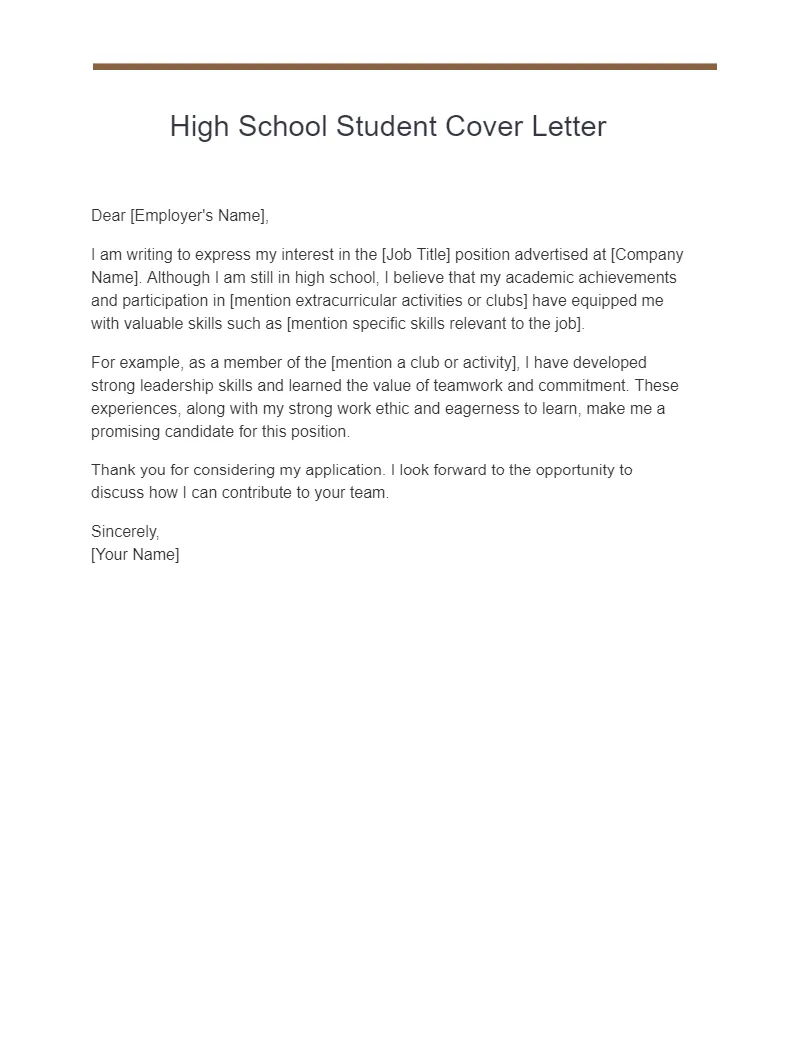
Understanding the High School Graduate Cover Letter
A cover letter is a crucial document for high school graduates seeking employment. It serves as your introduction to a potential employer, providing a snapshot of your skills, experiences, and personality. Unlike a resume, which lists your qualifications, a cover letter allows you to elaborate on them, demonstrating your suitability for a specific role. It’s your opportunity to make a strong first impression and persuade the hiring manager to consider your application seriously. Writing a compelling cover letter is an essential step in the job application process, especially for those with limited work experience. This guide will walk you through how to write a high-quality cover letter that highlights your strengths and helps you stand out from the competition.
Why a Cover Letter Matters
Even if a job posting doesn’t explicitly request a cover letter, submitting one can give you a significant advantage. A well-written cover letter shows that you’re serious about the position and willing to put in the extra effort. It allows you to personalize your application, tailoring it to the specific requirements of the job and the company. For high school graduates, a cover letter is particularly important because it provides context for your limited work history. You can use it to explain your academic achievements, extracurricular activities, and any volunteer work you’ve done, demonstrating the skills and qualities that make you a strong candidate. The cover letter also lets you express your enthusiasm for the job and the company, showcasing your personality and making you more memorable to the hiring manager. Submitting a cover letter demonstrates professionalism and attention to detail, both of which are highly valued by employers.
Key Components of a High School Graduate Cover Letter

A successful cover letter includes several key components. Each section contributes to a cohesive and persuasive presentation of your qualifications and suitability for the job. Following a standard structure ensures that your letter is easy to read and understand, helping the hiring manager quickly grasp your key strengths. These components, when combined effectively, create a cover letter that stands out and increases your chances of securing an interview. It’s important to tailor each component to the specific job and company to maximize your impact. By addressing all the necessary sections, you provide a comprehensive overview of your skills, experiences, and personality, making your application more compelling and memorable.
Header and Contact Information
Your cover letter should begin with a header that includes your contact information. This typically includes your full name, phone number, email address, and sometimes your mailing address. It’s important to ensure that the contact information is accurate and up-to-date. The header should also include the date and the employer’s contact information (name, title, company name, and address, if available). Use a professional font and layout for your header to create a polished first impression. Make sure that the format is easy to read and matches the font and style of your resume. Proofread your contact information carefully to avoid any errors that could prevent the employer from reaching you. A well-formatted header sets a professional tone for your entire letter.
Greeting the Hiring Manager
Start your cover letter with a professional greeting. If you know the name of the hiring manager, use it (e.g., “Dear Mr. Smith”). If you don’t know the name, use a general greeting such as “Dear Hiring Manager” or “Dear [Company Name] Hiring Team.” Avoid generic greetings like “To Whom It May Concern.” Personalizing the greeting shows that you’ve done your research and are genuinely interested in the position. Double-check the spelling of the hiring manager’s name to avoid any errors. This shows that you’re paying attention to detail and are respectful. A personalized greeting makes a better impression than a generic one and increases the likelihood that the hiring manager will read your letter carefully.
Writing the Body Paragraphs

The body paragraphs are the heart of your cover letter, where you showcase your qualifications and enthusiasm for the job. Each paragraph should focus on a specific aspect of your skills and experience, connecting them to the job requirements. The first paragraph should state the position you’re applying for and how you learned about it. The subsequent paragraphs should highlight your relevant skills and experiences, explaining how they align with the job description. Use action verbs and specific examples to demonstrate your accomplishments. The final paragraph should summarize your key qualifications and express your interest in an interview, inviting the hiring manager to contact you. Clear and concise language is key to making your message understandable.
Highlighting Your Skills and Achievements
When highlighting your skills and achievements, focus on those that are most relevant to the job. Even if you have limited work experience, you can showcase skills gained through school projects, extracurricular activities, volunteer work, or part-time jobs. Use the job description as a guide to identify the key skills the employer is seeking, and then provide specific examples of how you’ve demonstrated those skills. Quantify your achievements whenever possible (e.g., “Managed social media accounts, increasing follower engagement by 20%”). Use action verbs to describe your accomplishments (e.g., “Managed,” “Organized,” “Led”). This makes your accomplishments more impactful and shows the employer that you can make a positive impact. By providing clear, concise examples, you show the hiring manager that you have the skills needed to be successful in the role.
Emphasizing Relevant Coursework and Activities
Since high school graduates often lack extensive work experience, emphasizing relevant coursework and extracurricular activities is crucial. Highlight any courses that align with the job requirements, such as business, computer science, or communications. Describe projects, assignments, or presentations you’ve completed that demonstrate the skills the employer is seeking. Similarly, showcase any extracurricular activities, such as clubs, sports teams, or volunteer work. Explain what you learned from these activities, emphasizing skills like teamwork, leadership, communication, and problem-solving. If you held a leadership position in a club, detail your responsibilities and accomplishments. Always tie your experiences back to the job requirements, making it clear why your academic and extracurricular achievements are relevant. This will help demonstrate your ability to perform the duties required.
Showcasing Soft Skills

Soft skills are essential qualities that employers look for in every candidate. Highlight soft skills such as communication, teamwork, problem-solving, time management, and adaptability. Use specific examples from your experiences to demonstrate these skills. For example, if you were part of a team project, describe how you collaborated with others to achieve a common goal. If you volunteered, explain how you managed your time effectively to balance your responsibilities. Soft skills can make the difference when applying for jobs. Include examples of these skills, and also provide context of how you used them to achieve specific results. Highlighting your soft skills will show the employer that you’re a well-rounded individual who can work effectively in a professional environment.
Addressing the Employer’s Needs
Tailor your cover letter to the specific needs of the employer. Research the company and the job requirements to understand what the employer is looking for. Then, use your cover letter to explain how your skills and experiences align with those needs. Use the job description to identify the key responsibilities and qualifications, and then provide specific examples of how you’ve demonstrated those qualities. For example, if the job requires strong communication skills, describe a time when you effectively communicated with a team or a customer. Demonstrating that you understand the employer’s needs shows that you’re genuinely interested in the position and willing to meet their expectations. By aligning your qualifications with the job requirements, you increase your chances of being selected for an interview.
Creating a Strong Closing
The closing paragraph of your cover letter should summarize your interest in the position and express your eagerness for an interview. Reiterate your enthusiasm for the role and the company. Thank the hiring manager for their time and consideration. State that you look forward to hearing from them soon, and clearly indicate how they can contact you. Use a professional closing, such as “Sincerely” or “Best regards,” followed by your typed name. Make sure to proofread the entire closing to ensure it is professional and free from errors. This final paragraph is your last opportunity to make a positive impression. A strong closing leaves a lasting impression and increases the likelihood of securing an interview.
Expressing Gratitude and Next Steps

In your closing, express your gratitude for the hiring manager’s time and consideration. Thank them for reviewing your application and for the opportunity to be considered for the position. After expressing your gratitude, state that you look forward to hearing from them soon. This conveys your enthusiasm and interest in the role. Clearly indicate how the hiring manager can contact you, repeating your phone number and email address. Providing your contact information one more time makes it easy for the employer to respond. Offering your availability for an interview shows your willingness to take the next step in the application process. A professional and enthusiastic closing leaves a positive final impression.
Formatting and Proofreading Your Cover Letter
Formatting and proofreading are essential for creating a professional and error-free cover letter. Correct formatting makes your letter easy to read and visually appealing. Proofreading ensures that your letter is free of grammatical errors and typos. Always thoroughly review your cover letter before submitting it, and seek feedback from others to catch any mistakes you might have missed. A well-formatted and polished cover letter reflects positively on your attention to detail and professionalism. Ignoring formatting and proofreading can create a negative impression and undermine your chances of landing an interview. Take the time to perfect these aspects of your cover letter, and you’ll significantly improve your application.
Formatting Guidelines
Adhere to standard formatting guidelines to ensure your cover letter is professional and easy to read. Use a professional font, such as Times New Roman, Arial, or Calibri, in a 10-12 point size. Maintain consistent spacing throughout the letter, typically single-spaced with a blank line between paragraphs. Use left alignment for all text. Keep the letter concise, aiming for one page in length. Use clear headings and subheadings to organize your content and make it easy for the reader to find information. Ensure that the layout is visually appealing and well-organized. These formatting guidelines will ensure that your cover letter is professional and presents your skills in a clear way. A well-formatted cover letter shows that you value professionalism and attention to detail.
Proofreading and Editing Tips

Thorough proofreading is critical to avoid errors. After writing your cover letter, put it aside for a day or two, then review it with fresh eyes. Check for grammatical errors, spelling mistakes, punctuation errors, and typos. Read your cover letter aloud to catch any awkward phrasing or sentences that don’t flow smoothly. Use a spell checker and grammar checker, but don’t rely on them completely. They may not catch every error. Ask a friend, family member, or career advisor to review your cover letter for any mistakes you might have missed. Ensure that the tone is professional and that the content is clear, concise, and easy to understand. Proofreading is one of the most essential steps in cover letter writing.
Examples and Templates for High School Graduates
Using examples and templates can be extremely helpful when writing your cover letter. They provide a framework for structuring your letter and can give you ideas for content and phrasing. However, remember to personalize any template to match your own skills, experiences, and the specific job you’re applying for. Avoid using generic templates verbatim, as this can make your letter appear impersonal. Modify the template to highlight your strengths, emphasize the job requirements, and reflect your personality. There are many free cover letter templates available online. Using a template as a starting point helps you create a polished cover letter while ensuring you include all the key elements. Remember, the goal is to present a cover letter that is unique to you and showcases your individual abilities.
Sample Cover Letter 1
This sample should showcase a high school graduate with limited experience applying for an entry-level position. It emphasizes academic achievements, extracurricular activities, and soft skills. It focuses on the skills that are most relevant to the job. The goal of this cover letter is to provide a solid example that can be easily customized by the user. Make sure to read over this and make necessary changes to suit the needs of your particular situation. Take time to study and understand the different parts that make up the cover letter.
Sample Cover Letter 2

This cover letter sample should showcase a high school graduate who has volunteer experience or part-time work experience. This cover letter will show the importance of utilizing prior work experience and other important aspects to make the cover letter stand out. High school graduates will have a cover letter with less experience than college graduates, but they can stand out if they show off what they know and offer to employers. By providing an example, you can gain insight into how to format your own cover letter for the best results.
Common Mistakes to Avoid
Avoiding common mistakes is essential to ensure your cover letter makes a positive impression. Some errors can immediately disqualify your application. Always be mindful of these mistakes. Take your time and read over your cover letter with a fine-tooth comb before submitting your application. A well-crafted cover letter increases your chances of getting an interview, and ultimately, getting the job. Make sure to put a lot of effort into creating a cover letter that stands out for the right reasons.
Poor Grammar and Spelling
Poor grammar and spelling errors can make your cover letter look unprofessional and careless. Proofread your letter carefully to catch any mistakes. Use a spell checker and grammar checker, but also read your letter aloud to catch any awkward phrasing or sentences that don’t flow smoothly. Ask a friend or family member to review your letter for any errors you might have missed. Consistent errors can make you look like you have a lack of attention to detail, and this could make the employers look down on your application. By taking the time to edit your cover letter, you create a professional image that can help you in your job search. This will drastically improve your chances of success.
Generic Language
Avoid using generic language that could apply to any job or company. Tailor your cover letter to the specific job and the company you’re applying to. Research the company and the job requirements, and then highlight the skills and experiences that align with those requirements. Show that you understand the company’s mission and values, and explain why you’re interested in working there. Personalize your cover letter to demonstrate that you’re genuinely interested in the position and have taken the time to understand the job and the company. Generic language does not stand out, so make sure to tailor your cover letter to the specific job.
Lying or Exaggerating
Never lie or exaggerate about your skills, experiences, or qualifications. Employers can easily verify your information, and if they discover that you’ve been dishonest, it can lead to the rejection of your application and may even damage your reputation. Be honest and accurate in your cover letter, and focus on highlighting your strengths and accomplishments in a truthful and compelling way. Even if you have limited work experience, you can still demonstrate your value by emphasizing your transferable skills, academic achievements, and extracurricular activities. Honesty and integrity are key to building trust with potential employers, and they are always better than any lie.
Tips for a Successful Cover Letter
Following these tips can help you write a cover letter that gets noticed. These tips will help you create a great cover letter, and it will allow you to get ahead in your career search. Keep in mind the needs of your specific situation when you create your cover letter. A successful cover letter is more than just a formality. It is a valuable tool that showcases your qualifications and personality. Implement these tips to create a cover letter that will catch the attention of employers.
Tailoring Your Letter
Always tailor your cover letter to each job you apply for. Don’t use a generic template. Instead, carefully review the job description and highlight the skills and experiences that match the requirements. Research the company and understand its mission and values. Then, explain why you’re interested in the specific role and how your skills and experience align with the company’s needs. The more specific you are, the more likely you are to impress the hiring manager. Tailoring your cover letter shows that you’re genuinely interested in the opportunity and have taken the time to understand the job and the company. If you take your time and personalize your cover letter, you can boost your chances of landing the job.
Seeking Feedback
Ask a friend, family member, teacher, or career advisor to review your cover letter before you submit it. Getting feedback from others can help you identify any mistakes, improve the clarity of your writing, and ensure that your letter makes a positive impression. Ask your reviewers for specific feedback on the content, formatting, grammar, and overall tone. Be open to suggestions and make revisions based on their input. Getting a second opinion can significantly improve the quality of your cover letter and increase your chances of getting an interview. Feedback can help you perfect the cover letter.