Understanding the Purpose of a Cover Letter
A cover letter is more than just a formality; it’s your first introduction to a potential employer, offering a chance to make a strong first impression. Think of it as a personal advertisement that complements your resume, providing context, personality, and a narrative that your resume alone cannot convey. Especially when you have no direct experience, a well-crafted cover letter becomes crucial in highlighting your potential and enthusiasm. It allows you to explain why you are interested in the specific role and company, even without a traditional work history. The goal is to show how your skills, knowledge, and aspirations align with the job requirements and the company’s values. Essentially, the cover letter is your opportunity to tell your story and convince the hiring manager that you’re a valuable candidate.
Why is a Cover Letter Important?
In a competitive job market, a cover letter can significantly increase your chances of getting noticed. Many hiring managers view a cover letter as a mandatory part of the application process, especially when dealing with a high volume of applicants. It demonstrates your professionalism, communication skills, and genuine interest in the position. For those with limited experience, the cover letter provides a space to articulate why your skills are transferable and how your experiences, even if not directly work-related, have prepared you for the job. It shows that you’ve taken the time to understand the role and the company, setting you apart from candidates who might only submit a resume. A well-written cover letter shows your ability to communicate effectively and present your qualifications strategically.
How a Cover Letter Complements Your Resume

While your resume offers a snapshot of your skills and experiences, a cover letter allows you to elaborate and contextualize them. Your resume presents facts; your cover letter tells the story behind those facts. It offers a space to explain gaps in your experience, clarify your career goals, and express your personality. Think of your resume as the ‘what’ and your cover letter as the ‘why’ and ‘how’. For instance, if your resume lists volunteer work, your cover letter can explain the skills you gained and how they relate to the job. If you’re transitioning careers or have limited work experience, your cover letter can highlight your transferable skills and explain why you’re a good fit, even without a perfect match on paper. The cover letter creates a narrative that humanizes your application and provides a more complete picture of who you are and what you can bring to the role.
Key Components of a Cover Letter
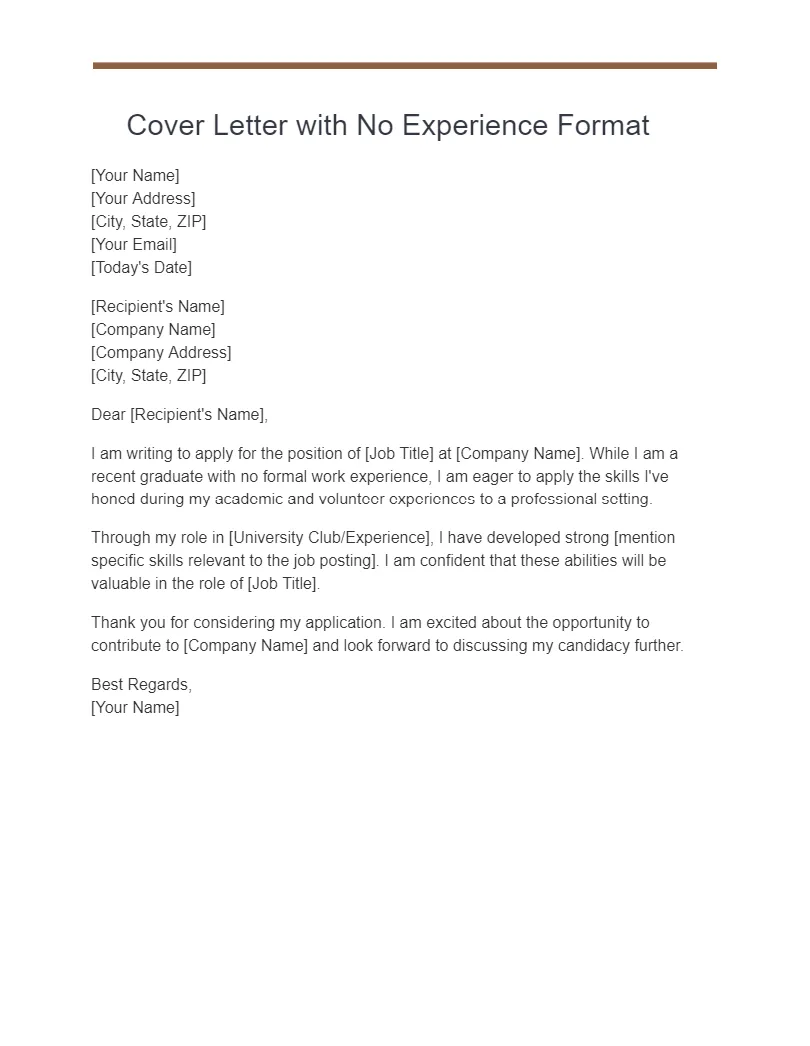
A well-structured cover letter typically includes several essential components. First, you need your contact information and the date, followed by the recipient’s contact information, including their name and title. The opening paragraph should immediately grab the reader’s attention, stating the position you’re applying for and where you found it. The body of the letter should highlight your skills, experiences, and explain your motivation for the role, focusing on transferable skills when you have limited experience. The closing paragraph should reiterate your interest, express your availability for an interview, and thank the reader for their time and consideration. Each section should be concise, focused, and tailored to the specific job and company. A clear structure makes the information easy to digest and increases the impact of your application.
Your Contact Information
At the top of your cover letter, begin by including your contact information. This should include your full name, phone number, email address, and optionally, your LinkedIn profile URL. Ensure your email address sounds professional. This section is crucial because it allows the hiring manager to quickly reach you if they want to move forward with your application. Make sure the information is accurate and up-to-date to avoid any delays in communication. Using a clear and readable format makes this section easy to find and use.
The Recipient’s Information

Below your contact information, include the recipient’s information. This should include the hiring manager’s name (if known), their title, the company name, and the company’s address. Researching the hiring manager’s name shows initiative and attention to detail. If you are unable to find the hiring manager’s name, you can use a general salutation such as “Dear Hiring Manager”. Always verify the correct spelling of the recipient’s name and title, to show that you value them.
The Opening Salutation
The opening salutation sets the tone for your cover letter. The best approach is to use “Dear [Hiring Manager name]”, if you know their name. This shows you’ve taken the time to research the company and personalize your application. If the name is unavailable, a professional alternative is “Dear Hiring Manager” or “Dear [Department name] Team”. Avoid using generic greetings such as “To Whom It May Concern”, which can make your application seem impersonal. Choose the salutation that best suits the company culture and job posting, while maintaining a professional tone.
Crafting a Compelling Opening Paragraph
The opening paragraph is your first opportunity to capture the reader’s attention, making it crucial. Start by stating the specific position you are applying for and where you found the job posting. Immediately express your enthusiasm for the role or the company. If something particularly caught your attention about the job or company, mention it here to show your genuine interest. Keep it concise, direct, and engaging, setting a positive tone. For instance, you could start by mentioning the company’s recent accomplishments, or how your skills align with the requirements of the role. This opening establishes the context of your application and encourages the reader to continue reading.
Highlighting Your Skills and Achievements

This is where you highlight your skills and achievements that align with the job requirements. Since you have no experience, focus on the skills you have and how you developed them. For each skill, provide a specific example from your education, projects, volunteer work, or other relevant experiences. Quantify your achievements whenever possible. For example, instead of saying “Managed social media,” say “Increased social media engagement by 30% through strategic content creation.” This makes your achievements tangible and demonstrates your ability to deliver results. Use keywords from the job description to show your understanding of what the employer is seeking and tailor your examples to meet their needs.
Focusing on Transferable Skills
When you lack direct experience, focusing on transferable skills is vital. These are skills that you’ve developed in one context that can be applied to another. Examples include communication, problem-solving, time management, leadership, and teamwork. Identify which skills are most relevant to the job you’re applying for and provide specific examples of how you’ve demonstrated those skills in other situations. For instance, if the job requires strong communication skills, describe how you successfully led a group project, presented to an audience, or resolved a conflict. By emphasizing these skills, you show that you can perform the job’s core responsibilities, even without a direct match with the role.
Showcasing Relevant Projects or Coursework
Even without work experience, you can showcase relevant projects or coursework to demonstrate your skills and knowledge. Describe any projects you’ve completed during your studies, personal projects, or volunteer work that are related to the job. Highlight your role in these projects, the challenges you faced, the solutions you developed, and the results you achieved. If you took relevant courses, explain the key concepts you learned and how they apply to the job requirements. Use these examples to illustrate your ability to apply your skills and knowledge in a practical setting. Providing details about these projects will help you show that you are capable and have the skills to succeed.
Demonstrating Your Enthusiasm and Interest
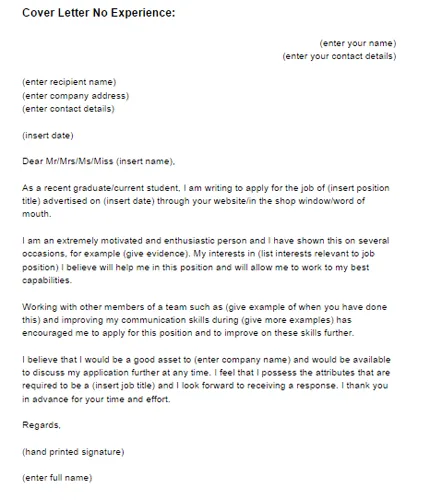
Expressing your enthusiasm and genuine interest is crucial to make a lasting impression. Explain why you are excited about the specific job, the company, and the industry. This could be tied to the company’s mission, values, or recent achievements. Show that you have researched the company and understand its goals and culture. Mention something that resonates with you about the company’s values. Highlight the aspects of the job that particularly appeal to you and explain why you believe you’d be a good fit. Enthusiasm is contagious, and it makes the hiring manager more likely to consider your application. Be sure your interest shines through, making your application more compelling.
Explaining Your Motivation for the Role
A strong cover letter clarifies why you are seeking the role. This is where you articulate your career goals and explain how the job fits into your professional aspirations. Show that you’ve thought about your career path and how this position aligns with your long-term goals. If this job is a stepping stone to a bigger goal, state that. This shows you are strategic about your choices. Describe why this particular opportunity interests you, highlighting the skills you hope to develop or the experiences you seek. This helps the hiring manager understand your drive and dedication, and it positions you as a candidate who is invested in long-term success.
Expressing Your Knowledge of the Company
Demonstrate your understanding of the company. Research the company’s mission, values, products or services, recent news, and company culture before writing your cover letter. Mention specific projects, initiatives, or achievements that have captured your attention. This shows the hiring manager that you have taken the time to learn about their organization and are genuinely interested in joining their team. Referencing something specific about the company creates a more personalized approach. If you are familiar with the company’s work, mention it, and explain how you can contribute. Doing your research helps in showing your understanding of the industry and commitment.
Structuring Your Closing Paragraph

The closing paragraph is your final opportunity to make a strong impression. In this paragraph, reiterate your interest in the position and the company. Briefly summarize why you are a good fit for the role, based on the key skills and experiences you highlighted in the body of your letter. State your availability for an interview and how the hiring manager can contact you. Make sure to thank the reader for their time and consideration. A well-crafted closing paragraph is essential for leaving a positive and lasting impression on the hiring manager. This is your last chance to encourage the reader to see how your qualifications align with the needs of the role.
Reiterating Your Interest and Availability
In the closing paragraph, explicitly reiterate your interest in the position. This reaffirms your enthusiasm and reminds the hiring manager why you are a good fit. State that you are eager to discuss your qualifications further and how you can contribute to the company’s goals. Clearly express your availability for an interview, including the best ways to contact you. Specify when you are available for an interview, such as immediately or at their convenience. This simple step helps the hiring manager proceed easily and increases your chances of getting the interview.
Adding a Call to Action
Adding a call to action encourages the hiring manager to respond. This prompts the reader to take the next step. This is something as simple as, “I am available for an interview at your earliest convenience.” Alternatively, you can suggest, “I welcome the opportunity to discuss my qualifications and how I can contribute to your team.” The goal is to make it easy for the hiring manager to take action and contact you. Always make it clear you’re available and eager to engage in the next step of the hiring process.
Formatting and Proofreading Your Cover Letter

Formatting and proofreading are critical components of a professional cover letter. The appearance of your letter says a lot about you. Poor formatting and errors make you look careless. Choose a clean, readable font and maintain consistency throughout the document. Keep your formatting consistent with the format used by your resume. Proofread your cover letter thoroughly for grammatical errors, typos, and clarity. Have someone else review it, too, to catch any mistakes you may have missed. A well-formatted and error-free cover letter shows attention to detail and respect for the hiring manager’s time.
Choosing the Right Font and Font Size
Select a professional and easy-to-read font, such as Times New Roman, Arial, Calibri, or Georgia. Keep the font size between 10 and 12 points. This ensures your cover letter is legible without appearing cramped or overly large. Maintaining a consistent font and size throughout the document creates a polished look. Using a legible font makes your cover letter easy for the hiring manager to read. Avoid using decorative or unusual fonts that might distract from the content.
Checking for Grammatical Errors and Typos
Proofreading your cover letter is a must. Errors can detract from your message and create a negative impression. Check for grammatical errors, typos, and punctuation mistakes. Read your letter aloud, as this can help you catch errors that you might miss when reading silently. Use a grammar and spell checker, but do not rely on it completely. Always review your letter manually to ensure accuracy and clarity. Consider having a friend, family member, or career counselor review your cover letter for a second opinion. A polished cover letter shows professionalism.
Tailoring Your Cover Letter to Each Job Application

Customizing your cover letter for each job application is essential. While you can start with a template, avoid sending the same generic letter for every job. Review the job description carefully and tailor your cover letter to match the specific requirements and the company’s values. Highlight the skills and experiences that are most relevant to the position. Show that you understand the role and the company’s needs. By tailoring your cover letter, you demonstrate your attention to detail. It also shows that you have taken the time to research the company and are genuinely interested in the role. This increases your chances of getting noticed and being called for an interview.