Understand the Purpose of a Cover Letter
A cover letter is your first opportunity to make a strong impression on a potential employer. Unlike a resume, which provides a factual overview of your skills and experience, a cover letter allows you to express your personality, enthusiasm, and specific interest in the role and company. It serves as a vital introduction, offering context to your qualifications and highlighting what makes you a unique and compelling candidate. A well-crafted cover letter can significantly improve your chances of securing an interview, making it a crucial component of your job application strategy. It’s your chance to go beyond the bullet points and demonstrate why you’re the perfect fit.
Why Is a Cover Letter Important
Cover letters provide a platform to elaborate on your resume. They enable you to connect your experiences with the specific requirements of the job, showcasing your understanding of the role and the company’s needs. They help you explain career transitions, gaps in employment, or any other relevant information that might require further context. By personalizing your application, you demonstrate genuine interest, differentiate yourself from other candidates, and significantly improve your chances of getting noticed by the hiring manager. A tailored cover letter shows that you’ve invested time and effort into the application process.
How Cover Letters Improve Job Applications

Cover letters improve job applications by providing a narrative that complements your resume. They add context, explain your motivations, and demonstrate your ability to communicate effectively. Cover letters also let you highlight specific achievements, skills, and experiences that align with the job requirements, making your application more compelling. They are a great way to demonstrate your understanding of the company’s values and culture and explain why you are a good fit. The right cover letter can elevate your application from being just another resume to a standout submission that grabs attention.
Cover Letter Structure [Explained]
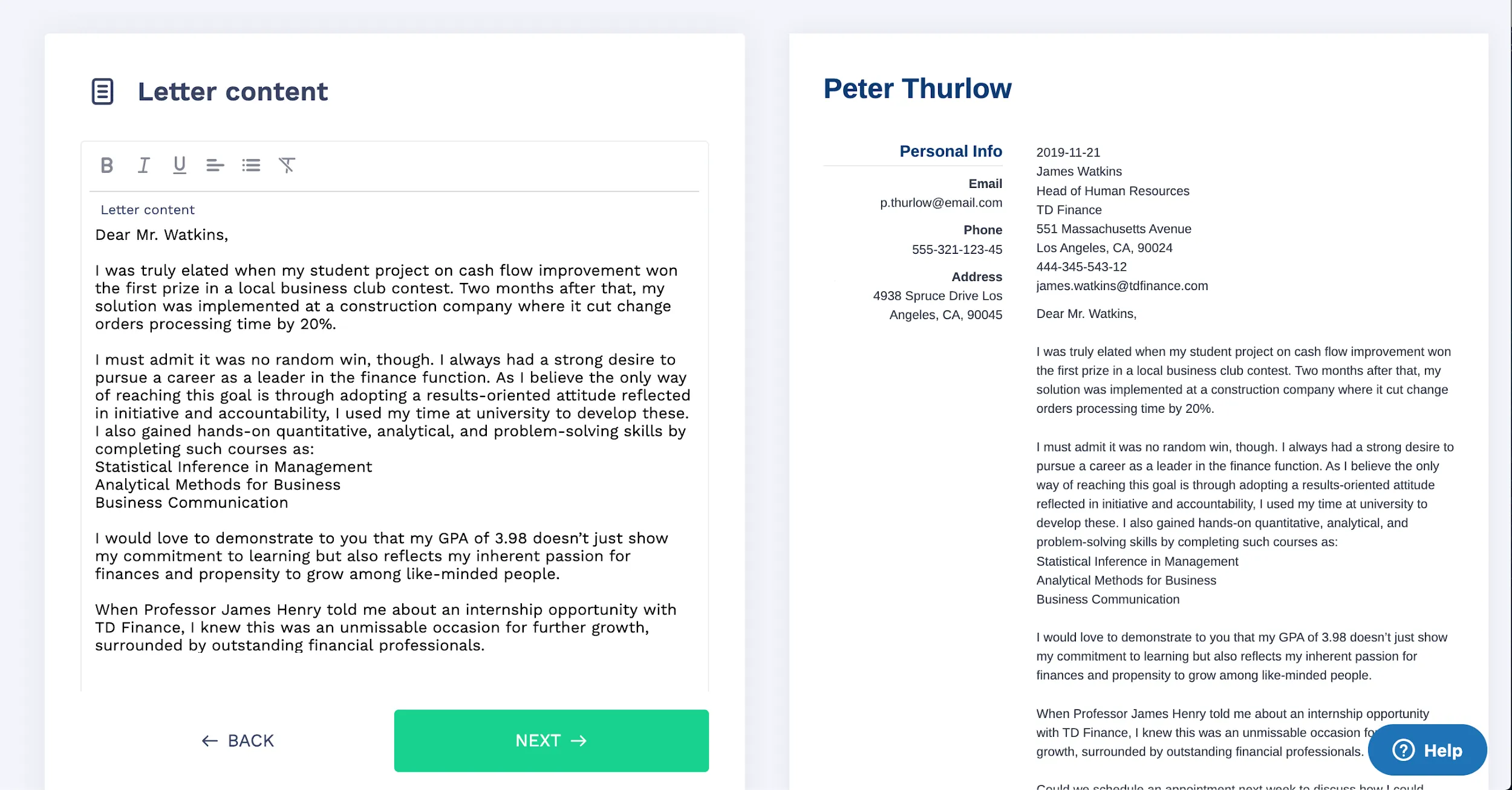
A well-structured cover letter is easy to read and clearly conveys your message. Typically, a cover letter is composed of several key sections: a header, a greeting, an introductory paragraph, body paragraphs (detailing your skills and experience), a closing paragraph with a call to action, and a professional sign-off. Each section plays a vital role in effectively communicating your qualifications and interest in the position. Following a standard structure helps you present your information in a logical and organized manner, making it easier for the hiring manager to quickly grasp the key points.
Header Section Basics
The header should include your contact information (name, phone number, email, and optionally, your LinkedIn profile URL) and the date. It’s essential to ensure the header is correctly formatted and easy to read. This allows the hiring manager to quickly find your contact details if they need to reach you. The header provides a professional appearance to your cover letter, establishing the tone for the rest of the document. Ensure that your email address is professional and that your contact information is up-to-date.
Greeting and Salutation Tips

When addressing the recipient, use a formal salutation like ‘Dear Mr./Ms./Mx. Last Name.’ Always try to find out the hiring manager’s name to personalize your cover letter, which shows initiative. If you can’t find the name, a generic salutation like ‘Dear Hiring Manager’ or ‘Dear [Company Name] Hiring Team’ is acceptable. Avoid overly casual greetings, such as ‘Hi’ or ‘Hello,’ unless the company culture is known to be informal. Double-check the spelling of the recipient’s name to avoid making a negative impression.
Body Paragraphs Guidelines
The body of your cover letter is where you present your case for why you’re the ideal candidate. The body typically consists of two to three paragraphs that discuss your skills, experience, and your understanding of the role. Each paragraph should have a clear focus, building a coherent narrative that shows the value you can bring to the company. Keep each paragraph concise, focusing on your relevant achievements and how they meet the job’s requirements. Aim to show, not just tell, by using specific examples and quantifiable results whenever possible.
First Paragraph Hooking Readers
The first paragraph should immediately capture the reader’s attention. State the position you are applying for and where you found the job posting. Briefly mention why you’re interested in the company and the role. A strong opening paragraph sets the tone for the rest of your letter, making the reader want to learn more. Be enthusiastic, and clearly state your intent. Your opening should immediately answer the question: “Why this job?”
Second Paragraph Showcasing Skills

The second paragraph highlights the key skills and experiences that make you a good fit. Refer to the job description and identify the skills and qualifications the employer values most. Provide specific examples from your past experiences where you demonstrated those skills. Quantify your achievements whenever possible (e.g., ‘Increased sales by 15%’). Your goal is to demonstrate your capabilities and show how you can contribute to the company’s success.
Third Paragraph Demonstrating Interest
In the third paragraph, express your genuine interest in the company and the role. Explain why you’re drawn to the company’s mission, values, or culture. Show that you’ve researched the company and understand its goals. Briefly reiterate your enthusiasm for the opportunity and your belief that you can make a valuable contribution. This paragraph is a chance to make a personal connection and show your commitment to the company.
Call to Action [How to Ask]
The final paragraph should include a clear call to action. Express your availability for an interview and thank the hiring manager for their time and consideration. It’s crucial to make it easy for the hiring manager to take the next step. End with a confident statement, restating your interest and readiness to discuss how your skills and experience align with the company’s needs. Don’t leave the hiring manager wondering what to do next; guide them.
Closing and Sign-off Suggestions

Use a professional closing such as ‘Sincerely,’ ‘Best regards,’ or ‘Respectfully.’ Avoid overly casual closings. Follow the closing with your typed name. If you are sending a hard copy, leave space for your signature above your typed name. The closing reinforces the professional tone of your letter and leaves a lasting impression of your attention to detail and professionalism.
Cover Letter Formatting Best Practices
Proper formatting ensures your cover letter is easy to read and visually appealing. Formatting makes a difference. It reflects your attention to detail and professionalism. Poor formatting can detract from your content, making it difficult for the hiring manager to quickly understand your qualifications.
Font and Typography Recommendations
Choose a professional and legible font, such as Times New Roman, Arial, Calibri, or Helvetica. Use a font size between 10 and 12 points for the body text. Ensure consistency throughout the document. Avoid overly stylized or decorative fonts that may distract the reader. Select a font that is easy on the eyes and suitable for professional correspondence.
Margins, Spacing, and Layout Advice

Use standard 1-inch margins on all sides of your cover letter. Use single-spacing for the body text and double-spacing between paragraphs. This improves readability and gives the document a clean look. Use left alignment for the text. Keep the layout clean and uncluttered to make it easy for the hiring manager to scan and quickly find important information.
File Type and Naming Conventions
Save your cover letter as a PDF file to ensure that the formatting remains consistent across different devices and operating systems. Name the file in a professional manner, such as “[Your Name] - Cover Letter - [Job Title]” to help the hiring manager easily identify the document. The naming convention should include your name and the job title to avoid any confusion or misidentification. A PDF format helps to maintain the layout as you intended.
Tips for Tailoring Your Cover Letter
Tailoring your cover letter to each job application is essential for demonstrating your genuine interest and suitability for the role. A generic cover letter is easily identifiable and often discarded. Customization demonstrates that you’ve invested the time to understand the specific requirements of the job and the company’s needs. Tailoring your letter makes it more compelling and increases your chances of getting hired.
Researching the Company [Essential Steps]

Before writing your cover letter, research the company. Visit their website, read their mission statement, and review their recent news and social media activity. This will give you insights into their culture, values, and current initiatives. Understanding the company allows you to tailor your letter to their specific needs. You should also look at the job description, and identify the key skills and qualifications that the employer is seeking, which you can then address in your letter.
Highlighting Relevant Skills and Experience
Carefully review the job description and identify the keywords and key requirements. Highlight the skills and experiences that align with the job’s needs. Use specific examples to illustrate how you have demonstrated those skills in the past. Tailor your cover letter to showcase what makes you the best candidate for the job, and to show that your achievements match the job’s requirements. Focus on relevant information; avoid including unnecessary details.
Using Keywords [SEO]
Incorporate keywords from the job description naturally throughout your cover letter. Keywords help your application get noticed by applicant tracking systems (ATS) and hiring managers. Avoid keyword stuffing, which can make your letter sound unnatural. Use the keywords in context, demonstrating how your skills and experience match the job requirements. This makes your cover letter more effective. Keywords can ensure your application is noticed and helps to highlight your ability to meet the job’s expectations.
Common Cover Letter Mistakes to Avoid

Avoiding common mistakes is crucial for creating a positive first impression. Be meticulous and pay close attention to detail to ensure that your cover letter showcases your professionalism and attention to detail. Mistakes can quickly undermine your application.
Generic Content and Lack of Personalization
A generic cover letter is a major red flag. Customize your letter to each specific job and company. Show you have invested the time to research the company and the position. Avoid using templates without making significant adjustments. Always address the letter to the hiring manager by name. Showcasing your knowledge and enthusiasm will demonstrate that you are serious about the opportunity.
Typos, Grammatical Errors and Tone
Typos and grammatical errors undermine your credibility. Proofread your cover letter carefully. Use spell-check tools, and have a friend or colleague review it. Maintain a professional tone throughout the letter. Avoid slang, jargon, or overly casual language. Ensure your writing is clear, concise, and error-free, as these errors will reflect negatively on your attention to detail.
Ignoring the Job Description
Failing to address the specific requirements outlined in the job description is a common mistake. Make sure your cover letter highlights how your skills and experience match the job’s requirements. Use keywords from the job description to demonstrate your understanding of the role. Tailor your letter to emphasize the aspects of your background that align with the company’s needs.
Cover Letter Examples
Reviewing examples of successful cover letters can give you a better understanding of how to structure and write your own. Examples provide a practical guide. However, it’s critical to customize the examples to fit your individual situation and the specific job for which you’re applying.
Example Cover Letter For Marketing
A marketing cover letter should emphasize your skills in digital marketing, content creation, and campaign management. Highlight your achievements in driving leads, increasing brand awareness, and improving ROI. Use data and specific examples to showcase your accomplishments. Demonstrate an understanding of the company’s marketing strategy and explain how your skills will contribute to their success. A great marketing letter should use persuasive language and highlight relevant metrics.
Example Cover Letter for Software Engineer
A software engineer cover letter should highlight your technical skills, such as programming languages, software development methodologies, and experience with specific technologies. Showcase your projects and contributions to relevant open-source projects. Demonstrate your problem-solving abilities, teamwork skills, and your understanding of software design principles. Provide quantifiable results and be very specific with your experience.
Cover Letter Writing Tools
Various tools can help you write a compelling cover letter, saving you time and improving the quality of your writing. Leveraging these tools is a good way to refine your cover letter and enhance its impact.
Online Cover Letter Builders
Online cover letter builders provide templates, guidance, and formatting assistance to help you create a polished cover letter quickly. These tools offer pre-written content and customizable sections, streamlining the writing process. Many cover letter builders are free or offer premium options. These platforms ensure your letter has a professional layout and format, saving time. Consider exploring these options to create a well-structured cover letter effortlessly.
AI-Powered Cover Letter Assistants
AI-powered tools can analyze job descriptions and generate personalized cover letters. These tools often suggest relevant skills, experiences, and keywords. AI assistants offer features such as grammar and spell-checking. Make sure to review and customize the AI-generated content to ensure it accurately reflects your qualifications and personality. Utilize AI tools for inspiration and to save time, but always personalize the final draft.
In conclusion, writing a great cover letter requires a strategic approach that emphasizes structure, customization, and attention to detail. By understanding the purpose of a cover letter and following the guidelines outlined in this guide, you can craft a compelling document that showcases your skills, experience, and genuine interest in the job. Avoid common mistakes, and use the resources available to create a cover letter that sets you apart from the competition. Mastering these techniques will help you present yourself effectively and significantly increase your chances of getting an interview.