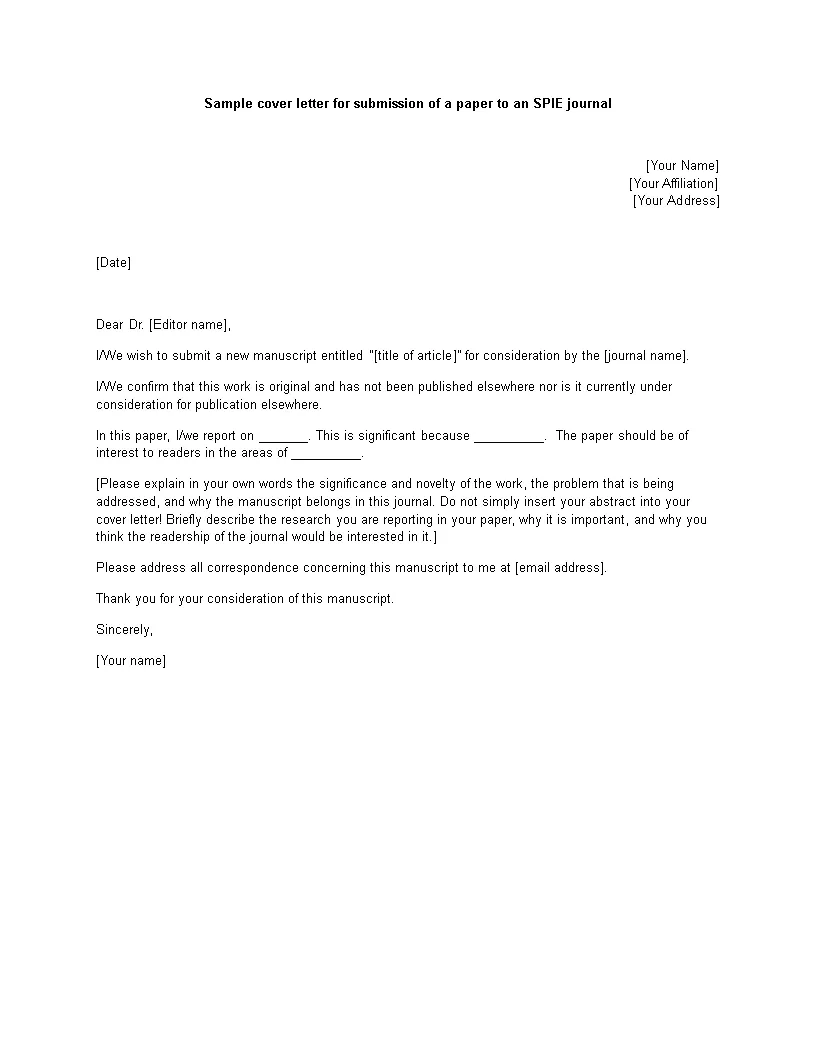
What is a Cover Letter Journal Article
A cover letter for a journal article is a crucial document that accompanies your manuscript when you submit it to a scholarly journal. Unlike cover letters for job applications, this letter serves a different purpose; it’s your chance to introduce your research to the journal’s editor, highlight the significance of your work, and persuade them that your article is a good fit for their publication. It’s a professional courtesy and a strategic tool that helps you make a positive first impression and increases the likelihood of your work being considered for publication. Therefore, it is important to get it right from the very beginning.
Purpose of a Cover Letter for Journal Articles
The primary purpose of a cover letter is to briefly introduce your research and make a case for its publication. It’s where you provide the context for your study, explain its importance, and convince the editor that your work aligns with the journal’s scope and audience. It’s not just a formality; it’s your opportunity to tell the story of your research in a concise, compelling way and establish a professional connection with the editor.
Why is a Cover Letter Important

A well-crafted cover letter can significantly impact the editor’s initial impression of your manuscript. It shows that you’ve considered the journal’s specific requirements and tailored your submission accordingly. It can also highlight the originality and significance of your research, making it more likely to be sent for peer review. In essence, the cover letter serves as your advocate, helping you stand out from the competition and improving your chances of getting published.
Key Components of a Stellar Cover Letter
Formatting Your Cover Letter
Proper formatting is essential for professionalism. Ensure your cover letter is clean, well-organized, and easy to read. Adhere to the journal’s specific guidelines, if any, and use a standard font like Times New Roman or Arial with a 12-point font size. Maintain consistent spacing and use clear headings and paragraphs to make it easy for the editor to scan and understand the content.
Contact Information and Date

Start with your contact information including your name, affiliation, email address, and phone number, typically aligned to the left. Following this, include the date of submission, aligned to the right. This sets a professional tone and allows the editor to easily contact you if needed.
Salutation
Address the editor by name, if possible. Research the journal to find out the editor’s name. If this information is unavailable, use a formal salutation such as ‘Dear Editor’ or ‘Dear Dr. [Editor’s Last Name]’. Avoid generic greetings like ‘To Whom It May Concern’, which suggest a lack of effort.
Introduction Crafting a Compelling Opening
Begin by stating the purpose of your letter—that you are submitting your manuscript for consideration—and include the title of your manuscript. Briefly mention the type of article (e.g., original research, review article) and the specific area of research. Make a strong first impression by clearly stating the significance of your work and why it is a good fit for the journal.
Mentioning Your Research and Findings

Provide a concise overview of your research, including the main objectives, methods, and key findings. Focus on the most important results and how they contribute to the existing body of knowledge. Avoid going into excessive detail; the manuscript itself contains all the comprehensive information, so keep this section brief and compelling.
Highlighting the Significance of Your Work
Explain why your research matters. Discuss its implications, the broader impact of your findings, and how it advances the field. Emphasize the originality and novelty of your work, and how it addresses a gap in existing research. If your findings have practical applications, mention them.
Emphasizing Your Novelty and Originality
Clearly state what is new and unique about your research. Highlight the innovative aspects of your study, such as a new methodology, a novel approach to a problem, or groundbreaking results. Explain how your work differs from or builds upon previous research in the field and why this difference is important.
Explaining the Choice of Journal

Specify why you chose this particular journal for your manuscript. Explain how your research aligns with the journal’s scope, audience, and aims. Mention any specific articles or topics previously published in the journal that relate to your work, demonstrating that you have researched the journal and believe it to be a suitable platform for your publication.
Summarizing Your Expertise
Briefly mention your relevant experience and qualifications, particularly in the field of your research. Highlight any previous publications or expertise that make you well-suited to conduct and report on this study. This adds credibility and reinforces your authority on the subject.
Closing and Formalities
Conclude the letter by expressing your anticipation for the editor’s consideration of your manuscript and thanking them for their time and attention. Include a formal closing such as ‘Sincerely’ or ‘Respectfully,’ followed by your full name, affiliation, and contact information. Ensure that all necessary documents, such as the manuscript, supplementary data, and any required forms, are included with your submission.
Proofreading and Editing Your Cover Letter

Before submitting your cover letter, thoroughly proofread it for any grammatical errors, typos, or inconsistencies. Check the tone and ensure that it is professional and appropriate for the journal. Consider asking a colleague or mentor to review the letter for clarity, accuracy, and overall effectiveness. A well-edited cover letter reflects positively on your attention to detail and professionalism.
Essential Elements of a Cover Letter
Addressing the Editor
Always address the editor directly by name if it’s available. If not, use a formal greeting. This personalized touch shows you’ve done your research and adds a professional touch.
Emphasize your Manuscript

Clearly state the title and type of your manuscript, indicating whether it’s an original research article, review, or other type of submission. Provide a brief overview to capture the editor’s attention.
Manuscript Overview
Give a succinct summary of your study’s main findings and why they’re significant. Highlight the originality and contribution of your work to its field.
Acknowledgements
If there are any acknowledgements or disclosures to make, include them here. This ensures transparency and satisfies any journal-specific requirements.
Finalizing and Submitting Your Cover Letter
Once you’ve written and revised your cover letter, ensure that you’ve followed all the journal’s submission guidelines. Double-check all formatting requirements, file formats, and submission processes. Make sure all necessary attachments, such as your manuscript and supplementary materials, are included. Submit your cover letter and manuscript, then patiently await the editor’s decision. A well-crafted cover letter can make a significant difference in the success of your submission.
In conclusion, a strong cover letter is essential for submitting your journal article. By following these guidelines, you can create a compelling cover letter that introduces your work effectively and increases your chances of publication. Good luck!