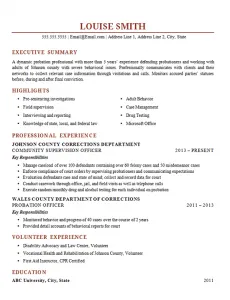
Understanding the Probation Officer Role
A Probation Officer plays a critical role in the criminal justice system, overseeing individuals who have been convicted of crimes and are serving their sentences in the community. This involves monitoring their behavior, ensuring they comply with court orders, and providing support to help them successfully reintegrate into society. They act as a bridge between the court, the offender, and the community, balancing supervision with rehabilitation. Understanding the core duties is the first step in tailoring your cover letter to demonstrate your alignment with the position. They assess risk, create supervision plans, and regularly interact with offenders, and it is vital to demonstrate an understanding of this multifaceted role in your application.
Key Responsibilities of a Probation Officer
The responsibilities of a Probation Officer are diverse and demanding. They include conducting investigations to assess an offender’s background and risk level, developing and implementing supervision plans, monitoring compliance with court-ordered conditions (such as drug testing, curfews, and community service), and providing guidance and support to offenders to help them make positive changes. Probation Officers also collaborate with other agencies, such as law enforcement, social services, and treatment providers, to ensure offenders receive the resources they need. Furthermore, they must be skilled in report writing, data analysis, and conflict resolution, making it a position requiring a wide range of skills and abilities. Showing awareness of these responsibilities is key.
Skills Needed to Become a Probation Officer

To excel as a Probation Officer, a combination of soft and hard skills is essential. Strong communication skills, both written and verbal, are paramount for effective report writing, interviewing, and interacting with offenders, colleagues, and the courts. Interpersonal skills, including empathy, active listening, and the ability to build rapport, are vital for establishing trust and encouraging positive behavioral change. Problem-solving and critical-thinking abilities are necessary for assessing situations, making sound judgments, and developing appropriate interventions. Additionally, Probation Officers must possess strong organizational and time-management skills to manage caseloads effectively and maintain accurate records. A commitment to ethical conduct and a firm understanding of the law are also critical.
Highlighting Relevant Skills Without Experience
When you have no direct experience as a Probation Officer, the goal is to emphasize your transferable skills and demonstrate how they relate to the job requirements. Identify the skills that align with the responsibilities of a Probation Officer and provide specific examples of how you’ve used these skills in other settings. This could include volunteer work, academic projects, previous employment, or personal experiences. Tailor your cover letter to the specific requirements outlined in the job description, showcasing how your skills and qualifications make you a strong candidate, even without direct experience. Focus on your potential and willingness to learn, highlighting your enthusiasm for the field and your commitment to professional development.
Transferable Skills from Other Fields
Many skills gained in other fields are directly transferable to a Probation Officer role. For instance, experience in customer service can translate to strong communication and interpersonal skills, as Probation Officers must effectively interact with a diverse population. A background in social work or counseling provides experience in assessment, intervention, and case management. Military service can demonstrate leadership, discipline, and the ability to follow procedures. Similarly, law enforcement experience provides insight into criminal behavior and legal processes. Volunteer work, particularly in positions involving mentoring, advocacy, or crisis intervention, showcases empathy, problem-solving abilities, and a commitment to helping others. These experiences can be effectively leveraged in your cover letter.
Examples of Transferable Skills

Consider how skills like communication, active listening, empathy, problem-solving, and conflict resolution can be highlighted. If you have experience in customer service, you can highlight your ability to effectively communicate with diverse individuals and resolve conflicts. If you have volunteered as a mentor, you can emphasize your ability to build rapport, provide guidance, and support individuals facing challenges. If you have experience in a leadership role, highlight your ability to make sound decisions, manage stress, and work collaboratively. Be specific in your examples. Instead of simply stating you have good communication skills, provide an example of how you have successfully communicated in a challenging situation, such as de-escalating a conflict or explaining complex information clearly.
Structuring Your Cover Letter
A well-structured cover letter is crucial for making a strong impression. Start with a professional header, including your contact information, followed by the date and the employer’s information. The letter should have a clear and concise opening paragraph, a body that highlights your relevant skills and experiences, and a closing paragraph that expresses your interest and availability. Use a formal tone throughout the letter, and ensure the formatting is clean and easy to read. The overall structure is important, with clear paragraphs and concise language that conveys your qualifications in an organized manner. A well-structured cover letter will demonstrate your professionalism and attention to detail, enhancing your chances of getting an interview.
Header and Contact Information
Your header should include your full name, address, phone number, and professional email address. Ensure your email address is appropriate and professional; avoid using nicknames or informal language. Below your contact information, include the date and the employer’s name, title (if known), and the organization’s address. Double-check all information for accuracy. This section sets the tone for your letter, demonstrating your professionalism and providing the employer with the means to contact you. Accuracy is key to ensure they can reach you easily. Correctly formatting your header shows attention to detail, a trait valued in a Probation Officer.
Personalized Greeting

Always address your cover letter to a specific person if possible. Research the hiring manager’s name and use it in your greeting, such as ‘Dear Mr./Ms. [Last Name].’ If you are unable to find a specific name, use a professional greeting, such as ‘Dear Hiring Manager.’ Avoid generic greetings like ‘To Whom It May Concern,’ as they can make your letter seem impersonal. A personalized greeting demonstrates that you have taken the time to research the organization and are genuinely interested in the position. This small detail can significantly improve your cover letter’s impact.
Opening Paragraph Grab Attention
The opening paragraph should immediately grab the reader’s attention and clearly state your purpose for writing. Briefly mention the position you are applying for and where you saw the job posting. Consider including a compelling statement that highlights your interest in the field or a key skill that aligns with the job requirements. For example, you might start by stating your enthusiasm for helping individuals make positive changes or your strong commitment to upholding justice and promoting community safety. Your opening should be concise, enthusiastic, and provide a clear indication of your interest and qualifications. This will encourage the reader to continue reading your letter.
Body Paragraphs Show Your Value
The body paragraphs are the heart of your cover letter, where you showcase your skills, experiences, and qualifications. Structure these paragraphs to address the key requirements outlined in the job description. Provide specific examples of how you have demonstrated the required skills in previous experiences, emphasizing your transferable skills. Use the STAR method (Situation, Task, Action, Result) to provide detailed examples of your accomplishments. For each skill, explain the situation, the task you were assigned, the actions you took, and the positive results you achieved. This will demonstrate how you can apply these skills to the Probation Officer role. Tailoring these paragraphs to the specific job description is essential.
Highlighting Your Skills and Abilities

When highlighting your skills and abilities, be specific and provide concrete examples. Instead of saying you have excellent communication skills, describe a situation where you effectively communicated complex information to a diverse audience. If you have strong problem-solving skills, give an example of a time you identified a problem, developed a solution, and achieved a positive outcome. Quantify your achievements whenever possible, such as the number of people you assisted or the percentage of improvement you achieved. This will make your claims more credible and demonstrate your value. Use action verbs to show your skills in practice, emphasizing your ability to perform the duties of a Probation Officer.
Demonstrating Your Passion for the Role
Expressing your genuine passion for the Probation Officer role is important. Explain what attracts you to this field and why you are interested in helping individuals reintegrate into society. Discuss your understanding of the challenges and rewards of the profession. Highlight your commitment to ethical conduct, integrity, and the principles of justice. Consider mentioning any relevant experiences, such as volunteering, coursework, or personal experiences, that have fueled your interest in this career path. Demonstrating your passion and commitment will make you a more memorable and appealing candidate. Conveying your enthusiasm for this work can significantly improve your chances.
Using Action Verbs to Describe Your Skills
Using strong action verbs to describe your skills and accomplishments makes your cover letter more engaging and demonstrates your abilities more effectively. Start each bullet point or sentence describing your achievements with a powerful action verb. Some examples of action verbs for Probation Officers include assess, analyze, counsel, mediate, supervise, implement, investigate, and advocate. For instance, instead of saying you ‘were responsible for,’ you could write ‘assessed the needs of…’ or ‘implemented a plan.’ Action verbs create a vivid picture of your capabilities and make your cover letter more dynamic. This will help the hiring manager quickly understand what you bring to the table.
Show, Don’t Tell, Through Examples

The most effective cover letters provide concrete examples to support your claims. Instead of simply stating your skills, provide specific instances where you have demonstrated those skills. For instance, instead of writing ‘I am a good listener,’ describe a situation where you actively listened to someone, understood their concerns, and provided appropriate support. Use the STAR method to structure your examples, providing a detailed account of the Situation, Task, Action, and Result. This approach proves your abilities and provides evidence of your ability to perform the duties of a Probation Officer. This helps the hiring manager see your potential for the role more clearly.
Closing the Cover Letter
Your closing paragraph should reiterate your interest in the position and express your enthusiasm for the opportunity. Reiterate your understanding of the Probation Officer role, and mention how your skills and experiences align with the job requirements. Indicate your availability for an interview and thank the employer for their time and consideration. Include a call to action, such as ‘I look forward to the opportunity to discuss my qualifications in more detail’ or ‘Thank you for considering my application.’ Use a professional closing, such as ‘Sincerely’ or ‘Best regards,’ followed by your typed name. The closing is your final opportunity to make a positive impression.
Expressing Your Enthusiasm and Availability
In your closing, clearly state your interest in the Probation Officer position and reiterate your enthusiasm. Mention that you are available for an interview at their earliest convenience. You can say, ‘I am eager to learn more about this opportunity and discuss how my skills and experiences can contribute to your team. I am available for an interview at your earliest convenience and can be reached at [phone number] or [email address].’ This shows your eagerness to move forward in the hiring process. Make it easy for them to contact you.
Proofreading and Editing Your Cover Letter

Proofreading and editing your cover letter is a crucial step. Carefully review your letter for any grammatical errors, spelling mistakes, and typos. Ensure the formatting is consistent and easy to read. Read the letter aloud to catch any awkward phrasing or unclear sentences. Consider having a friend, family member, or career counselor review your letter for feedback. A polished and error-free cover letter demonstrates your attention to detail and professionalism. It will make a strong impression on the hiring manager, so never skip this important step. Use online grammar checkers or proofreading tools to help.
Tips for a Polished Cover Letter
Use a clear and concise writing style, avoiding jargon or overly complex sentences. Tailor your cover letter to each specific job application, highlighting the skills and experiences that align with the job description. Proofread carefully, and ask someone to review it. Maintain a professional tone throughout the letter. Use strong action verbs to describe your accomplishments, and provide specific examples to support your claims. Be enthusiastic and express your genuine interest in the position and the organization. Remember to keep the letter concise, ideally one page in length, to keep the reader engaged. Make it easy for the hiring manager to understand your qualifications.
Additional Resources for Cover Letter Writing
Several online resources can help you write a compelling cover letter. Websites like Indeed, LinkedIn, and CareerBuilder offer templates, examples, and writing tips. CareerOneStop, sponsored by the U.S. Department of Labor, provides helpful information on job search strategies and career development. Your college or university’s career services department can also offer valuable resources, including resume and cover letter reviews. Professional resume writers are also available and can provide expert assistance in creating a polished and effective cover letter. Make use of these resources to improve your letter, even if you have no experience. They will provide valuable insights and guidance.