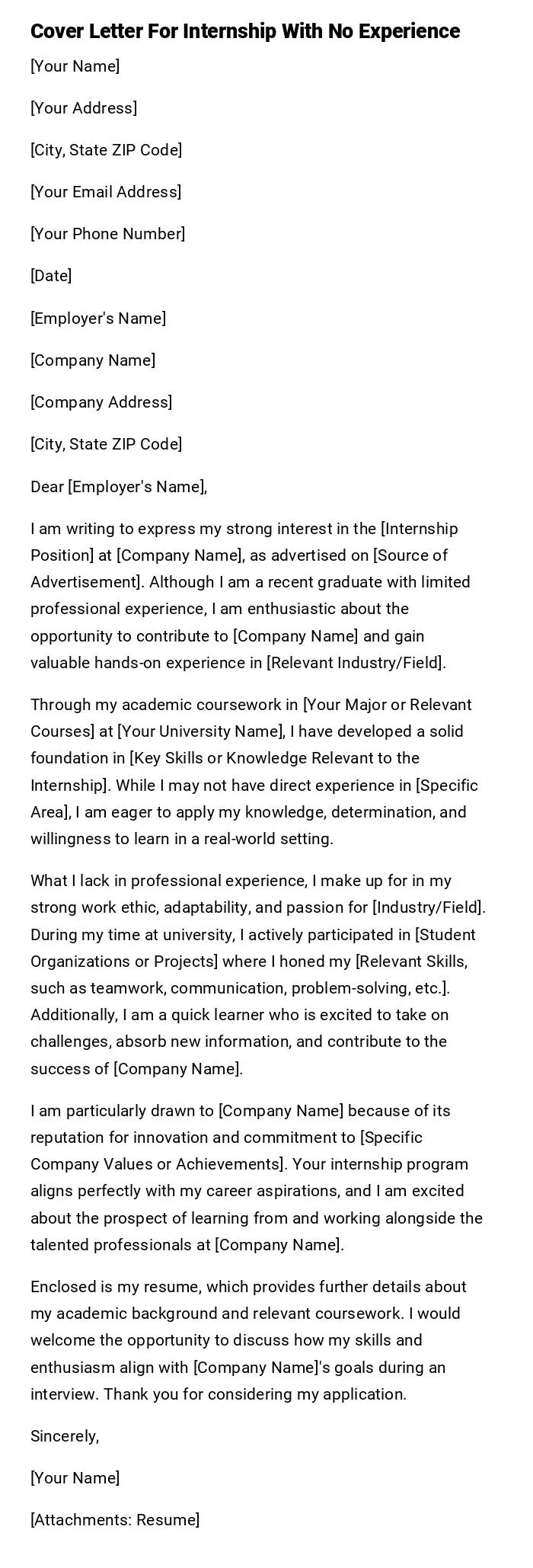
Cover Letter Internship with No Experience
Securing an internship is a crucial step in launching your career, providing invaluable experience and networking opportunities. However, many students and recent graduates face the challenge of crafting a compelling cover letter when they lack direct work experience. This guide will equip you with the strategies and insights needed to create a standout cover letter, even if you’re starting from scratch. We will focus on how to highlight your potential, showcase transferable skills, and demonstrate your enthusiasm, all while making a positive impression on potential employers. Remember, your cover letter is your chance to shine, so let’s make it count!
Researching the Internship and Company
Before you even begin writing, thorough research is essential. Understanding the internship role and the company’s culture is paramount. This shows the hiring manager that you’re genuinely interested and have taken the time to learn about the opportunity. This also enables you to tailor your letter effectively, highlighting how your skills and experiences align with their specific needs.
Understanding the Internship Role

Carefully review the internship description. Identify the key responsibilities, required skills, and preferred qualifications. What are the primary tasks you’ll be expected to perform? What technical or soft skills are they looking for? Make a list of these requirements; this list will be crucial when crafting the body of your cover letter and tailoring the letter’s content to fit the needs of the internship position you are applying for.
Analyzing Company Culture and Values
Visit the company’s website, read their ‘About Us’ page, and explore their social media presence. What is their mission? What values do they emphasize? Is the company known for innovation, teamwork, or customer service? Understanding the company’s culture allows you to demonstrate that you’re a good fit. Showing that your values align with theirs can significantly increase your chances of getting noticed.
Highlighting Transferable Skills
Even without direct work experience, you possess transferable skills—skills gained through other experiences that are relevant to the internship. These can come from academics, extracurricular activities, volunteer work, or even personal projects. The key is to identify and highlight those skills, demonstrating how they apply to the internship role.
Identifying Relevant Skills

Common transferable skills include communication, teamwork, problem-solving, time management, and leadership. Consider projects you’ve worked on, group assignments, and any leadership roles you’ve held. Think about the skills you used in those situations and how they relate to the internship. For example, if the internship requires strong communication skills, highlight instances where you effectively presented information, wrote reports, or participated in debates.
Showcasing Soft Skills
Soft skills are crucial for success in any workplace. Highlight skills like adaptability, creativity, and a willingness to learn. Provide examples of how you’ve demonstrated these skills. For example, if you mention adaptability, explain how you handled a challenging project deadline or adjusted to a new software program.
Emphasizing Education and Coursework
Your education and coursework are valuable assets. Use your cover letter to showcase relevant academic achievements and how they align with the internship requirements. Don’t be afraid to highlight specific courses, projects, or academic accomplishments that demonstrate your knowledge and abilities.
Mentioning Relevant Projects and Assignments

Think about any projects, research papers, or assignments that relate to the internship. Describe your role, what you learned, and any outcomes or results. If you worked on a team project, explain your contributions and how you collaborated with others. If the internship is in marketing, describe a marketing plan you developed in a class; if it’s in engineering, discuss a design project you completed. Remember to always highlight the benefits you have achieved.
Highlighting Academic Achievements
Mention any academic achievements, such as a high GPA, Dean’s List recognition, or scholarships, if they are relevant to the internship. These achievements demonstrate your dedication and work ethic. If you have received any awards or honors, be sure to include them as well. Be specific and provide concrete examples to show your achievements.
Writing a Compelling Opening Paragraph
The opening paragraph is your first chance to grab the reader’s attention. It should immediately convey your enthusiasm for the internship and the company. It should also briefly introduce yourself and state your purpose for writing. A strong opening sets the tone for the rest of your letter, making the reader want to learn more.
Grabbing the Reader’s Attention

Start with a hook. Mention something specific that caught your eye about the company or the internship. This could be a recent project, a company value, or a specific aspect of the role that excites you. Avoid generic opening lines like “I am writing to express my interest.” Instead, try a sentence like “I was thrilled to see the opportunity for an [Internship Title] at [Company Name], especially given your recent work on [Specific Project].”
Stating Your Enthusiasm
Clearly express your enthusiasm for the internship and the company. Let the hiring manager know why you’re excited about this specific opportunity and what you hope to gain from it. For instance, you could write, “I am eager to contribute to [Company Name]’s mission of [Company Mission] and am particularly drawn to the opportunity to develop my skills in [Specific Skill].”
Structuring the Body Paragraphs
The body paragraphs should provide detailed evidence of your skills, experiences, and qualifications. This is where you demonstrate how you meet the internship’s requirements. Structure your paragraphs to highlight your accomplishments, quantify your achievements, and show your knowledge. Use the STAR method (Situation, Task, Action, Result) to describe your experiences effectively.
Focusing on Accomplishments

Don’t just list your responsibilities; focus on what you achieved. What were the results of your actions? Did you improve efficiency, solve a problem, or contribute to a project’s success? Use action verbs and specific examples to showcase your accomplishments. For example, instead of saying “I worked on a team project,” say “I led a team of five students to develop a marketing plan that increased project awareness by 20%.”
Quantifying Your Achievements
Whenever possible, quantify your achievements with numbers, percentages, or specific data. This adds credibility to your claims and demonstrates the impact of your work. For example, instead of saying “I improved customer service,” say “I improved customer satisfaction scores by 15% by implementing a new support system.”
Demonstrating Your Knowledge
Show that you have the knowledge and skills needed for the internship. This doesn’t necessarily mean having prior work experience, but rather showing that you have a solid understanding of the field and the role. Show you’ve done your research and understand the industry.
Tailoring the Letter to the Internship

Customize your letter to the specific internship you’re applying for. Avoid using a generic cover letter. Instead, tailor each letter to the job description and the company’s specific needs. This shows that you’ve taken the time to understand the role and are a good fit. Mentioning the company’s specific initiatives shows a proactive approach.
Using Keywords from the Job Description
Carefully review the job description and identify the keywords used to describe the required skills and qualifications. Incorporate these keywords naturally throughout your cover letter. This helps the hiring manager see that you meet the requirements. Be sure to provide evidence for each skill that you claim to possess.
Crafting a Strong Closing
The closing paragraph should reiterate your interest and include a call to action. End on a positive note, and make it easy for the hiring manager to take the next step.
Reiterating Your Interest
Briefly restate your enthusiasm for the internship and the company. Reaffirm your belief that you would be a valuable asset. Show your gratitude to the reader for considering your application.
Including a Call to Action
Clearly state what you want the hiring manager to do next. This could be an invitation for an interview or a follow-up conversation. Make it easy for them to contact you by providing your email address and phone number. For example, you could write “I am eager to discuss how my skills and enthusiasm can contribute to [Company Name]. I am available for an interview at your earliest convenience. Thank you for your time and consideration. I look forward to hearing from you soon.”