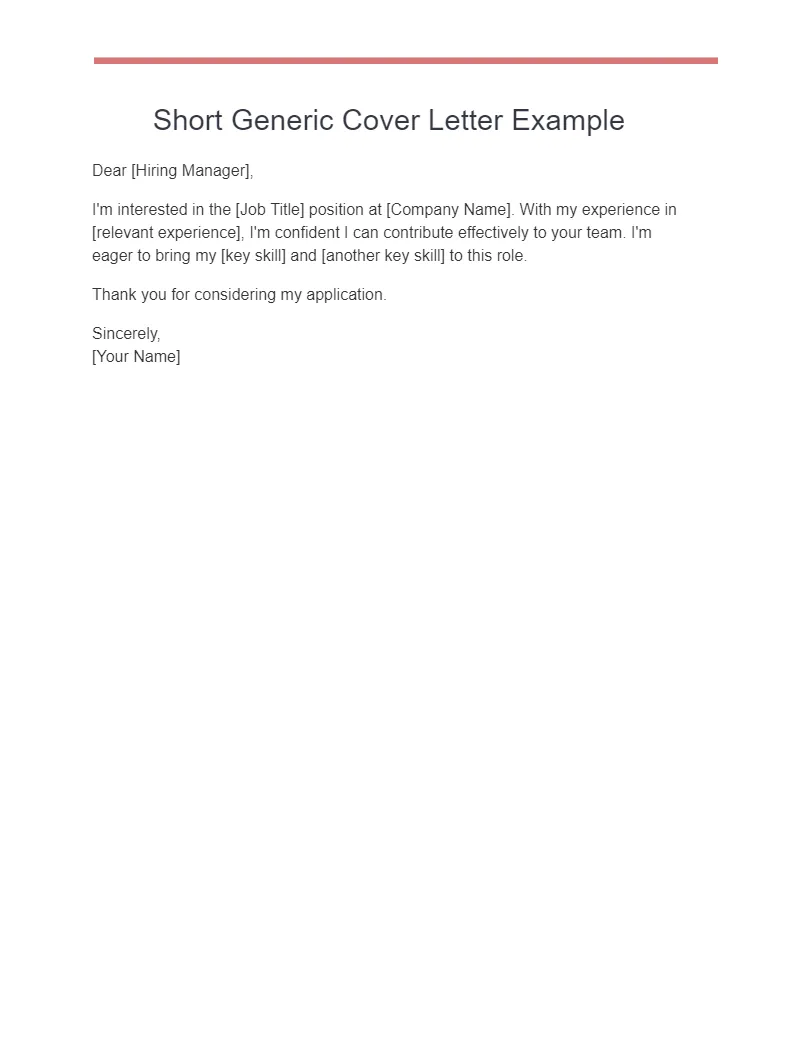
Understanding the Importance of a Cover Letter
A cover letter is more than just a formality; it’s your first opportunity to make a strong impression on a potential employer. While your resume provides a concise overview of your qualifications, a cover letter allows you to delve deeper, providing context and personality that a resume often lacks. It’s your chance to tell your story, explain why you’re interested in the specific role, and showcase how your skills and experiences align with the company’s needs. A well-crafted cover letter can significantly increase your chances of getting an interview, setting you apart from other applicants and demonstrating your genuine interest in the position. Failing to include a cover letter, or submitting a generic one, can be a missed opportunity to make a compelling case for yourself. The cover letter also reflects your communication skills, attention to detail, and overall professionalism.
Key Components of a Generic Cover Letter
A generic cover letter, while adaptable, should include several key elements to ensure it effectively conveys your qualifications and enthusiasm. These components work together to present a cohesive and compelling narrative to the hiring manager. While you will adapt this cover letter to fit each specific job, a general template will save you time. Each of these components plays a crucial role in presenting you as a strong candidate for the job. Remember to customize each section to align with the specific requirements and expectations outlined in the job description.
Contact Information

At the top of your cover letter, include your full name, phone number, email address, and optionally, your LinkedIn profile URL. This information should be clearly visible and easy for the hiring manager to find. Make sure the contact information is up-to-date and professional. Double-check for any typos or errors, as this could be a red flag for potential employers. Consistency is key here; ensure the contact details match those on your resume. Your contact information is a fundamental aspect of the cover letter, enabling employers to easily reach you for further steps in the hiring process.
Date and Salutation
Following your contact information, include the date the cover letter is written. Then, address the hiring manager by name whenever possible. Research the company and try to find out who the hiring manager is or the specific person reviewing applications. If you can’t find a name, use a general salutation like “Dear Hiring Manager.” Avoid outdated or generic salutations such as “To Whom It May Concern.” A personalized salutation shows you’ve done your research and are genuinely interested in the position. It also sets a more engaging tone for the letter and shows attention to detail. Using the hiring manager’s name is a sign of respect and increases the chances of your letter being read carefully.
Opening Paragraph
The opening paragraph is your hook – the first impression you make on the reader. Start by stating the position you’re applying for and where you saw the job posting. Briefly mention why you’re interested in the role and the company. Show enthusiasm and highlight one or two key skills or experiences that directly align with the job’s requirements. This paragraph should grab the reader’s attention and encourage them to continue reading. Make it clear and concise, setting the tone for the rest of your letter. The opening paragraph is critical in immediately showcasing your understanding of the job requirements and expressing your genuine interest in the role. Keep it brief, focused, and enthusiastic.
Body Paragraphs Highlighting Skills and Experience

This is where you sell yourself. Elaborate on your relevant skills and experiences. Use specific examples to illustrate your accomplishments and how you have delivered results in previous roles. Tailor your examples to the job description, emphasizing the skills and qualifications the employer is seeking. Use action verbs to describe your achievements and quantify your accomplishments whenever possible. Avoid simply restating your resume; instead, provide context and demonstrate how your skills and experiences translate into value for the company. Use this space to show the hiring manager the value you bring to the role. Explain the situation, the action you took, and the positive outcome or result. Keep this section clear, concise, and easy to read.
Tailoring Your Skills to the Job Description
Carefully review the job description and identify the key skills and qualifications the employer is looking for. Highlight your relevant skills and experiences by using keywords and phrases from the job description. Provide specific examples of how you have used these skills in the past to achieve results. Explain how your skills and experiences align with the company’s needs and how you can contribute to its success. Showing that you meet the specific requirements of the job makes a strong case for your candidacy. Tailor your skills to match the job description, and the chances of getting an interview increase significantly. Make sure the skill you highlight are supported by the experience listed in your resume.
Quantifying Achievements with Numbers
Whenever possible, use numbers to quantify your accomplishments and show the impact of your work. Instead of saying you “increased sales,” state by how much, such as “increased sales by 15% within six months.” This gives the hiring manager a clear picture of your achievements and demonstrates your ability to deliver results. Quantifiable achievements are more compelling and make your application stand out. Examples could be anything from the number of projects completed to the amount of money saved. Use numbers to show the actual results of your work. Provide the hiring manager with concrete evidence of your skills and value.
Closing Paragraph and Call to Action

Conclude your cover letter by reiterating your interest in the position and thanking the hiring manager for their time and consideration. Express your enthusiasm and state that you are eager to discuss your qualifications further. Include a clear call to action, such as “I look forward to hearing from you” or “I am available for an interview at your earliest convenience.” This reinforces your interest and encourages the hiring manager to take the next step. Be confident and professional. The closing paragraph summarizes your enthusiasm, reiterates your value, and makes it easy for the hiring manager to know what they should do next.
Formatting and Proofreading Your Cover Letter
Proper formatting and careful proofreading are essential for presenting a professional and polished cover letter. Poorly formatted or error-filled letters can damage your credibility and make it appear that you lack attention to detail. Take the time to ensure your cover letter is visually appealing and free of errors. This section discusses the key elements of formatting and proofreading to make your cover letter shine.
Font and Layout Guidelines
Choose a professional and easy-to-read font, such as Times New Roman, Arial, or Calibri. Use a font size of 10-12 points. Maintain consistent formatting throughout your cover letter, including the font, font size, and spacing. Use one-inch margins on all sides. Left-align your text and avoid justified alignment. Keep paragraphs short and use white space effectively to make the letter easy to read. A clean and well-formatted cover letter demonstrates professionalism. It makes it easy for the hiring manager to read your message and helps to leave a positive impression. Consider using a cover letter template to ensure your layout and formatting meet industry standards. A good layout makes a good impression.
Proofreading Checklist

Proofreading your cover letter is essential to catch any errors before submitting your application. Here’s a helpful checklist:
- Spelling: Check for any typos or misspelled words. Use a spell checker and read through the document multiple times.
- Grammar: Ensure your sentences are grammatically correct. Pay attention to subject-verb agreement and correct tense usage.
- Punctuation: Verify that you have used commas, periods, and other punctuation marks correctly.
- Formatting: Check for consistent formatting, including font, font size, margins, and spacing.
- Content: Review your cover letter to ensure your message is clear, concise, and free of any vague or repetitive content.
- Contact Information: Double-check your contact information to ensure it is correct and up-to-date.
Proofread your cover letter multiple times, ideally with a fresh pair of eyes. Consider asking a friend or family member to review your cover letter as well. They can often spot mistakes you might miss. Always double-check before sending.
Common Mistakes to Avoid
Many applicants make common mistakes in their cover letters that can hurt their chances of getting an interview. Being aware of these mistakes can help you avoid them and make a better impression on potential employers. By understanding the common pitfalls, you can significantly increase the effectiveness of your cover letter. This section goes over several common mistakes that can undermine your application.
Using the Wrong Tone
Your cover letter’s tone should be professional, enthusiastic, and appropriate for the industry and company culture. Avoid sounding overly casual, informal, or arrogant. Keep your tone positive and confident, but avoid making claims you can’t back up. Ensure your tone matches the company’s culture. Overly formal language can make you seem out of touch, and overly casual language can undermine your credibility. A friendly and enthusiastic tone is often appreciated. Make sure to remain professional and respectful.
Grammar and Spelling Errors

Errors in grammar and spelling are a major turnoff for employers. They indicate a lack of attention to detail and a lack of professionalism. Always proofread your cover letter carefully before submitting. Run a spell checker, but don’t rely on it entirely. Read the document word for word, looking for any mistakes. Ask a friend or family member to proofread it as well. Poor grammar and spelling errors can quickly disqualify you from consideration. Always double-check everything to make sure everything is correct.
Generic and Vague Content
Avoid using generic or vague language that could apply to any job. Tailor your cover letter to each specific position, highlighting the skills and experiences that make you a strong fit. Do not simply restate your resume; provide specific examples of your accomplishments and how they align with the job requirements. Focus on demonstrating your unique value and showing how you can contribute to the company’s success. Your letter will lack impact if it could be applied to any job.
Examples of Effective Cover Letter Phrases
Here are some examples of effective phrases you can use in your cover letter:
- “I am writing to express my enthusiastic interest in…”
- “With my experience in X, I am confident I can contribute to…”
- “In my previous role at Y, I successfully…”
- “I am eager to learn more about this opportunity and discuss my qualifications in detail.”
- “I am a highly motivated and results-oriented professional with a proven track record of…”
Use these phrases as inspiration, but remember to tailor your language to fit your specific situation and the job description. By using these phrases, you can convey your qualifications and interest in a clear and compelling way.