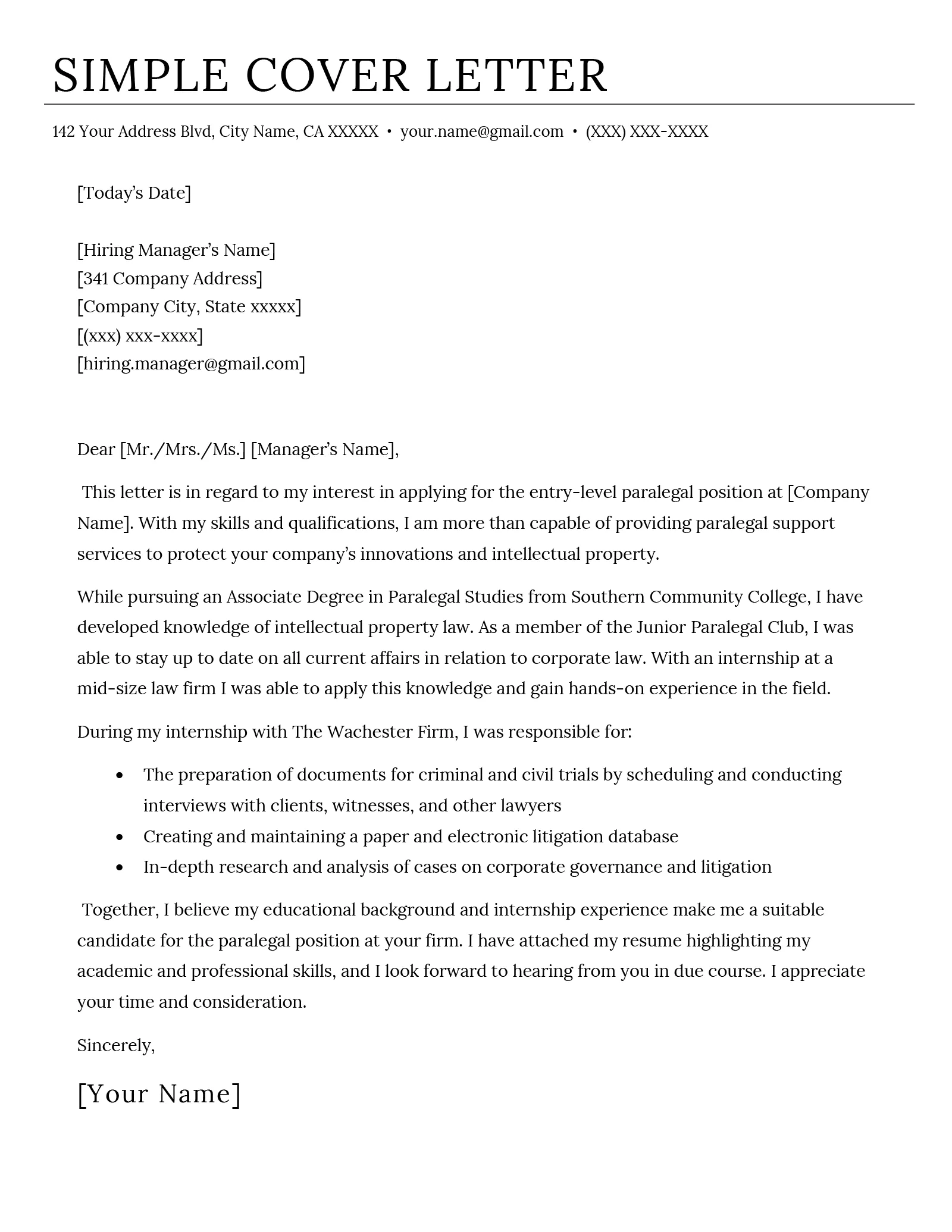
What is a Cover Letter
A cover letter is a crucial document that accompanies your resume when you apply for a job. It serves as your introduction to the potential employer, providing context to your application and highlighting your key qualifications and interest in the specific role. Unlike a resume, which is a factual summary of your experience, a cover letter allows you to showcase your personality, writing skills, and genuine enthusiasm for the opportunity. A well-written cover letter can significantly increase your chances of getting noticed and securing an interview. It is your chance to make a strong first impression and persuade the hiring manager that you are the ideal candidate for the position.
Why You Need a Great Cover Letter
In today’s competitive job market, a great cover letter is essential. It’s your chance to differentiate yourself from other applicants. It provides the hiring manager with a more detailed view of your skills and qualifications than a resume alone. Your cover letter allows you to personalize your application by demonstrating your understanding of the company and the specific job requirements. You can express your passion for the role and explain why you’re a perfect fit. A well-crafted cover letter highlights your achievements, explains career gaps (if any), and aligns your experience with the company’s needs. It also reflects your communication skills, attention to detail, and professionalism, all critical factors that hiring managers consider when evaluating candidates. A strong cover letter sets the stage for a successful job application process.
Top 5 Tips for Formatting Your Cover Letter

Creating a winning cover letter starts with the right format. Proper formatting ensures your letter is easy to read, professional, and effectively communicates your message. Adhering to these formatting tips will help you showcase your skills and increase your chances of landing an interview.
Tip 1 Use a Professional Header
Start your cover letter with a professional header. This should include your full name, contact information (phone number, email address, and LinkedIn profile URL if you have one), and the date. Ensure your header is clean and easy to read. Align the header to the left or right, depending on the style of your cover letter, but maintain consistency throughout the document. A well-formatted header immediately establishes professionalism and allows the hiring manager to quickly access your contact details. The use of a professional header sets a positive tone right from the start. Consider the header as your first introduction, making sure it is clear and concise. This is your first chance to demonstrate attention to detail. Use a consistent font style, size, and layout for a cohesive look. (cover-letter-header.webp)
Tip 2 Tailor It to the Job and Company
Always tailor your cover letter to the specific job and company. Generic cover letters are easily spotted and often discarded. Research the company and the role to understand their needs and requirements. Address the hiring manager by name, if possible (find it on LinkedIn). Highlight the skills and experiences most relevant to the job description. Show that you understand the company’s mission, values, and culture. Mention specific projects, achievements, or initiatives that align with their goals. Demonstrating that you’ve done your homework proves your genuine interest. Showing how your skills match their requirements makes your application compelling. Customization makes your letter stand out from the generic ones. Use keywords from the job description to highlight your relevant skills. (tailoring-cover-letter.webp)
Tip 3 Highlight Relevant Skills and Experience

Your cover letter should highlight your most relevant skills and experiences. Avoid simply repeating your resume. Instead, expand on your key achievements. Provide context and illustrate your abilities with specific examples. Quantify your accomplishments whenever possible (e.g., “Increased sales by 15%” or “Managed a team of 10 people”). Explain how your skills meet the employer’s needs, linking your experiences to their requirements. Use action verbs to describe your accomplishments. Tailor the skills you emphasize to the specific job requirements. A well-crafted letter showcases your ability to deliver results. Focusing on what you can bring to the company makes you an attractive candidate. Make sure your skills align with the job description, so it demonstrates that you are a great fit. (highlight-skills.webp)
Tip 4 Show, Don’t Just Tell
Instead of simply stating your skills, use examples to demonstrate them. Instead of saying “I am a good communicator,” describe a situation where you effectively communicated to achieve a specific outcome. Use the STAR method (Situation, Task, Action, Result) to structure your examples. Detail the situation, the task you faced, the actions you took, and the positive results achieved. This approach provides concrete evidence of your abilities. Showcasing your skills through anecdotes makes your cover letter more engaging and memorable. Providing specific examples validates your claims. A cover letter filled with compelling stories is significantly more persuasive than one filled with generic statements. (show-dont-tell.webp)
Tip 5 Proofread Carefully
Always proofread your cover letter meticulously before sending it. Spelling and grammatical errors can undermine your credibility. Check for clarity, conciseness, and proper formatting. Read your cover letter aloud to catch any awkward phrasing. Have a friend, family member, or career advisor review it. Use spell-check and grammar-check tools, but don’t rely on them completely. A well-proofread cover letter demonstrates your attention to detail. Eliminate any typos, grammatical errors, or inconsistencies. Ensuring perfection will make a positive impression on the hiring manager. Proofreading shows your commitment to excellence. (proofreading-cover-letter.webp)
Key Formatting Elements for a Cover Letter

Besides the content, the format of your cover letter plays a crucial role in its effectiveness. A well-formatted cover letter is easy to read, professional, and visually appealing. Here are key formatting elements to consider.
Formatting Cover Letter Length
Keep your cover letter concise. Aim for a single page, ideally no more than 400 words. Hiring managers often have to review a high volume of applications, so brevity is key. Focus on your most relevant qualifications and experiences. Use clear, concise language. Avoid unnecessary jargon or lengthy explanations. Your cover letter should be a summary, not an exhaustive list. A well-written, brief cover letter shows that you can communicate effectively. Respect the hiring manager’s time by being direct and to the point. Stick to the essentials; the details are in your resume. (cover-letter-length.webp)
Formatting Cover Letter Font and Style
Choose a professional font and maintain consistency throughout your cover letter. Use a standard font like Times New Roman, Arial, Calibri, or Helvetica. Use a font size between 10 and 12 points for readability. Use a single font style throughout your cover letter. Avoid using multiple fonts. Ensure that the font is easy to read on both paper and screen. Make sure your cover letter looks clean and polished. Consistent formatting contributes to a professional appearance. Choose a font size and style that fits your content. Consistent font shows that you pay attention to detail.
Formatting Cover Letter Paragraph Structure

Organize your cover letter with clear paragraphs and ample white space. Use a formal business letter format, including the date, the recipient’s name and title, and the company address. Start with a strong opening paragraph that grabs the reader’s attention. Use the body paragraphs to highlight your relevant skills and experiences, showing how they align with the job requirements. End with a call to action, expressing your interest in an interview and thanking the hiring manager for their time. Use short, concise paragraphs to make your content easy to read. Use bullet points, if necessary, to highlight key achievements or skills. A well-structured cover letter is easy to navigate and understand. Ensure proper spacing between paragraphs and sections. A clear structure makes it easier for the reader to follow your points.
Cover Letter Template and Examples
Using a cover letter template can be a great starting point. Many templates are available online. Consider using a template for inspiration, but always customize it to fit your specific needs and the job you are applying for. Tailor your cover letter to the specific job description. Replace generic content with personalized information. A template helps ensure your cover letter includes all necessary elements. Examples can illustrate how to structure and format your letter. Make sure that your cover letter is a unique representation of you. (cover-letter-template.webp)
Conclusion
Crafting a winning cover letter requires attention to detail, a clear understanding of your qualifications, and a good grasp of the job requirements. By following these formatting tips and incorporating tailored content, you can create a cover letter that grabs the hiring manager’s attention and significantly improves your chances of landing an interview. Remember to proofread carefully and showcase your enthusiasm for the position and the company. Your cover letter is your opportunity to make a memorable first impression. Make the most of it, and good luck with your job search!