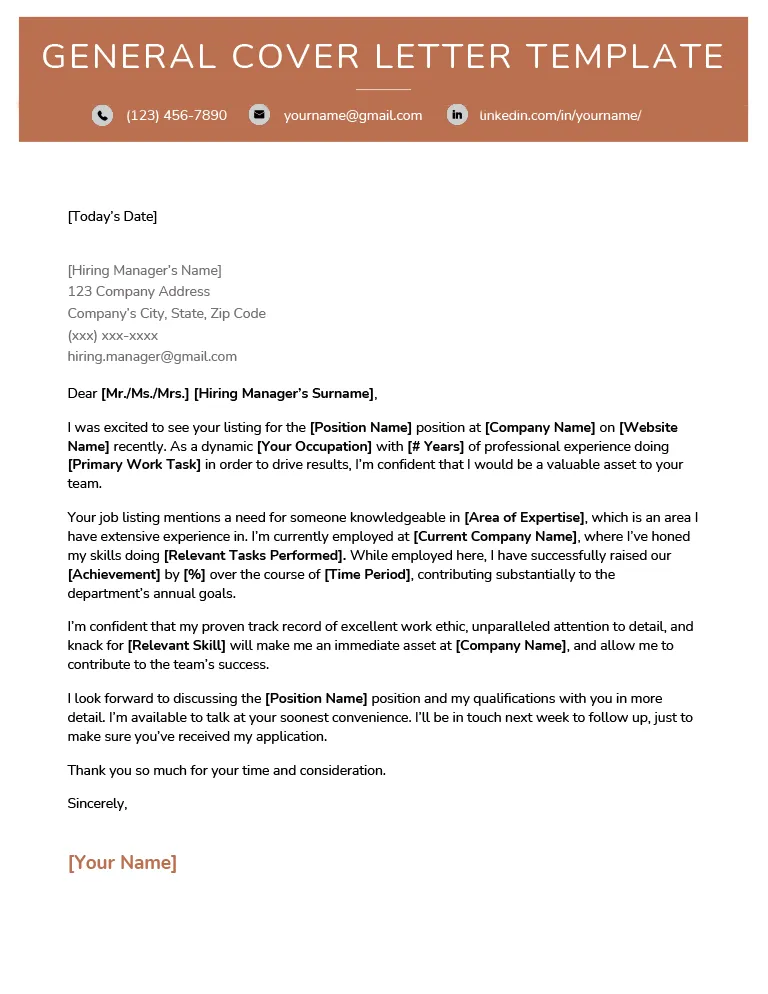
Understanding the Importance of a Cover Letter
A cover letter is far more than just a formality; it’s your first opportunity to make a lasting impression on a potential employer. In a crowded job market, a well-crafted cover letter can set you apart, showcasing your personality, skills, and enthusiasm for the position. It provides context to your resume, allowing you to tell a story that highlights your relevant experiences and explains why you’re the ideal candidate. Failing to provide a cover letter where it is requested demonstrates a lack of attention to detail and a lack of genuine interest in the opportunity, which can lead your application to be discarded before it’s even reviewed. Therefore, learning how to make a general cover letter is crucial for any job seeker.
Why a Cover Letter is Essential
Cover letters are essential because they allow you to personalize your application. They provide a space to elaborate on your resume, connecting your skills and experiences to the specific requirements of the job. Recruiters often use cover letters to gauge your communication skills, writing style, and overall professionalism. Moreover, a cover letter demonstrates your genuine interest in the company and the role, going beyond simply listing qualifications. A strong cover letter conveys your personality and enthusiasm, making you more than just a list of credentials; it helps the hiring manager see you as a real person with real value to offer the organization. If you are trying to learn how to make a general cover letter, you must understand that this is your sales pitch to potential employers.
How Cover Letters Complement Resumes

While your resume lists your qualifications, your cover letter explains them. It acts as a narrative, connecting your past experiences to the job’s requirements and articulating your career goals. A resume provides a snapshot of your skills and experience, while a cover letter provides the context, showing how you’ve applied these skills in previous roles and how they align with the job you’re applying for. The cover letter helps to humanize your application, providing a more comprehensive view of your personality and motivations. It’s also an excellent opportunity to address any gaps in your employment history or to explain why you’re changing careers. A well-written cover letter will ensure your application will be carefully considered.
Essential Components of a Cover Letter
Header and Contact Information
The header of your cover letter should include your contact information and the date. This ensures the recipient knows how to reach you and when the letter was written. Begin with your full name, address, phone number, and professional email address. Following that, include the date you are sending the letter. Then, add the hiring manager’s name, title, and company address, if available. Ensuring this information is easily accessible and accurate is a basic but crucial step in learning how to make a general cover letter. The header is often the first thing a recruiter sees, so make sure it’s clean, professional, and easy to read. See the example below:
Example:
John Doe 123 Main Street, Anytown, USA (123) 456-7890 john.doe@email.com
October 26, 2023
Jane Smith HR Manager Acme Corporation 456 Oak Avenue, Anytown, USA
Formatting Your Header

Proper formatting is key to making a professional impression. Use a clear and readable font, such as Arial or Times New Roman, in a size between 10 and 12 points. Left-align your header, and use single spacing within the header itself. Ensure there is adequate space between the header and the body of the letter, and use bolding sparingly for emphasis only. Keep it clean and organized to make it easy for the reader to find the necessary information. A well-formatted header demonstrates attention to detail, which is a vital skill for any job. Always use professional fonts to demonstrate this point, and make sure that the layout is not clutters. You want to make it easy on the reader.
See the image for an example on formatting your header.
The Salutation
The salutation is the greeting at the beginning of your cover letter. The most common and professional salutation is “Dear Mr./Ms./Mx. [Last Name].” If you know the hiring manager’s name, it’s always best to address the letter to them directly. However, if the name is not provided, or you are unsure, you can use a more general greeting. Using the correct salutation from the very beginning sets a professional tone and shows that you have taken the time to personalize your application. Avoiding generic salutations such as “To Whom It May Concern” demonstrates a level of detail and professionalism that will make a great first impression.
Choosing the Right Salutation
If you don’t know the hiring manager’s name, options include “Dear Hiring Manager,” “Dear [Company Name] Team,” or “Dear [Department] Team.” Avoid overly casual greetings like “Hi” or “Hello.” Researching the company to find the hiring manager’s name is always advisable; this shows initiative and attention to detail. Always double-check the spelling of the name and use the correct title (Mr., Ms., or Mx.). If no name is available, “Dear Hiring Manager” is a safe and professional choice, though not ideal. If you are learning how to make a general cover letter, take note of the need to personalize it.
Crafting a Compelling Opening Paragraph

The opening paragraph is your chance to grab the reader’s attention. Start by stating the position you’re applying for and how you learned about the opportunity. Briefly mention why you’re excited about the role and the company. The opening should be concise and engaging, highlighting your enthusiasm and making the reader want to learn more. Avoid generic phrases; instead, aim for a statement that shows your understanding of the job and your alignment with the company’s values. Keep it brief and to the point. The first few sentences set the tone for the entire letter, so make sure they are impactful and well-written. Also, if possible, include a mutual contact, if applicable.
Grabbing Attention from the Start
To grab attention, consider starting with a strong statement. A brief achievement, a unique skill, or a relevant experience can pique the reader’s interest. Demonstrate your passion for the role and your understanding of the company’s mission. Avoid clichés and focus on what makes you stand out. Tailor your opening to each job application. Research the company to understand its culture and values, and then reflect that in your opening. Make sure your opening paragraph showcases your personality and enthusiasm. Use active and engaging language to draw the reader in from the first sentence. See the example below:
Example:
“I am writing to express my keen interest in the Marketing Manager position at Acme Corporation, as advertised on LinkedIn. With five years of experience driving successful marketing campaigns and a proven track record of increasing brand awareness, I am confident I can significantly contribute to your team’s objectives.”
Highlighting Your Value Proposition
The body of your cover letter should highlight your value proposition. This is where you connect your skills, experiences, and achievements to the job requirements. Tailor each letter to the specific job, demonstrating your understanding of the role and the company’s needs. Focus on the most relevant skills and experiences, using specific examples to illustrate your qualifications. Show how you’ve made a positive impact in previous roles, providing quantifiable results whenever possible. Emphasize what you can bring to the table and how you can contribute to the company’s success. By doing this, you will learn how to make a general cover letter that will stand out.
Demonstrating Your Skills and Experience

Use the body of your cover letter to showcase your key skills and experiences that align with the job description. Provide specific examples of how you’ve applied your skills and the results you achieved. Use the STAR method (Situation, Task, Action, Result) to structure your examples. This helps you to provide a clear and concise narrative of your accomplishments. Quantify your achievements whenever possible, using numbers and metrics to illustrate your impact. Tailor your examples to the specific requirements of the job and highlight how your skills and experiences make you a strong fit for the role. This step is essential to your guide on how to make a general cover letter.
Tailoring Your Letter to the Job
Customizing your cover letter for each job is crucial. Review the job description carefully and identify the key skills and qualifications the employer is seeking. Then, adjust your letter to emphasize the experiences and skills that align with those requirements. This shows that you’ve taken the time to understand the role and the company’s needs. Generic cover letters are often disregarded, while tailored letters demonstrate your genuine interest and attention to detail. Always use the job description as your guide. Customize each cover letter by highlighting the skills and experiences that are most relevant to the position you are applying for. Avoid using a generic template, and ensure each letter is unique to the specific job.
Researching the Company and Role
Researching the company and the role is a vital step in crafting a compelling cover letter. Learn about the company’s mission, values, and recent achievements. Understand the role’s responsibilities and the skills required to be successful. This research will allow you to tailor your letter to the company’s needs and demonstrate your enthusiasm for the opportunity. You can find this information on the company’s website, social media profiles, and industry publications. Tailor your cover letter to demonstrate your understanding of the company’s mission and values. When learning how to make a general cover letter, the research step is the key to showing genuine interest.
Quantifying Your Achievements

Quantifying your achievements is one of the most effective ways to make a strong impression. Use numbers, metrics, and data to illustrate your accomplishments and the impact you’ve made in previous roles. Instead of saying you “improved customer satisfaction,” state that you “increased customer satisfaction by 20%.” This provides concrete evidence of your abilities and demonstrates your ability to deliver results. Whenever possible, quantify your accomplishments using specific numbers, percentages, and data. Quantifying your achievements makes your claims more credible and shows the tangible value you can bring to a new role. Use the image below for examples.
Using Action Verbs to Showcase Your Skills
Action verbs help to make your cover letter more dynamic and engaging. Start sentences with strong verbs that describe your accomplishments and skills. Action verbs immediately draw the reader’s attention and make your accomplishments more impactful. Some effective action verbs include “managed,” “developed,” “led,” “achieved,” “implemented,” and “increased.” Avoid using weak or passive language. Instead, use strong action verbs to clearly convey your accomplishments and abilities. Your cover letter will be much more impactful if you utilize these types of verbs. This is the key to learning how to make a general cover letter that will make a great first impression. See the image below for examples.
Writing a Strong Closing Paragraph
The closing paragraph provides a final opportunity to leave a positive impression. Reiterate your interest in the position and the company, and summarize your key qualifications. Express your enthusiasm for the opportunity and emphasize your eagerness to contribute to the company’s success. The closing should be concise, enthusiastic, and memorable. Make sure to thank the reader for their time and consideration. A strong closing paragraph reinforces your qualifications and leaves a lasting impression. A clear call to action is essential to completing your guide on how to make a general cover letter.
Expressing Your Interest and Call to Action

In the closing paragraph, clearly express your interest in the position and the company. Include a call to action, such as inviting the reader to contact you for an interview. State your eagerness to discuss your qualifications further and contribute to the company’s goals. Make it easy for the hiring manager to take the next step. Provide your contact information once again, and express your gratitude for their time and consideration. A strong call to action makes it easy for the hiring manager to move forward with your application. This is a necessary part of your knowledge on how to make a general cover letter.
Proofreading and Editing Your Cover Letter
Ensuring Clarity and Accuracy
Proofreading and editing are crucial steps to ensuring your cover letter is polished and professional. Check for spelling errors, grammatical mistakes, and typos. Ensure that your writing is clear, concise, and easy to understand. Pay attention to sentence structure, punctuation, and word choice. A cover letter filled with errors can undermine your credibility and make a negative impression. Proofread your cover letter multiple times and use spell-check tools to catch any mistakes. The importance of this step cannot be understated. Always ensure that your cover letter is free of any errors. Proofreading and editing help to ensure clarity and accuracy. See the image below for an example.
Seeking Feedback for Improvement

Ask a trusted friend, family member, or career advisor to review your cover letter. They can provide valuable feedback on your writing style, clarity, and overall effectiveness. Ask them to identify any areas for improvement. Consider their suggestions and make revisions to enhance your letter. A fresh pair of eyes can catch mistakes that you might have missed. Seeking feedback is an important step in the process. It also helps you to be more comfortable on how to make a general cover letter. Ask for feedback from multiple sources to get different perspectives and refine your letter. See the image below to consider the steps.
Cover Letter Mistakes to Avoid
Common Errors and How to Fix Them
Avoid common mistakes like using generic language, repeating information from your resume, and including irrelevant details. Generic cover letters that are not tailored to the job show a lack of effort and interest. Ensure your cover letter complements, rather than duplicates, your resume. Keep your focus on relevant qualifications and experiences. Be careful of using clichés or overused phrases. To fix these errors, customize your cover letter for each job. Highlight your accomplishments and experiences in a way that’s specific to the job requirements. Focus on what you can offer the company. Making sure your application is not generic will help you in learning how to make a general cover letter that stands out.
Cover Letter Examples and Templates
Where to Find Reliable Templates
There are many resources available for cover letter templates. Websites like Indeed, Resume.com, and Zety offer a variety of templates. Consider the purpose of the template. Use these templates as a starting point, adapting them to reflect your own experiences and the specific job requirements. Look for templates that suit your industry and experience level. Templates provide a framework, but make sure to personalize the content. Choosing the right template is essential to learning how to make a general cover letter. Always customize the template to fit your individual needs and the requirements of the job.
Adapting Templates to Your Needs
When using a template, adapt it to your needs by adding your unique qualifications and tailoring the content to the job description. Make sure the language and tone match your personality and the company’s culture. Replace the template’s generic content with your own accomplishments and experiences. Ensure the template aligns with the job requirements. Adapt the template to showcase your unique value proposition. Tailoring is one of the most important aspects in learning how to make a general cover letter. Take the time to customize and personalize your letter. See the image below for some examples.