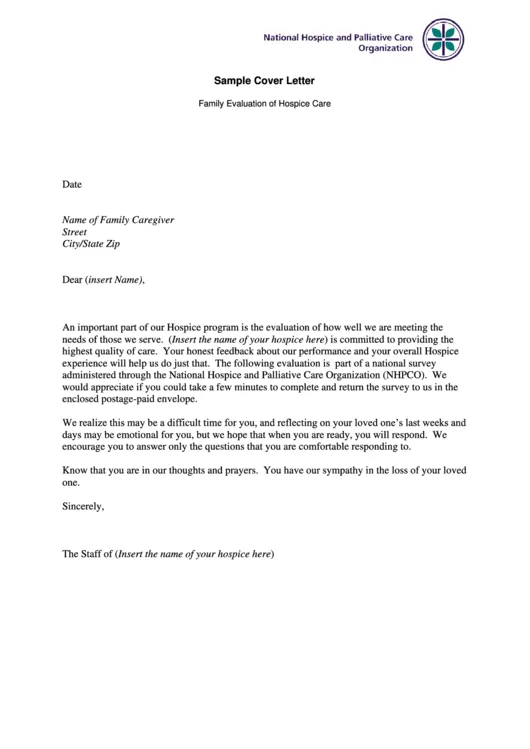
Crafting a Compelling Hospice Nurse Cover Letter
A well-crafted cover letter is your first opportunity to make a strong impression on a potential employer. For a hospice nurse, this is especially crucial, as the role demands not only clinical expertise but also a deep sense of compassion and empathy. Your cover letter should be more than just a formality; it should be a compelling narrative that showcases your qualifications, experience, and, most importantly, your genuine commitment to providing comfort and care to patients and their families during a difficult time. This guide will provide you with all the necessary information to write a cover letter that impresses and helps you land your dream job in hospice care.
Understanding the Hospice Nurse Role
Before you begin writing, it’s essential to have a clear understanding of the hospice nurse role. This understanding will inform your cover letter, allowing you to tailor it to the specific requirements of the position. Hospice nurses provide a unique level of care, focusing on symptom management, pain relief, and emotional support for patients with life-limiting illnesses. They work in various settings, including patients’ homes, nursing homes, and hospice facilities, and collaborate with a multidisciplinary team to ensure holistic care.
Key Responsibilities of a Hospice Nurse

Hospice nurses have many important responsibilities. These nurses are responsible for assessing patients’ conditions, administering medications, providing wound care, and educating patients and their families about their illnesses and treatment plans. They also play a crucial role in providing emotional support, helping patients and families cope with grief and loss. The ability to communicate effectively and empathetically is a cornerstone of the role, allowing nurses to build trust and provide comfort during vulnerable times.
Essential Skills for Hospice Nurses
Beyond clinical expertise, several soft skills are vital for hospice nurses. These include strong communication skills, empathy, active listening, and the ability to remain calm under pressure. Critical thinking skills are essential for making informed decisions and adapting to changing patient needs. Hospice nurses must also be organized, detail-oriented, and able to work independently while collaborating effectively with a team. Demonstrating these skills in your cover letter will significantly increase your chances of being selected for an interview.
Highlighting Your Qualifications
Your cover letter should serve as a showcase of your qualifications, demonstrating how your skills and experience align with the requirements of the hospice nurse position. Focus on highlighting those aspects of your background that are most relevant to the role. Make sure you clearly articulate your nursing qualifications, certifications, and any specialized training you’ve received. Don’t just list your qualifications; provide concrete examples of how you’ve applied these skills in real-world situations to benefit patients.
Showcasing Relevant Experience

Detail your nursing experience, emphasizing any experience you have in hospice care, palliative care, or working with patients with chronic or life-limiting illnesses. Even if you don’t have direct hospice experience, highlight transferable skills from other nursing roles, such as experience in oncology, geriatrics, or home health. Describe specific responsibilities you held, the patient populations you served, and the outcomes you achieved. Always use action verbs to describe your experience, which will make your writing more engaging and impactful.
Quantifying Achievements
Whenever possible, quantify your achievements. Use numbers and data to illustrate the impact of your work. For example, instead of saying you provided excellent patient care, state how you improved patient satisfaction scores by a certain percentage or reduced readmission rates. If you trained or mentored other nurses, mention the number of individuals you trained and the positive outcomes of your efforts. Numbers are a powerful way to demonstrate your effectiveness and make your cover letter more persuasive.
Demonstrating Empathy and Compassion
As a hospice nurse, your ability to show empathy and compassion is paramount. Demonstrate these qualities in your cover letter by sharing specific examples of how you’ve provided emotional support to patients and their families. Describe situations where you went above and beyond to comfort a patient or ease their suffering. Highlight your ability to listen actively, communicate effectively, and create a supportive environment. These examples will help the hiring manager understand your commitment to providing compassionate care.
Structuring Your Cover Letter

A well-structured cover letter is easy to read and highlights your key qualifications. Organize your letter into distinct sections to showcase your skills, experience, and passion for hospice care effectively. Use clear headings and concise paragraphs to keep the reader engaged. This structure will also make it easier for the hiring manager to quickly find the information they need. Ensure you maintain a professional tone and use proper grammar, spelling, and punctuation throughout your cover letter.
Header and Contact Information
Start your cover letter with a professional header that includes your full name, contact information (phone number, email address, and optionally, your LinkedIn profile URL), and the date. Include the hiring manager’s name (if known) and the address of the hospice organization. Ensure all contact information is current and easily accessible. This section provides essential details for the employer to reach you.
Opening Paragraph Strategy
The opening paragraph is your first chance to grab the reader’s attention. State the position you’re applying for and briefly mention where you saw the job posting. Express your interest in the role and the hospice organization. If possible, personalize your opening by mentioning something specific that attracted you to the organization or the role. This shows that you’ve done your research and are genuinely interested in the opportunity.
Body Paragraphs: Showcasing Skills

The body paragraphs are where you showcase your skills and experience. Use these paragraphs to elaborate on your qualifications, providing specific examples of your achievements and how you’ve demonstrated empathy and compassion. Tailor your descriptions to match the requirements of the job description. Focus on the key skills and experiences that are most relevant to the hospice nurse role. Use action verbs and quantify your achievements to make your qualifications more impactful.
Closing Paragraph: Call to Action
In your closing paragraph, reiterate your interest in the position and express your enthusiasm for the opportunity. Thank the hiring manager for their time and consideration. Include a clear call to action, such as stating your availability for an interview and your willingness to provide any additional information. End with a professional closing, such as “Sincerely” or “Respectfully,” followed by your name.
Formatting and Proofreading
The format and presentation of your cover letter reflect your professionalism and attention to detail. Ensure your letter is easy to read and visually appealing. Proofread it carefully for any errors in grammar, spelling, and punctuation. This is a crucial step that can significantly impact the impression you make on the hiring manager. Take your time to review your letter, and consider having a friend or colleague proofread it for you as well.
Font and Layout Best Practices

Choose a professional and readable font, such as Times New Roman, Arial, or Calibri, in a standard size (11 or 12 points). Use single spacing and leave a space between paragraphs. Use a clear layout with margins of one inch on all sides. Keep the text aligned to the left for better readability. Avoid using excessive bolding, italics, or underlining. These formatting choices will make your cover letter more visually appealing and easier to read.
Proofreading for Errors
Proofreading is an absolutely essential step. Carefully review your cover letter for any grammatical errors, spelling mistakes, and punctuation errors. These errors can detract from your professionalism and make a negative impression. Read your letter multiple times, and consider reading it aloud to catch any awkward phrasing or sentences that don’t make sense. It’s also a good idea to have a friend, family member, or career advisor review your cover letter for any errors you may have missed.
Keywords and SEO Optimization
When applying online, your cover letter may be scanned by an applicant tracking system (ATS). To ensure your application is considered, incorporate relevant keywords from the job description into your cover letter. While it’s important to use keywords, avoid keyword stuffing, which can make your letter sound unnatural and detract from its overall impact. Make sure that the keywords are naturally integrated into your writing and that you’re always prioritizing clarity and readability.
Incorporating Relevant Keywords

Carefully review the job description for the hospice nurse position and identify the keywords and phrases used to describe the required skills, experience, and qualifications. Integrate these keywords naturally into your cover letter, especially in the sections where you describe your skills and experience. Keywords might include terms like “patient care,” “pain management,” “end-of-life care,” “compassion,” “empathy,” and specific nursing certifications. Using these keywords helps to ensure your application is discoverable by the ATS.
Tailoring Your Letter to the Job
Always tailor your cover letter to the specific job you’re applying for. Read the job description carefully and identify the key requirements and responsibilities. Customize your letter to address these requirements directly, highlighting your relevant skills and experience. Show the hiring manager that you understand their needs and that you are a good fit for the role. Avoid using a generic cover letter; personalization is key to making a positive impression.
Additional Tips and Resources
Beyond the core elements, there are additional strategies that can strengthen your cover letter. These tips can help you stand out from other applicants and increase your chances of getting an interview. Always remember that the goal is to make a compelling case for why you are the best candidate for the hospice nurse position.
Following Up on Your Application
After submitting your application, follow up with the hiring manager. A week or so after submitting your application, send a brief email or make a phone call to inquire about the status of your application. This shows your continued interest in the position and can help to keep you at the forefront of the hiring manager’s mind. However, be respectful of their time and avoid being overly persistent.
Resources for Hospice Nurses
There are many resources available to hospice nurses. Professional organizations like the National Hospice and Palliative Care Organization (NHPCO) provide valuable information, training, and networking opportunities. Online job boards and career websites also offer job postings, salary information, and career advice for nurses. Additionally, consider reaching out to experienced hospice nurses for mentorship and guidance. Utilizing these resources will support your professional development and career advancement.