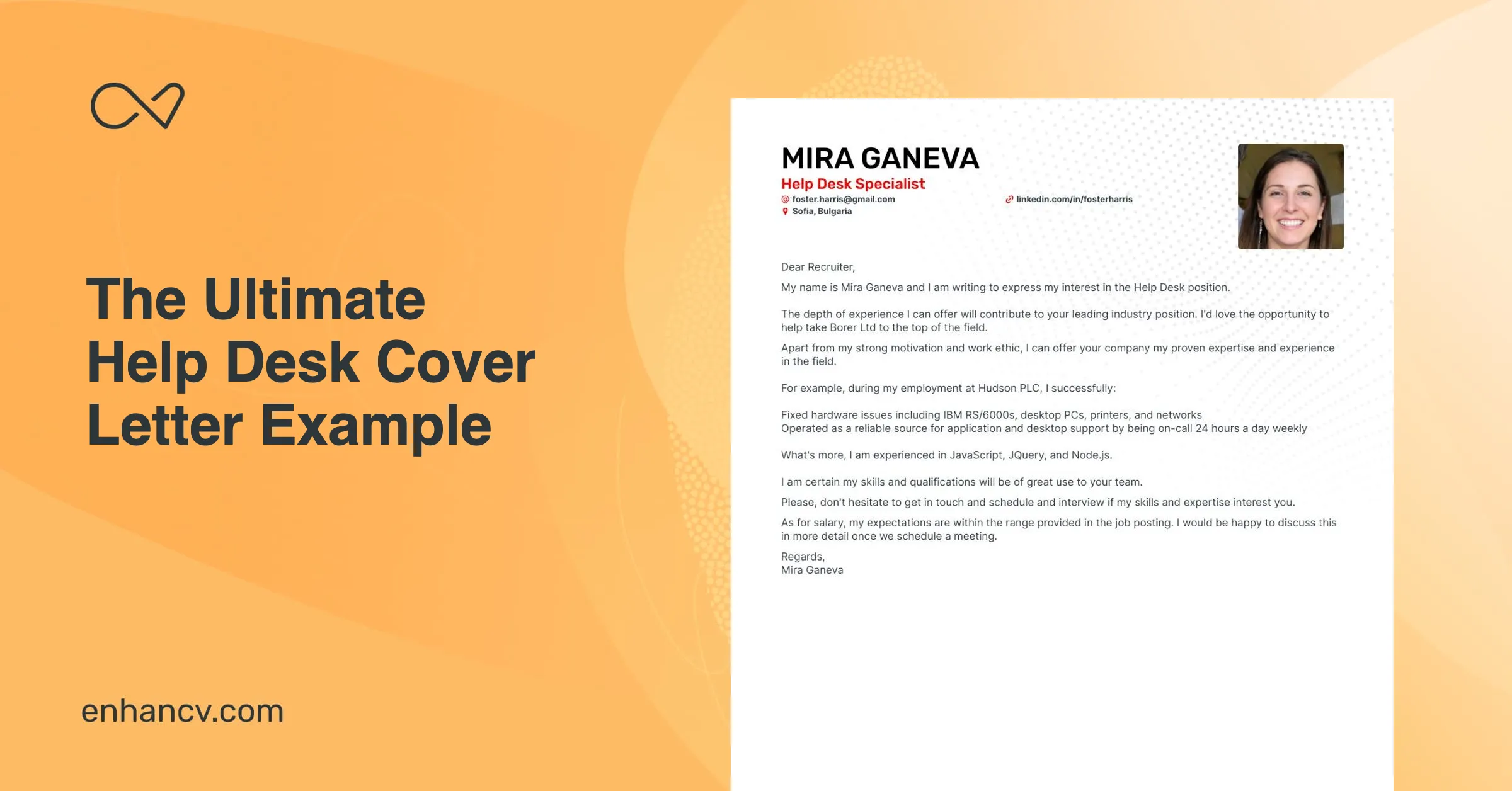
What Is a Help Desk Cover Letter?
A help desk cover letter is a crucial document that accompanies your resume when applying for a help desk position. It serves as your introduction to the hiring manager, providing a glimpse into your personality, skills, and experience beyond what is listed in your resume. It’s your opportunity to showcase why you are the ideal candidate and to highlight your passion for providing technical support. This letter is more than just a formality; it’s a strategic tool designed to make a positive first impression and increase your chances of landing an interview. A well-crafted help desk cover letter can set you apart from other applicants and demonstrate your genuine interest in the role and the company.
Why You Need a Help Desk Cover Letter
In the competitive field of IT support, a help desk cover letter is a must-have for several reasons. Firstly, it allows you to personalize your application and tailor it to the specific requirements of the job. Unlike a resume, which provides a general overview of your qualifications, a cover letter enables you to emphasize the skills and experiences that are most relevant to the position. Secondly, it offers a chance to elaborate on your achievements and explain how you have used your skills to solve problems in the past. This narrative element can make your application more compelling. Finally, it demonstrates your communication skills. A well-written cover letter proves that you can articulate your thoughts clearly and professionally – an essential skill for a help desk role. By showcasing your personality, enthusiasm, and attention to detail, a cover letter significantly boosts your chances of being noticed and selected for an interview, distinguishing you from candidates who submit only a resume.
Key Components of a Help Desk Cover Letter

A strong help desk cover letter consists of several essential components, each playing a vital role in capturing the hiring manager’s attention. These components work together to create a persuasive narrative that highlights your qualifications and enthusiasm. The key components include your header and contact information, a professional greeting, an engaging opening paragraph, detailed sections highlighting your skills and experience, a tailored approach for the specific job, a compelling closing, and meticulous proofreading. Each section should be clear, concise, and targeted toward the specific requirements of the job. Successfully incorporating these components will demonstrate that you are a thoughtful, organized, and professional candidate, significantly increasing your prospects of securing an interview.
Header and Contact Information
Begin your cover letter with a professional header that includes your full name, address, phone number, and email address. This information should be at the top left or right corner of the page, allowing the recruiter to easily find your contact details. Ensure your email address sounds professional (e.g., using your full name) to maintain a polished image. Following your information, add the date and the hiring manager’s name and title, as well as the company’s name and address. This not only shows attention to detail but also demonstrates that you know who to address your letter to. If you cannot find the hiring manager’s name, research the company to find the appropriate title, such as ‘Hiring Manager’ or ‘Human Resources Department’. Using correct formatting for your header sets a professional tone and is the first impression a recruiter will have of your organizational skills.
Greeting the Hiring Manager
Start your cover letter with a professional greeting. Addressing the hiring manager by name is crucial; this demonstrates that you have taken the time to research and personalize your application. Use ‘Dear Mr./Ms. [Last Name]’ if you know their name. If the name is unavailable, ‘Dear Hiring Manager’ is acceptable, but always aim to find the specific person. Avoid generic greetings such as ‘To Whom It May Concern,’ as it can come across as impersonal. The greeting sets the tone for the rest of your letter, so ensure it is respectful and professional. A proper greeting indicates you are serious about the position and have taken the initiative to show genuine interest in the company and job opportunity. It signals that you are attentive to detail and have invested effort in making a personal connection, increasing the likelihood that the hiring manager will continue reading.
Opening Paragraph: Grab Their Attention

The opening paragraph is your chance to immediately capture the hiring manager’s interest. Start with a concise and compelling statement that highlights your enthusiasm for the help desk position and the company. Briefly mention how you learned about the job and why it excites you. You can also highlight one or two key skills or experiences that make you a strong fit. For instance, mention a significant achievement that demonstrates your problem-solving abilities or customer service skills. Avoid generic phrases and clichés; instead, aim for originality and authenticity. The goal is to hook the reader from the start and encourage them to continue reading. This initial impression can determine whether the hiring manager reads your entire cover letter, making a strong opening crucial to the success of your application.
Highlighting Your Skills and Experience
The body of your cover letter should focus on showcasing your relevant skills and experience. Select the most important skills and experiences that align with the job description and provide specific examples to demonstrate your competence. Use the STAR method (Situation, Task, Action, Result) to describe your accomplishments and quantify your achievements whenever possible. This section must clearly state your qualifications, using clear and concise language. Avoid repeating your resume; instead, provide additional context, explaining the significance of your achievements. Show how your previous experiences have prepared you for the help desk role. Organize your skills and experience into logical categories, such as technical skills, communication skills, and problem-solving abilities, to make it easier for the hiring manager to understand your qualifications. Tailoring this section to match the job description ensures your application stands out.
Technical Skills
In the section highlighting your technical skills, list the specific technologies, software, and hardware you are proficient in. This might include operating systems (Windows, macOS, Linux), networking protocols, ticketing systems, and remote access tools. Provide examples of how you have used these skills in previous roles. For instance, you might describe your experience troubleshooting network issues, installing software, or configuring user accounts. Mention any certifications relevant to the role, such as CompTIA A+, Network+, or Microsoft certifications. Be specific and avoid vague terms; instead, use industry-standard terminology. Highlighting your technical expertise demonstrates your ability to handle the day-to-day tasks of a help desk, such as diagnosing and resolving hardware and software issues and providing technical support to end-users. Show your proficiency in the skills employers are looking for in a help desk role.
Communication Skills

Communication skills are paramount in a help desk role. Highlight your ability to communicate technical information clearly and effectively to non-technical users. Describe instances where you have successfully explained complex issues in simple terms. Show your active listening skills, as well as your ability to empathize with users and provide a positive customer service experience. Examples of these experiences can include handling difficult customers, mediating conflicts, or providing training. Mention any experience using communication tools such as phone, email, chat, and ticketing systems. Illustrate how you use these methods to document and resolve issues. Highlighting your strong communication skills assures the hiring manager that you can effectively interact with users and provide professional and respectful support, creating a positive experience.
Problem-Solving Skills
Problem-solving is a central aspect of the help desk role, so this should be explicitly detailed. Provide examples of how you approach and resolve technical issues. Describe your analytical thinking, and your ability to troubleshoot effectively, identifying the root cause of problems. Mention any specific methodologies you have used, such as the troubleshooting steps in a logical order. Detail the results of your actions by highlighting improvements made. Emphasize your ability to work under pressure, managing multiple support requests, and your dedication to finding solutions quickly and efficiently. Show your resourcefulness by mentioning that you have resolved issues with tools and strategies such as internet searches, knowledge bases, and collaboration with other team members. By including this information, you demonstrate that you are adept at resolving technical issues and ensuring user satisfaction.
Quantifiable Achievements
Quantify your achievements whenever possible. Use numbers and statistics to demonstrate the impact of your work. Instead of saying “Improved customer satisfaction,” say “Increased customer satisfaction by 15% by implementing a new troubleshooting process.” Mention the number of tickets you handled per day or the reduction in resolution time you achieved. Show how you have contributed to team efficiency, perhaps by reducing downtime or improving issue resolution rates. Quantifiable results provide concrete evidence of your abilities and make your achievements more credible. They show the hiring manager the value you can bring to the role and create a clear picture of your potential impact on the team. Providing specific examples of your achievements will demonstrate that you are results-oriented and can have a positive impact on the team.
Tailoring Your Cover Letter

Always tailor your cover letter to each specific job application. Review the job description carefully and highlight the skills, experiences, and qualifications most relevant to the role. Use keywords from the job description throughout your cover letter. This ensures that your application aligns with the employer’s needs. Research the company and mention specific projects, values, or goals that resonate with you. This demonstrates your interest in the company and your understanding of their mission. Tailoring your cover letter shows that you are not using a generic template, and that you have taken the time to understand the specific role and company. This level of personalization increases your chances of getting noticed and demonstrates your proactive approach to job applications.
Researching the Company
Before writing your cover letter, research the company thoroughly. Visit their website, review their social media profiles, and read news articles about them. Identify their mission, values, and recent projects. This information will help you tailor your cover letter to show your understanding of the company and your alignment with their goals. Mention specific aspects of the company that interest you and explain why you are excited about the opportunity. For example, you might praise their commitment to customer service or highlight a particular product or service that you find innovative. Showing you have taken the initiative to research the company proves your interest and commitment, setting you apart from generic applicants.
Matching Skills to Job Description
Carefully analyze the job description and identify the skills and qualifications the employer is seeking. Then, highlight your skills and experiences that match those requirements in your cover letter. Use the same keywords and phrases from the job description when describing your skills and experiences. This helps your application get noticed by applicant tracking systems (ATS) and ensures that you are addressing the employer’s specific needs. For instance, if the job description mentions “customer service,” use the phrase “customer service” in your cover letter and provide examples of how you have provided excellent customer support in the past. Emphasize the skills the employer prioritizes, which shows that you are a well-suited and attentive candidate.
Formatting and Layout Tips

Formatting and layout are essential for creating a professional and readable cover letter. Use a clean and easy-to-read font, such as Arial, Calibri, or Times New Roman, with a font size between 10 and 12 points. Maintain consistent formatting throughout your letter, including font size, spacing, and headings. Use bullet points to highlight key skills or achievements, making the information easy to scan. Keep your paragraphs concise and focused; avoid long blocks of text. Ensure your margins are standard, usually 1 inch on all sides. Proofread your cover letter carefully to eliminate any grammatical errors or typos. A well-formatted cover letter is easy to read and demonstrates that you have attention to detail, making a positive impression on the hiring manager. Proper formatting makes your letter more professional and polished.
Closing the Cover Letter
End your cover letter with a strong closing paragraph that reinforces your interest in the position. Reiterate your enthusiasm for the opportunity and briefly summarize your key qualifications. Express your appreciation for the hiring manager’s time and consideration. Include a call to action by stating that you are available for an interview and eager to discuss your qualifications further. Use a professional closing, such as “Sincerely,” “Best regards,” or “Thank you,” followed by your full name. A strong closing leaves a lasting positive impression and encourages the hiring manager to contact you. It is also an opportunity to reiterate your key skills and enthusiasm, ensuring your application’s lasting impact.
Proofreading and Editing
Before submitting your cover letter, carefully proofread and edit it to eliminate any errors. Check for spelling mistakes, grammatical errors, and punctuation issues. Ensure that your sentences are clear and concise and that your ideas flow logically. Read your cover letter aloud to catch any awkward phrasing or unclear sentences. Consider asking a friend, family member, or career counselor to review your letter for feedback. Proofreading and editing are crucial steps in ensuring your cover letter is professional and polished. A cover letter that is free of errors demonstrates your attention to detail and your commitment to excellence, which is highly valued in the IT support field. A well-edited cover letter shows that you take pride in your work and are attentive to details.
Call to Action

The call to action is a vital part of your closing paragraph. This is your opportunity to prompt the hiring manager to take the next step – inviting you for an interview. Clearly state your availability for an interview and express your eagerness to discuss your qualifications further. You can also provide your phone number and email address again for easy contact. Make it easy for the hiring manager to reach you. A strong call to action indicates your enthusiasm and proactive approach to the job search. It also shows your initiative and commitment to taking the next step in the hiring process. A clear call to action increases your chances of getting contacted for an interview and moving forward in the recruitment process.
Help Desk Cover Letter Examples
Reviewing help desk cover letter examples can provide valuable insights into how to structure and write your own letter. Analyze different examples to get inspiration for your content. Pay attention to the tone, formatting, and content. Look at how candidates highlight their skills, experiences, and achievements. Adapt the examples to your own situation, tailoring the content to your specific skills and experiences. Take note of the language and phrasing to develop your own unique style. Use these examples as a guide to help you create a strong and effective cover letter that captures the attention of the hiring manager and increases your chances of getting an interview. Studying and analyzing various examples is a great way to understand what works and what doesn’t in a help desk cover letter.