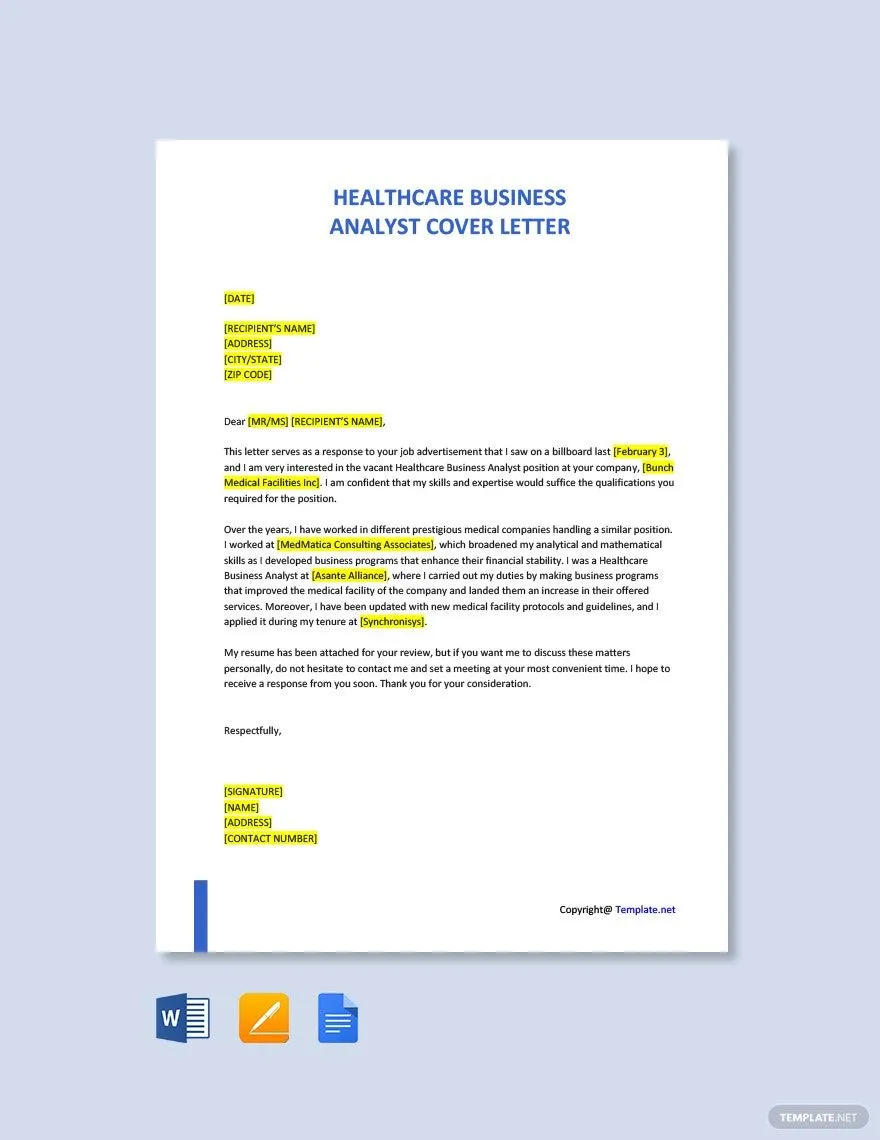
Crafting a Healthcare Analyst Cover Letter
A well-crafted healthcare analyst cover letter is your first opportunity to make a strong impression on potential employers. It’s not just a formality; it’s a crucial document that complements your resume and provides a deeper insight into your qualifications, skills, and enthusiasm for the role. A compelling cover letter can significantly increase your chances of getting an interview and ultimately, landing your dream job in healthcare analysis. This guide provides comprehensive advice to help you create a standout cover letter that grabs the hiring manager’s attention and highlights your unique strengths.
Understanding the Purpose of a Cover Letter
The primary purpose of a healthcare analyst cover letter is to introduce yourself to the hiring manager, express your interest in the specific position, and showcase how your skills and experience align with the job requirements. Unlike your resume, which provides a factual overview of your qualifications, a cover letter allows you to demonstrate your personality, communication skills, and genuine interest in the company and the role. It allows you to tell a story about your career, explain gaps in your experience (if any), and illustrate why you are the ideal candidate. It’s also a chance to show that you’ve done your research on the company and understand its mission and values.
Highlighting Relevant Skills for Healthcare Analysis

Healthcare analysis requires a diverse skill set. Your cover letter should highlight the most relevant skills for the specific job you’re applying for. This typically includes strong analytical abilities, proficiency in data analysis tools (such as SQL, R, or Python), and experience with healthcare data sets. Emphasize your ability to interpret complex data, identify trends, and provide actionable insights. Additionally, demonstrate your understanding of healthcare regulations, industry trends, and the ability to communicate complex information clearly and concisely. Problem-solving, critical thinking, and attention to detail are also crucial skills to mention.
Consider this the time to discuss skills such as Microsoft Excel, Tableau, or other tools used for visualization. Also mention the experience with data mining, predictive modeling and the experience with statistical methods.
Researching the Target Company
Before you begin writing your cover letter, it’s essential to research the target company thoroughly. Visit their website, read their mission statement, and understand their values. Explore their recent press releases, annual reports, and any other relevant information that provides insight into their current projects, challenges, and goals. This research will enable you to tailor your cover letter to the company’s specific needs and demonstrate your genuine interest in their work. By showing that you understand their business and have relevant experience, you will make a much better impression.
Key Sections of a Healthcare Analyst Cover Letter
A well-structured healthcare analyst cover letter typically includes several key sections that work together to present a comprehensive view of your qualifications. Each section should serve a specific purpose and contribute to your overall message. A clear and concise structure will make your cover letter easier to read and more impactful. It helps the hiring manager quickly grasp the essence of your skills and your suitability for the position.
Header and Contact Information

Start with a professional header that includes your name, address, phone number, and email address. Make sure your contact information is up-to-date and accurate. The header should be at the top left of the document, or, alternatively, use a business format aligning it at the top right of the document. Include the date and the hiring manager’s name and title (if known), and the company address.
Addressing the Hiring Manager
Address your cover letter to the hiring manager by name whenever possible. This shows that you’ve taken the time to research the company and personalize your application. If you cannot find the hiring manager’s name, use a professional greeting like “Dear Hiring Manager” or “Dear [Department Name] Hiring Team.” Avoid generic greetings like “To Whom It May Concern.”
Writing a Compelling Opening
Your opening paragraph should immediately capture the reader’s attention and state your interest in the position. Mention the specific job title and where you found the job posting. Briefly summarize your most relevant qualifications and express your enthusiasm for the opportunity. It is important that your opening is compelling and shows the reader that you are the right fit for this role. A strong opening creates interest and encourages the hiring manager to read the rest of your letter.
Showcasing Your Skills and Experience

In the body of your cover letter, elaborate on your skills and experience, providing specific examples to support your claims. Use the job description as a guide to identify the key requirements and highlight how your skills align with those requirements. Provide quantifiable results whenever possible, using data to demonstrate your achievements. Emphasize your understanding of healthcare industry trends, regulations, and challenges. Tailor the content to the specific role you’re applying for, ensuring that it’s relevant to the company’s needs.
Quantifying Achievements
Instead of simply listing your responsibilities, quantify your achievements whenever possible. Use numbers, percentages, and other metrics to demonstrate the impact of your work. For example, instead of saying “Improved data accuracy,” say “Improved data accuracy by 15% through the implementation of a new validation process.” Quantifying your achievements adds credibility to your claims and shows the hiring manager the value you can bring to the company. This demonstrates you are someone who can produce real, measurable results.
Tailoring Your Letter to the Job Description
Customize your cover letter for each job you apply for. Carefully review the job description and identify the key skills and requirements. Then, tailor your letter to highlight the experiences and skills that align with the specific requirements. This shows that you have taken the time to understand the position and are a good fit. It also increases your chances of getting noticed by the hiring manager. Avoid using a generic cover letter; customization is key.
Demonstrating Knowledge of Healthcare Industry

Show that you are informed about current issues and trends. Mention any relevant professional development, certifications, or continuing education you’ve completed. If you’ve published any papers or presented at conferences, include those details as well. This shows your ongoing commitment to the field and that you are staying current in the healthcare sector. This will provide an advantage in your application and set you apart from other candidates.
Expressing Enthusiasm and Interest
Convey your genuine enthusiasm for the opportunity and the company. Explain why you are interested in the role and what excites you about the prospect of working there. Highlight any personal connections or experiences that make you a good fit for the company culture. Your enthusiasm will make you more memorable and demonstrate your commitment to the role.
Writing a Strong Closing Statement
In your closing paragraph, reiterate your interest in the position and thank the hiring manager for their time and consideration. Include a call to action, such as “I am eager to discuss my qualifications in further detail” or “I look forward to hearing from you soon.” Provide your contact information one more time, and close with a professional closing, such as “Sincerely” or “Best regards.”
Proofreading and Editing Your Cover Letter

Before submitting your cover letter, carefully proofread and edit it for any errors in grammar, spelling, and punctuation. Errors can create a negative impression and undermine your credibility. Read your letter aloud to catch any awkward phrasing or sentences that don’t flow smoothly. Ask a friend, colleague, or career counselor to review your letter as well. A fresh pair of eyes can often spot errors that you might have missed.
Formatting and Presentation
The appearance of your cover letter is just as important as its content. Use a professional and easy-to-read font, such as Times New Roman, Arial, or Calibri, with a font size between 10 and 12 points. Use standard margins (1 inch on all sides) and single-space your text. Ensure that your cover letter is well-organized with clear headings, subheadings, and bullet points. This will make it easy for the hiring manager to scan and quickly understand your key qualifications.
Ensuring a Professional Appearance
Maintain a professional appearance by using high-quality paper if you are submitting a physical copy, or by saving your cover letter as a PDF file to preserve the formatting. Avoid using excessive formatting, colors, or graphics, as these can distract from the content. Make sure the cover letter aligns well with the professional appearance of your resume. A polished and professional-looking cover letter shows attention to detail and reflects positively on your candidacy.
Using Keywords Effectively

Incorporate keywords from the job description throughout your cover letter. This will help your application get noticed by applicant tracking systems (ATS) and increase your chances of getting an interview. Use keywords naturally and strategically, rather than stuffing them into the text. Focus on the most important keywords related to the job requirements, skills, and industry terminology. This approach helps you to communicate your key strengths and competencies in an effective manner.
Common Mistakes to Avoid
Avoid these common mistakes to ensure your cover letter makes a positive impression.
Using Generic Language
Avoid using generic, vague language that could apply to any job. Tailor your letter to the specific position and company. Show that you have taken the time to understand the role and what the company is looking for. Generic cover letters are often discarded because they fail to show the applicant’s genuine interest and specific qualifications.
Focusing on Yourself Too Much

While it’s important to highlight your skills and experience, focus on how you can contribute to the company’s success, not just on what you want to get out of the job. Frame your accomplishments in terms of their impact on the company’s goals and objectives. This demonstrates that you understand the employer’s needs and are focused on delivering value. Always consider it a two-way street where you have something to offer and what can be delivered to the company.
Ignoring the Job Description
Failing to address the specific requirements listed in the job description is a common mistake. Make sure to tailor your letter to the specific skills, experiences, and qualifications the employer is seeking. This shows that you have carefully reviewed the job description and are a good fit for the role. Ignoring the job description can lead to your application being overlooked.
Not Proofreading Carefully
Typos and grammatical errors can create a negative impression and damage your credibility. Proofread your cover letter carefully, and ask someone else to review it as well. A clean, error-free cover letter demonstrates your attention to detail and professionalism. Proofreading is an essential step in the application process.
Resources for Further Assistance
If you need help writing your cover letter, there are many resources available to provide assistance.
Cover Letter Templates
Use cover letter templates as a starting point, but always customize them to fit your specific situation. Many online resources offer free cover letter templates that you can adapt to your needs. Be sure to tailor your cover letter to the specific job requirements and company. A template can help you get started, but it’s essential to make it your own.
Healthcare Analyst Job Boards
Explore job boards that specialize in healthcare analyst positions. These boards often provide sample cover letters and other career resources. Websites like LinkedIn, Indeed, and Glassdoor are valuable resources for job searching and career advice. They often provide valuable insights into the industry and current job market trends.