Why Firefighter Cover Letters Are Important
A firefighter cover letter is more than just a formality; it’s your initial opportunity to make a strong impression. In a highly competitive field, where numerous candidates possess similar qualifications, your cover letter becomes the crucial differentiator. It allows you to go beyond the confines of your resume, providing a space to demonstrate your unique passion, dedication, and understanding of the firefighting profession. A well-crafted cover letter highlights your most relevant experiences and skills, aligning them with the specific needs of the fire department you’re applying to. The cover letter gives you the chance to showcase your personality, your drive and what makes you stand out from the crowd. A compelling cover letter can significantly boost your chances of securing an interview, while a weak one can lead to your application being overlooked.
Highlighting Relevant Skills and Experience
Focus on the skills and experiences that are most pertinent to firefighting. Start by reviewing the job description and identify the key requirements the fire department is looking for. These might include things such as emergency medical services (EMS) certifications, experience with fire suppression, hazardous materials handling, or specific training in rescue operations. Then, in your cover letter, clearly articulate how your past experiences have equipped you with these skills. Provide specific examples of situations where you demonstrated these abilities, using the STAR method (Situation, Task, Action, Result) to illustrate your accomplishments. Be specific with details; for example, instead of saying “I worked in a team,” describe a particular rescue operation you were involved in, detailing your role and the positive outcome. This shows your potential employer that you are able to perform what they expect and you are the person they should hire.
Matching Your Skills with Fire Department Needs

Tailoring your cover letter to the specific fire department you are applying to is crucial. Research the fire department’s mission, values, and any recent initiatives or challenges it is facing. Look at the department’s website and social media, if it is available. If possible, find out about the department’s specific needs or focus areas. This research helps you to align your skills and experiences to the department’s specific requirements. When writing your cover letter, reference any training, certifications, or experiences that directly match their needs. For instance, if the department emphasizes community outreach, highlight any volunteer work or public education experience you may have. Showing that you understand their objectives and how you can contribute to them makes your application more compelling and demonstrates your genuine interest in joining their team.
Key Sections of a Firefighter Cover Letter
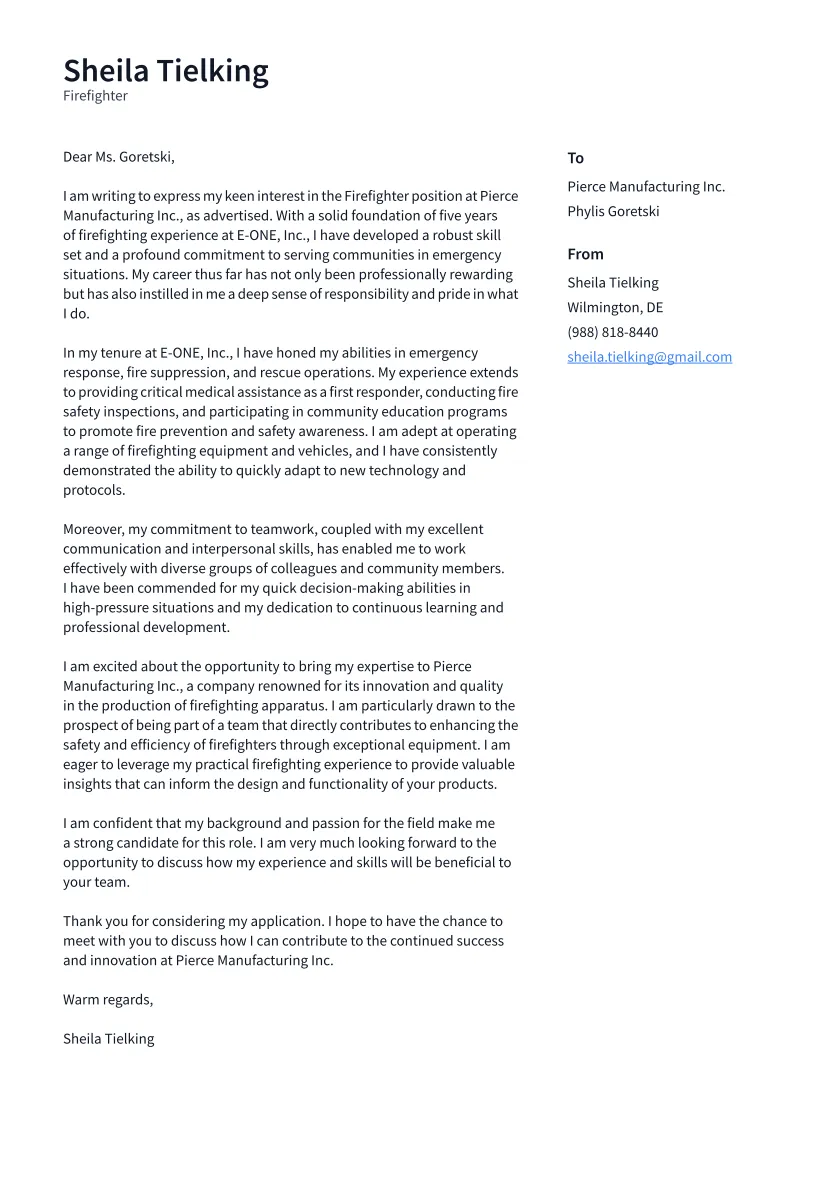
A well-structured cover letter typically includes these key sections: Your contact information, at the top, including your name, address, phone number, and email. The date and the hiring manager’s contact information come next. Follow with a professional greeting, such as ‘Dear Mr./Ms. [Last Name]’. The opening paragraph should state your purpose, mentioning the position you are applying for and where you saw the advertisement. This should be followed by body paragraphs, where you expand on your qualifications, experiences, and passion. Finally, your closing paragraph should reaffirm your interest and include a call to action. Be sure to proofread and edit your letter before submitting your application.
Formatting Your Firefighter Cover Letter
Formatting a firefighter cover letter requires professionalism and clarity. Use a standard business letter format. Choose a readable font such as Times New Roman or Arial, size 11 or 12 points. Ensure your letter is single-spaced with a space between paragraphs. The layout should be clean and easy to follow. Use concise language and avoid lengthy paragraphs. Keep the letter to one page, as this is the standard and what is recommended. Proofread your cover letter to check for any grammatical errors and typos. A clean format and well-written content show attention to detail, which is a very important skill for a firefighter. The formatting should be easy to follow so the reader stays engaged, and does not get lost in the details.
Addressing the Hiring Manager

Address your cover letter to the specific hiring manager whenever possible. Research the fire department to find out the name of the person responsible for hiring. If you cannot find a specific name, use a generic greeting such as “Dear Hiring Manager”. Avoid using outdated greetings, as they can give the impression you don’t pay attention to details. In the first paragraph, state the position you are applying for and where you found the job posting. Also, mention why you are interested in joining the fire department. Personalizing the greeting shows that you have taken the time to research the department and that you are serious about the opportunity.
Body Paragraph 1 Highlight Your Passion
The first body paragraph is where you establish your passion for firefighting. Describe what specifically attracts you to the profession and why you are committed to serving your community. Share any personal experiences or motivations that have driven you to pursue this career path. Show enthusiasm for firefighting, and explain the ways you can contribute to the fire department’s mission. This section should reflect your character and commitment, demonstrating that you possess the determination, courage, and dedication required of a firefighter. Your passion should be evident, and it should connect with the values of the fire department.
Body Paragraph 2 Showcase Your Experience
In this paragraph, discuss your most relevant experiences. Highlight how your past experiences have prepared you for the role. Use the STAR method to provide specific examples of your accomplishments. Focus on situations where you demonstrated skills such as teamwork, quick thinking, and problem-solving abilities. Quantify your achievements whenever possible. For example, if you have experience in a volunteer fire department, mention the number of calls you responded to or any special commendations you received. The goal is to showcase your practical capabilities and demonstrate your competence in the field, so the hiring manager will know you are able to do the job.
Body Paragraph 3 Skills and Certifications

Detail your specific skills and any certifications that are relevant to the firefighter position. List any relevant certifications such as EMT, Paramedic, fire suppression, hazardous materials handling, or rescue operations. Explain how these skills align with the job requirements mentioned in the job description. If you have any specialized training, be sure to include it. Highlight any courses, workshops, or advanced training you have completed. The goal is to provide proof of your qualifications and abilities, and the ability to perform the actions needed for the job. This also shows you take the initiative to keep up with your training, which is critical for firefighters.
Closing Your Cover Letter
In your closing paragraph, express your interest in the position. Reiterate your enthusiasm for the fire department and the opportunity to serve the community. Thank the hiring manager for their time and consideration. Be clear and concise in your closing. Avoid generic phrases and maintain a professional tone. Ensure the conclusion leaves a positive impression, demonstrating your readiness to take on the challenges and responsibilities of a firefighter.
Call to Action in Your Cover Letter
Conclude your cover letter with a clear call to action. Express your eagerness to discuss your qualifications further in an interview. State your availability for an interview and include your contact information. Offer to provide references upon request. A strong call to action leaves a lasting impression and encourages the hiring manager to take the next step in the hiring process. Ending your cover letter with a clear call to action is the final step in making the impact you want.