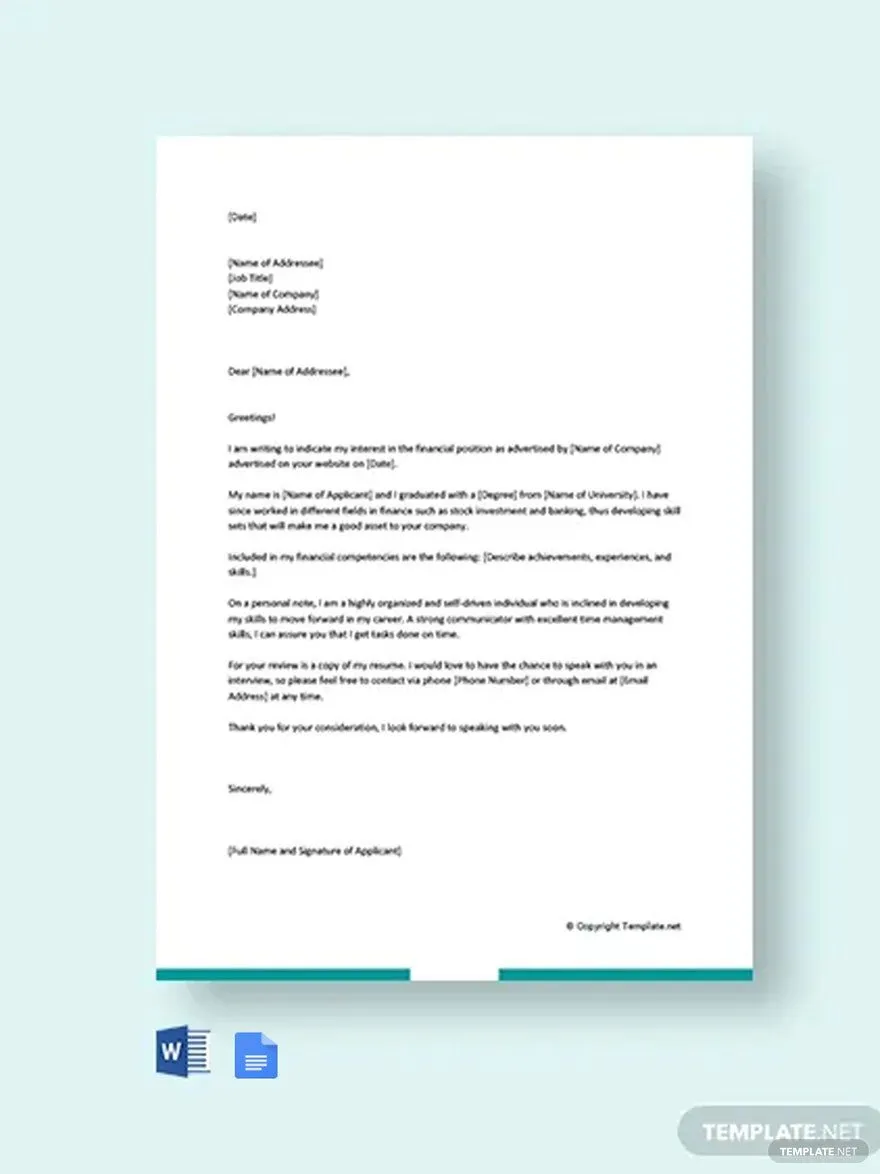
Why Your Finance Cover Letter Matters
In the competitive world of finance, your cover letter is often your first impression. It’s a crucial opportunity to showcase your qualifications, demonstrate your understanding of the role, and highlight your enthusiasm for the position and the company. A well-crafted cover letter can significantly increase your chances of landing an interview, while a poorly written one can lead to immediate rejection. Think of it as your personal marketing document, designed to capture the hiring manager’s attention and convince them you’re the perfect fit. Remember, it’s not just a formality; it’s a strategic tool to differentiate yourself from other applicants and make a compelling case for your candidacy.
Highlighting Your Skills
When writing your cover letter for finance, emphasize the skills that align with the job description. Finance roles often require a combination of technical, analytical, and soft skills. Technical skills include financial modeling, data analysis, budgeting, forecasting, and knowledge of financial regulations. Analytical skills involve the ability to interpret complex financial data, identify trends, and make informed decisions. Soft skills like communication, teamwork, and problem-solving are equally important. Clearly state how your skills match the specific requirements of the job, using concrete examples to illustrate your proficiency.
Quantify Your Achievements

Instead of just listing your responsibilities, quantify your achievements whenever possible. Use numbers and data to demonstrate the impact you’ve made in previous roles. For instance, instead of saying “Managed a team,” say “Managed a team of 10 analysts, resulting in a 15% increase in productivity.” Or, instead of “Improved financial reporting,” say “Implemented new reporting procedures, reducing reporting errors by 20%.” Quantifying your accomplishments provides concrete evidence of your capabilities and adds credibility to your claims. This approach makes your cover letter much more compelling and memorable to the hiring manager.
Tailoring Your Letter
One of the most important secrets of a successful finance cover letter is tailoring it to each specific job application. Generic cover letters are easily spotted and often discarded. Research the company and the role thoroughly, and customize your letter to demonstrate your understanding of their needs and goals. Mention specific projects or initiatives that resonate with the company’s values or objectives. Address the key requirements listed in the job description and explain how your skills and experience align with those needs. Tailoring your letter shows that you’ve invested time and effort, and that you’re genuinely interested in the position.
Formatting and Design
The formatting and design of your cover letter are essential for making a positive first impression. Use a professional and easy-to-read font, such as Times New Roman, Arial, or Calibri. Ensure your letter is well-structured, with clear headings and concise paragraphs. Maintain consistent margins and spacing throughout the document. Avoid lengthy blocks of text; break up your content with bullet points or short paragraphs to improve readability. A clean, well-organized cover letter shows attention to detail and professionalism, which are highly valued in the finance industry. Make sure your letter looks visually appealing and is easy for the hiring manager to scan quickly.
Proofreading and Editing

Before submitting your cover letter, meticulously proofread and edit it for any errors. Typos, grammatical errors, and spelling mistakes can undermine your credibility and create a negative impression. Use a grammar and spell-checking tool, but also read the letter carefully yourself. It’s also a good idea to have a friend, colleague, or career advisor review your cover letter for clarity and accuracy. A polished, error-free cover letter demonstrates your attention to detail and professionalism, both of which are critical in the finance sector. Remember, perfection is key when presenting yourself to potential employers.
Common Mistakes to Avoid
Generic Language
One of the biggest pitfalls is using generic, boilerplate language that could apply to any job. Avoid generic phrases like “I am a team player” or “I am a hard worker” without providing specific examples to back up these claims. Generic language shows a lack of effort and fails to differentiate you from other candidates. Instead, use specific examples and tailor your language to the specific job and company. Show that you’ve done your research and understand the requirements of the role and the company’s culture.
Typos and Grammatical Errors

Typos and grammatical errors are a major turn-off for hiring managers. They suggest a lack of attention to detail and professionalism. Always proofread your cover letter carefully, and use spell-checking and grammar-checking tools to catch any mistakes. Reading your cover letter aloud can also help you identify errors. If possible, have someone else review your letter to catch any issues you might have missed. A clean, error-free cover letter demonstrates your commitment to quality and attention to detail.
Lack of Enthusiasm
A cover letter should convey your enthusiasm for the position and the company. Avoid sounding indifferent or uninspired. Show your excitement for the opportunity and explain why you are interested in the role and the company. Mention any specific aspects of the job or company that excite you. Demonstrate that you have researched the company and understand its values and mission. A cover letter filled with genuine enthusiasm will make you stand out and increase your chances of getting an interview.
Failing to Follow Instructions
Always carefully read and follow the instructions provided in the job posting. Some employers may have specific requirements for cover letters, such as a specific format, length, or required content. Failing to adhere to these instructions can demonstrate a lack of attention to detail and a disregard for the employer’s preferences. Make sure you address any specific requests in the job description. Show that you are a good listener and can follow directions. This attention to detail is essential in finance, where accuracy and adherence to regulations are paramount.
Key Elements of a Finance Cover Letter

Contact Information
At the top of your cover letter, include your contact information: your name, phone number, email address, and LinkedIn profile URL. Make sure your email address is professional and that your LinkedIn profile is up-to-date. This information allows the hiring manager to easily contact you. Ensure that the contact information is accurate and that you regularly check the email address you provide. Also, make sure your LinkedIn profile is polished and reflects your professional experience.
The Opening
The opening paragraph of your cover letter should immediately grab the reader’s attention. State the position you are applying for and where you found the job posting. If you know the hiring manager’s name, address the letter to them directly. Briefly mention your most relevant qualifications and your enthusiasm for the role. Make a strong first impression by clearly stating your purpose and demonstrating your interest in the opportunity. Keep the opening concise and focused on why you are a good fit for the role.
Skills and Experience

In the body of your cover letter, elaborate on your skills and experience. Highlight the skills and achievements that are most relevant to the job requirements. Provide specific examples and quantify your accomplishments whenever possible. Explain how your skills and experience align with the company’s needs and objectives. Mention any relevant certifications or professional development. Show the hiring manager that you have the skills and experience necessary to excel in the role.
Closing and Call to Action
In your closing paragraph, reiterate your interest in the position and the company. Thank the hiring manager for their time and consideration. Include a clear call to action, such as stating that you are looking forward to the opportunity to discuss your qualifications further. Reiterate your contact information. Close the letter professionally, such as with “Sincerely” or “Best regards,” followed by your name. A strong closing leaves the hiring manager with a positive impression and encourages them to take the next step.
Cover Letter Examples
Reviewing cover letter examples can provide valuable insights into effective formatting, language, and content. Look for examples that are tailored to finance roles and that showcase strong skills and achievements. Use these examples as inspiration, but avoid simply copying them. Adapt the examples to reflect your unique skills, experience, and the specific requirements of the job you’re applying for. Ensure that your cover letter reflects your personality and professional style.