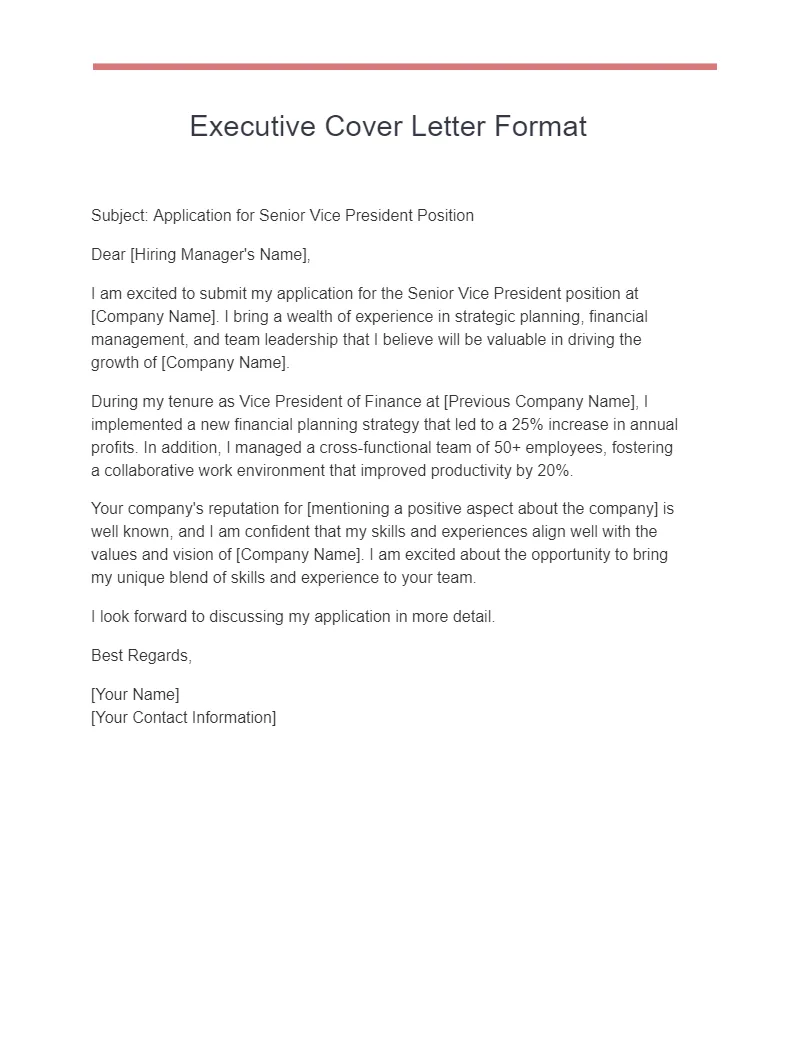
What is an Executive Cover Letter
An executive cover letter is a crucial document in your job application package, acting as your first impression to potential employers. It’s a tailored introduction that goes beyond a simple summary of your resume, aiming to showcase your qualifications, experience, and value proposition in a compelling manner. Unlike a general cover letter, an executive cover letter is specifically designed for high-level positions, such as CEO, CFO, COO, and other leadership roles. It is crafted to highlight your strategic thinking, leadership capabilities, and accomplishments that align with the specific needs of the organization. The goal is to not only get noticed but also to position yourself as the ideal candidate to lead the company forward. Crafting a strong executive cover letter is essential for making a positive impact and significantly increasing your chances of landing an interview.
Why Executive Cover Letters Are Important
In the competitive landscape of executive job searches, a well-crafted cover letter is not just optional, but essential. It provides a crucial opportunity to distinguish yourself from other applicants and make a strong first impression. It is your chance to demonstrate that you understand the company’s specific challenges and how your skills and experience can provide solutions. This level of understanding and focus is vital to securing an interview. It allows you to present a narrative of your career, focusing on achievements and leadership experiences, thereby enhancing your resume and making it more compelling. Essentially, an effective cover letter is an investment in your future, offering a personalized view of who you are and what you bring to the table, ultimately increasing your odds of success in the job market.
Key Components of an Executive Cover Letter

Contact Information
Begin with your contact information at the top of the letter. Include your full name, phone number, professional email address, and LinkedIn profile URL. This information is critical because it makes it easy for the hiring manager or recruiter to contact you to discuss your qualifications. Ensure all information is accurate, up-to-date, and professional. Your email address, in particular, should reflect a professional tone, avoiding informal or outdated choices. The inclusion of your LinkedIn profile allows the reader to gain a more comprehensive view of your professional history and further assess your suitability for the role.
Professional Summary
The professional summary is your elevator pitch, providing a concise overview of your most significant qualifications, accomplishments, and what makes you the perfect fit for the role. Start by stating your experience level and the industry you work in. Then, highlight your unique skills and experience that are most relevant to the job description. Clearly communicate your value proposition – what you offer the company and how you can contribute to its success. Make sure this section is results-oriented, quantifying your achievements whenever possible. It should leave the reader wanting to learn more, compelling them to delve deeper into your qualifications.
Highlighting Achievements

This section is crucial for demonstrating your tangible contributions and the value you bring to an organization. Instead of merely listing job duties, concentrate on showcasing specific achievements supported by quantifiable results. Use the STAR method (Situation, Task, Action, Result) to structure each achievement and provide context. Briefly describe the situation, the task you faced, the actions you took, and the positive results you achieved. This method vividly illustrates your impact and demonstrates your ability to deliver measurable outcomes. The more data you can include, such as percentage increases, cost savings, or other key performance indicators (KPIs), the more compelling your achievements will be.
Skills and Expertise
This section should be carefully tailored to align with the job requirements. Include a mix of hard skills, such as financial modeling or project management software proficiency, and soft skills, like leadership, communication, and problem-solving. Make sure the listed skills are relevant to the specific position you are applying for. Substantiate your skills with examples from your past experiences, demonstrating how you have used them to achieve desired outcomes. Use keywords from the job description to optimize your application and ensure it aligns with the employer’s needs.
Call to Action
Conclude your letter with a clear call to action. Express your interest in an interview and make it easy for the hiring manager to move forward. Thank the reader for their time and consideration, and provide your contact details again for convenience. You can also express your enthusiasm to discuss your qualifications in more detail. By making the next step obvious, you increase the likelihood of receiving a positive response and progressing to the interview stage. A well-defined call to action helps to drive the process forward and shows your proactive approach.
Formatting Your Executive Cover Letter
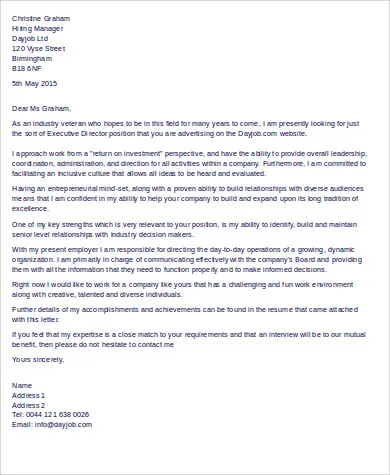
Font and Layout
Choose a professional and easy-to-read font such as Arial, Calibri, or Times New Roman. Maintain a consistent font size, usually between 11 and 12 points. Use a standard letter layout with 1-inch margins on all sides and single or 1.15 line spacing. This layout ensures the letter is both aesthetically pleasing and easy to scan. The aim is to make the document clean and accessible. Proper formatting contributes to readability, making your letter more likely to be read and understood by busy hiring managers. Avoid cluttered layouts or excessive use of graphics; the focus should be on the content.
Length and Tone
Keep your executive cover letter concise, aiming for one page. Executive audiences appreciate clarity and efficiency, so avoid unnecessary length. Adopt a professional and confident tone, showing your leadership qualities. Use active voice and strong verbs to convey your message effectively. Avoid jargon and overly formal language, instead opting for clear and straightforward language. Be positive and enthusiastic about the opportunity, and tailor your language to match the company culture and the specific requirements of the job. A well-balanced tone will leave a lasting impression.
Customization is Key

Never use a generic cover letter. Customize each letter to align with the specific job requirements, the company’s values, and the role’s unique challenges. Research the company thoroughly, understanding their mission, recent activities, and future goals. Personalize the letter by addressing the hiring manager by name, if possible. Highlight how your experience directly addresses the organization’s needs and goals. By taking the time to customize each letter, you demonstrate genuine interest in the role and increase your chances of standing out among the candidates.
Writing a Compelling Executive Cover Letter
Researching the Company
Before you start writing, conduct in-depth research about the company. Explore their website, social media profiles, and recent press releases to learn about their current projects, challenges, and values. Understand their industry position and how your skills can help them achieve their strategic objectives. Use this information to tailor your letter, demonstrating that you understand the company’s needs and that your experience directly aligns with their goals. Demonstrate a genuine interest in the company, showing that you are not just applying for a job, but are enthusiastic about contributing to their success.
Tailoring to the Job

Carefully review the job description and identify the key requirements and skills the employer is looking for. Highlight the accomplishments and experiences that match these specific needs in your cover letter. Use keywords from the job description to optimize your application and make it more relevant to the hiring manager. Show how your background and expertise make you uniquely qualified for the role. This approach demonstrates your understanding of the position’s requirements and your ability to deliver immediate value to the company. Customization proves that you have carefully considered the opportunity and are not just submitting a generic application.
Using Action Verbs
Use strong action verbs to start your sentences and highlight your accomplishments. Action verbs help to convey a sense of purpose and demonstrate your ability to initiate and achieve results. Instead of saying “Responsible for project management,” use “Managed projects, leading to a 15% increase in efficiency.” Such verbs make your descriptions more dynamic and compelling. Examples of powerful action verbs include “Spearheaded,” “achieved,” “implemented,” “transformed,” “negotiated,” and “optimized.” This technique adds to the overall impact of your cover letter, showcasing your proactive attitude and tangible contributions.
Proofreading and Editing
Always proofread your cover letter multiple times to catch any grammatical errors, typos, and inconsistencies. Ensure your letter is polished and professional. Ask a trusted colleague or friend to review your cover letter for a second opinion. Fresh eyes can often catch errors that you might have missed. Attention to detail is critical in executive cover letters, as errors can undermine your credibility. A clean and well-edited letter demonstrates professionalism and your commitment to excellence. This thoroughness demonstrates your professionalism and your attention to detail – essential qualities for any executive role.
Examples of Strong Executive Cover Letters
Examining examples of effective executive cover letters can provide guidance and inspiration. Search for samples that match the kind of roles you are targeting and tailor your writing based on these examples. Pay attention to how successful letters highlight achievements, use action verbs, and align with the company’s requirements. Analyze their structure, tone, and the language they use. Remember to customize these examples to reflect your unique experiences and the specific requirements of each job. This will help you to understand how to structure and phrase your own letter, to make it compelling and effective.
Common Mistakes to Avoid
Avoid common mistakes that can undermine your application. Do not use a generic cover letter. Avoid typos, grammatical errors, and excessive jargon. Do not focus solely on job duties rather than achievements. Never include negative comments about previous employers or companies. Make sure you tailor your letter to the role and the company. Ensure your cover letter is not too long or too short, aiming for one page. Avoid overselling or making unsubstantiated claims. These steps help maintain a professional image and increase your chances of getting a positive response.
Crafting a powerful executive cover letter requires time, effort, and attention to detail. By understanding the essential components, following formatting guidelines, and avoiding common mistakes, you can create a document that captures attention and boosts your job search. Remember to customize each letter, highlight your achievements, and showcase your skills. A winning cover letter will set you apart from the competition and increase your chances of securing your desired role.