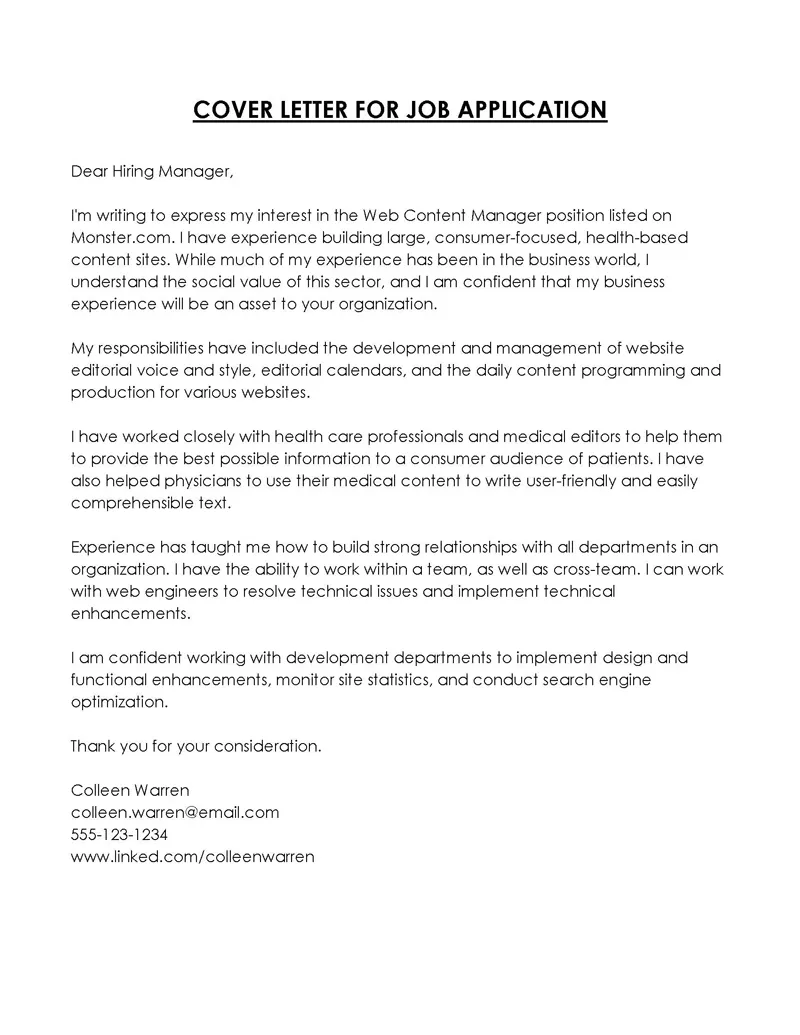
Understanding the Employment Application Cover Letter
A cover letter is a crucial document that accompanies your resume when applying for a job. It serves as an introduction, allowing you to highlight your qualifications, skills, and experiences in a way that a resume alone cannot. A well-crafted cover letter can significantly increase your chances of landing an interview by capturing the hiring manager’s attention and demonstrating your genuine interest in the position. It’s your opportunity to make a strong first impression and differentiate yourself from other candidates. Remember, it’s not just a formality; it’s a strategic tool in your job search arsenal. Properly written application cover letter allows you to explain how your skills and experiences align with the job requirements.
Purpose of a Cover Letter
The primary purpose of a cover letter is to provide context to your resume. While your resume lists your skills and experiences, the cover letter allows you to elaborate on them, providing specific examples and demonstrating how you’ve used your skills to achieve results. It’s also a chance to showcase your personality, writing skills, and enthusiasm for the role. The cover letter is where you can explain why you are interested in the specific company and position, and why you believe you are the best fit. It’s about telling a story and making a compelling case for why a hiring manager should invite you for an interview.
Why Cover Letters are Important

Cover letters are essential because they offer an opportunity to demonstrate your communication skills, attention to detail, and genuine interest in the role and company. They allow you to tailor your application to the specific requirements of the job, showcasing how your skills and experiences align with the employer’s needs. Additionally, a well-written cover letter can help you stand out from other applicants by providing a personalized and compelling narrative. In a competitive job market, a strong cover letter can be the deciding factor in whether you get an interview or not. It’s your chance to make a memorable first impression and highlight what makes you unique.
Key Elements of a Cover Letter
Contact Information and Date
At the top of your cover letter, include your contact information: your name, phone number, email address, and optionally, your LinkedIn profile URL. Following this, add the date you are writing the letter. This ensures the hiring manager can easily reach you and also provides a timestamp for your application. Ensure your contact details are current and professional, as this is the first thing the hiring manager sees and uses to connect with you. This section is critical for making it easy for the employer to contact you if they like your application.
Recipient Information

Address your letter to the hiring manager by name whenever possible. Research the company to find the name of the person responsible for hiring for the specific role. If you can’t find a specific name, use a general salutation like “Dear Hiring Manager.” Avoid generic greetings such as “To Whom It May Concern,” as they suggest a lack of effort. Addressing the letter to a specific person shows that you’ve taken the time to research the company and that you’re genuinely interested in the position. This personalization can make a significant impact.
Salutation
Begin your cover letter with a professional salutation. “Dear Mr./Ms./Mx. [Last Name]” is the standard format. If you don’t know the name, use “Dear Hiring Manager,” but avoid overly casual greetings. The salutation sets the tone for the rest of your letter, so choose a respectful and appropriate one. Ensure you spell the recipient’s name correctly; a simple typo can make a negative first impression. The salutation immediately establishes your professionalism and sets the tone for your communication.
Opening Paragraph
The opening paragraph should capture the reader’s attention immediately. State the position you are applying for and where you found the job posting. Briefly mention why you are interested in the role and the company. Consider including a compelling statement or a brief anecdote that showcases your enthusiasm and interest. This is your opportunity to make a strong first impression and make the reader want to continue reading. Keep it concise and engaging to hook the hiring manager from the start. Briefly explain why you’re a good fit and express your enthusiasm.
Body Paragraphs

The body paragraphs are where you showcase your skills, experience, and how they align with the job requirements. Provide specific examples of your accomplishments and how you have contributed to previous employers or projects. Tailor the content to the specific job description, highlighting the skills and experiences most relevant to the position. Use action verbs to describe your accomplishments and quantify your achievements whenever possible. Each paragraph should focus on a specific aspect of your qualifications, making it easy for the hiring manager to understand your value. Focus on what you can bring to the company.
Highlighting Relevant Skills and Experience
When highlighting your skills and experience, focus on the qualifications listed in the job description. Identify the key skills and experiences the employer is looking for and provide specific examples of how you have demonstrated these skills in the past. Use the STAR method (Situation, Task, Action, Result) to structure your examples, providing clear and concise explanations of your accomplishments. This method helps you provide context and showcase your ability to perform the required tasks. Ensure your examples are recent and relevant to the role, demonstrating your ability to deliver results. Make your skills shine by backing them up with solid examples.
Tailoring Your Letter to the Job
Tailoring your cover letter to each job application is crucial. Customize your letter to reflect the specific requirements and expectations outlined in the job description. Research the company and understand its values, mission, and culture. This demonstrates your genuine interest and helps you align your skills and experiences with the company’s needs. Avoid using a generic template; instead, modify each letter to address the specific role and employer. Taking the time to personalize your letter shows your commitment and increases your chances of standing out.
Quantifying Achievements

Wherever possible, quantify your achievements with data and statistics. Instead of saying “Improved customer satisfaction,” say “Increased customer satisfaction by 15% through implementing new customer service strategies.” Quantifiable results make your accomplishments more impactful and demonstrate your ability to achieve results. Use numbers, percentages, and specific figures to highlight your contributions. Providing concrete evidence of your achievements makes your claims more credible and helps the hiring manager understand the value you can bring to the company.
Closing Paragraph
The closing paragraph should reiterate your interest in the position and the company. Thank the hiring manager for their time and consideration. Briefly summarize your key qualifications and express your enthusiasm for the opportunity. Reiterate your commitment to bringing value to the company. The closing should be positive, confident, and leave the reader with a lasting impression of your qualifications and eagerness to contribute. This helps reinforce your interest and makes your application memorable.
Call to Action
Include a clear call to action, such as stating that you are available for an interview and providing your contact information. Make it easy for the hiring manager to take the next step. Express your eagerness to discuss your qualifications further and reiterate your contact details. This step encourages the hiring manager to take action. A concise and direct call to action ensures that the hiring manager knows what to do next, facilitating the process.
Formatting and Design

Font and Style
Choose a professional font such as Times New Roman, Arial, or Calibri. Use a font size between 10 and 12 points for readability. Maintain consistent formatting throughout the document, including font, spacing, and alignment. Ensure the font is easy to read and professional-looking, as this reflects your attention to detail. A clean and consistent design shows that you are organized and professional, making your application easier to read and understand.
Length and Structure
Keep your cover letter concise, ideally no more than one page. Use clear and concise language, avoiding jargon and overly complex sentences. Organize your content logically, using paragraphs and headings to make it easy to read. Break up large blocks of text with bullet points or short paragraphs. A well-structured letter is easier for the hiring manager to read and allows them to quickly grasp your key qualifications. Ensure your letter is easy to scan and get the key information quickly.
Proofreading and Editing

Before submitting your cover letter, proofread it carefully for any grammatical errors, spelling mistakes, and typos. Check for punctuation errors and ensure your sentences flow smoothly. Have a friend or family member review your letter for a fresh perspective. Mistakes can create a negative impression, so it’s critical to present a polished and professional document. Proper proofreading demonstrates your attention to detail and commitment to quality, increasing your chances of getting noticed.
Common Mistakes to Avoid
Grammar and Spelling Errors
Avoid making any grammar and spelling mistakes, which can significantly detract from your application. Always proofread your cover letter carefully, and use spell-check tools to catch any errors. Ensure your sentences are clear, and your language is professional. Errors suggest a lack of attention to detail and can damage your credibility. Always make sure your grammar and spelling are perfect.
Generic and Uninspired Content
Avoid using generic phrases and templates. Customize your cover letter for each job application, highlighting the specific requirements and your relevant skills. Avoid sounding like every other applicant by showing your personality and genuine interest in the role and the company. Demonstrate your enthusiasm and your unique qualifications. Your cover letter should showcase what makes you unique.
Submitting Your Cover Letter
File Format and Naming
Save your cover letter as a PDF file to ensure that the formatting remains consistent across different devices. Name the file in a professional manner, such as “Your Name_CoverLetter.pdf”. This ensures that your document is easily accessible and can be opened without issues. Using a professional file name helps the hiring manager organize your application correctly.
How to Send it Effectively
Follow the instructions provided in the job posting for submitting your application. If submitting online, ensure that the file is attached correctly. If sending via email, include a brief, professional message in the body of the email, reiterating your interest in the position. Always double-check all the details before sending your application, as this shows your attention to detail. Following the instructions ensures that your application is correctly received and considered.
In conclusion, crafting the perfect employment application cover letter is essential for a successful job search. By following these guidelines, you can create a compelling cover letter that highlights your skills and experiences, showcases your personality, and increases your chances of landing an interview. Remember to tailor your letter to each job, proofread carefully, and always put your best foot forward. Good luck!