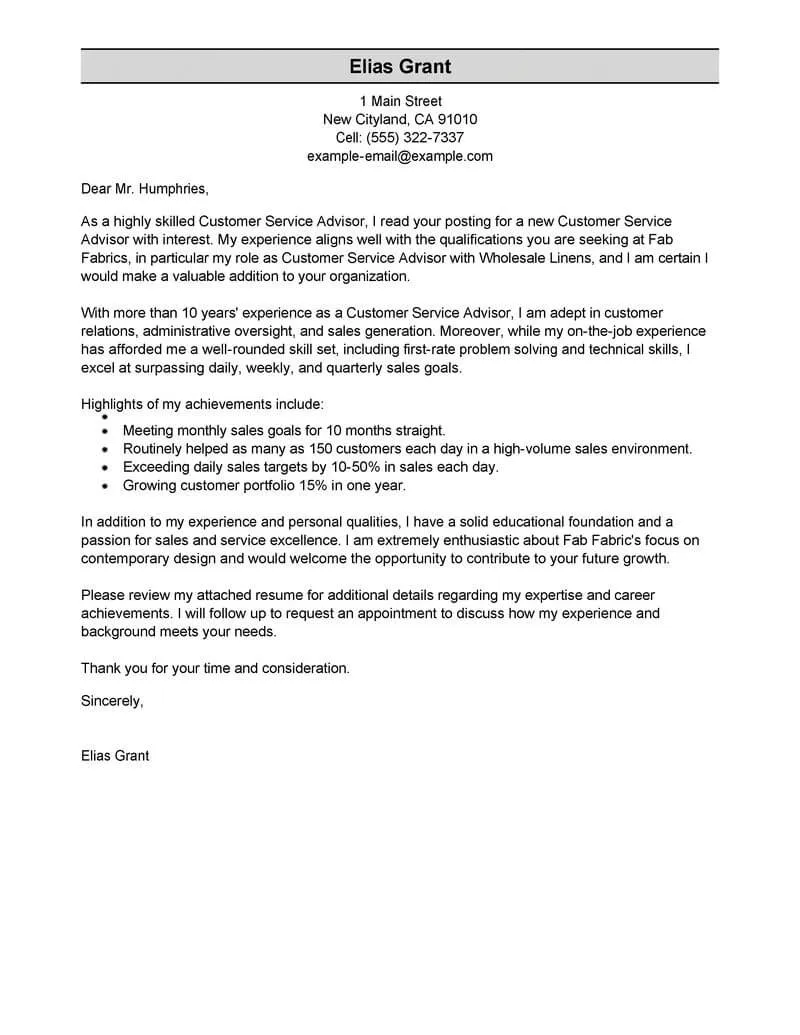
Crafting a Winning Customer Service Cover Letter
In the competitive job market, a compelling customer service cover letter is your first step toward landing an interview. It’s more than just a formality; it’s your opportunity to showcase your skills, experience, and passion for providing excellent customer support. A well-crafted cover letter can significantly increase your chances of getting noticed by potential employers and securing your dream job. This guide provides fast and effective tips to create a customer service cover letter that stands out.
Understanding the Purpose of a Cover Letter
A customer service cover letter serves several crucial purposes. Firstly, it introduces you to the hiring manager, providing a professional snapshot of your background. Secondly, it allows you to highlight specific skills and experiences that align with the job requirements, demonstrating why you are a suitable candidate. Finally, it gives you a chance to express your enthusiasm for the role and the company, setting the tone for a positive first impression. Your cover letter acts as a personal marketing tool.
Highlighting Relevant Skills and Experience

When writing your customer service cover letter, it’s crucial to emphasize skills and experiences that directly relate to the job description. Review the job posting carefully and identify the key requirements. Then, tailor your letter to showcase how your skills and experiences meet those needs. Focus on demonstrating your abilities to solve problems, communicate effectively, and provide excellent customer support. Use action verbs to describe your accomplishments and skills.
Showcasing Your Customer Service Abilities
Customer service jobs require a unique set of skills. Your cover letter should highlight your abilities in communication, empathy, problem-solving, and conflict resolution. Provide specific examples of how you have successfully handled customer inquiries, resolved issues, and exceeded expectations. Mention any training, certifications, or software proficiencies relevant to the role. Show how you can create a positive customer experience.
Quantifying Achievements in Customer Service
To make your cover letter more impactful, quantify your achievements whenever possible. Use numbers and statistics to demonstrate your success in previous roles. For instance, instead of saying ‘Improved customer satisfaction’, you could say ‘Increased customer satisfaction scores by 15% within six months’. This gives the hiring manager concrete evidence of your capabilities. Provide data to make your claims more impactful and believable.
Structuring Your Customer Service Cover Letter

A well-structured cover letter is easy to read and conveys your message effectively. Use a clear and concise format with distinct sections. Organize your content logically, starting with an engaging opening, followed by body paragraphs that highlight your skills and experience, and concluding with a strong call to action. Consider using bullet points to make key information stand out and break up large blocks of text.
The Opening Paragraph That Grabs Attention
Your opening paragraph is your first and often only chance to grab the hiring manager’s attention. Start with a strong hook that immediately conveys your enthusiasm for the role and the company. Mention where you saw the job posting and why you are interested. Briefly introduce yourself and highlight your most relevant skills or experiences. Keep it concise and focused on creating a positive first impression.
Body Paragraphs Emphasizing Value
The body paragraphs are where you showcase your skills and experience in detail. Use these paragraphs to highlight specific achievements and provide examples of how you have excelled in previous customer service roles. Tailor your content to the specific requirements of the job description, emphasizing how your skills and experiences align with the company’s needs. Use action verbs and quantify your accomplishments whenever possible.
A Strong Closing to Secure the Interview

Your closing paragraph should reiterate your interest in the position and express your desire for an interview. Thank the hiring manager for their time and consideration. Clearly state how you can be reached and provide your contact information. Reiterate your enthusiasm and confidence in your ability to contribute to the company’s success. A strong closing leaves a lasting positive impression.
Customizing Your Cover Letter for Each Job
Avoid using a generic cover letter for all job applications. Customize your letter for each specific role you apply for. This demonstrates your genuine interest in the company and your understanding of the job requirements. Tailoring your cover letter shows you’ve taken the time to understand the role and the company’s needs. Focus on what makes you a unique fit for the company.
Researching the Company and Role
Before writing your cover letter, research the company and the specific role. Visit their website, social media pages, and read reviews to understand their values, culture, and customer service approach. This information will help you tailor your letter to the company’s specific needs and demonstrate your genuine interest. Understanding the company’s mission can make your cover letter relevant.
Tailoring Content to Specific Requirements

Carefully review the job description and identify the key requirements. Use the job description as a guide to tailor the content of your cover letter. Highlight the skills, experiences, and qualifications that match the job requirements. Use the same keywords and phrases that the employer uses in their job posting. Show how your capabilities align perfectly with the company’s needs.
Avoiding Common Mistakes in Customer Service Cover Letters
Avoid common mistakes that can damage your chances of getting an interview. These mistakes can range from grammatical errors to generic content. Paying attention to detail can significantly increase your chances of securing your desired role. Focus on the areas that can make or break your application. Many mistakes are easy to fix with a good review.
Typos and Grammatical Errors
Typos and grammatical errors can create a negative impression and make you appear unprofessional. Always proofread your cover letter carefully before submitting it. Use spell check and grammar check tools, but also read your letter aloud to catch any errors you might miss. Consider having a friend or family member review your letter for a fresh perspective.
Generic Content and Lack of Personalization

Avoid using generic content that could apply to any job. Customize your cover letter to the specific role and company. Research the company and tailor your letter to demonstrate your genuine interest and understanding of their needs. Show how your skills and experience align with the company’s goals. A personalized cover letter increases your chances of standing out among the competition.
Tips for Formatting and Design
The formatting and design of your cover letter can impact its readability and overall appeal. Use a professional and clean design that is easy on the eyes. The formatting affects how well your information is received. Using the right formatting makes your cover letter more readable. Keep your design simple and straightforward.
Using a Professional and Readable Font
Choose a professional and readable font, such as Arial, Times New Roman, or Calibri. Use a font size between 10 and 12 points for the body text, and ensure your font is consistent throughout the document. This makes your letter easier to read and more professional. Keep it consistent and readable for the best results.
Optimizing Length and Readability

Keep your cover letter concise and to the point. Aim for a single page in length. Use clear and concise language and avoid unnecessary jargon. Break up large blocks of text with bullet points and white space to improve readability. This makes it easier for the hiring manager to quickly scan your qualifications and experience.
Final Review and Submission
Before submitting your cover letter, conduct a final review. Proofread carefully for any errors in grammar, spelling, and punctuation. Ensure that your contact information is accurate and up-to-date. Double-check that you’ve tailored your letter to the specific job and company. Consider having someone else review your letter for a second opinion. A final review helps make sure you can submit a high-quality cover letter.