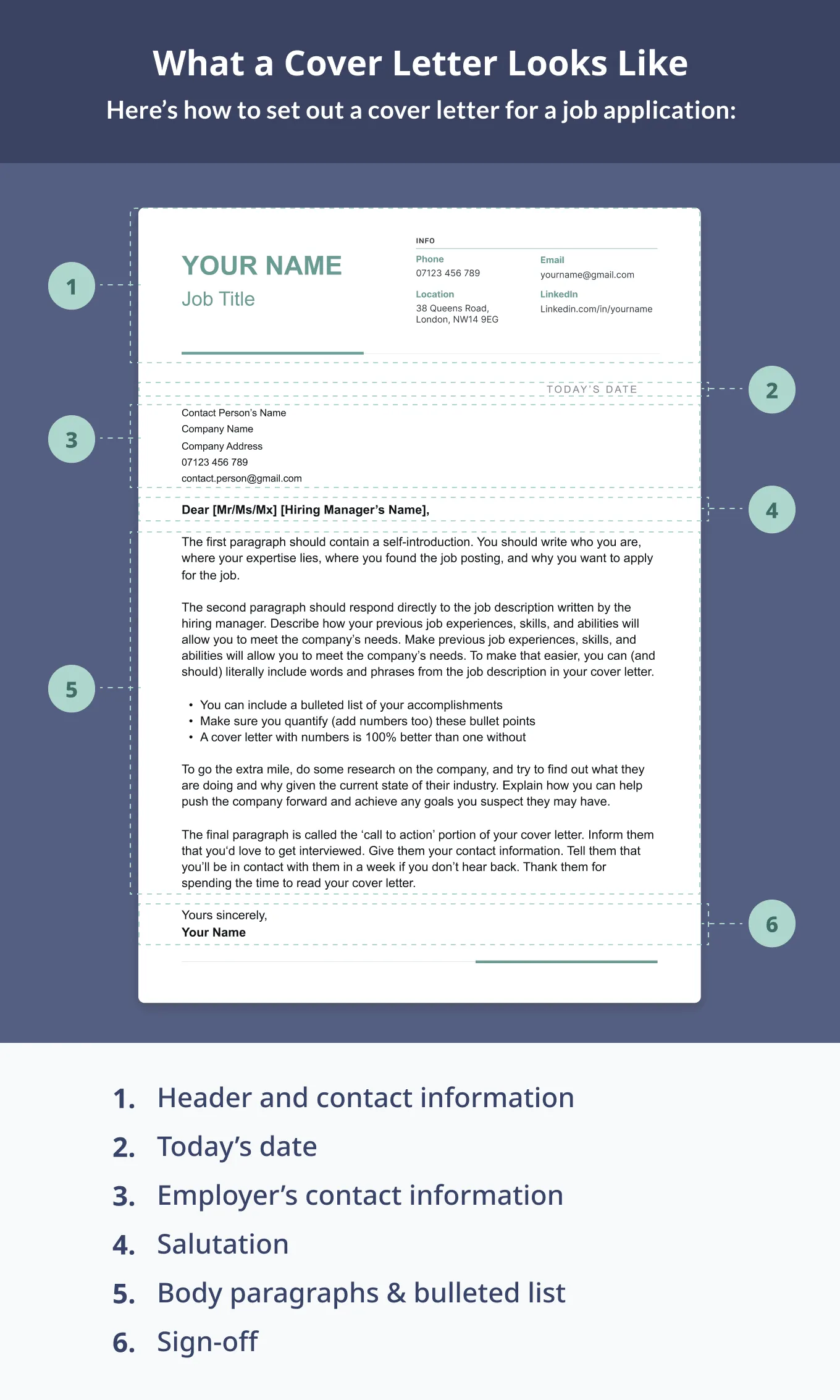
What is a Cover Letter
A cover letter is a crucial document that accompanies your resume when applying for a job. It serves as a personal introduction, allowing you to elaborate on your qualifications, skills, and experiences in a way that a resume alone cannot. Think of it as your opportunity to make a strong first impression and convince the hiring manager that you are the perfect fit for the role. It is also a chance to showcase your personality and writing skills, demonstrating why you’re the best candidate for the position. Without a well-crafted cover letter, your application might get overlooked, regardless of how impressive your resume is. It is often the first impression you make on a potential employer, and it sets the tone for the rest of your application. That’s why it’s important to know what elements are included in an effective cover letter.
Contact Information
Accurate contact information is a must-have in any cover letter, making it easy for the employer to reach you. This section should be placed at the top, ensuring it’s the first thing the hiring manager sees. Proper formatting and attention to detail here demonstrates your professionalism and attention to detail. Including your contact information is a non-negotiable element of any cover letter, ensuring that the employer can easily reach you. Omitting this crucial detail could cost you the opportunity to be considered for the job.
Your Name and Contact Details

Start by including your full name, making sure it matches the name on your resume. Below your name, list your phone number, email address, and optionally, your LinkedIn profile URL. Ensure your email address is professional and suitable for job applications. Double-check all details for accuracy. A small mistake here could mean you miss important communication from the potential employer. It is better to have a dedicated email for job applications to avoid any confusion and stay organized. Make sure your voicemail message is professional and up-to-date.
Date and Recipient’s Information
Following your contact information, include the current date. Below that, provide the hiring manager’s name and title, if known, along with the company’s name and address. If you are unsure of the hiring manager’s name, research on LinkedIn or the company website to find the correct person. Addressing the letter to a specific person shows that you’ve taken the time to personalize your application and shows that you are not just sending a generic application. If you cannot find the hiring manager’s name, using a general greeting such as ‘Dear Hiring Manager’ is acceptable, but always try to find a specific person’s name.
Professional Greeting
Begin your cover letter with a formal greeting. ‘Dear Mr./Ms./Mx. [Last Name],’ is the most appropriate option when you know the hiring manager’s name. Always use the correct title and spelling. If you don’t know the name, use ‘Dear Hiring Manager’ or ‘Dear [Company Name] Hiring Team’. Avoid casual greetings like ‘Hi’ or ‘Hello.’ A professional greeting sets the tone for your letter and reflects your attention to detail and respect for the hiring process. The greeting sets the first impression, and the rest of your letter will build upon this.
Body of the Cover Letter

The body of the cover letter is where you make your case for why you’re the ideal candidate. This section typically consists of several paragraphs that demonstrate your skills, experience, and enthusiasm. This is the most important part of the cover letter. It showcases your personality, skills, and experiences, which are all very important to the hiring manager. It is where you show that you have the qualifications to do the job and that you are passionate about the opportunity. The body should tell a clear and concise story that connects your skills and experience with the job requirements.
Opening Paragraph
Start with a strong opening paragraph that immediately captures the reader’s attention. State the position you are applying for and where you found the job posting. Briefly mention why you are interested in the role and the company. Showing your interest in the company shows that you have done your research. Make your opening paragraph compelling and concise, leaving the hiring manager wanting to read more. It’s about grabbing their attention from the very start, showcasing your enthusiasm and demonstrating your understanding of the role you’re applying for. Avoid generic openings; personalize it for the role and company.
Highlighting Your Value
In the main body, connect your skills and experience to the job requirements. Explain what value you can bring to the company. What makes you different from the other applicants? Focus on your key accomplishments and how they align with the role. This is not just about listing your skills; it’s about demonstrating how you’ve used those skills to achieve results. Be specific and provide examples. By highlighting your value, you’re painting a picture of the benefits the company will receive by hiring you. It helps them understand why you are the best fit and how you will contribute to their success.
Showcasing Relevant Skills and Experience

Tailor your cover letter to the specific job description by highlighting the most relevant skills and experiences. Analyze the job requirements and align your qualifications accordingly. Provide specific examples of how you’ve demonstrated those skills in previous roles. Use keywords from the job description to show you understand the role. Avoid simply repeating your resume; instead, expand on your achievements and explain how they relate to the role you are applying for. Using the job description as your guide helps you create a targeted and effective cover letter.
Quantifying Achievements
Whenever possible, quantify your achievements to demonstrate your impact. Use numbers, percentages, and metrics to showcase your successes. Instead of saying, ‘Improved sales,’ say, ‘Increased sales by 15% in one quarter.’ This makes your achievements more concrete and compelling. Quantifiable results show the hiring manager the value you can bring to the company. Providing data makes it easy for the reader to understand the real value you have brought to your previous roles and gives them a clear view of your potential.
Expressing Enthusiasm and Interest
Show your genuine interest in the company and the role. Explain why you are excited about the opportunity and what attracts you to the company’s mission or values. Research the company to show you understand their work. Expressing your enthusiasm makes you more memorable and demonstrates that you are truly interested in the position. This is your opportunity to show how you’ll thrive in the company’s culture, which can set you apart from other candidates. Your excitement can be contagious, demonstrating your eagerness to join the team.
Call to Action

End your cover letter with a clear call to action. Express your interest in an interview and state your availability. Thank the hiring manager for their time and consideration. Make it easy for them to move forward in the hiring process. A strong call to action encourages the hiring manager to take the next step, which is usually to schedule an interview. This helps ensure your application gets the attention it deserves. It shows confidence and initiative, leaving a positive lasting impression.
Closing and Signature
Your closing is your final opportunity to leave a lasting impression. Ensure it’s professional, polite, and leaves the reader with a positive feeling. This is a crucial step in the cover letter, emphasizing professionalism and respect. Proper closing and signature indicate your attention to detail and professionalism, signaling your respect for the hiring process. A professional close is important to solidify a positive impression and show respect for the hiring manager’s time and consideration.
Formal Closing
Use a formal closing such as ‘Sincerely,’ ‘Best regards,’ or ‘Thank you.’ These closings are professional and appropriate for a job application. Avoid casual closings like ‘Cheers’ or ‘Best.’ The formal closing sets a tone of respect and professionalism. It demonstrates your attention to detail and consideration for the hiring process. A well-chosen closing is another aspect of making a great first impression.
Your Typed Name

Type your full name below your closing. This serves as your signature. If you are submitting a printed cover letter, you may also hand-sign the letter above your typed name. Ensure your name is clearly legible. Your typed name provides a professional and organized appearance. It ensures clarity and professionalism in your application. This is standard practice and shows you are paying attention to details.
Optional: Attachments
Mention any attachments included with your application, such as your resume or portfolio. List them clearly at the end of your cover letter, if necessary. This ensures the hiring manager knows what to expect and that all required documents are included. It also saves time and avoids confusion. Listing attachments ensures all necessary materials are considered. Including this step helps ensure your application is complete and professional.