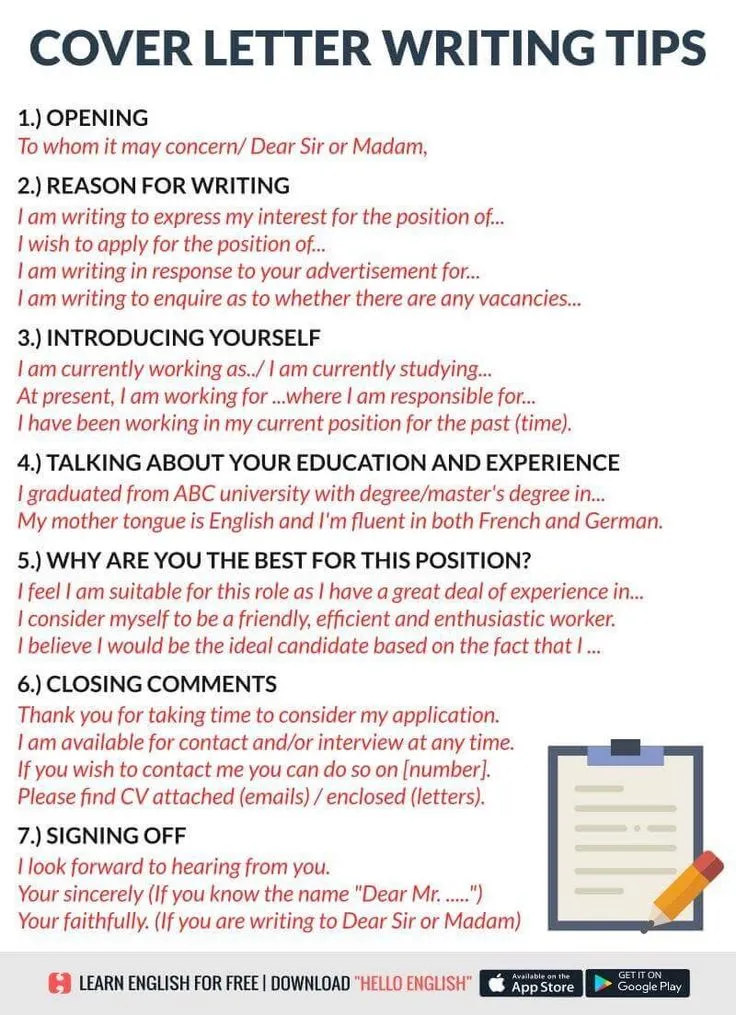
The Power of a Cover Letter
In the competitive job market, a well-crafted cover letter can be the key to unlocking your dream career. It serves as your initial introduction to a potential employer, providing an opportunity to showcase your personality, skills, and enthusiasm. While a resume provides a snapshot of your professional history, a cover letter allows you to tell a story, connecting your experience to the specific requirements of the job and the values of the company. A compelling cover letter can significantly increase your chances of getting noticed and securing an interview, setting you apart from other applicants who may only submit a resume. Neglecting a cover letter is a missed opportunity to make a strong first impression and demonstrate your genuine interest in the position.
Why Cover Letters Are Important
Cover letters are important for a multitude of reasons. They give you the chance to go beyond the basic information presented in your resume. They enable you to explain any gaps in your employment history, highlight specific skills relevant to the job, and express your passion for the company and the role. A well-written cover letter demonstrates your communication skills, attention to detail, and ability to tailor your application to the specific needs of the employer. In addition, the cover letter provides an opportunity to elaborate on the key accomplishments and how they align with the job requirements. It also shows that you are not just sending out a generic application, but that you have taken the time to understand the position and the company’s goals.
Cover Letter’s Impact

The impact of a cover letter is often underestimated. It is your chance to make a memorable first impression. A well-written cover letter can be the deciding factor when the hiring manager has to choose between several highly qualified candidates. By effectively communicating your value proposition, you can quickly capture the reader’s attention and persuade them to review your resume in detail. This is where you can showcase your accomplishments and tailor your skills to the specific requirements of the job and the organization. The cover letter can also reveal your personality and show your enthusiasm, making you more than just a list of skills and experiences, and a real person who is genuinely interested in the opportunity.
Secret 1 Tailor to the Job
One of the most crucial cover letter tips is tailoring your letter to each job application. Generic cover letters are easily recognizable and often discarded. Take the time to carefully review the job description and identify the key skills, qualifications, and experiences that the employer is seeking. Use these keywords and phrases throughout your cover letter, demonstrating that you understand the role and are a perfect fit. Addressing the specific needs of the company is an excellent way to capture the reader’s attention and demonstrate your genuine interest in the position. A personalized letter will show that you are genuinely invested in the opportunity.
Researching the Company
Before you start writing, conduct thorough research on the company. Visit their website, read their mission statement, and learn about their values, culture, and recent news. This knowledge will help you personalize your cover letter and demonstrate your understanding of the company’s goals and how you can contribute to their success. When possible, identify the hiring manager’s name and address your letter to them directly. This shows that you have taken the initiative to learn more about the company and its leaders, creating a stronger connection with the recipient. Researching the company shows that you are genuinely interested and invested in the role and the organization.
Highlighting Relevant Skills

Carefully review the job description and identify the essential skills and qualifications required for the role. Then, highlight your relevant skills, providing specific examples of how you have demonstrated them in past roles. Use action verbs to describe your accomplishments and quantify your achievements whenever possible. Match your skills to the requirements outlined in the job posting, demonstrating a clear understanding of what the employer is looking for. By highlighting these skills, you can show that you are a strong candidate and that you possess the abilities needed to succeed in the position. It is also important to consider how these skills align with the company’s values and goals.
Secret 2 Showcase Your Achievements
Rather than simply listing your responsibilities, use your cover letter to showcase your achievements and demonstrate the impact you have made in previous roles. Provide specific examples of how you have solved problems, increased efficiency, or contributed to the success of previous projects. Use the STAR method (Situation, Task, Action, Result) to structure your examples and make them clear and compelling. This approach helps the reader understand the context of your accomplishments and how you achieved them. It’s important to focus on results, using numbers and data to support your claims, demonstrating the value you can bring to the new position and the company.
Quantifying Accomplishments
Whenever possible, quantify your accomplishments to demonstrate the tangible impact of your work. Use numbers, percentages, and data to illustrate your achievements. For example, instead of saying “Improved customer satisfaction,” you could say “Increased customer satisfaction by 15% through implementing new training programs.” This approach adds credibility to your claims and helps the reader understand the scale of your achievements. When showcasing your accomplishments, quantify them and provide context so that the reader clearly understands the importance of your contributions. Quantifying your accomplishments is a way to highlight your successes in a measurable way.
Using Action Verbs

Use strong action verbs to describe your accomplishments and responsibilities. Action verbs make your cover letter more dynamic and engaging, capturing the reader’s attention and conveying your accomplishments effectively. Examples of effective action verbs include: “Managed,” “Led,” “Implemented,” “Developed,” “Achieved,” and “Increased.” Choosing powerful words that convey your accomplishments can make your cover letter more memorable. Avoid passive language and focus on verbs that highlight your skills and contributions. The proper use of action verbs will enhance the overall impact of your cover letter and help you stand out from the competition.
Secret 3 Keep It Concise
Keep your cover letter concise and to the point. Employers are busy and often review numerous applications, so it’s essential to make your letter easy to read and understand. Aim for a letter that is no more than one page long, typically three to four paragraphs. Focus on the most relevant information and avoid including unnecessary details. Get straight to the point and quickly highlight your key skills, experiences, and why you are a good fit for the role. Be concise and avoid the mistake of being too verbose or including irrelevant information.
The Ideal Length
The ideal length for a cover letter is one page. This ensures that you can provide enough information to capture the reader’s attention without overwhelming them. Focus on quality over quantity, and select the most relevant information to include. A concise cover letter will be more appealing to busy hiring managers who have limited time to review applications. It’s essential to get your point across without making the reader lose interest. A well-written, concise cover letter will keep the reader engaged and increase your chances of getting noticed.
Formatting for Readability

Use clear and easy-to-read formatting to ensure your cover letter is accessible and easy to navigate. Choose a standard font like Times New Roman, Arial, or Calibri, and use a font size between 10 and 12 points. Use consistent spacing between paragraphs and sections. Break up large blocks of text with headings and subheadings to improve readability. Ensure your cover letter is easy to read, with sufficient white space and proper formatting. By following these steps, you’ll create a visually appealing and professional cover letter.
Secret 4 Perfect Your Tone
The tone of your cover letter should be professional, yet engaging. It should reflect your personality and enthusiasm while maintaining a respectful and confident approach. Avoid sounding too formal or overly casual. Strive for a balanced tone that demonstrates your communication skills and ability to connect with the reader. A professional tone in your cover letter is essential for making a positive impression on a potential employer and conveying your interest in the position.
Professional vs Conversational
Find a balance between professional and conversational writing. Your cover letter should be professional in its tone and structure, using appropriate language and formatting. However, it should not sound overly formal or impersonal. It should convey your personality and enthusiasm for the position. A conversational tone can help you build rapport with the reader, making you seem more approachable and human. The goal is to showcase your skills and personality while maintaining a professional demeanor.
Avoiding Clichés

Avoid using clichés and generic phrases that can make your cover letter seem unoriginal. Instead, use fresh and specific language that highlights your unique skills and experiences. Avoid overused phrases and expressions that do not add value to your application. To show you are thoughtful, it is important to demonstrate your genuine interest in the company. By avoiding clichés, you can show your attention to detail and ensure your cover letter stands out from the crowd. Originality and uniqueness are crucial in capturing the reader’s attention.
Secret 5 Proofread Meticulously
Before submitting your cover letter, proofread it meticulously for any errors in grammar, spelling, and punctuation. Errors can make a negative impression and undermine your credibility. Read your letter aloud, and consider asking a friend or family member to review it as well. Taking the time to proofread your cover letter demonstrates your attention to detail and commitment to quality. Ensure your cover letter is free of errors and polished to perfection.
Checking Grammar and Spelling
Thoroughly check your cover letter for any grammatical and spelling errors. These errors can distract the reader and reflect poorly on your communication skills. Use a grammar and spell-checking tool to assist you. Be sure to double-check any proper nouns, such as company names, and ensure all information is accurate. Paying close attention to these details will show your commitment to presenting yourself professionally and demonstrating your attention to detail. Proofreading is critical for making a positive impression.
Seeking Feedback

Ask a trusted friend, family member, or career advisor to review your cover letter and provide feedback. A fresh perspective can help you identify areas for improvement and ensure your letter is clear, concise, and effective. Ask them to check for clarity, tone, and overall effectiveness. Seeking feedback can also help you identify any errors or inconsistencies. The goal is to get an objective assessment of your cover letter before submitting it. Getting external feedback is an essential step in ensuring your cover letter is of the highest quality.