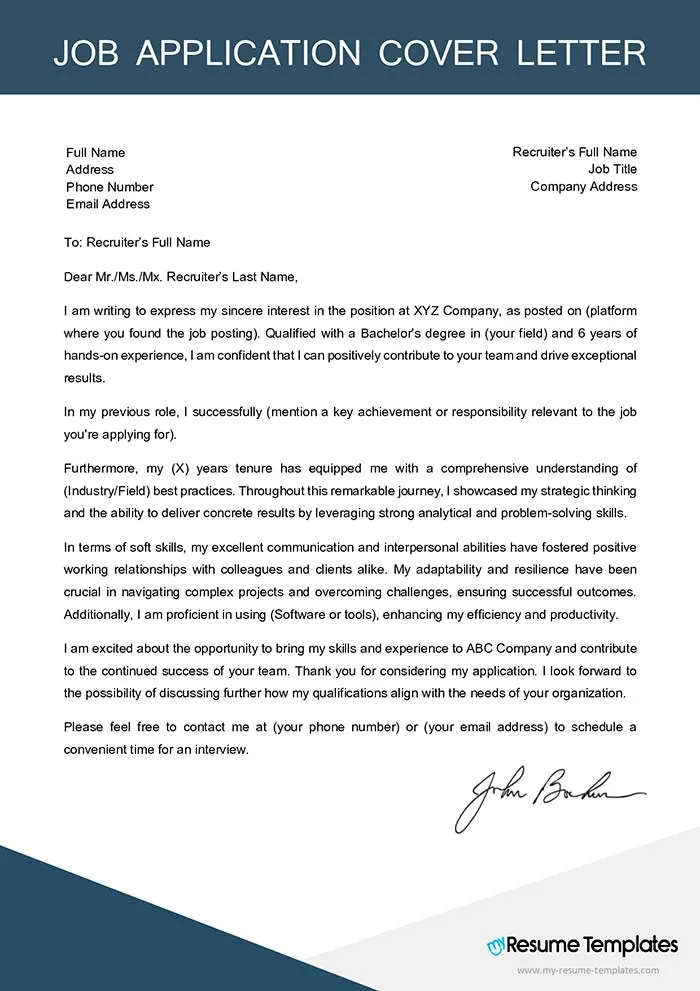
What is a Cover Letter (And Why You Need One)
A cover letter is a crucial document that accompanies your resume when applying for a job. It serves as your first introduction to a potential employer, providing an opportunity to showcase your personality, skills, and enthusiasm for the position. Unlike a resume, which lists your qualifications, a cover letter allows you to tell a story about why you are the perfect fit for the role and the company. Think of it as your personal sales pitch, highlighting your unique value proposition and persuading the hiring manager to read your resume and consider you for an interview. A well-crafted cover letter can significantly increase your chances of landing an interview, while a poorly written one can lead to your application being overlooked. So, mastering the art of cover letter writing is an essential step in any successful job search.
Key Components of a Powerful Cover Letter
A powerful cover letter is more than just a formality it is a carefully constructed document designed to capture the reader’s attention and persuade them of your suitability for the job. Several key components are essential for crafting an effective cover letter. Understanding and incorporating these elements will significantly enhance your chances of making a positive impression and moving forward in the application process. From a professional header to a compelling closing, each part plays a vital role in conveying your qualifications and enthusiasm. Let’s explore each component in detail to ensure your cover letter stands out.
Contact Information

Start your cover letter with your contact information at the top, typically aligned to the left or right. Include your full name, phone number, email address, and optionally, your LinkedIn profile URL. Ensure the contact information is accurate and up-to-date. This allows the hiring manager to easily reach you. Double-check for any typos or errors; a simple mistake here can lead to missed opportunities. Presenting a clean and professional header sets the tone for the rest of your letter and shows attention to detail.
Professional Header
Following your contact information, include a professional header. This should typically include the date and the hiring manager’s name and title, if known, along with the company’s name and address. Using the hiring manager’s name immediately personalizes your letter. If you cannot find the name, use a general title like ‘Hiring Manager’. The header demonstrates that you have tailored the letter to the specific company and position. This attention to detail makes a positive impression on the reader. Always ensure the information is accurate and the formatting is consistent with professional standards.
Greeting the Hiring Manager
Begin your cover letter with a formal greeting. The best approach is to address the hiring manager by name, such as ‘Dear Mr. Smith’. This personalizes your letter and shows that you have taken the time to research the contact person. If you are unsure of the hiring manager’s name, use ‘Dear Hiring Manager’ or ‘Dear [Company Name] Team’. Avoid generic greetings like ‘To Whom It May Concern’, which can make your letter seem impersonal. A well-chosen greeting immediately establishes a professional tone and sets the stage for your message.
Crafting a Compelling Introduction

Your introduction is your first opportunity to grab the hiring manager’s attention. Briefly state the position you are applying for and how you learned about the opportunity. Then, immediately highlight your most relevant skills or experiences and express your enthusiasm for the role and the company. Make it clear why you are interested in this specific position and what you bring to the table. The introduction should be concise, engaging, and designed to make the reader want to learn more about you. Keep it focused and tailored to the job requirements.
Highlighting Your Skills and Experience
The body of your cover letter should provide details about your skills and experience. Focus on the qualifications that directly match the job requirements. Refer to the job description and identify the key skills and experiences the employer is seeking. Provide specific examples of how you have demonstrated these skills in the past. Use the STAR method (Situation, Task, Action, Result) to showcase your accomplishments. This structured approach helps you to clearly and effectively communicate your value. Quantify your achievements whenever possible to demonstrate the impact you have made in previous roles.
Showcasing Relevant Achievements
Instead of simply listing your responsibilities, highlight your significant achievements. Use action verbs to describe what you accomplished in your previous roles. Focus on results-driven outcomes, such as increased sales, improved efficiency, or successful project completions. Provide specific examples that demonstrate how you went above and beyond. By focusing on your accomplishments, you show the hiring manager what you are capable of and the value you can bring to their organization. Be sure to align your achievements with the needs of the company and the job description.
Quantifying Your Accomplishments

Whenever possible, quantify your accomplishments. Use numbers, percentages, and data to provide tangible evidence of your achievements. Instead of saying, ‘Improved customer satisfaction’, say, ‘Increased customer satisfaction scores by 15% through the implementation of a new feedback system’. Quantifiable results demonstrate your impact more effectively than vague descriptions. Quantifying your achievements gives the hiring manager a clear understanding of your capabilities and the value you can bring to the role. Use numbers to make your achievements more compelling and memorable.
Tailoring Your Cover Letter
Avoid using a generic cover letter for every job application. Customize your cover letter for each specific position and company you apply to. Research the company and tailor your skills and experiences to match the job requirements. Highlight the aspects of your background that are most relevant to the specific role. Show that you understand the company’s mission, values, and culture. Demonstrate your genuine interest in the company. Tailoring your cover letter shows the hiring manager that you are serious about the opportunity and have taken the time to understand their needs.
Researching the Company
Before writing your cover letter, research the company thoroughly. Visit their website, read their mission statement, and learn about their products or services. Understand their values, culture, and recent news or developments. This research will help you tailor your cover letter to the company’s specific needs and demonstrate your genuine interest. It shows that you are not just sending out a generic application, but that you are genuinely interested in joining their team. Mentioning specific company initiatives or values in your letter will show that you have done your homework.
Matching Skills to Job Requirements

Carefully review the job description and identify the key skills and qualifications the employer is seeking. Highlight these skills and provide specific examples of how you have demonstrated them in the past. Use keywords from the job description in your cover letter. This shows the hiring manager that you meet the requirements of the position. Aligning your skills with the job requirements increases your chances of getting noticed. Be clear about how your skills and experience align with the job’s needs.
Writing a Strong Closing
Your closing should summarize your interest in the position and reiterate your qualifications. Reiterate your enthusiasm for the opportunity and why you are a good fit for the company. Express your availability for an interview and provide a clear call to action. Keep the tone professional and confident. The closing should leave a lasting positive impression on the hiring manager and make them want to contact you. Thank the hiring manager for their time and consideration.
Expressing Enthusiasm and Interest
Show genuine enthusiasm and interest in the role and the company throughout your cover letter. Mention specific aspects of the job or the company that excite you. Explain why you are drawn to the company’s mission, culture, or values. Demonstrating your passion for the opportunity will make you stand out from other candidates. Conveying your excitement for the opportunity will leave a positive impression. Make sure your enthusiasm shines through in your writing.
Call to Action

Include a clear call to action in your closing. State that you are available for an interview and provide your contact information. Make it easy for the hiring manager to contact you by reiterating your phone number and email address. Encourage them to reach out to you. A strong call to action encourages the hiring manager to take the next step and move your application forward. A clear call to action increases your chances of getting contacted for an interview.
Formatting and Proofreading
Formatting and proofreading are critical steps in cover letter writing. Use a professional font such as Times New Roman, Arial, or Calibri, and maintain a consistent font size. Use clear and concise language. Ensure proper grammar, spelling, and punctuation throughout the letter. Proofread multiple times and have someone else review your cover letter for errors. A well-formatted and error-free cover letter demonstrates your attention to detail and professionalism, making a positive impact. It’s the final polish that enhances your chances of success.
Font and Layout
Choose a professional font that is easy to read, such as Times New Roman, Arial, or Calibri. Use a font size between 10 and 12 points. Maintain consistent formatting throughout your cover letter, including spacing, margins, and alignment. Ensure your letter is well-organized with clear paragraphs and headings. A clean and well-formatted cover letter is easier for the hiring manager to read and demonstrates your attention to detail and professionalism. A good layout enhances readability, making a positive impression.
Proofreading for Errors

Proofread your cover letter multiple times to catch any errors in grammar, spelling, and punctuation. Use a grammar checker to help identify potential mistakes. Have a friend, family member, or career advisor review your cover letter for a fresh perspective. Errors can undermine your credibility and make a negative impression. Thorough proofreading is essential to ensure your cover letter is polished and professional. Attention to detail is key to a successful cover letter.