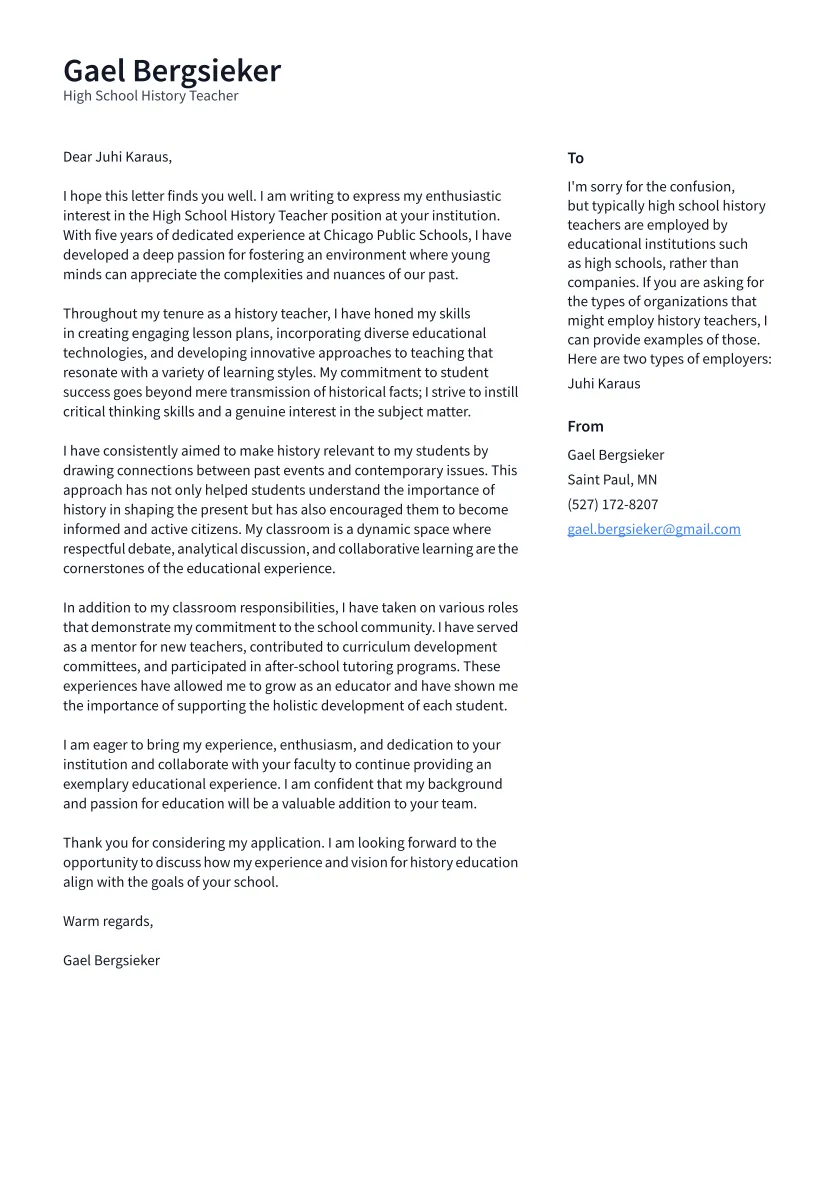
Why a Cover Letter Matters for History Teachers
In the competitive field of education, especially when applying for a History Teacher position, a well-crafted cover letter is not just a formality; it’s your first opportunity to make a lasting impression. It serves as a vital introduction, allowing you to showcase your personality, passion for history, and relevant skills in a way that a resume alone cannot. A compelling cover letter can be the deciding factor in whether your application moves forward, offering a glimpse into your teaching philosophy and enthusiasm for the subject. It is your chance to stand out from other qualified candidates, making you more than just a list of qualifications on paper.
The Purpose of a Cover Letter
The primary purpose of a cover letter is to introduce yourself and your qualifications to a potential employer, highlighting why you are the ideal candidate for the History Teacher position. It’s a platform to express your enthusiasm for teaching history and to demonstrate how your skills and experience align with the specific requirements of the role. The cover letter should explain why you are interested in the particular school or district, showing that you’ve done your research and are not just sending out generic applications. It’s an opportunity to connect with the hiring manager on a personal level, showcasing your communication skills and passion for education.
How It Complements Your Resume

While your resume provides a chronological overview of your education, experience, and skills, the cover letter allows you to expand on these points and provide context. It gives you space to explain the ‘why’ behind your choices, demonstrating how your experiences have shaped your teaching philosophy and prepared you for the role. The cover letter complements your resume by personalizing your application, offering insights into your teaching style, classroom management techniques, and how you engage students. It adds a layer of depth, making your application more memorable and helping the hiring committee understand you better as a potential colleague and educator.
Key Components of a Powerful Cover Letter
Header Information
Your header should be clear and professional, including your full name, contact information (phone number and email address), and the date. This information ensures the recipient can easily contact you. Using a professional font and maintaining a clean layout is essential for readability. Your header establishes the first impression of your organizational skills and attention to detail, crucial qualities for a teacher. Ensuring that your contact details are up-to-date and easily accessible is a small but vital step in the application process.
Your Contact Information

This includes your name, address, phone number, and professional email address. Make sure the email address is appropriate and reflects a professional demeanor. Double-check that your phone number is correct and that your voicemail greeting is professional and welcoming. This section should be at the top left corner of your cover letter.
Recipient’s Information
Always address your cover letter to a specific person if possible; research the hiring manager’s name. Include their title, the school’s name, and the address. This personalization shows that you’ve taken the time to research and are genuinely interested in the position. If you can’t find a specific name, use a professional title like ‘Hiring Committee’ or ‘Principal’.
The Opening: Grabbing Their Attention
The opening paragraph is your first opportunity to capture the reader’s attention. Start with a strong statement that immediately conveys your enthusiasm for the position and the school. You can mention a specific program or initiative that interests you or briefly highlight a relevant achievement. Avoid generic phrases; instead, personalize your opening to show you’ve tailored your letter to the specific job and institution. This sets the tone for your entire letter and encourages the reader to continue.
Highlighting Your Passion for History

Demonstrate your genuine passion for history. Share what excites you about the subject and how you inspire students to appreciate the past. Mention any specific historical periods or events that you are particularly passionate about. Describe how you bring history to life in the classroom, whether through innovative teaching methods, engaging projects, or incorporating primary sources. Your passion is contagious, and conveying it effectively will make you a memorable candidate. Consider including an anecdote or personal connection to history.
Showcasing Relevant Skills and Experience
Subject Matter Expertise
Showcase your in-depth knowledge of historical periods, events, and concepts. Highlight your ability to teach various aspects of history, from ancient civilizations to modern times. Mention any specializations or areas of expertise you possess, such as a particular geographic region or historical era. Provide examples of how you’ve used your expertise to develop engaging lesson plans, assessments, and classroom activities. Emphasize your ability to make complex historical concepts accessible and interesting to students.
Classroom Management Skills

Describe your ability to create a positive and productive learning environment. Highlight your classroom management techniques, emphasizing your ability to establish clear expectations, maintain discipline, and motivate students. Provide specific examples of how you’ve successfully managed diverse classrooms and addressed challenging student behaviors. Mention any experience you have with differentiated instruction, ensuring that you cater to different learning styles and student needs. Focus on strategies to foster a respectful and inclusive classroom culture.
Differentiating Yourself
What makes you unique? Highlight any special skills, experiences, or qualities that set you apart from other candidates. This could include proficiency in a second language, experience with educational technology, or involvement in extracurricular activities related to history. Mention any awards, publications, or presentations you have made. Show how these experiences have shaped you as an educator and contributed to your teaching philosophy. Consider sharing any innovative teaching methods or unique projects you have implemented.
Addressing Specific Requirements
Tailoring to the Job Description
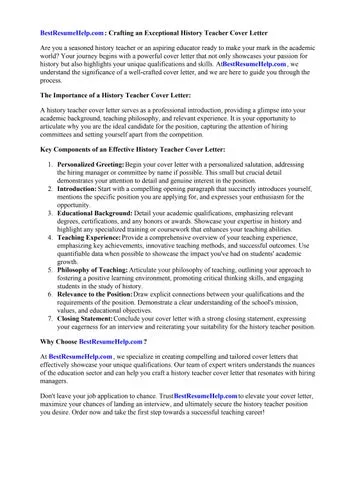
Carefully review the job description and tailor your cover letter to address the specific requirements and qualifications listed. Identify the key skills, experiences, and qualities the employer is seeking and demonstrate how your background aligns with these needs. Provide concrete examples of how you have successfully performed tasks similar to those outlined in the job description. Show the employer that you understand the role and have the necessary skills to excel in it. This targeted approach shows you’ve taken the time to understand their needs.
Using Keywords from the Job Posting
Incorporate relevant keywords from the job description into your cover letter. This helps demonstrate that you meet the employer’s requirements and can also help your application pass through applicant tracking systems. Use these keywords naturally and strategically throughout the letter, particularly in the sections where you discuss your skills and experience. Avoid keyword stuffing; instead, focus on integrating the keywords in a way that sounds authentic and reflects your understanding of the role. This practice is essential for getting your application noticed.
The Closing & Call to Action
Expressing Enthusiasm

Reiterate your enthusiasm for the position and the school in your closing paragraph. Briefly summarize your key qualifications and reiterate your passion for teaching history. Reassure the employer that you are a strong candidate. Convey your eagerness to contribute to their educational community and make a positive impact on students’ lives. Your closing should leave the reader with a positive and memorable impression, reinforcing why you are the right fit for the role.
Requesting an Interview
Include a clear call to action, such as requesting an interview to discuss your qualifications further. Thank the hiring manager for their time and consideration. Provide your contact information again and express your availability for an interview. Make it easy for the employer to move forward with your application. A direct call to action demonstrates your proactive nature and desire to secure the position.
Proofreading and Formatting
Ensuring Clarity and Accuracy

Before submitting your cover letter, meticulously proofread it for any grammatical errors, typos, or inconsistencies. Ensure your writing is clear, concise, and easy to understand. Have a trusted friend or colleague review your letter for a fresh perspective. Accuracy is crucial in a cover letter, as errors can undermine your credibility and professionalism. Take your time and ensure that your letter is polished and error-free, reflecting your attention to detail and communication skills.
Formatting Best Practices
Use a professional font like Times New Roman or Arial, with a font size between 10 and 12 points. Maintain consistent spacing and use a standard one-inch margin. Ensure your letter is well-organized with clear paragraphs and headings. Use bullet points to highlight key skills or accomplishments. Avoid long blocks of text; instead, break up your letter into smaller, easily digestible sections. A well-formatted cover letter is easier to read and makes a positive impression on the hiring manager.
Common Mistakes to Avoid
Generic Letters
Avoid sending a generic cover letter that could be sent to any school or district. Tailor each letter to the specific job and institution. Research the school’s mission, values, and programs and highlight how your skills and experience align with their needs. Generic letters show a lack of effort and interest, decreasing your chances of getting hired. Personalize your letter to demonstrate you’ve taken the time to understand the specific needs of the position and the school.
Typos and Grammatical Errors
Typos and grammatical errors can create a negative impression and suggest a lack of attention to detail. Proofread your letter carefully, and have someone else review it as well. Use grammar and spell-check tools, but don’t rely on them completely. Check for common errors, such as incorrect punctuation, subject-verb agreement, and the misuse of homophones. A well-written letter reflects your professionalism and your commitment to quality, while errors suggest the opposite.
Ignoring the Job Description
Failing to address the requirements and qualifications outlined in the job description is a critical mistake. Review the job posting carefully and ensure your cover letter highlights your relevant skills and experiences. Use the keywords from the job description to demonstrate that you meet the employer’s needs. Show how your qualifications align with their requirements, and provide concrete examples of your accomplishments. A cover letter that directly addresses the job description demonstrates your suitability for the role and increases your chances of getting hired.
By following these secrets, you can create a cover letter that will impress hiring managers and significantly increase your chances of securing a History Teacher position. Remember that your cover letter is a crucial part of your job application, so put in the time and effort to make it stand out.